The monumental battle over remote work is heating up this summer as more traditionalist business leaders are demanding that their employees come to the office more often.
Google Maps workers, asked to come back to the office full-time recently, fought back with a petition and threats of a strike and won a reprieve of 90 days. Elon Musk demanded that all Tesla staff come to the office full-time despite insufficient spaces at Tesla offices, resulting in Tesla staff getting recruited by other companies. Apple employees are pushing back publicly against the leadership’s demand for three days in the office, with a recent letter saying “stop treating us like school kids who need to be told when to be where and what homework to do.” The same struggles are happening at smaller companies in the U.S. and across the globe.
What these traditionalist executives are failing to realize is that the drama, stress, and tensions caused by their demands won’t matter. Remote work will win this fall.
That’s because of the new COVID-19 variants, which the Biden administration predicts may lead to 100 million infections in the fall. The most dangerous is BA.5, which is much more resistant than prior variants to protection from COVID caused either by vaccinations or prior infections. Its capacity to escape immunity combines with what appears to be increased transmissibility and the ability to induce a worse disease. Thus, it led to a rise in hospitalizations in Portugal, Israel, and other countries where it became dominant. We can expect the same in the U.S. as BA.5 becomes increasingly dominant later this summer.
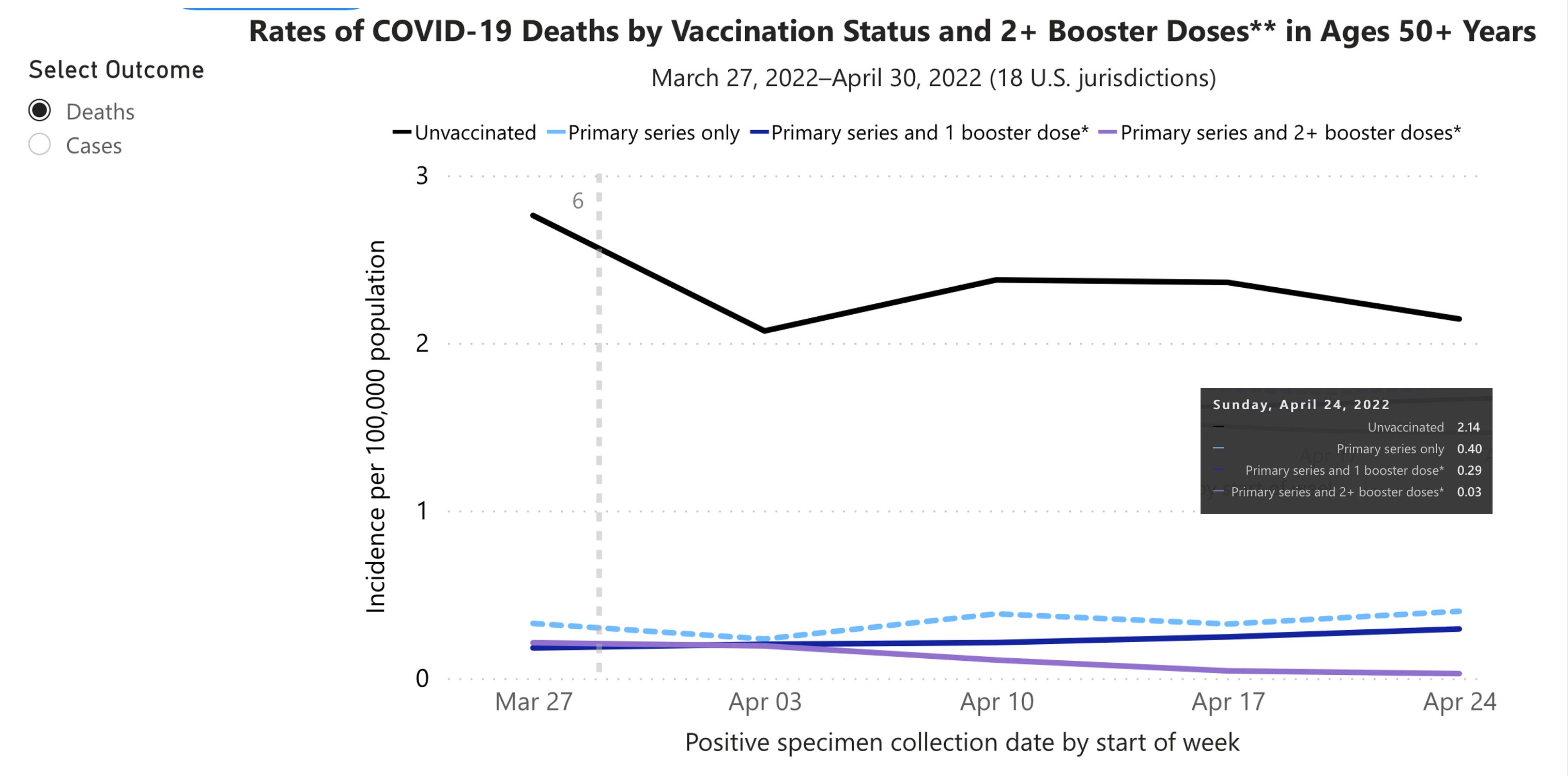
Perhaps you think COVID-19 vaccines might protect us from this problem? Think again. A Kaiser Permanente study on the original Omicron strain, BA.1, found that nine months after two doses of Pfizer vaccine, effectiveness against hospital admission was at 41%. A booster shot increased effectiveness against hospitalization to 85% for a couple of months, but it wore off quickly to 55% after three months.
Note that this is vaccine effectiveness against hospitalization, not infection: The vaccine is much weaker against infection–and it’s for the original Omicron strain BA.1, not BA.5, which is much more capable of immune escape, more transmissible, and causes more serious disease. Let’s not forget that less than three-quarters of eligible Americans are vaccinated, less than half of all vaccinated Americans received a booster shot, and less than a quarter of those over 50s received a second booster.
Moreover, a new study shows that after an initial infection, each subsequent infection with COVID-19 results in higher risks of hospitalization and death. In other words, after an initial infection, you end up with long-term or permanent damage that is exacerbated by subsequent infections. Thus, it’s important to minimize the number of times we get infected with COVID.
Unfortunately, the government is not taking the steps needed to address this situation. Despite multiple requests by the White House, Congress is refusing to fund COVID vaccines and boosters, treatments such as Paxlovid, and research and production of next-generation vaccines. Election–year politics at their worst.
The implication is clear: This fall will see a major COVID surge. Moreover, we’ll be more vulnerable than before, given the lack of government funding for vaccines and treatments, and BA.5’s ability to infect vaccinated individuals.
During both the Delta surge and the Omicron surge, traditionalist companies that tried to force their employees back to the office (and experienced extensive drama and stress over this coercive approach) had to roll back their plans, with all that effort wasted. The yo-yoing of going back and forth from home to the office and back home seriously undermined productivity, morale, retention, and recruitment.
We’ll see the exact same yo-yoing at Tesla, Apple, Google, and other companies led by traditionalist executives in a few months. But why do they pursue this doomed effort to push their staff into the office when they have access to the same information?
The key lies in what makes these executives feel successful and feeds their identity as leaders. In fact, one leader wrote an op-ed piece about this topic, saying “There’s a deeply personal reason why I want to go back to the office. It’s selfish, but I don’t care. I feel like I lost a piece of my identity in the pandemic… I’m worried that I won’t truly find myself again if I have to work from home for the rest of my life.”
By honestly saying the quiet part out loud, this op-ed reveals how claims about remote work undermining productivity, innovation, and social capital try to cover up other concerns. This personal orientation speaks to a mental blindspot called the egocentric bias, an orientation toward prioritizing one’s own perspective and worldview over others.
While we all have an egocentric bias to some extent, research shows that higher-level leaders tend to suffer from such blinkers more than others. As the saying goes, power corrupts, and absolute power corrupts absolutely. The more power a leader has, the more blind a leader tends to be to the perspectives of others. And that’s unfortunate because studies also show that leaders who demonstrate humility about their own perspective and ability result in subordinates showing higher productivity and job satisfaction.
It’s important to empathize with and understand where such leaders are coming from. However, following their personal and selfish predisposition will hurt the bottom lines of their companies. What works much better is a hybrid-first, team-led model: a flexible approach where individual team leads consult with their team members to decide what works best for them.
That approach works for large companies, such as my client Applied Materials, a Fortune 200 high-tech manufacturer. It adopted an “Excellence from Anywhere” modality that focuses on deliverables rather than where someone works. That also goes for middle-size organizations, including another client, the Information Sciences Institute. The 400-staff data science and machine learning research center at the University of Southern California used this approach to become a leader in hybrid and remote work.
Team members at Applied and ISI come to the office when they want to socialize or need to collaborate more intensely since for most people, intense collaboration works best in person. Otherwise, team members stay at home because workers are substantially more productive working remotely. As COVID-19 cases increase in their areas, the teams flexibly adapt their approach to collaborate and socialize fully remotely.
This team-led, hybrid-first approach provides the best of all worlds. It fits the desires of most employees, whose biggest non-salary demand is flexibility. It also maximizes profits for companies, since it boosts retention, recruitment, collaboration, innovation, and productivity. And finally, it addresses the risks associated with COVID variants, as well as other emergencies.
The only obstacle is the personal, selfish orientation of traditionalist leaders, who need to recognize the danger they are posing to the success of their companies if they pursue a backward-looking coercive effort to get their staff to return to the office.
Gleb Tsipursky is the CEO of the future-proofing consultancy Disaster Avoidance Experts, which helps tech and insurance executives seize competitive advantage in hybrid work. He is the author of Leading Hybrid and Remote Teams: A Manual on Benchmarking to Best Practices for Competitive Advantage.
The opinions expressed in Fortune.com commentary pieces are solely the views of their authors and do not reflect the opinions and beliefs of Fortune.
More must-read commentary published by Fortune:
- What the media gets wrong in its persistent crypto criticism
- The gun industry’s deadly lie
- A list of companies supporting abortion rights after the Roe v. Wade ruling shows which firms are stepping up, and why
- Career hoarding is on the rise—but it comes at a cost
- Are billionaires just lucky?