
• Home
  • News
  • Fortune 500
  • Tech
  • Finance
  • Leadership
  • Lifestyle
  • Rankings
  • Multimedia
TechConnected Logistics

5 Things to Know About How the Feds See the ‘Sharing’ Economy

By
Jeff John Roberts
Jeff John Roberts
Editor, Finance and Crypto
Down Arrow Button Icon
By
Jeff John Roberts
Jeff John Roberts
Editor, Finance and Crypto
Down Arrow Button Icon
June 3, 2016, 1:12 PM ET
GERMANY-ECONOMY-PROPERTY-INTERNET-TOURISM
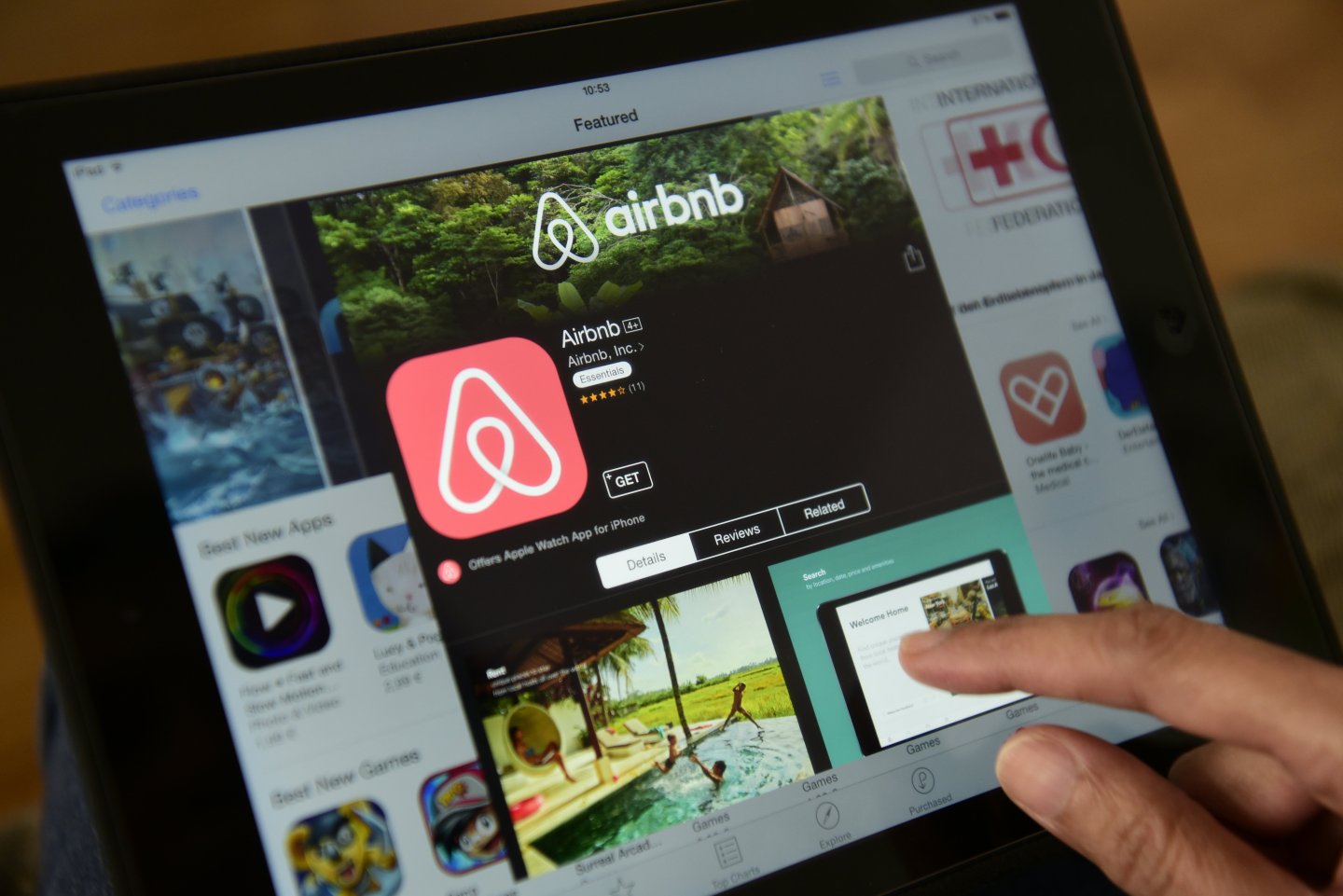
TO GO WITH AFP STORY by ELOI ROUYER A woman browses the site of US home sharing giant Airbnb on a tablet in Berlin on April 28, 2016. Berlin will from Sunday, May 1, 2016, restrict private property rentals through Airbnb and similar online platforms, threatening hefty fines in a controversial move meant to keep housing affordable for locals. / AFP / John MACDOUGALL (Photo credit should read JOHN MACDOUGALL/AFP/Getty Images)Photograph by John MacDougall — AFP/Getty Images

Unless you’ve been living under a rock, you’ve heard about how startups like Uber and Airbnb are using technology and a new labor model to upend traditional industries like hotels and taxi companies.

Now, the federal government wants everyone to know they’ve heard about these companies too. On Friday, the Commerce Department published a paper on the size and significance about these new arrivals to the American economy and how they are affecting workers, consumers, and regulation.

Titled “Digital Matching Firms: A New Definition in the ‘Sharing Economy’ Space,” the report offers a cautious but sophisticated look at a topic that keeps creating both hype and controversy. I gave it a read, and here are five points that jumped out.

1. It’s not sharing, stupid

The report doesn’t phrase it quite like that. But it does take pains to note that “sharing economy” is a misnomer for companies like Uber and TaskRabbit, which involve the exchange of money for services, and where no one is sharing anything.

Alas, the Commerce Department disregards well-known alternative phrases like “on-demand economy” or “gig economy” and proposes a new term “digital matching firms” instead. It’s hard to imagine that catching on with anyone beside government gnomes.

Despite the infelicitous phrasing, the report makes an important point: If we’re going to measure the size and influence of this new part of the economy, it’s critical to classify who is a part of it. On page six, the report explains a variety of firms that don’t count, including Amazon, couchsurfing.com, and certain car-sharing firms. Meanwhile, the end of the report lists over a hundred firms that do count, and classifies them with labels like “errands,” “delivery,” “dining,” and so on.

2. This economy is still small

“Even using a broader definition than the one we propose, all of these studies suggest that the “sharing” economy comprises a relatively small portion of the overall economy,” says the Commerce report.

How small? It cites various consultant reports to offer some hard numbers: 2.7 million Americans provide services for on-demand platforms; key “sharing” services had global revenues of $15 billion in 2014; by 2025, Airbnb-style rentals could amount to 10% of all accommodation bookings. But take these with a grain of salt, says the report, because many figures are distorted by the inclusion of companies that don’t belong in this category at all.

Finally, the report notes the sector is dominated by a few giants. It states that “roughly 500,000 of the estimated 2.7 million U.S. on-demand independent workers are estimated to provide services for Uber, Lyft, and Airbnb, suggesting that service providers in the digital matching economy are concentrated in a small number of firms.”

3. The new style of economy has big benefits
For tech types who see the government as a bunch of haters who don’t understand disruption, the report should provide some comfort. It lists a number of benefits, including:
  • Lower prices for consumers
  • Flexible employment and extra income for workers
  • Better use of idle assets and new forms of business
  • Better consumer experience

Further, the “benefits” section of the report makes clear the Commerce Department understands how peer-to-peer user reviews are able to create trust, and create new types of economic interaction that weren’t possible before.

Get Data Sheet, Fortune’s technology newsletter.

4. But there are some real problems

This is the part of the report that will get the well-oiled PR teams at Uber and Airbnb in a tizzy. The Commerce Department lists “challenges” that could provide ammunition to those who are complaining about the companies before courts and community boards. Those “challenges” include:

  • On-demand work means income instability and fewer benefits compared to traditional jobs
  • Lack of company oversight means untrained workers can pose a danger to consumers
  • Privacy dangers arising from the companies collecting a huge amount of personal information
  • A failure to get services to poorer consumers who lack smartphones or internet access

The report also talks of “integrating…firms into the regulatory framework,” which could makes the likes of Uber uneasy. Specifically, it refers to taxes, disability rules, worker classification, and consumer safety.

5. Where’s the data for decisions?

Those at venture capital firm Andreessen Horowitz, who like to preach the virtues of “regulatory humility,” will be encouraged by the Commerce Department’s acknowledgement that it still lacks important information to make decisions.

“The lack of data makes it difficult for researchers and policymakers to study trends in this area,” says the report, which also describes the “relative infancy” of firms like Uber and Airbnb.

It concludes by adding that the feds are expanding data collection efforts. In particular, it notes the Department of Labor and the U.S. Census Bureau will reintroduce tools to gather information about part-time and contingent workers.


About the Author
By Jeff John RobertsEditor, Finance and Crypto
LinkedIn iconTwitter icon

Jeff John Roberts is the Finance and Crypto editor at Fortune, overseeing coverage of the blockchain and how technology is changing finance.

See full bioRight Arrow Button Icon

Latest in Tech

LawInternet
A Supreme Court decision could put your internet access at risk. Here’s who could be affected
By Dave Lozo and Morning BrewDecember 2, 2025
7 hours ago
AITikTok
China’s ByteDance could be forced to sell TikTok U.S., but its quiet lead in AI will help it survive—and maybe even thrive
By Nicholas GordonDecember 2, 2025
8 hours ago
United Nations
AIUnited Nations
UN warns about AI becoming another ‘Great Divergence’ between rich and poor countries like the Industrial Revolution
By Elaine Kurtenbach and The Associated PressDecember 2, 2025
9 hours ago
Anthropic cofounder and CEO Dario Amodei
AIEye on AI
How Anthropic’s safety first approach won over big business—and how its own engineers are using its Claude AI
By Jeremy KahnDecember 2, 2025
9 hours ago
Nvidia founder and CEO Jensen Huang reacts during a press conference at the Asia-Pacific Economic Cooperation (APEC) CEO Summit in Gyeongju on October 31, 2025.
AINvidia
Nvidia CFO admits the $100 billion OpenAI megadeal ‘still’ isn’t signed—two months after it helped fuel an AI rally
By Eva RoytburgDecember 2, 2025
11 hours ago
Big TechInstagram
Instagram CEO calls staff back to the office 5 days a week to build a ‘winning culture’—while canceling every recurring meeting
By Marco Quiroz-GutierrezDecember 2, 2025
12 hours ago

Most Popular

placeholder alt text
Economy
Ford workers told their CEO 'none of the young people want to work here.' So Jim Farley took a page out of the founder's playbook
By Sasha RogelbergNovember 28, 2025
4 days ago
placeholder alt text
Success
Warren Buffett used to give his family $10,000 each at Christmas—but when he saw how fast they were spending it, he started buying them shares instead
By Eleanor PringleDecember 2, 2025
18 hours ago
placeholder alt text
Economy
Elon Musk says he warned Trump against tariffs, which U.S. manufacturers blame for a turn to more offshoring and diminishing American factory jobs
By Sasha RogelbergDecember 2, 2025
12 hours ago
placeholder alt text
C-Suite
MacKenzie Scott's $19 billion donations have turned philanthropy on its head—why her style of giving actually works
By Sydney LakeDecember 2, 2025
19 hours ago
placeholder alt text
Success
Forget the four-day workweek, Elon Musk predicts you won't have to work at all in ‘less than 20 years'
By Jessica CoacciDecember 1, 2025
1 day ago
placeholder alt text
AI
More than 1,000 Amazon employees sign open letter warning the company's AI 'will do staggering damage to democracy, our jobs, and the earth’
By Nino PaoliDecember 2, 2025
20 hours ago
Rankings
  • 100 Best Companies
  • Fortune 500
  • Global 500
  • Fortune 500 Europe
  • Most Powerful Women
  • Future 50
  • World’s Most Admired Companies
  • See All Rankings
Sections
  • Finance
  • Leadership
  • Success
  • Tech
  • Asia
  • Europe
  • Environment
  • Fortune Crypto
  • Health
  • Retail
  • Lifestyle
  • Politics
  • Newsletters
  • Magazine
  • Features
  • Commentary
  • Mpw
  • CEO Initiative
  • Conferences
  • Personal Finance
  • Education
Customer Support
  • Frequently Asked Questions
  • Customer Service Portal
  • Privacy Policy
  • Terms Of Use
  • Single Issues For Purchase
  • International Print
Commercial Services
  • Advertising
  • Fortune Brand Studio
  • Fortune Analytics
  • Fortune Conferences
  • Business Development
About Us
  • About Us
  • Editorial Calendar
  • Press Center
  • Work At Fortune
  • Diversity And Inclusion
  • Terms And Conditions
  • Site Map

© 2025 Fortune Media IP Limited. All Rights Reserved. Use of this site constitutes acceptance of our Terms of Use and Privacy Policy | CA Notice at Collection and Privacy Notice | Do Not Sell/Share My Personal Information
FORTUNE is a trademark of Fortune Media IP Limited, registered in the U.S. and other countries. FORTUNE may receive compensation for some links to products and services on this website. Offers may be subject to change without notice.