In early March, the U.S. Securities and Exchange Commission (SEC) adopted new regulations to require U.S. companies to release information about climate risks and greenhouse gas emissions. Already, the decision is facing legal challenges. Nineteen Republican-led states have launched a pair of suits to overturn them entirely as a breach of the agency’s authority.
These lawsuits reflect the ferocious public debate that has accompanied the drafting of these rules. Lost in that debate, though, is what’s happening in China–our major strategic competitor, and our biggest rival in the battle to lead the low-carbon economy.
In this battle, climate disclosures are one of the U.S.’s competitive advantages. American firms tend to provide the public with much more useful and comprehensive information on climate-related issues than Chinese firms. Financial markets rely on these disclosures to incorporate climate risk into their investment decisions. A recent survey of institutional investors found that almost 80% consider climate risk disclosure to be at least as important as financial disclosure.
Investors value disclosures because climate is a major risk factor for corporate bottom lines across the economy. Weather-dependent sectors must manage higher temperatures and more frequent extreme events; climate change could drive a 6-18% decline in global average yields of staple crops if growers do not adapt their cultivation practices. Sectors like real estate and infrastructure face increased flood damage, projected to rise 26% in the U.S. by 2050. Meanwhile, decarbonization trends in sectors like energy, heavy industry, and agriculture impact their entire supply chains, affecting industries from technology to consumer packaged goods.
Public disclosures, then, help investors manage climate risk–and U.S. firms offer better disclosures than Chinese firms. But China’s regulators are pushing to close that gap. Hong Kong already requires firms to disclose emissions. From 2025, though, it will require a full suite of climate disclosures–covering emissions data, climate risk, and other topics–that align with leading global standards from the International Sustainability Standards Board (ISSB).
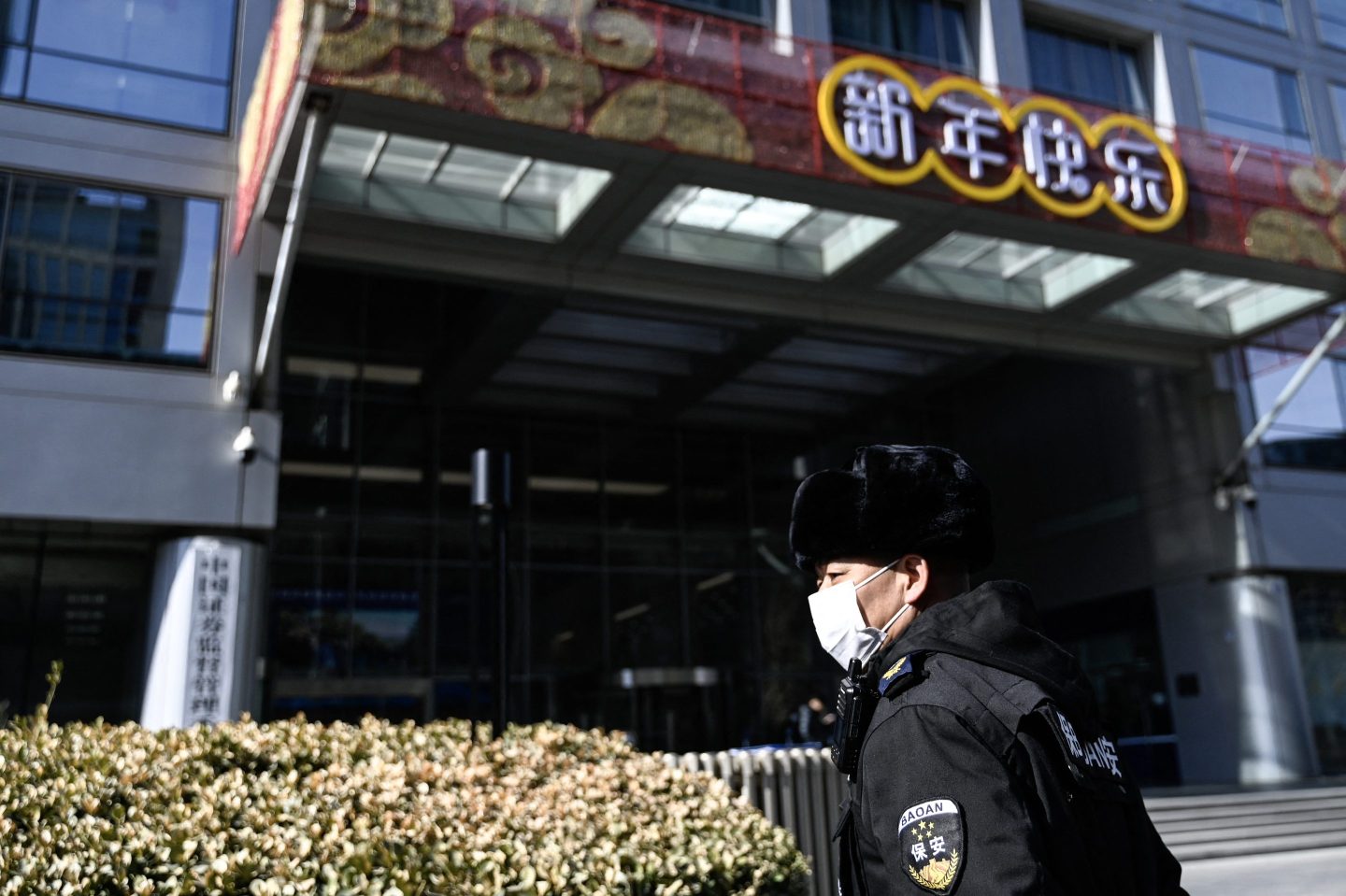
Hong Kong’s progress is expected; it is the gateway to Chinese stock markets for international investors. More striking are new proposals from China’s three major mainland stock markets, whose value is together more than twice that of Hong Kong. Regulations proposed by mainland authorities this February would introduce the mainland’s first-ever climate disclosure requirements.
The requirements are part of a package of efforts to revive foreign investment inflows that have collapsed amidst China’s faltering economy and its increasing hostility to international business. Good climate disclosures won’t reverse these fundamentals, but they do matter to global investors. As China Securities Regulatory Commission vice-chair Fang Xinghai stated bluntly in April 2022, “If you don’t disclose [on ESG], … you won’t get the support of international capital.”
The mainland’s proposals are largely in line with ISSB standards. They only apply to the mainland’s largest and most innovative firms–covering 60% of public equity market capitalization–and they lack features in U.S. and European regulations like mandatory assurance protocols for emissions data. But they also are stricter than the U.S. in other areas. The SEC’s standards, for instance, allow firms to not disclose emissions if they do not view emissions as “material” to their bottom lines. China allows no such exemption.
China’s efforts harden its financial system against climate risk and meet a real investor need. That need is even more pressing in the U.S. Our market-driven financial system relies more heavily on transparency and public disclosure than China’s opaque, state-driven capital markets. Our firms’ disclosures may be better, but they suffer from the absence of regulations that standardize how firms disclose. Almost two-thirds of US investors in a 2022 survey said that their “investment decision-making would be better informed if companies applied a single set of ESG reporting standards.”
The SEC’s mandate imposes such standards for climate. They are not as strong as advocates would like. The Sierra Club has sued the SEC to restore stricter emissions reporting requirements proposed in its draft rule from February 2022 that align with mandates from Europe.
But the Republican states’ lawsuits threaten the requirements entirely. Doing so would set us apart not just from China, but from financial markets around the world. Regulators in jurisdictions including the European Union, Japan, Brazil, the United Kingdom, Switzerland, Singapore, Australia, and New Zealand have all proposed or established climate disclosure mandates based on ISSB standards.
Leading the low-carbon economy requires building a financial system that can manage the risks and opportunities of climate change and the energy transition. Regulators are pushing ahead around the world to build that system–including in China. The SEC’s mandate helps the U.S. keep pace. Overturning it would set us back.
Edmund Downie is a Ph.D. candidate in the Science, Technology, and Environmental Policy program at the Princeton School of Public and International Affairs. Erica Downs, Ph.D., is a senior research scholar at the Center on Global Energy Policy, Columbia University’s School of International and Public Affairs. Yushan Lou is a research associate at the Center on Global Energy Policy, Columbia University’s School of International and Public Affairs.
More must-read commentary published by Fortune:
- Here’s how the U.S., Europe, and China are faring in the post-pandemic race for economic growth
- We analyzed 46 years of consumer sentiment data–and found that today’s ‘vibecession’ is just men starting to feel as bad about the economy as women historically have
- The U.S. housing market is headed into a pivotal spring season as home sellers wait for their sweet spot, according to Opendoor
- Russia and China are leading in hypersonic innovation. Here’s what’s holding the U.S. back
The opinions expressed in Fortune.com commentary pieces are solely the views of their authors and do not necessarily reflect the opinions and beliefs of Fortune.