• Home
  • Latest
  • Fortune 500
  • Finance
  • Tech
  • Leadership
  • Lifestyle
  • Rankings
  • Multimedia
CommentaryRecession

We studied 70 countries’ economic data for the last 60 years and something big about market crashes changed 25 years ago

By
Josh Ederington
Josh Ederington
,
Jenny Minier
Jenny Minier
, and
The Conversation
The Conversation
Down Arrow Button Icon
By
Josh Ederington
Josh Ederington
,
Jenny Minier
Jenny Minier
, and
The Conversation
The Conversation
Down Arrow Button Icon
February 8, 2026, 7:30 AM ET
broker
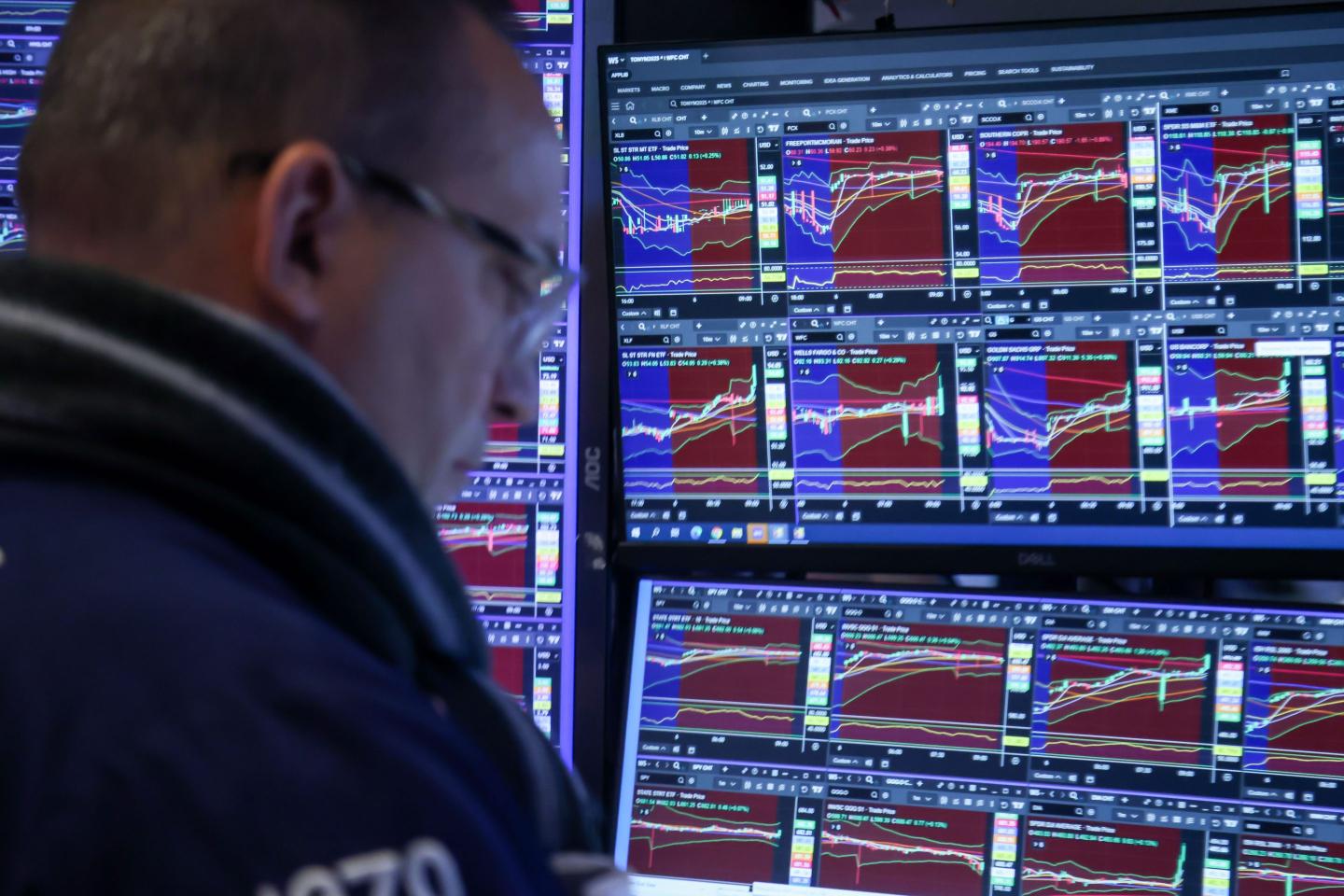
A trader works on the floor of the New York Stock Exchange (NYSE) in New York, US, on Friday, Feb. 6, 2026.Michael Nagle/Bloomberg via Getty Images

National economies are increasingly moving in sync and responding to the same booms and busts as a result of near-instantaneous communications and interdependent global supply chains. This is a sharp change from much of the 21st century, when economies were primarily affected by economic shocks in neighboring countries.

Recommended Video

That’s what we found in a paper published in the journal Economic Letters, in which we calculated measures of economic correlation using data on gross domestic product for 70 countries over the past 60 years. Along with fellow economic scholars Yoonseon Han and David Lindequist, we found that physical distance was indeed less important than it used to be, particularly with regard to how interconnected countries are to one another.

Specifically, we measured the extent to which countries have found their business cycles — the traditional boom-bust intervals of economic performance — in sync. For example, when there is a positive shock to production in Germany, to what extent does this affect incomes in the United States?

We were interested in whether the relationship between distance and economic correlation has changed over time.

What we found was that from 1960-1999, business cycles were strongly localized. That is, a country’s economy was much more likely to be impacted by shocks to nearby countries than by shocks in faraway countries. For example, the U.S. was more affected by economic conditions in Canada or Mexico than it was to economic conditions in the United Kingdom or South Korea.

This finding is not surprising and fits well with a long economic literature showing that countries are more likely to trade with nearby countries and that the volume of trade between two countries is a significant predictor of how synchronized their business cycles are.

However, we went on to find that this relationship between physical distance and economic correlation started to break down after 2000. Specifically, for the past 20 years, there has been no statistically significant relationship between the geographic distance between two countries and the extent to which incomes in the two countries move together — what economists refer to as their economic covariance.

Why it matters

In the late 1990s and early 2000s, a number of economists, including Frances Cairncross and Thomas Friedman, popularized the idea that new technologies like the internet and containerization had led to the death of distance, in which our new lives would be increasingly globalized. They imagined a future in which these new technologies not only impacted how goods were produced — like global supply chains — but also how we work and live.

Such theories were met with some skepticism by trade researchers at the time, and not all of the predictions have come true. For example, the link between distance and trade flows has proved stubbornly persistent. Even today, the top-two trading partners of the U.S. remain Canada and Mexico. And one only has to look at housing prices in major urban centers in the U.S. to see that physical location remains highly valued to most people.

However, our research suggests that at least some of the popular predictions about the globalized economy might be coming true. For instance, the world economy appears to have made countries increasingly susceptible to global, as opposed to localized, shocks.

This was made devastatingly clear to millions of people during the pandemic, when supply chain bottlenecks reverberated across the globe, subsequently generating a worldwide rise in prices. As a result, U.S. economic and trade policy discussions have been increasingly focused on potential vulnerabilities to foreign shocks. Indeed, a new buzzword during the Biden administration was “supply chain resiliance.”

What still isn’t known

Our work provides evidence that business cycles and economic shocks have become more globalized over the past couple of decades. Many of the main economic events from 1960-2000 – like the 1980s savings and loan crisis or the 1997 Asian currency crisis – had primarily localized effects. But more recently, the principal economic events of the past two decades — like the 2008 financial crisis — have had far more global implications.

What we don’t know is whether this pattern will continue, resulting in a new era in which most of the world’s economies move in tandem. Or will a new turn toward economic nationalism lead to a reversal in which economies – and economic shocks – become more localized once again?

The Research Brief is a short take on interesting academic work.

Josh Ederington, Professor of Economics, Miami University and Jenny Minier, Julian Lange Professor of Economics, Miami University

This article is republished from The Conversation under a Creative Commons license. Read the original article.

The Conversation
Join us at the Fortune Workplace Innovation Summit May 19–20, 2026, in Atlanta. The next era of workplace innovation is here—and the old playbook is being rewritten. At this exclusive, high-energy event, the world’s most innovative leaders will convene to explore how AI, humanity, and strategy converge to redefine, again, the future of work. Register now.
About the Authors
By Josh Ederington
See full bioRight Arrow Button Icon
By Jenny Minier
See full bioRight Arrow Button Icon
By The Conversation
See full bioRight Arrow Button Icon

Latest in Commentary

Finance
Lorem ipsum dolor sit amet, consectetur adipiscing elit, sed do eiusmod tempor incididunt ut labore et dolore magna aliqua. Ut enim ad minim veniam
By Fortune Editors
October 20, 2025
Finance
Lorem ipsum dolor sit amet, consectetur adipiscing elit, sed do eiusmod tempor incididunt ut labore et dolore magna aliqua. Ut enim ad minim veniam
By Fortune Editors
October 20, 2025
Finance
Lorem ipsum dolor sit amet, consectetur adipiscing elit, sed do eiusmod tempor incididunt ut labore et dolore magna aliqua. Ut enim ad minim veniam
By Fortune Editors
October 20, 2025
Finance
Lorem ipsum dolor sit amet, consectetur adipiscing elit, sed do eiusmod tempor incididunt ut labore et dolore magna aliqua. Ut enim ad minim veniam
By Fortune Editors
October 20, 2025
Finance
Lorem ipsum dolor sit amet, consectetur adipiscing elit, sed do eiusmod tempor incididunt ut labore et dolore magna aliqua. Ut enim ad minim veniam
By Fortune Editors
October 20, 2025
Finance
Lorem ipsum dolor sit amet, consectetur adipiscing elit, sed do eiusmod tempor incididunt ut labore et dolore magna aliqua. Ut enim ad minim veniam
By Fortune Editors
October 20, 2025

Most Popular

Finance
Lorem ipsum dolor sit amet, consectetur adipiscing elit, sed do eiusmod tempor incididunt ut labore et dolore magna aliqua. Ut enim ad minim veniam
By Fortune Editors
October 20, 2025
Finance
Lorem ipsum dolor sit amet, consectetur adipiscing elit, sed do eiusmod tempor incididunt ut labore et dolore magna aliqua. Ut enim ad minim veniam
By Fortune Editors
October 20, 2025
Finance
Lorem ipsum dolor sit amet, consectetur adipiscing elit, sed do eiusmod tempor incididunt ut labore et dolore magna aliqua. Ut enim ad minim veniam
By Fortune Editors
October 20, 2025
Finance
Lorem ipsum dolor sit amet, consectetur adipiscing elit, sed do eiusmod tempor incididunt ut labore et dolore magna aliqua. Ut enim ad minim veniam
By Fortune Editors
October 20, 2025
Finance
Lorem ipsum dolor sit amet, consectetur adipiscing elit, sed do eiusmod tempor incididunt ut labore et dolore magna aliqua. Ut enim ad minim veniam
By Fortune Editors
October 20, 2025
Finance
Lorem ipsum dolor sit amet, consectetur adipiscing elit, sed do eiusmod tempor incididunt ut labore et dolore magna aliqua. Ut enim ad minim veniam
By Fortune Editors
October 20, 2025
Fortune Secondary Logo
Rankings
  • 100 Best Companies
  • Fortune 500
  • Global 500
  • Fortune 500 Europe
  • Most Powerful Women
  • Future 50
  • World’s Most Admired Companies
  • See All Rankings
Sections
  • Finance
  • Fortune Crypto
  • Features
  • Leadership
  • Health
  • Commentary
  • Success
  • Retail
  • Mpw
  • Tech
  • Lifestyle
  • CEO Initiative
  • Asia
  • Politics
  • Conferences
  • Europe
  • Newsletters
  • Personal Finance
  • Environment
  • Magazine
  • Education
Customer Support
  • Frequently Asked Questions
  • Customer Service Portal
  • Privacy Policy
  • Terms Of Use
  • Single Issues For Purchase
  • International Print
Commercial Services
  • Advertising
  • Fortune Brand Studio
  • Fortune Analytics
  • Fortune Conferences
  • Business Development
  • Group Subscriptions
About Us
  • About Us
  • Editorial Calendar
  • Press Center
  • Work At Fortune
  • Diversity And Inclusion
  • Terms And Conditions
  • Site Map
  • About Us
  • Editorial Calendar
  • Press Center
  • Work At Fortune
  • Diversity And Inclusion
  • Terms And Conditions
  • Site Map
  • Facebook icon
  • Twitter icon
  • LinkedIn icon
  • Instagram icon
  • Pinterest icon

Latest in Commentary

trump
CommentaryMarkets
We’re no longer in a bull or bear market. We’re in a Trump market — and here’s how to navigate it
By Jeffrey Sonnenfeld and Steven TianMarch 26, 2026
24 minutes ago
EuropeLetter from London
Rishi Sunak is giving advice to CEOs on AI. Here are his golden rules
By Kamal AhmedMarch 25, 2026
19 hours ago
retirement
CommentaryRetirement
Our retirement system gets a C-plus; policymakers have an opportunity to make it A grade
By Chris MahoneyMarch 25, 2026
1 day ago
david-f
CommentaryVenture Capital
Europe has survived 3 energy shocks in 4 years. The only way out is to stop buying power from its enemies
By David FrykmanMarch 25, 2026
1 day ago
fauci
CommentaryCOVID-19 vaccines
How COVID turned America against science — and what it will take to win it back
By David Blumenthal and James A. MoroneMarch 24, 2026
2 days ago
alex
Commentarydisruption
AI’s disruption is a choice, not a forecast
By Alex StephanyMarch 24, 2026
2 days ago

Most Popular

Magazine
The youngest-ever female CEO of a Fortune 500 company is fighting Trump's cuts to keep Medicaid strong
By Fortune EditorsMarch 24, 2026
2 days ago
Success
Palantir’s billionaire CEO says only two kinds of people will succeed in the AI era: trade workers — ‘or you’re neurodivergent’
By Fortune EditorsMarch 24, 2026
2 days ago
Commentary
The Treasury just declared the U.S. insolvent. The media missed it
By Fortune EditorsMarch 23, 2026
3 days ago
Success
JPMorgan’s Jamie Dimon says remote work breeds ‘rope-a-dope politics’ and stunts young workers’ growth
By Fortune EditorsMarch 25, 2026
20 hours ago
C-Suite
'I didn’t want anybody shooting me': Five Guys CEO gave away $1.5 million bonus to employees over botched BOGO burger birthday celebration
By Fortune EditorsMarch 25, 2026
15 hours ago
Success
The job market is so bad that ‘reverse recruiters’ are charging $1,500 a month just to help people look for jobs
By Fortune EditorsMarch 25, 2026
1 day ago

© 2026 Fortune Media IP Limited. All Rights Reserved. Use of this site constitutes acceptance of our Terms of Use and Privacy Policy | CA Notice at Collection and Privacy Notice | Do Not Sell/Share My Personal Information
FORTUNE is a trademark of Fortune Media IP Limited, registered in the U.S. and other countries. FORTUNE may receive compensation for some links to products and services on this website. Offers may be subject to change without notice.