• Home
  • Latest
  • Fortune 500
  • Finance
  • Tech
  • Leadership
  • Lifestyle
  • Rankings
  • Multimedia

Trendingnow

1

The millennial generation has split, new Fed research shows: Those over 35 are edging toward boomer-style wealth, while everyone else falls behind

2

Scott Bessent casually says the U.S. has more than $1 trillion in gold—and that it doesn’t matter for the dollar

3

Mark Cuban says he has the solution to growing income inequality, and it's to reward every employee—from CEO to janitor—with company stock

1

The millennial generation has split, new Fed research shows: Those over 35 are edging toward boomer-style wealth, while everyone else falls behind

2

Scott Bessent casually says the U.S. has more than $1 trillion in gold—and that it doesn’t matter for the dollar

3

Mark Cuban says he has the solution to growing income inequality, and it's to reward every employee—from CEO to janitor—with company stock
CommentaryWeather and forecasting

I spent 8 years flood-proofing a city. Capital markets are running out of time to take El Niño seriously

By
Ravi S. Bhalla
Ravi S. Bhalla
Down Arrow Button Icon
By
Ravi S. Bhalla
Ravi S. Bhalla
Down Arrow Button Icon
June 13, 2026, 8:15 AM ET

Ravi S. Bhalla, Head of Climate Finance, Dundon Advisers; former Mayor of Hoboken, N.J.

ravi
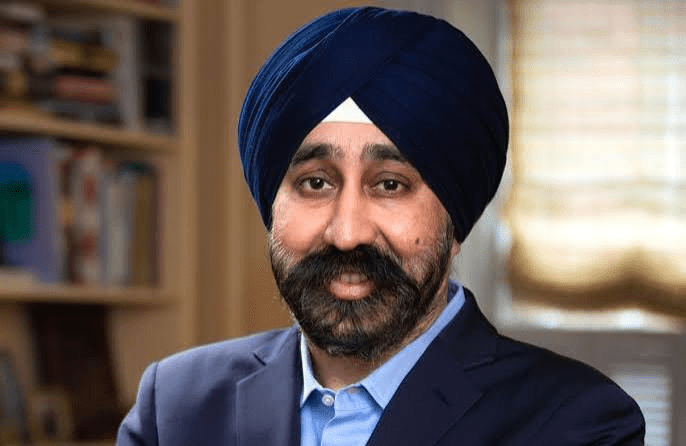
Ravi S. Bhalla, Head of Climate Finance, Dundon Advisers; former Mayor of Hoboken, N.J.courtesy of Ravi Bhalla
Add Fortune on Google for similar content.

Federal forecasters put the odds of a strong El Niño this winter at roughly two in three, and the odds of one matching or exceeding the record 2015 event at better than one in three. That forecast is worth taking seriously. But the bigger story is that resilience infrastructure has quietly become a distinct investment category — and capital markets have been slow to treat it that way. A strong El Niño will make ignoring that gap even more expensive.

Recommended Video

I served as mayor of Hoboken for eight years. The lesson I took from that job: the financial case for resilience is almost always stronger than people assume. When a city manages physical risk well, it protects property values, the tax base, business continuity, and credit quality at the same time. When it does not, all four take a hit at once.

In Hoboken, we built ResilienCity Park on the site of a former chemical plant. The park combines green space with underground stormwater detention systems that can hold roughly two million gallons during a major rain event. It is one of several projects the city pursued under the broader Rebuild by Design effort following Superstorm Sandy. The result was less flooding, faster recovery after storms, and fewer disruptions for residents and businesses. During my tenure, S&P Global Ratings repeatedly affirmed Hoboken’s AA+ credit rating, citing the city’s resilience investments and its approach to long-term environmental risk.

The demand for this kind of work has grown well beyond what any city, state, or federal program can fund alone. Boston Consulting Group has projected that annual demand for resilience-focused investment could reach $3 trillion by 2030, with the cost of inaction up to 15 times more expensive. A survey BCG ran with the Rockefeller Foundation found that more than four in ten institutional investors across the major markets now identify adaptation and resilience as a theme they want exposure to. Rating agencies, including Moody’s, are incorporating physical climate risk into their analyses. These are the ingredients of a market, but not yet the structures, standards, and interplay that would make it function like one.

The clearer way to think about this category is by physical sector, not as a single bucket called “climate adaptation.” Flood and stormwater infrastructure — including flood protection barriers, detention systems, raised roads, green stormwater capture — is the most familiar piece, and the one I worked on most directly in Hoboken. Grid and energy hardening is a second category, covering buried transmission, microgrids, substation flood protection, and wildfire-resistant utility design. Water supply and treatment is a third, including drought-resilient supply, leak reduction, and systems built for the rainfall patterns of the next thirty years rather than the last thirty. Wildfire defense and forest management is a fourth, increasingly relevant well beyond the Western states. Coastal and transportation adaptation is a fifth, covering ports, airports, rail corridors, and highways that need to keep functioning through more extreme conditions than they were originally engineered for. Each has its own engineering profile, regulatory environment, and set of public and private actors. Treating them as one undifferentiated category is part of why investor interest has been slower to translate into investor activity.

The structural problem behind that lag is that the dividend from resilience infrastructure does not look like a toll road or a wind farm. Its returns come largely in the form of avoided losses — damage that did not happen, business interruption that was prevented, revenues that were preserved — and those benefits accrue across municipal budgets, insurance balance sheets, small businesses, and private property at the same time. Investor interest is real and growing. What’s been slower to develop is the middle of the pipeline: projects engineered, permitted, and structured to the point where institutional capital can actually underwrite them. A pension fund or insurance allocator cannot buy a concept; it needs a definitive revenue projection, a contract structure, and enough scale to be worth the diligence. Blended capital arrangements, resilience-linked municipal debt, environmental impact bonds, and well-designed public-private partnerships are all moving from concept to practice. What is missing is execution at scale on the project-preparation side.

The most reasonable objection to this view is that resilience returns are too diffuse to underwrite, that avoided losses do not show up in a project’s revenue line the way tolls or tariffs do. That objection is proving to have less force with time. Insurers are pricing physical risk more aggressively, rating agencies are doing the same with municipal credit, and the discount applied to vulnerable assets is now visible in markets where it used to be invisible. The returns to resilience are increasingly easy to see because the losses from its absence are increasingly easy to count.

A strong El Niño will pull all of this forward. Floods, droughts, fires, and grid strain that might have been spread across several normal years tend to arrive together during an event like the one being forecast. The places and balance sheets that have already invested in resilience will fare better. The ones that have not will pay the bill in real time. From where I sit, after eight years running a small city that flooded badly and then learned how to stop flooding, the case is straightforward. Resilience infrastructure is a real category, with real sectors and real financial logic behind it. Capital markets that engage with it seriously, sector by sector, will be in a better position than those that continue to treat climate adaptation as someone else’s problem. A strong El Niño will only make that case harder to ignore.

The opinions expressed in Fortune.com commentary pieces are solely the views of their authors and do not necessarily reflect the opinions and beliefs of Fortune.

About the Author
By Ravi S. Bhalla
See full bioRight Arrow Button Icon
Add Fortune on Google for similar content.

Latest in Commentary

Finance
Lorem ipsum dolor sit amet, consectetur adipiscing elit, sed do eiusmod tempor incididunt ut labore et dolore magna aliqua. Ut enim ad minim veniam
By Fortune Editors
October 20, 2025
Finance
Lorem ipsum dolor sit amet, consectetur adipiscing elit, sed do eiusmod tempor incididunt ut labore et dolore magna aliqua. Ut enim ad minim veniam
By Fortune Editors
October 20, 2025
Finance
Lorem ipsum dolor sit amet, consectetur adipiscing elit, sed do eiusmod tempor incididunt ut labore et dolore magna aliqua. Ut enim ad minim veniam
By Fortune Editors
October 20, 2025
Finance
Lorem ipsum dolor sit amet, consectetur adipiscing elit, sed do eiusmod tempor incididunt ut labore et dolore magna aliqua. Ut enim ad minim veniam
By Fortune Editors
October 20, 2025
Finance
Lorem ipsum dolor sit amet, consectetur adipiscing elit, sed do eiusmod tempor incididunt ut labore et dolore magna aliqua. Ut enim ad minim veniam
By Fortune Editors
October 20, 2025
Finance
Lorem ipsum dolor sit amet, consectetur adipiscing elit, sed do eiusmod tempor incididunt ut labore et dolore magna aliqua. Ut enim ad minim veniam
By Fortune Editors
October 20, 2025

Most Popular

Finance
Lorem ipsum dolor sit amet, consectetur adipiscing elit, sed do eiusmod tempor incididunt ut labore et dolore magna aliqua. Ut enim ad minim veniam
By Fortune Editors
October 20, 2025
Finance
Lorem ipsum dolor sit amet, consectetur adipiscing elit, sed do eiusmod tempor incididunt ut labore et dolore magna aliqua. Ut enim ad minim veniam
By Fortune Editors
October 20, 2025
Finance
Lorem ipsum dolor sit amet, consectetur adipiscing elit, sed do eiusmod tempor incididunt ut labore et dolore magna aliqua. Ut enim ad minim veniam
By Fortune Editors
October 20, 2025
Finance
Lorem ipsum dolor sit amet, consectetur adipiscing elit, sed do eiusmod tempor incididunt ut labore et dolore magna aliqua. Ut enim ad minim veniam
By Fortune Editors
October 20, 2025
Finance
Lorem ipsum dolor sit amet, consectetur adipiscing elit, sed do eiusmod tempor incididunt ut labore et dolore magna aliqua. Ut enim ad minim veniam
By Fortune Editors
October 20, 2025
Finance
Lorem ipsum dolor sit amet, consectetur adipiscing elit, sed do eiusmod tempor incididunt ut labore et dolore magna aliqua. Ut enim ad minim veniam
By Fortune Editors
October 20, 2025
Fortune Secondary Logo
Rankings
  • 100 Best Companies
  • Fortune 500
  • Global 500
  • Fortune 500 Europe
  • Most Powerful Women
  • World's Most Admired Companies
  • See All Rankings
  • Lists Calendar
Sections
  • Finance
  • Fortune Crypto
  • Features
  • Leadership
  • Health
  • Commentary
  • Success
  • Retail
  • Mpw
  • Tech
  • Lifestyle
  • CEO Initiative
  • Asia
  • Politics
  • Conferences
  • Europe
  • Newsletters
  • Personal Finance
  • Environment
  • Magazine
  • Education
Customer Support
  • Frequently Asked Questions
  • Customer Service Portal
  • Privacy Policy
  • Terms Of Use
  • Single Issues For Purchase
  • International Print
Commercial Services
  • Advertising
  • Fortune Brand Studio
  • Fortune Analytics
  • Fortune Conferences
  • Business Development
  • Group Subscriptions
About Us
  • About Us
  • Press Center
  • Work At Fortune
  • Terms And Conditions
  • Site Map
  • About Us
  • Press Center
  • Work At Fortune
  • Terms And Conditions
  • Site Map
  • Facebook icon
  • Twitter icon
  • LinkedIn icon
  • Instagram icon
  • TikTok icon
  • YouTube icon

Latest in Commentary

Can Bangkok future-proof itself against the heat?
CommentaryThailand
Can Bangkok future-proof itself against the heat?
By Curtis S. Chin and Ella TanJuly 23, 2026
3 hours ago
mm
CommentaryLeadership
Michael Muthukrishna: The ‘lone genius’ myth is wrong and it’s holding back your business
By Michael MuthukrishnaJuly 23, 2026
12 hours ago
Paul Keary (L) and Mike Sutcliff (R).
CommentaryAI agents
Teneo & Thoughtworks CEOs: the AI race will be won with governance, not speed 
By Paul Keary and Mike SutcliffJuly 23, 2026
12 hours ago
marks
CommentaryNational Security
General James ‘Spider’ Marks: there’s a strategic risk hidden inside closed AI systems
By James MarksJuly 23, 2026
12 hours ago
glp
Commentaryobesity
The GLP-1 paradox: too expensive to cover, too effective to cut
By Bryan Sivak and Elina OnitskanskyJuly 23, 2026
12 hours ago
data
CommentaryData centers
The hidden cost of AI: Why your town is negotiating with Amazon and Microsoft
By Melody BirminghamJuly 23, 2026
13 hours ago

Most Popular

The millennial generation has split, new Fed research shows: Those over 35 are edging toward boomer-style wealth, while everyone else falls behind
Real Estate
The millennial generation has split, new Fed research shows: Those over 35 are edging toward boomer-style wealth, while everyone else falls behind
By Nick LichtenbergJuly 22, 2026
1 day ago
Scott Bessent casually says the U.S. has more than $1 trillion in gold—and that it doesn’t matter for the dollar
Economy
Scott Bessent casually says the U.S. has more than $1 trillion in gold—and that it doesn’t matter for the dollar
By Sasha RogelbergJuly 22, 2026
1 day ago
Mark Cuban says he has the solution to growing income inequality, and it's to reward every employee—from CEO to janitor—with company stock
Success
Mark Cuban says he has the solution to growing income inequality, and it's to reward every employee—from CEO to janitor—with company stock
By Sasha RogelbergJuly 20, 2026
3 days ago
'The man who dies rich dies disgraced': The last time America had such wealth inequality, Andrew Carnegie knew he had to give it all away
Success
'The man who dies rich dies disgraced': The last time America had such wealth inequality, Andrew Carnegie knew he had to give it all away
By Nick LichtenbergJuly 22, 2026
1 day ago
Spain lifted the World Cup, but the IRS still gets a cut of its $50 million pay day as players, coaches and refs all face complex U.S. “jock taxes”
Personal Finance
Spain lifted the World Cup, but the IRS still gets a cut of its $50 million pay day as players, coaches and refs all face complex U.S. “jock taxes”
By Joshua HongJuly 23, 2026
17 hours ago
Mathematicians grapple with a ‘very rapid and very unsettling change’ as AI cracks yet another century-old problem
AI
Mathematicians grapple with a ‘very rapid and very unsettling change’ as AI cracks yet another century-old problem
By Eva RoytburgJuly 21, 2026
2 days ago

© 2026 Fortune Media IP Limited. All Rights Reserved. Use of this site constitutes acceptance of our Terms of Use and Privacy Policy | CA Notice at Collection and Privacy Notice | Do Not Sell/Share My Personal Information
FORTUNE is a trademark of Fortune Media IP Limited, registered in the U.S. and other countries. FORTUNE may receive compensation for some links to products and services on this website. Offers may be subject to change without notice.