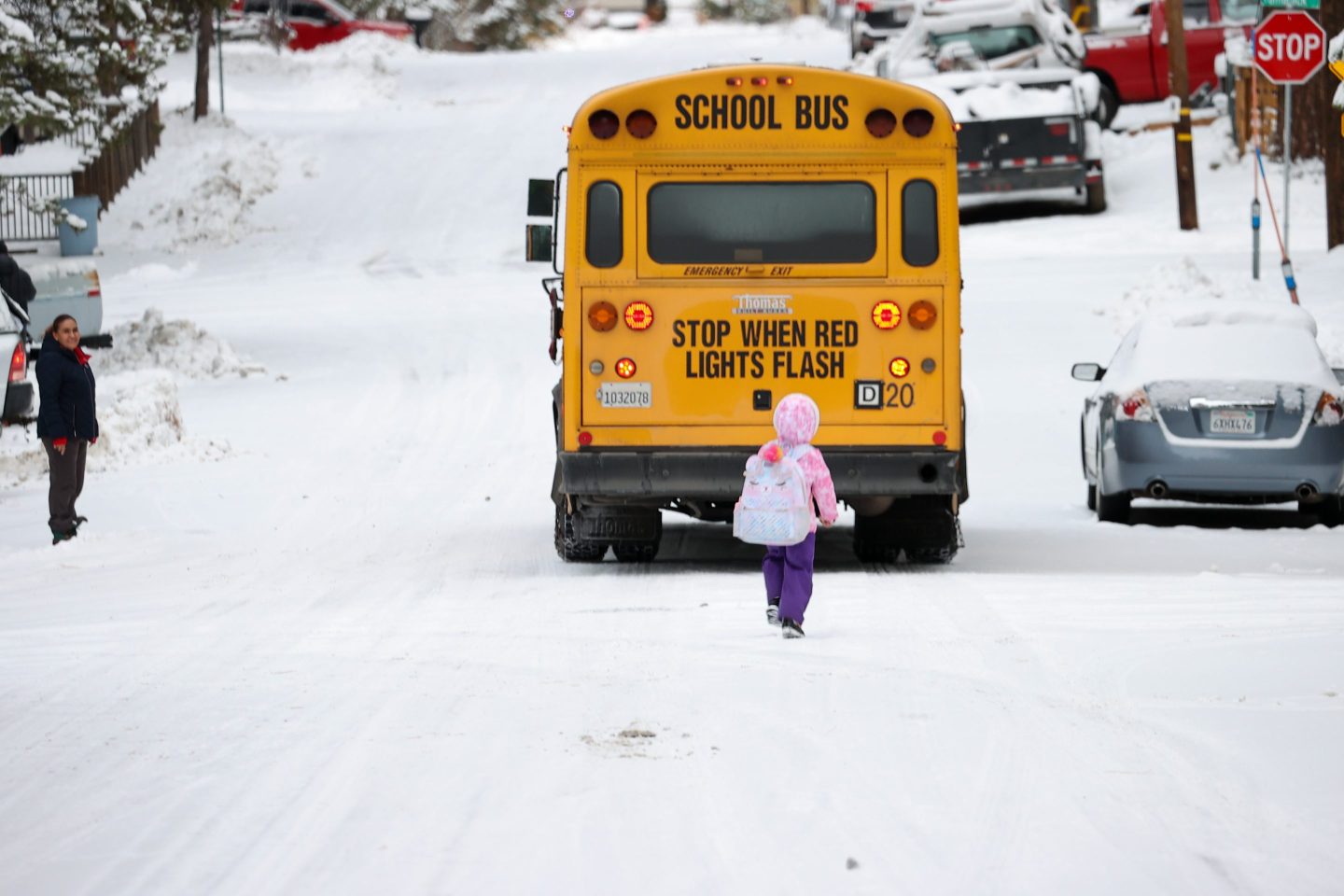
The Biden Administration recently announced a plan to upgrade one of the most outdated systems in the U.S.: school transportation.
The federal program is providing nearly $1 billion to 389 school districts in all 50 states to replace old diesel school buses with “clean,” mostly electric buses. It addresses part of a larger concern that parents like me have expressed for years: School transportation is the largest mass transit system in the U.S., serving roughly 25 million children every day. So why has it basically stayed the same for decades, despite the risks it poses to our kids’ health and safety?
The problems with school transit extend beyond outdated, unsafe buses. The good news is that parents, educators, and elected officials are finally coming together to spark change and seek solutions.
The challenges: safety, sustainability, and beyond
Over 90% of the nation’s 500,000 school buses run on diesel, emitting toxic fumes that millions of children (and adults) breathe in daily. Transportation accounts for the largest share of greenhouse gas emissions in the U.S., so replacing the buses is certainly a step in the right direction.
But why stop there? An upgrade should consider all aspects of the school transportation experience, including:
- Long routes: Inefficient and inflexible routes leave many children sitting on school buses for hours. Scientific studies have shown that long bus rides can negatively impact children’s mental health and academic performance. Additionally, unpredictable departure and arrival times put stress on parents, causing them to be late for work and/or worry about where their child is at any given time.
- High costs: School transportation costs $28 billion annually, a massive expense that some districts struggle to afford. Schools shouldn’t have to cut after-school programs in order to afford their bus system.
- Safety issues. School bus safety largely hasn’t changed since the 1960s. Buses are old and unsafe (most don’t have seat belts). Children with special needs lack the right support. Drivers are untrained and unequipped–and this may be contributing to the nationwide school bus driver shortage, which in turn has led to longer routes.
- Communication concerns: The current system is opaque and inflexible. For many families, it’s difficult to understand and communicate with.
When my kids were young, I couldn’t help but notice how the process of getting them around town hadn’t changed since my own mother struggled with the same challenges decades ago, back in India. We have made so many other aspects of our lives more transparent, flexible, and safe–often with the aid of modern technology. Surely, we could apply what we’ve learned to our kids’ transportation.
Potential solutions
The school transportation crisis has reached a fever pitch, but many districts are already taking steps to improve it.
This year saw a surge in electric school bus purchases across the country. Montgomery County Public Schools in Maryland has the largest electric school bus fleet in the U.S.–and Seattle, Los Angeles, Houston, and other cities are following suit with new electric buses.
Some districts are also implementing smaller vehicles, which reduce emissions, improve routes, and reduce the number of mostly empty school buses on the road.
Some districts are embracing school bus routing software that offers flexibility and optimization–and they’re quickly recognizing that better routes improve the well-being of children and drivers and reduce costs. Improving routes with cutting-edge technology that tell parents their child’s school bus location in real time makes sense. If we can track a package on our phones, surely we can do the same for our children.
School bus drivers are valued and essential workers, and many choose the job because it gives them a sense of purpose. It’s imperative that they receive better vehicles and more training. Organizations like SPED Safe offer training programs to enhance safe environments for all students, especially those with disabilities. Other programs focus on handling conflict and de-escalation skills.
Whether it’s as simple as putting seat belts in vehicles or integrating new technology, each of these efforts helps ensure children’s safety.
The road ahead
We can work together as a public and private sector to affect change in school transportation. Urge school districts to adopt electric buses, and support officials and organizations that are committed to upgrading this outdated system.
It’s not just parents and children who are affected by school transit woes–it’s all of us. By prioritizing transparency, safety, and sustainability, we can usher in a new era of school transportation.
Ritu Narayan is the founder and CEO of Zum, a technology company that partners with schools to provide a next-generation student transportation solution.
The opinions expressed in Fortune.com commentary pieces are solely the views of their authors and do not necessarily reflect the opinions and beliefs of Fortune.
More must-read commentary published by Fortune:
- Will the U.S. and Europe slide into recession in 2023? Here’s how to look out when economic outlooks don’t
- Biden crowned world energy czar as diplomacy triumphs over Putin’s tantrums
- 2023 will be the year of digital assassination. Are you ready for the 2-hour internet day?
- Could Kanye West be placed under Kim Kardashian’s conservatorship?
Our new weekly Impact Report newsletter examines how ESG news and trends are shaping the roles and responsibilities of today's executives. Subscribe here.