• Home
  • Latest
  • Fortune 500
  • Finance
  • Tech
  • Leadership
  • Lifestyle
  • Rankings
  • Multimedia
Commentarysupply chains

How not to fix supply chains

By
Kathryn Judge
Kathryn Judge
Down Arrow Button Icon
By
Kathryn Judge
Kathryn Judge
Down Arrow Button Icon
August 9, 2022, 2:04 PM ET
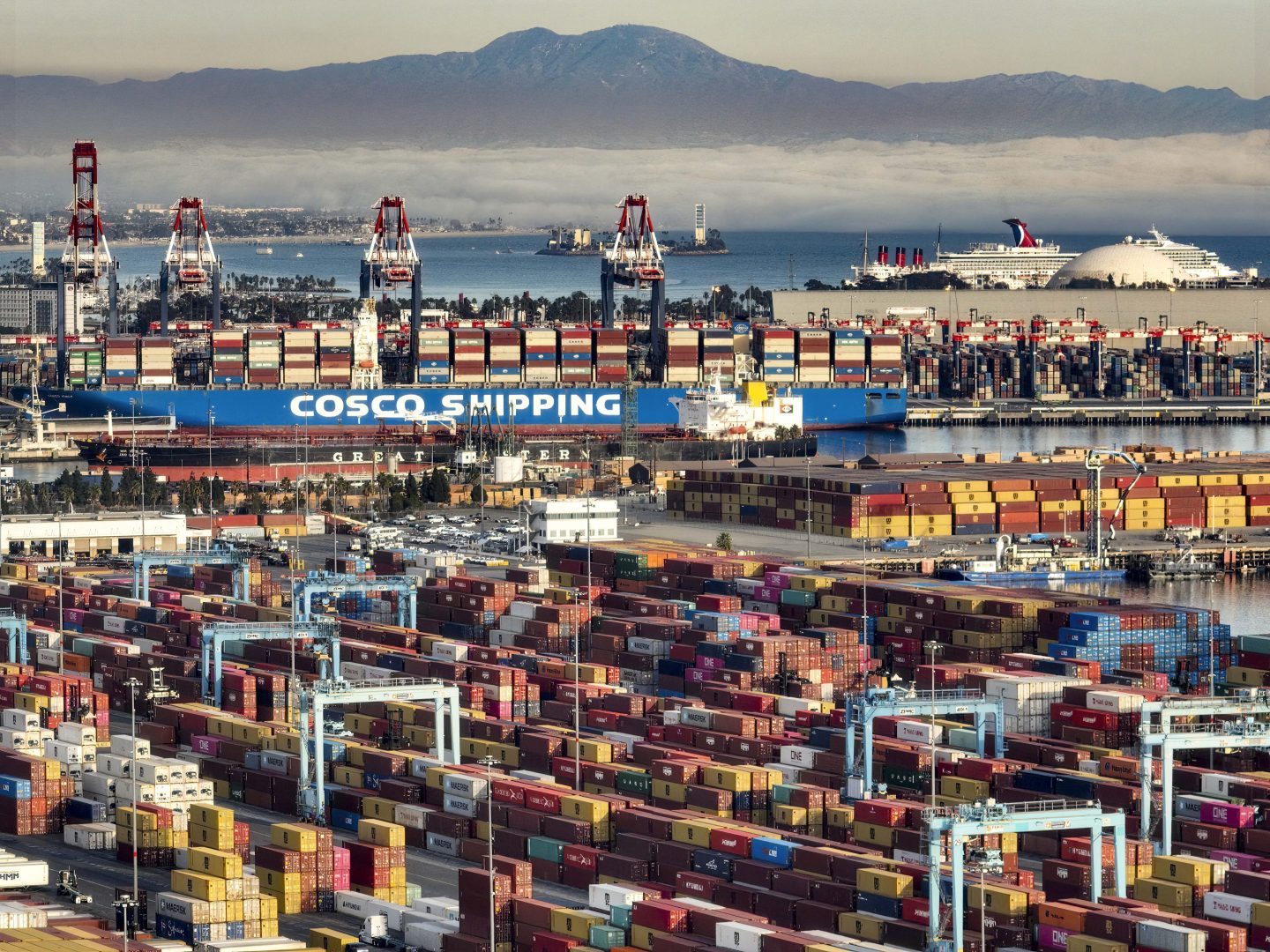
Containers are stacked up in the Port of Long Beach in California
The pandemic has disrupted the complex supply chains that underpin global trade, but pursuing solutions that increase complexity could make things worse.Jeff Gritchen—MediaNews Group/Orange County Register/Getty Images

For a while, the most visible signs of a supply-chain crisis were people having to wait a long time for a new couch. Today, supply-chain breakdowns are standing in the way of access to medical testing, infant formula, and, in some parts of the world, food.

Supply-chain challenges have also contributed to the highest inflation the U.S. has experienced in 40 years. A misguided belief that supply chains would soon heal themselves contributed to the Federal Reserve falling behind the curve in its efforts to combat inflation. Everyone is now feeling the pinch, and some are downright suffering.

However, the current efforts to Band-Aid over the crises and get back to “normal” as quickly as possible could just exacerbate the problem and cause more long-run damage. Neither the pandemic nor Russia’s invasion of Ukraine has caused the problems that are now on display. Rather, those shocks revealed fundamental weaknesses that had been decades in the making because of the complexity of our supply chains. Patching up supply chains in hopes of returning to 2019 would not be a success, for companies, policymakers, or society.

Recent shortages of medical dyes used to diagnose and treat heart disease, cancer, and other ailments illustrate the problem. To minimize costs, many hospitals became reliant on a single provider for their dyes, yet they failed to understand how that reliance left them vulnerable. As a result, when a wave of COVID-19 infections caused a Shanghai plant of GE Healthcare to shut down, hospitals across the U.S. faced shortages. Other producers and hospitals, concerned about serving their own customers and patients, refused to share. Patients across the country had procedures delayed as hospitals and doctors tried to figure out how long the shortage would last.

Automakers similarly thought they were doing the right thing when they slashed orders for semiconductors at the onset of the pandemic. Cutting costs in the face of uncertainty to buffer their bottom line seemed like the prudent move. However, in cutting their costs, they also denied revenue to the suppliers on which they depend. This harmed those relationships and discouraged production of the semiconductors that automakers need, ultimately costing them $210 billion in 2021 alone, according to one estimate, much more than the amounts they had saved. The dearth of vehicles was also a major contributor to the rapid onset of inflation that year.

Short-termism is nothing new, but the consequences are magnified when a company is embedded in a complex ecosystem of the kind created by today’s intertwining, globalized supply chains.

The complexity of these systems means most producers understand only a fraction of the risks to which they are exposed. For example, when carmakers cut back on semiconductors, many failed to realize how quickly producers would scale back production—and hence the magnitude of the risk they were taking.

This complexity also limits the ability of companies to work together to minimize disruptions and prevent further damage. For example, the Shanghai plant managed to substantially increase medical dye production within a few weeks of its closure, so the total supply didn’t take that big of a hit. But due to the complexity of the system and the fact that each hospital—and even regulators—had only a partial view of it, no one knew or trusted that there was enough stock to go around. This contributed to the usual hoarding and other panicked responses, which just exacerbate the problem.

Many efforts to address supply-chain weaknesses miss this bigger picture: How complex supply chains and incomplete information breed new sources of fragility. As a result, well-intentioned “solutions” could just make things worse.

For example, many companies are now trying to address weaknesses in their supply chains by transforming those chains into webs. Sourcing key inputs from multiple places and companies can reduce the risk should problems emerge with one supplier, but it also makes the overall system far more complex. Introducing even more complexity will only accentuate the opacity that makes it so hard for companies or policymakers to identify vulnerabilities in a timely manner.

Multisourcing can also weaken relationships along the supply chain, making it even harder to achieve the cooperation that is often key to minimizing disruptions in the face of a new shock—be it a pandemic, a natural disaster, or a war. Multisourcing provides no protection against shocks that hit all suppliers simultaneously. While it can be part of a thoughtful, long-term solution, deployed as the most readily available Band-Aid, multisourcing could also make things worse.

If we have learned anything from the last few years, it’s that the unexpected can happen—and it can hurt. Recognizing the complexity of the current system, and the ways that complexity contributed to the current challenges, is the key first step in identifying the type of investment and risk management strategies needed to guard against the next shock. 

Kathryn Judge is the Harvey J. Goldschmid Professor of Law at Columbia Law School and the author of Direct: The Rise of the Middleman Economy and the Power of Going to the Source.

The opinions expressed in Fortune.com commentary pieces are solely the views of their authors and do not reflect the opinions and beliefs of Fortune.

More must-read commentary published by Fortune:

  • Here come the Roarin’ 20s. Invest until it hurts
  • A list of companies supporting abortion rights after the Roe v. Wade ruling shows which firms are stepping up, and why
  • The recession is already here—if you’re a woman
  • Career hoarding is on the rise—but it comes at a cost
  • Venture capital is hard–and it’s supposed to be

Sign up for the Fortune Features email list so you don’t miss our biggest features, exclusive interviews, and investigations.


About the Author
By Kathryn Judge
See full bioRight Arrow Button Icon

Latest in Commentary

Finance
Lorem ipsum dolor sit amet, consectetur adipiscing elit, sed do eiusmod tempor incididunt ut labore et dolore magna aliqua. Ut enim ad minim veniam
By Fortune Editors
October 20, 2025
Finance
Lorem ipsum dolor sit amet, consectetur adipiscing elit, sed do eiusmod tempor incididunt ut labore et dolore magna aliqua. Ut enim ad minim veniam
By Fortune Editors
October 20, 2025
Finance
Lorem ipsum dolor sit amet, consectetur adipiscing elit, sed do eiusmod tempor incididunt ut labore et dolore magna aliqua. Ut enim ad minim veniam
By Fortune Editors
October 20, 2025
Finance
Lorem ipsum dolor sit amet, consectetur adipiscing elit, sed do eiusmod tempor incididunt ut labore et dolore magna aliqua. Ut enim ad minim veniam
By Fortune Editors
October 20, 2025
Finance
Lorem ipsum dolor sit amet, consectetur adipiscing elit, sed do eiusmod tempor incididunt ut labore et dolore magna aliqua. Ut enim ad minim veniam
By Fortune Editors
October 20, 2025
Finance
Lorem ipsum dolor sit amet, consectetur adipiscing elit, sed do eiusmod tempor incididunt ut labore et dolore magna aliqua. Ut enim ad minim veniam
By Fortune Editors
October 20, 2025

Most Popular

Finance
Lorem ipsum dolor sit amet, consectetur adipiscing elit, sed do eiusmod tempor incididunt ut labore et dolore magna aliqua. Ut enim ad minim veniam
By Fortune Editors
October 20, 2025
Finance
Lorem ipsum dolor sit amet, consectetur adipiscing elit, sed do eiusmod tempor incididunt ut labore et dolore magna aliqua. Ut enim ad minim veniam
By Fortune Editors
October 20, 2025
Finance
Lorem ipsum dolor sit amet, consectetur adipiscing elit, sed do eiusmod tempor incididunt ut labore et dolore magna aliqua. Ut enim ad minim veniam
By Fortune Editors
October 20, 2025
Finance
Lorem ipsum dolor sit amet, consectetur adipiscing elit, sed do eiusmod tempor incididunt ut labore et dolore magna aliqua. Ut enim ad minim veniam
By Fortune Editors
October 20, 2025
Finance
Lorem ipsum dolor sit amet, consectetur adipiscing elit, sed do eiusmod tempor incididunt ut labore et dolore magna aliqua. Ut enim ad minim veniam
By Fortune Editors
October 20, 2025
Finance
Lorem ipsum dolor sit amet, consectetur adipiscing elit, sed do eiusmod tempor incididunt ut labore et dolore magna aliqua. Ut enim ad minim veniam
By Fortune Editors
October 20, 2025
Rankings
  • 100 Best Companies
  • Fortune 500
  • Global 500
  • Fortune 500 Europe
  • Most Powerful Women
  • Future 50
  • World’s Most Admired Companies
  • See All Rankings
Sections
  • Finance
  • Leadership
  • Success
  • Tech
  • Asia
  • Europe
  • Environment
  • Fortune Crypto
  • Health
  • Retail
  • Lifestyle
  • Politics
  • Newsletters
  • Magazine
  • Features
  • Commentary
  • Mpw
  • CEO Initiative
  • Conferences
  • Personal Finance
  • Education
Customer Support
  • Frequently Asked Questions
  • Customer Service Portal
  • Privacy Policy
  • Terms Of Use
  • Single Issues For Purchase
  • International Print
Commercial Services
  • Advertising
  • Fortune Brand Studio
  • Fortune Analytics
  • Fortune Conferences
  • Business Development
About Us
  • About Us
  • Editorial Calendar
  • Press Center
  • Work At Fortune
  • Diversity And Inclusion
  • Terms And Conditions
  • Site Map
  • Facebook icon
  • Twitter icon
  • LinkedIn icon
  • Instagram icon
  • Pinterest icon

Latest in Commentary

powell
CommentaryMiddle class
Forget the K-Shape: We have a barbell economy—and the middle class is buckling under the weight
By Katica RoyJanuary 14, 2026
17 hours ago
engineer
Commentaryengineering
China graduates 1.3 million engineers per year, versus just 130,000 in the U.S. We need AI to bridge the gap
By Paul Eremenko and Ashish SrivastavaJanuary 14, 2026
20 hours ago
powell/trump
CommentaryFederal Reserve
Is Powell’s Fed head independence dead? Trump outfoxes himself this time
By Jeffrey SonnenfeldJanuary 13, 2026
2 days ago
paramount
CommentaryM&A
A cautionary Hollywood tale: the Ellisons’ lose-lose Paramount positioning
By Jeffrey Sonnenfeld and Stephen HenriquesJanuary 12, 2026
3 days ago
Walken
Commentarybeverages
Molson Coors CEO: We’re doing our part to solve society’s ‘occasion problem’ – and we’re getting some unexpected help
By Rahul GoyalJanuary 12, 2026
3 days ago
AsiaChina
What global executives need to ask about China in 2026
By Joe Ngai and Jeongmin SeongJanuary 11, 2026
3 days ago

Most Popular

placeholder alt text
Personal Finance
Peter Thiel makes his biggest donation in years to help defeat California’s billionaire wealth tax
By Nick LichtenbergJanuary 14, 2026
16 hours ago
placeholder alt text
Success
Despite his $2.6 billion net worth, MrBeast says he’s having to borrow cash and doesn’t even have enough money in his bank account to buy McDonald’s
By Emma BurleighJanuary 13, 2026
2 days ago
placeholder alt text
AI
'Godfather of AI' says the technology will create massive unemployment and send profits soaring — 'that is the capitalist system'
By Jason MaJanuary 12, 2026
3 days ago
placeholder alt text
AI
Being mean to ChatGPT can boost its accuracy, but scientists warn you may regret it
By Marco Quiroz-GutierrezJanuary 13, 2026
2 days ago
placeholder alt text
Future of Work
'Microshifting,' an extreme form of hybrid working that breaks work into short, non-continuous blocks, is on the rise
By Nick LichtenbergJanuary 13, 2026
2 days ago
placeholder alt text
Economy
Goldman Sachs top economist says Powell probe won’t change the Fed: 'Decisions are going to be made based on employment and inflation'
By Sasha RogelbergJanuary 12, 2026
3 days ago

© 2025 Fortune Media IP Limited. All Rights Reserved. Use of this site constitutes acceptance of our Terms of Use and Privacy Policy | CA Notice at Collection and Privacy Notice | Do Not Sell/Share My Personal Information
FORTUNE is a trademark of Fortune Media IP Limited, registered in the U.S. and other countries. FORTUNE may receive compensation for some links to products and services on this website. Offers may be subject to change without notice.









