
For months, the threat of artificial intelligence (AI) replacing human workers has hovered over the American economy like a distant storm. But this week, the storm made landfall, as viral doomsday essays seemed to become reality.
AI executive Matt Shumer made a stir early in the month with an essay posted to X.com (and adapted for Fortune) that forcefully argued for white-collar workers to be afraid. He likened the moment to February 2020, with the pandemic rapidly approaching U.S. shores and a widely unprepared American public. The essay has been viewed 85 million times on the social media platform.
He wasn’t alone. Citrini Research, the top finance Substack, posted a similar essay on Feb. 22, warning of a “global intelligence crisis” brought on by sudden advancements in AI. The highly speculative, but deeply resonant essay painted a doomsday scenario of a “human intelligence displacement spiral” where AI agents rapidly replace software engineers, financial advisors, and middle management. At its core was the concept of a “ghost GDP”—economic output that benefits the owners of computing power but never circulates through the human consumer economy. In this scenario, stripped of high-paying salaries, prime borrowers default and tank the $13 trillion residential mortgage market, unemployment spikes above 10%, the stock market corrects down 38%, and the economy collapses into a deflationary spiral. Unusually for a work of speculative fiction, the market reacted to the piece, showing that the “AI scare” trade was real, at least in readers’ minds.
The Dow Jones Industrial Average was down over 800 points on Monday (1.66%), with software stocks getting hit especially hard. Analysts and economists responded throughout the week that the economics implied by Citrini’s argument were unsound, but on Thursday, Twitter co-founder and current Block CEO Jack Dorsey stunned the market by announcing a massive 40% downsizing of his company’s ranks. In words that could have come out of the Citrini report, he wrote to shareholders that “intelligence tools have changed what it means to build and run a company.” Block stock rose nearly 14% the next day.
“This is one of the first major examples of AI driving layoffs, but certainly not the last,” Matt Shumer wrote on X. “If you’re saying ‘this won’t happen to me,’ reevaluate your thoughts. Now. It may be the most important thing you do.”
Many Wall Street banks, top economists and even AI CEOs consider this all to still be overblown hype, cautioning that macroeconomics 101 implies the Citrini narrative is false. Others stake out a middle ground, predicting an AI transition that will be difficult but ultimately positive. But the Block layoffs suggest that, at least in the tech sector, the AI scare is moving from market narrative to sudden reality. And America isn’t prepared.
The disconnect that misses millions falling off the white-collar cliff
Veteran macroeconomic analyst Albert Edwards of Societe Generale is a certain type of famous in the finance world for his alternative, somewhat contrarian views, which the French investment bank stresses do not reflect its house opinion. In 2023, he wondered aloud in his weekly strategy note about the phenomenon of “greedflation” signaling potentially the end of capitalism, as record high profit margins indicated that corporations were raising prices more than they needed to, with the working and middle classes suffering as a result.
Edwards claimed the Citrini research vindicated his analyses of late. “The AI macro doomsday scenario is not for 2028,” he wrote on Monday. “It’s here right now!” He cited data showing that the U.S. consumer was “running on fumes” as incomes had “hit a brick wall” during the greedflation era. “I can honestly say that if I was 18 now, there is no way I would go to university only to leave with huge debts and poor job prospects,” he wrote. “Instead, I would become an electrician or similar trade.”

Nicole James, a 42-year-old former creative executive who built Snapchat’s content team, is living the reality that Edwards described. After a series of increasingly senior roles, including her stint at Snap, she was head of content at the animation studio Invisible Universe until 2023, when the company pivoted to become an AI studio and laid off half its staff. James hasn’t been employed full-time since, despite never having a gap in employment for the previous decade-and-a-half.
She told Fortune about sending out hundreds of applications and facing endless ghosting and a profound lack of respect for her creative skills. Maybe she’s a victim of an entertainment recession more than an AI victim, she said, but she’s working retail to make ends meet. She also said she’s struggling with a certain loss of identity. “I really felt embarrassed when I showed up to work the first day and like put on my name tag,” James admitted. “It’s very shocking. Like I just fell off a cliff and I don’t, I have no flashlight.”
Most of the country feels as if they’re on the cliff or falling, according to Laks Ganapathi, founder of the independent investment research firm Unicus. Ganapathi’s firm produced a research note very similar to the Citrini scenario in mid-January, she said, except they called it the “vibecession,” a term popularized by economics writer Kyla Scanlon. Forecasting high unemployment and stubborn inflation into the second half of 2026, she predicted that “companies will lean as much as they can, as fast as they can with AI. And that is going to cut a lot of jobs. And some companies in the process are going to completely stop existing as a going concern.”

Then, because of “skyhigh inflation” and sticky inflation, Ganapathi argued, a huge amount of people will persistently experience recession, while another segment of people will insist that the data shows everything is fine in the economy. She said the “huge disconnect between the data and the reality will keep widening, and AI will only make it worse.” It sounds a lot like the “ghost GDP” thesis of the Citrini essay, she agreed. What really matters about this disconnect, she added, is that it means the U.S. economy won’t experience a “clean, single-event collapse.” Millions of Americans, in other words, could find themselves in a continuous tumble off a cliff, without the flashlight.
Wall Street pushback and the jobs of tomorrow
Wall Street is attempting to talk the market off the ledge. Citadel Securities published a blistering takedown of the Citrini essay, pointing out that the data flatly contradicts the thesis. If AI is so destructive, they argued, why is demand for software engineers actually up 11% year-over-year?
Citadel argues the doomsday thesis relies on the “recursive technology fallacy,” ignoring the physical constraints of energy and compute power that naturally brake infinite AI expansion. Historically, Citadel notes, productivity shocks lower marginal costs, expand output, and increase real income, acting as a complement to human labor rather than a strict substitute. Other critics of the Citrini essay include Tyler Cowen, of Marginal Revolution fame, and Robert Armstrong, the Unhedged columnist at the Financial Times.
Morgan Stanley similarly urged calm, reminding investors that while AI will alter the labor force, it will not permanently replace it. Instead, the firm predicted a wave of entirely new corporate roles, such as the “Chief AI Officer” and specialized jobs like “computational geneticists” and “predictive maintenance engineers.” Morgan Stanley even envisioned a new product manager/engineer hybrid role centered around “vibe coding”—prototyping concepts through natural language before handing them off for deployment.
Bank of America Research, for its part, claimed the “apocalyptic narrative” about AI “doesn’t square well with sound economic theory.” Global economist Claudio Irigoyen wrote on Friday that the selloff in markets to “a combination of crowded positioning and multiple equilibria, similar to a bank run triggered by unfounded rumors of insolvency,” similar to warnings from UBS’ Paul Donovan and Apollo Global Management’s Torsten Slok that retail traders’ prominence is leaving markets vulnerable to narrative and knee-jerk movements.
Notes of caution included Citigroup allowing that “eventually, AI implementation will lead to higher unemployment and deflation,” while Goldman Sachs allowed that “AI impacts could be more frontloaded than the 10-year adoption cycle embedded in our forecasts,” but a “gradual and orderly adoption cycle” remains the most likely outcome.
Entering a more optimized world
Even several tech CEOs told Fortune, echoing recent comments from PromptQL founder Tanmai Gopal, that the AI job-loss narrative is mostly hype and there will be plenty of jobs going forward.
David Stout, CEO of webAI, the AI lab that was valued at $2.5 billion as of January, said the scenario for jobs going forward will be like a closely watched travel budget. If you don’t use up every penny of the budget, your company will take back what’s not being spent. Instead of massive job loss, he said, companies will be “much more optimized” with proper AI adoption. “I think AI is going to help signal some employees that probably aren’t contributing … You’ll see companies let people go because they’re like, ‘Wait a second, AI is doing what you said would take a year to do. Something’s wrong.’ I think it’s going to be like those type of moments.”
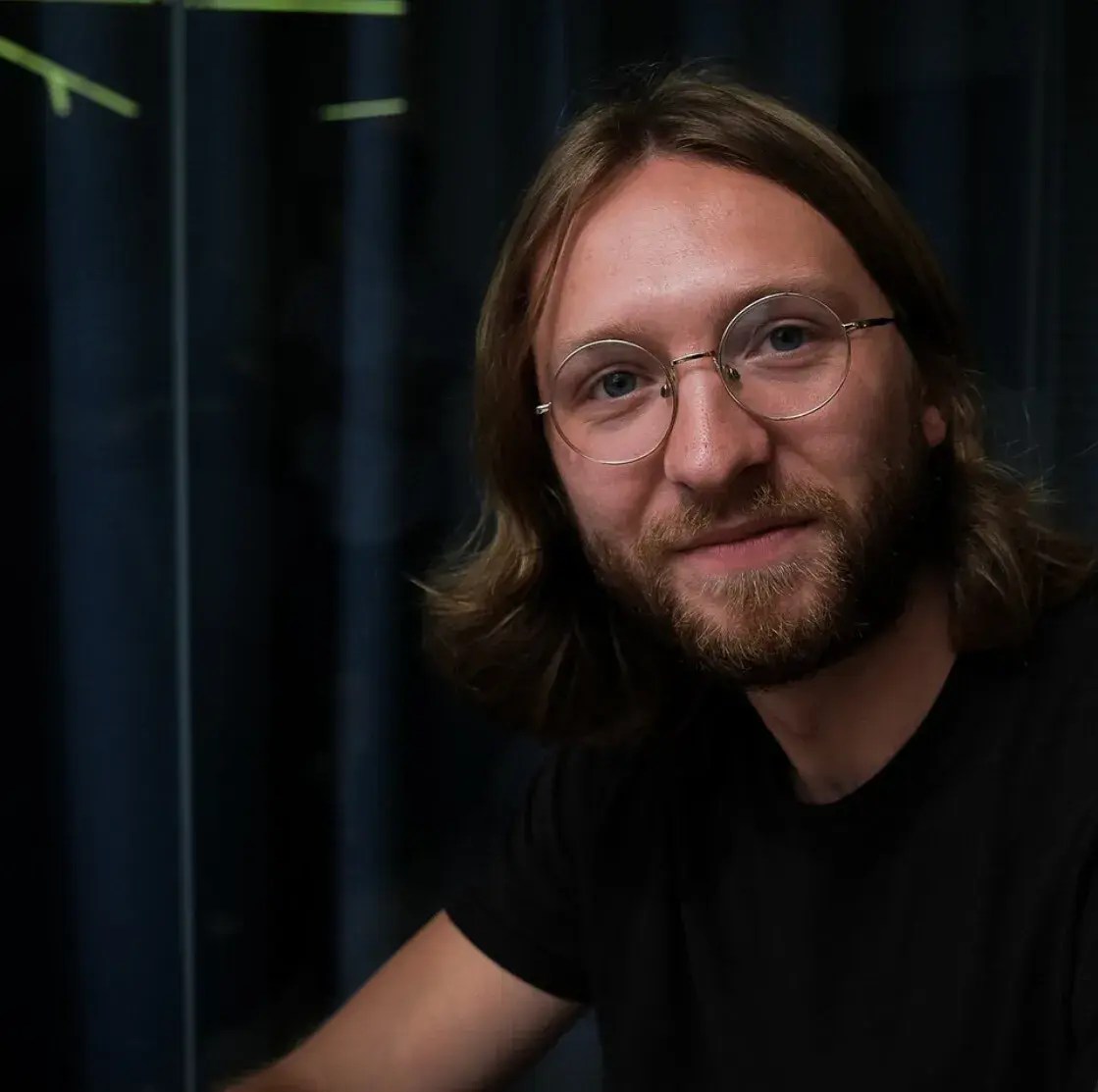
Still, as an AI executive himself, Stout said he thinks it’s absurd to argue that the technology can really replace humans. “AI is not just this autonomous thing that goes and does exactly what it needs to do,” he said. “If it is, we’re not seeing it.”
Even an executive inside an industry actually being disrupted—insurance—poured cold water on the mass displacement theory. Amrish Singh, CEO of the AI insurance startup Liberate, told Fortune that he’s seeing tremendous growth in terms of what AI can automate in the repetitive, mechanical processing of insurance claims. “We’re today at about 2.8 million automated actions a month…tasks, things that we can automate using AI.” He also noted major disclosures from Allianz and Travelers about huge savings already being achieved as a result of AI adoption. “We’re seeing many companies, not just Liberate customers, but across the insurance industry, finding a way to use AI specifically on those ordinary tasks, you know, answering phone calls, emails, SMS, resolving the request for the customer with serious ROI.”
The reason people shouldn’t fear the looming cliff of job loss, he added, comes down to a basic understanding of the insurance industry. Estimating that $25 out of every $100 spent on handling a claim is operating expenses—answering calls, emails and the like—that’s a huge saving in the $1.2 trillion insurance industry. Even then “this particular industry is one where there’s always value of human effort, right? Humans are amazing at judgment.” Every insurance claim will require a visit, and then likely a lengthy conversation, with a claims adjuster, he added. “Humans are amazing at evaluating a very specific, unique circumstance.”

There’s another thing about humans with this AI transition, Singh added: “Humans swing between doomsday and complete disbelief,” while the truth lies in the messy middle. Ultimately, Singh predicted the integration of AI will follow the historical pattern of enterprise technology: “It’s slow, and then it’s sudden.”
The ‘new-collar’ boom
What it still comes down to, as well, is the physical reality of the AI boom and the fact that data centers represent a bottleneck—adoption will be limited as long as the amount of compute is limited as well. Mike Mathews proudly recalled to Fortune that he began his career in the Boston area as a fourth-generation plumber, with his family working in the blue-collar trades dating back to the 1920s. Now that he’s the global digital infrastructure practice leader for Marsh, he’s familiar with the figures: The world currently has 12,000 data centers, with 3,000 more planned, and he said both white-collar and blue-collar jobs will be replaced by what he called the “new-collar” economy.
“You’re going to have very, very high-paid blue-collar workers,” Mathews said. He argued that a massive social shift is required, as parents must begin guiding their children toward vocational training and technical labs rather than strictly white-collar degrees. And these won’t be one-time jobs just for the construction of the data centers, either; Mathews said the vast majority will require complete retrofitting to handle AI’s intense power and liquid cooling needs.
“It’s hard to imagine two white-collar parents understanding the path to a very successful blue-collar career where an electrician is working in a data center making $250,000, [or] $300,000. It’s unimaginable, but that’s where we’re headed.”

Mathews included himself in this big social switch that needs to happen, when asked about whether he’d want his own kids to follow in the family footsteps. Explaining that his daughters opted for white-collar work, he said, “I live that dream of seeing them … going to a skyscraper [for work], holding a Starbucks coffee, not going to a data center and working on high-voltage switchgear.” But he said it will be a big value going forward to emphasize getting both kinds of education. “There’s time in your life to get both, certainly before the age of 24. Get some technology training, get some hands-on training, get various skill sets.”