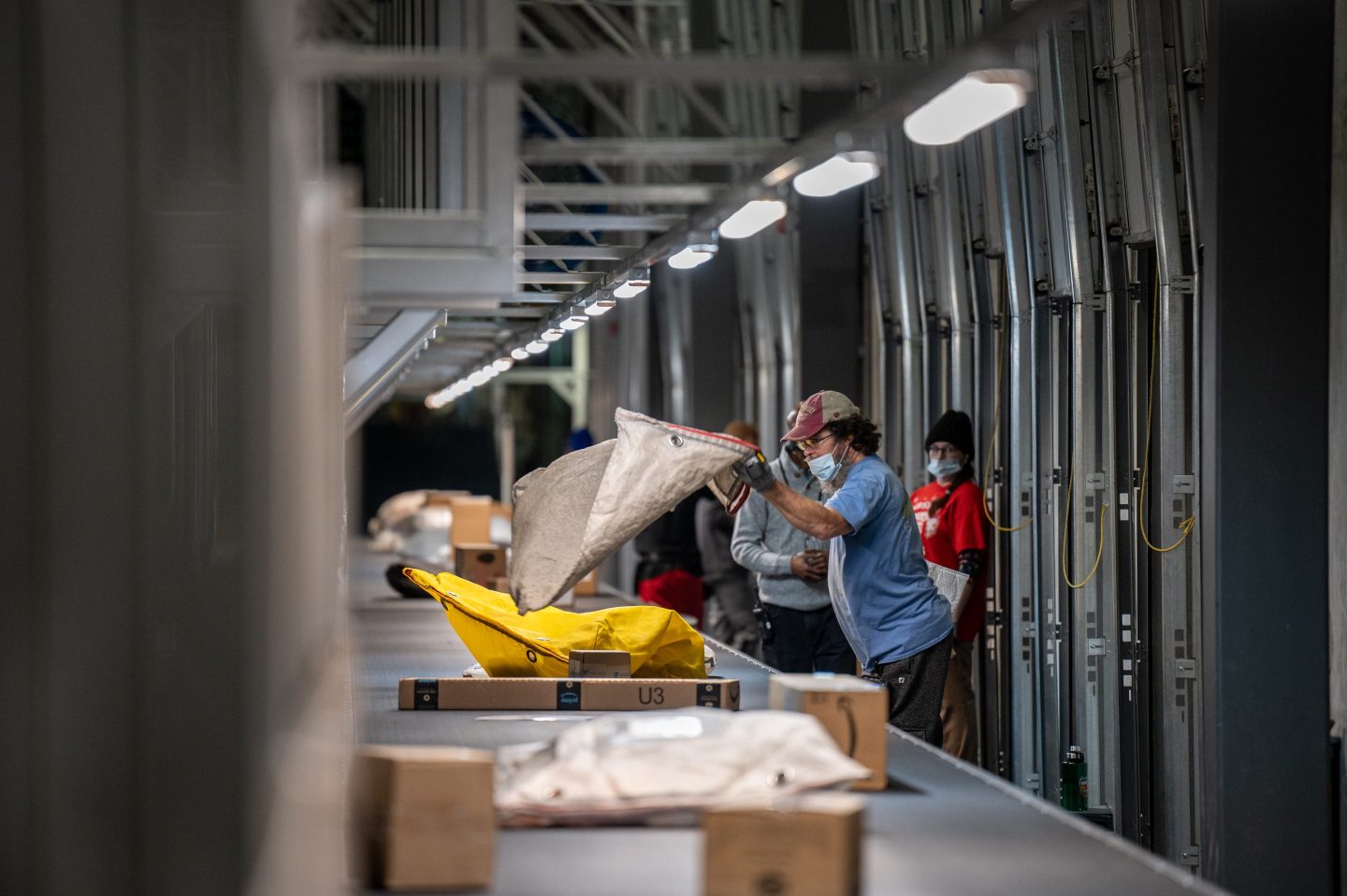
In March 2020, the onset of the COVID-19 pandemic delivered global supply chains a rude awakening. More than two years later, amid China’s strict zero-COVID policy and the ongoing fallout from Russia’s invasion of Ukraine, supply chains face their most acute crisis in decades.
That crisis is contributing to a macroeconomic environment that is downright dangerous—and we need technology to confront it.
American consumers understand the magnitude of the problem. They can’t help but feel its impact. Inflation has reached 40-year highs. Businesses see it too. Apple advised analysts last quarter that supply-chain constraints could deal an $8 billion blow to the company in Q2. The cost to ship a 40-foot container from Asia to the U.S. West Coast sits at nearly $10,000, up fivefold from pre-pandemic levels.
In a post-pandemic world, supply chain and logistics will make or break profits. As businesses try to adapt the centrality of logistics to their operations, both technology adoption and capital allocation have each accelerated to meet the moment. Changes forecast to take years—and even decades—to materialize are happening in a much shorter time period.
As investors and analysts, we see signals flashing red every day, but what are they telling us?
Industrial surveys have found over and over that U.S. businesses want to “reshore” substantial parts of their operations to this hemisphere. The appetite for reshoring is acute in critical sectors like pharmaceuticals, semiconductors, and defense hardware, and Congress is paying attention. Businesses are also racing to integrate better technologies into their supply chains.
In the next decade, market participants will spend private and public capital worth tens of billions of dollars to develop the technical infrastructure needed to strengthen many sectors in the U.S.
Businesses are prioritizing supply-chain visibility and resilience more than ever. If the animating concern of the China-based supply chain was cheap prices, tomorrow’s supply chains will be optimized for reliability, even if it comes at a higher cost. Managers want insights into every step of their supply chain to better forecast the future. To do so, they’re relying on digitization, better data practices, connected warehouses, and other technologies that already exist.
The environment of cost inflation across the board—especially the increased costs of logistics—is forcing companies to innovate at every step of transport to control costs. Amazon reported that fulfillment costs surged 23% in Q1, which caused the company an unprecedented $3.8 billion quarterly operating loss. Last-mile logistics, more efficient ground transportation, and the optimization of every trip delivery trucks or container ships make will be needed to keep costs under control.
Each of these alarming developments underscores the importance of logistics technology. Unfortunately, high costs are here to stay. But by catalyzing the best technologies in logistics, we can avoid the worst potential outcomes. If the supply chain breaks down completely, the true inflation rate would not stop at 8% or 10%—it would be effectively infinite. That makes reliability the biggest premium of all.
The past two years should remind us all that “unpredictable events” are no longer an excuse for businesses to come up short on logistics. Future crises are inevitable. Businesses must prepare by investing in the technology and infrastructure needed to confront them. Entrepreneurs are leading the way, putting billions on the line to prove that technology can get the job done.
The stakes are high, but the opportunity is also massive. Global logistics is a $10 trillion industry. The value of industrial reshoring to North America in future years is estimated at the level of hundreds of billions of dollars in activity. Meanwhile, the logistics technology market managing supply-chain innovation is worth tens of billions—and it’s growing.
The West is under pressure, and our supply lines are battle lines. Just as important as the values that hold us together, we must unite around strategic logistics. By adopting better technologies, we can protect commerce between free nations and secure the resources we need to defend ourselves and maintain our way of life.
Jake Medwell is a founding partner at the U.S.-based venture firm 8VC. Medwell was named the “most active freight investor” by PitchBook.
The opinions expressed in Fortune.com commentary pieces are solely the views of their authors and do not reflect the opinions and beliefs of Fortune.
More must-read commentary published by Fortune:
- TSMC chairman Mark Liu describes how the world’s largest chipmaker is reimagining the semiconductor industry
- We should stop blaming workers for the Great Resignation–and start looking at the jobs they’re leaving
- Web3 is not dead. Here’s what the crypto space will look like in 2030
- How to fix the nursing shortage—and recruit the next generation of frontline heroes
- I was a senior executive at WeWork before it imploded. Here’s the one behavior that could have saved the company