The case for greater diversity in medicine can’t get much more stark than this.
Black newborns are three times more likely than white newborns to die when cared for by white physicians, according to a new study tracking 1.8 million hospital childbirths over more than two decades. But when they are cared for by Black doctors, Black newborns are far more likely to survive, as their mortality rate is roughly cut in half.
The study, published this week, provides stunningly concrete evidence of the lethal toll that racism and sexism in health care takes on Black patients from birth. And it underlines the serious health problems exacerbated by medicine’s lack of diversity among doctors, only 5% of whom are Black and only 5.8% of whom are Hispanic.
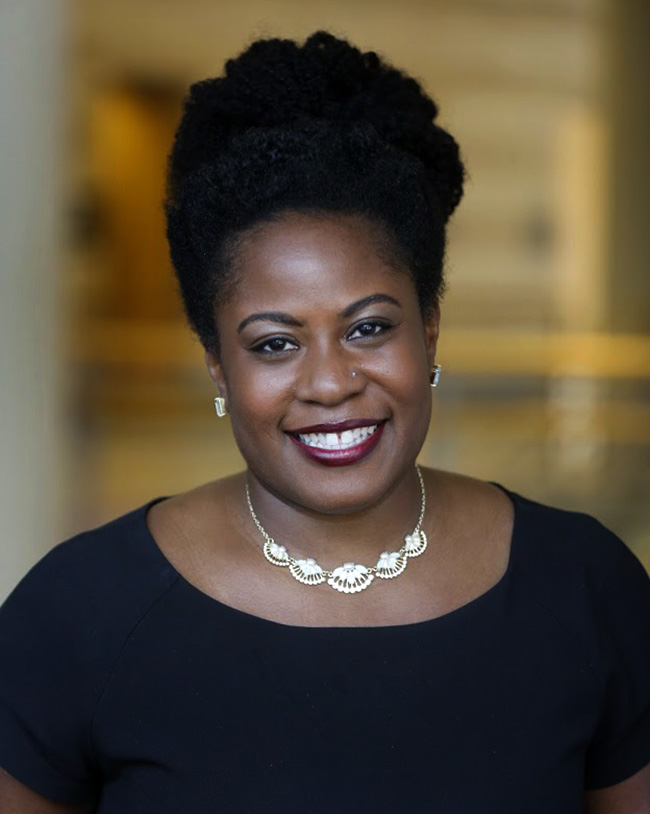
“If we disagree about all of the other things, we should be able to agree that infants should have the opportunity for a fair start to life,” says Rachel Hardeman, one of the study’s authors and a reproductive health equity researcher and associate professor at the University of Minnesota’s School of Public Health.
But Black children, and their mothers, have long been denied that opportunity. The reasons are complex, given the pervasive nature of systemic racism, which affects patients’ socioeconomic status as well as their physicians’ unconscious—or conscious—bias.
Whatever the race of their doctor, Black newborns are already more than twice as likely to die as white newborns, and Black women are at least three times as likely to die in childbirth as white mothers—two extreme examples of the widespread health disparities that damage the lifespans of Black patients and other people of color.
“Our health care system has not yet grappled with the fact that it has been built on a history of racist ideas that we have to name and explosively dismantle,” says Hardeman. “These ideas of racial inferiority … may not be explicitly taught in medical school, but they’re certainly not debunked—and there’s a significant body of curriculum and education that’s missing in how we’re training our health care providers.”
These longstanding health inequities have gained more attention in recent months, thanks to the national reckoning over racism and the brutal toll of COVID-19 on Black and Latinx communities. But as I reported for Fortune this month, the disproportionately low numbers of doctors from those communities have long worsened the care that patients of color receive, and their subsequent health outcomes.
“We haven’t done a great job of diversifying our health care workforce; 5% of the physician workforce is Black while 13% of the US population is Black, and that really hasn’t changed over time,” says Hardeman. “We have to be thinking about how do we create a critical mass of providers from diverse backgrounds that are in tune with communities of color, who understand that lived experience, and who can really build relationships and trust that seems to be missing right now.”
The study, which was published Monday in the journal Proceedings of the National Academy of Sciences of the United States of America or PNAS, was based on 1.8 million Black and white children born in Florida between 1992 and 2015. It was led by Brad N. Greenwood of George Mason University’s School of Business, and also co-authored by Laura Huang of Harvard Business School and Aaron Sojourner of University of Minnesota’s Carlson School of Management.
Its findings in some ways raise “more questions than answers,” Hardeman says. For example, although Black children were more likely to die under the care of white doctors, their mothers’ mortality rates were unaffected by the race of the doctor. Hardeman calls this “one of the most surprising findings,” and did not have an immediate explanation for it.
The research also illuminated other ways in which it’s needlessly difficult to study the impact of racism in health. In order to conduct the study, Hardeman and her co-authors first had to track down and compile racial data on the nearly 10,000 physicians in their data set. Florida’s state Agency for Healthcare Administration, which provided the data, recorded the race of the patients studied but not the race of their doctors. So the researchers enlisted a team of trained research associates to find publicly-available photos of all 10,000 physicians, and to do further research and analysis to assess their race and ethnicity.
About 2,000 physicians whose race could not be determined were dropped from the data set—an outcome that, as Hardeman points out, demonstrates the need for better demographic data around race as a first step.
“Part of how structural racism and, frankly, white supremacy operate in our country is that we are not asking these questions, and not collecting data,” she says. “How hard would it be to ask physicians to self-identify on all of their board exams and all the ways they’re certified, so that we actually have solid data? But we don’t do that.”