One year ago today, Hewlett Packard split into two companies to better compete in a rapidly changing technology industry. Separating, the argument went, would let the resulting smaller spawn focus on their core businesses instead of being bogged down by one another.
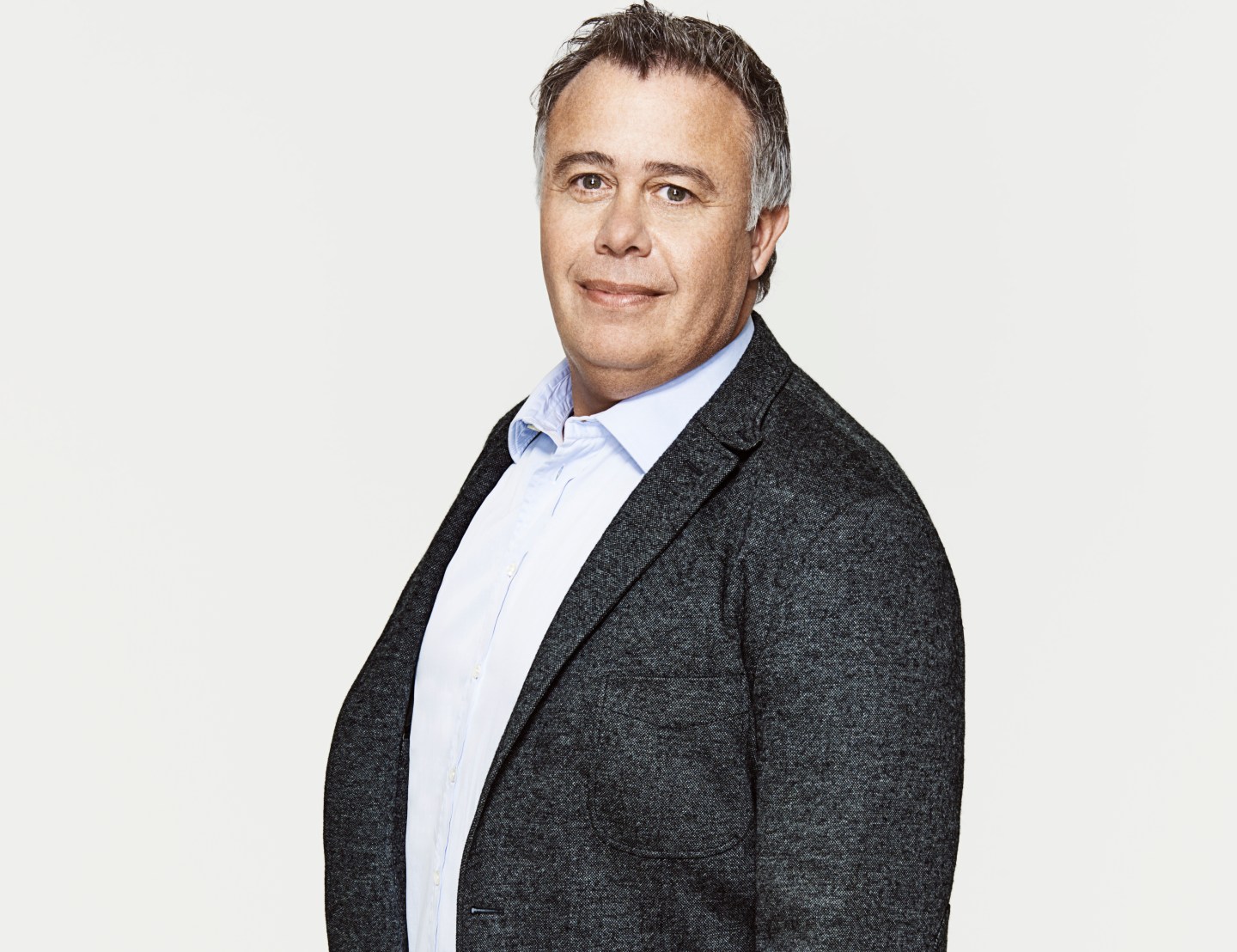
While Hewlett Packard Enterprise (HPE) CEO Meg Whitman is concentrating on data center technology, HP Inc. (HPQ) CEO Dion Weisler is trying to turn around his company’s core printing and personal computer business. With fewer people buying PCs and printers over the years, Weisler has a difficult task.
In a sign of the challenges, the company’s sales have declined in each quarter since the corporate split. Furthermore, HP Inc. said in October that it would cut 3,000 to 4,000 jobs over the next three years—on top of previously announced plans for 3,000 layoffs by the end of the year.
Still, Weisler is betting that the company’s push into new markets like 3D-printing and more advanced copier machines through its $1 billion acquisition of Samsung’s printing business will help lift HP Inc. in the next few years.
Weisler spoke to Fortune on Monday in prelude to the company’s one-year anniversary. Here’s an edited version of the conversation:
Fortune: What’s been the highlight since the split?
Weisler: It’s always interesting, I think, to reflect on the year. I just held my staff meeting here today in Palo Alto, Calif., and I opened with my reflection of the year. I thought, “Wow what a year, and what a difference a year makes.” The separation absolutely delivered on all of the promises that we knew in our hearts. It made us faster, it made us nimbler, it made us more focused. It enabled us to reinvent ourselves.
It empowered us to wake up every day thinking about both printing and personal systems, and that we were going to play our game, not anybody else’s game. We had a very well-honed strategy in our core markets, the key areas of growth that we were going to go after, and how we would create a future for the organization for the next 75 years. To enter our second year, I think we really start it with a position of strength.
What were some of the unexpected lessons you’ve learned from the split?
I think the things we’ve learned were mostly positive. We embraced our partner community early and brought them along the journey with us. They were a very big part in ensuring we didn’t drop a single ball with customers along the way. It was a thesis that we had that we proved through the separation.
The surprise to me was just how fast this organization was at focusing on the job at hand. Whether it was how fast the board of directors got up to speed, and this is almost a brand new board—certainly more new members than there were existing members. That diversity of thought, and the way [the board] engaged, and the way my staff stepped into their new roles, and how quickly they embraced the customer, and the reinvention story. That acceleration enabled us to do the things we did like acquire Samsung [printing business], announce our 3-D printing products, drive our graphics business, accelerate in our core markets, and set out for our future.
How has the culture of HP changed in the past year?
On day one, I said we like to think of ourselves as having the heart and energy of a startup but with the brains and muscle of a Fortune 100 organization. I think we anchored ourselves around that. If we were a five person organization in a garage in Palo Alto, how would we act, think, and serve our customers in a very intimate way—and how can we amplify that across a very large Fortune 100 organization? We want to drive a learning-based culture that’s not afraid to try and not afraid to be entrepreneurial. Not everything we do is going to work, but that’s okay as long as we move and raise the bar. That’s the culture we try to establish. It’s not something that’s forced down from the CEO, it’s something that bubbles up.
Get Data Sheet, Fortune’s technology newsletter.
I’d like you to contrast that strategy of getting smaller with one of your biggest competitors, Dell Technologies, which just completed it’s huge acquisition of enterprise company EMC.
I can speak for us. We wake up every single day thinking about printing and personal systems. That’s what we do. Our strategy is anchored in market trends. So we spend an inordinate amount of time thinking about how the commercial and consumer world will blend, what are millennials’ expectations, the impact of mobility and security, how everything is moving to being sold as a service, and how we are going to leverage what I think will happen with the blended reality of a 2-D and 3-D world in the context of a printing and personal systems.
HP used to have a huge portfolio [of products]. I can tell you from the conclusion of our first board meeting, I spent more time talking about printing and personal systems than the three-years prior with the previous HP board that had to deal with everything from a $150 PC all the way up to a Superdome computer [HPE’s lineup of expensive, powerful servers]. The magnitude of that kind of portfolio, at least for us, meant that you were always sub-optimizing something. Now as two companies, we do much less sub-optimization and much more optimization.
That being said, I imagine you’re still working a lot with HPE, just not as one big company.
Both Meg and I said, HP was born in a single car garage and although we would be two separate Fortune 100 organizations, we’d like to think that we moved to a two car garage. And I think those principles were well established at the top. We work incredibly close with Hewlett Packard Enterprise. And sometimes, if a customer requests to have one person, then Meg and I will decide who takes the lead on that and we deliver what the customer is after. By and large most organizations are very happy to have the two contact points because we both sharpened our pencils and we really focused on each of our products and solutions that we can offer. In many cases, we are even closer now.
If you’ve been living at home with your sister, you kind of take your sister for granted. When you move out and both start families and you work a little harder on the relationship, I think it’s the same thing that happened here.
Is HP at the size you want the company to be, considering you just announced another round of layoffs?
I think we already operate at significant scale. We are delivering something every second at every day—in fact more than one thing at every second. I don’t think that scale is our issue.
I think there is great opportunity for us to grow our organization as we continue our strategy to be excellent at the core. It’s a story of re-invention and it won’t always be easy along the way. I think we’ve proven that we know how to operate in both an up and down market with a very clear sense of purpose and a team that one-year later is believing more than ever before we are transforming how people are thinking about HP.
I want to get your thoughts on what’s going on with Apple (AAPL) in light of analysts’ mixed reactions to its latest lineup of MacBook Pro laptops. Do you think Apple is more vulnerable now to competitors than it has been in recent years?
I can tell you what we do, which is obsessing about our customers. We have an obsession now with Premium [HP’s lineup of high-end laptops]. But we’re really focused on adding real value-added features that customers are looking for. It’s that obsession with the customer and their behavior, the new workforce, and the office of the future that drives our R&D and design teams. Ultimately, if we continue to raise the bar, customers will have choice, and we’ve seen them move to our portfolio.
For more about HP, watch:
How do you feel about Microsoft (MSFT) growing its Surface brand? Now Microsoft has the Surface Studio all-in-one computer and the Surface Hub digital whiteboard. That must be interesting for you considering your company relies on Windows so much.
I’ve been very consistent here saying co-opetition is the nature of this business. We can be the closest of partners but also compete. I’ve said very publicly that I think Satya [Microsoft CEO Satya Nadella] and the team have created categories that have enabled us to start participating in new markets. They’ve made some very big investments. A couple years ago before Surface, there really wasn’t a Windows tablet or Windows detachable [a laptop-tablet hybrid device] because the market was owned by other players. They spent a lot of money, either through product write-offs or a lot of product marketing and advertising, to create a category. Now I think we can build a better mousetrap and offer those sprinkles of magic that I’ve referred to before. We know how to do hardware, we’ve been doing it for 30 years. We know how to marry that [hardware] with great security products and design. If they want to go and create a really-high priced category for all-in-one [PCs] and are able to move the market, that’s fantastic. We’ll go and just as we did in the Surface space, we’ll go build what I think are even more compelling products.