• Home
  • Latest
  • Fortune 500
  • Finance
  • Tech
  • Leadership
  • Lifestyle
  • Rankings
  • Multimedia
EconomyCommentary

No one’s happier about calls for a ‘back-seat’ Fed than Fed insiders who were targeted by the White House this year

Eleanor Pringle
By
Eleanor Pringle
Eleanor Pringle
Senior Reporter, Economics and Markets
Down Arrow Button Icon
Eleanor Pringle
By
Eleanor Pringle
Eleanor Pringle
Senior Reporter, Economics and Markets
Down Arrow Button Icon
December 29, 2025, 3:06 AM ET
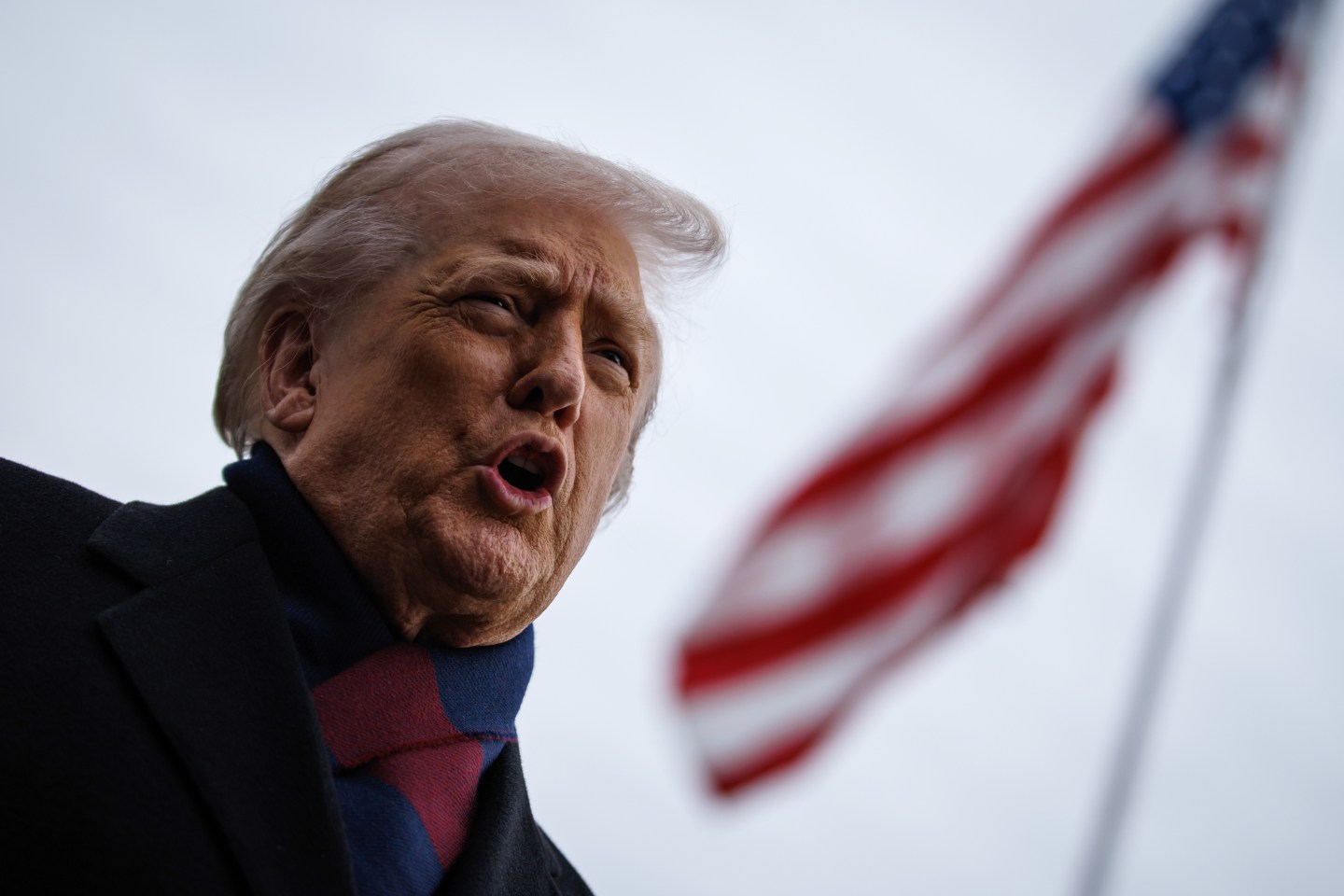
US President Donald Trump speaks to members of the media on the South Lawn of the White House before boarding Marine One in Washington, DC, US, on Saturday, Dec. 13, 2025.
President Donald Trump before boarding Marine One, in Washington, D.C., Dec. 13, 2025.Samuel Corum—Sipa/Bloomberg/Getty Images

With Trump 2.0, markets and the media knew they would get their fair share of double takes. For me, the image that springs to mind the most was the moment in July when the President of the United States showed up on the doorstep of the Fed, literally. Armed with a disputed list of costs for Fed building renovations, President Trump said that “generally” speaking he would fire a project manager who had gone over budget. Fed chair Jerome Powell, looking visibly uncomfortable, had already provided a breakdown of costs, explaining that the project was on track, and he highlighted that Trump had included in his accounting a building that was already complete. The Federal Reserve chair and the president stood stiffly, side by side, in matching hard hats, bickering on a building site, for all the world to see.

Trump’s visit to the Fed was only the fourth presidential visit in U.S. history; behind this traditional restraint lies the idea that the credibility of the central bank and the White House are both strengthened if neither attempts to interfere with the other.

The image summed up the conversations (off the record and, in recent months, increasingly nervously) I regularly have with sources—either within the Fed or at agencies working closely with the financial institution. In my catch-ups with these 10 or so people since January, their mood has shifted. Early on, there was optimism that the focus of politicians would pass (as it so often does). But as the months rolled by, they mentally battened down their hatches against an onslaught of insults, scrutiny, and unprecedented criticism. 

Recommended Video

In the run-up to the election, Trump claimed Powell acted politically by lowering interest rates to help President Biden (an insult, given the legally mandated autonomy of the organization). Vice President JD Vance lobbied for more political control over the base interest rate.

While some economists later echoed Trump in saying the Federal Open Market Committee (FOMC) should cut rates, the public outpouring of Trump’s fury was extraordinary: Trump called the chair “Too Late Powell,” a “stubborn mule,” a “major loser,” and a “stupid person.” 

Wall Street grew uncomfortable with the attacks. Even if it wanted to see rate cuts, it didn’t want to see the central bank’s independence threatened. When Trump pulled back on the notion of firing Powell, he instead focused on other members of the FOMC. In September, he attempted to oust Fed Governor Lisa Cook via social media, alleging she made false statements on a mortgage application. She denies this and has taken her case to the Supreme Court. Hearings begin in January.

Other autonomous agencies got the message: If Trump is willing to take on the Fed, they might be next.

“How much can truly change under a single administration?” I asked one source. “Three years is a long time yet,” was the response. 

The January question

Since January, many federal employees inside and outside the Fed have quietly decided that discretion is the better part of valor. To the relief of Wall Street, the Fed’s most prominent figures haven’t gone to ground entirely.

Outside of monetary policy, leaders have publicly stuck to the script when it comes to political questions. Time and again, Powell insisted that base rate decisions are made exclusively and entirely on data pertaining to the economy. On the elephant in the room that is January’s court hearings over the firing of Cook, Powell said it would be “inappropriate” to comment. 

While the temperature has dropped for now, sources say, they’re preparing for the mercury to start rising again early next year. The reasoning that an independent Fed leads to better economic outcomes is widely accepted. But if Trump succeeds in ousting Cook, then the Fed’s autonomy looks less secure—potentially leading to inflationary sentiment.

Analysts’ concerns over the Fed’s independence don’t descend as low as comparisons to President Nixon and Arthur Burns, however, when an alignment on monetary policy between the White House and the Fed plunged the economy into a crisis.

Economists more widely believe that there are too many defenders of independence—and too much scrutiny from the markets—to allow politicians to attempt to fundamentally alter the trajectory of the Fed, especially if Powell sticks around as a governor.

Selective silence is a tactic on which it seems everyone, at last, can agree. Critics argue that the Federal Open Market Committee—with its mysterious dot-plots and the breadcrumbs its members occasionally drop into speeches—engages the attention of Wall Street a little too much. Treasury Secretary Scott Bessent has been lobbying for a “back-seat” Federal Reserve, something insiders will be only too happy to oblige. 

On the other hand, the Federal Reserve system is mandated to answer to Congress and, by extension, the American public. In an era of economic volatility, with business leaders and consumers alike unsure of the path forward, a void of insight from key decision-makers could be damaging and frustrating. 

There’s also been a delicate balance to strike between pushing back on claims about bias within the Fed and reminding the public that the Fed is focused mainly on, and is guided by, its mandate. 

The next Fed chair

Another awkward question is who’s actually in charge. Secretary Bessent has made it clear that in the search for a new Federal Reserve leader, he wants to appoint a “shadow chair,” someone to be the true power at the Fed while Powell is increasingly overlooked as he nears the end of his term in May.

It was not a popular idea, but the White House has proceeded with a very public recruitment process ever since. Potentially impacted parties are keeping an eye on front-runners, they said, without becoming overly invested in outcomes that may never come to pass. 

One concern is that the broadcast nature of the selection process means pressure is already piling onto the shoulders of the would-be nominee, who must wrangle expectations without having accumulated real influence within the central bank. 

Wall Street is also preparing for some early hiccups. Until the past few meetings, Powell’s run had been one of steady consensus. As UBS chief economist Paul Donovan said in a note to clients this week: “What is perhaps more interesting today is the extent of division within the Federal Reserve. This is potentially storing up trouble for Powell’s successor as Fed chair. A Fed that is prepared to dissent under Powell may be more inclined to dissent under a Fed chair who commands less respect in the institution, and the wider financial markets.”

Whatever the creases that will need to be ironed out under a new Fed regime, Trump’s cabinet seems keen for it to happen behind closed doors. For federal staffers who want to crack on without the weight of the White House breathing down their necks, the diversion of that attention can’t come soon enough.
Join us at the Fortune Workplace Innovation Summit May 19–20, 2026, in Atlanta. The next era of workplace innovation is here—and the old playbook is being rewritten. At this exclusive, high-energy event, the world’s most innovative leaders will convene to explore how AI, humanity, and strategy converge to redefine, again, the future of work. Register now.
About the Author
Eleanor Pringle
By Eleanor PringleSenior Reporter, Economics and Markets
LinkedIn icon

Eleanor Pringle is an award-winning senior reporter at Fortune covering news, the economy, and personal finance. Eleanor previously worked as a business correspondent and news editor in regional news in the U.K. She completed her journalism training with the Press Association after earning a degree from the University of East Anglia.

See full bioRight Arrow Button Icon

Latest in Economy

Finance
Lorem ipsum dolor sit amet, consectetur adipiscing elit, sed do eiusmod tempor incididunt ut labore et dolore magna aliqua. Ut enim ad minim veniam
By Fortune Editors
October 20, 2025
Finance
Lorem ipsum dolor sit amet, consectetur adipiscing elit, sed do eiusmod tempor incididunt ut labore et dolore magna aliqua. Ut enim ad minim veniam
By Fortune Editors
October 20, 2025
Finance
Lorem ipsum dolor sit amet, consectetur adipiscing elit, sed do eiusmod tempor incididunt ut labore et dolore magna aliqua. Ut enim ad minim veniam
By Fortune Editors
October 20, 2025
Finance
Lorem ipsum dolor sit amet, consectetur adipiscing elit, sed do eiusmod tempor incididunt ut labore et dolore magna aliqua. Ut enim ad minim veniam
By Fortune Editors
October 20, 2025
Finance
Lorem ipsum dolor sit amet, consectetur adipiscing elit, sed do eiusmod tempor incididunt ut labore et dolore magna aliqua. Ut enim ad minim veniam
By Fortune Editors
October 20, 2025
Finance
Lorem ipsum dolor sit amet, consectetur adipiscing elit, sed do eiusmod tempor incididunt ut labore et dolore magna aliqua. Ut enim ad minim veniam
By Fortune Editors
October 20, 2025

Most Popular

Finance
Lorem ipsum dolor sit amet, consectetur adipiscing elit, sed do eiusmod tempor incididunt ut labore et dolore magna aliqua. Ut enim ad minim veniam
By Fortune Editors
October 20, 2025
Finance
Lorem ipsum dolor sit amet, consectetur adipiscing elit, sed do eiusmod tempor incididunt ut labore et dolore magna aliqua. Ut enim ad minim veniam
By Fortune Editors
October 20, 2025
Finance
Lorem ipsum dolor sit amet, consectetur adipiscing elit, sed do eiusmod tempor incididunt ut labore et dolore magna aliqua. Ut enim ad minim veniam
By Fortune Editors
October 20, 2025
Finance
Lorem ipsum dolor sit amet, consectetur adipiscing elit, sed do eiusmod tempor incididunt ut labore et dolore magna aliqua. Ut enim ad minim veniam
By Fortune Editors
October 20, 2025
Finance
Lorem ipsum dolor sit amet, consectetur adipiscing elit, sed do eiusmod tempor incididunt ut labore et dolore magna aliqua. Ut enim ad minim veniam
By Fortune Editors
October 20, 2025
Finance
Lorem ipsum dolor sit amet, consectetur adipiscing elit, sed do eiusmod tempor incididunt ut labore et dolore magna aliqua. Ut enim ad minim veniam
By Fortune Editors
October 20, 2025
Rankings
  • 100 Best Companies
  • Fortune 500
  • Global 500
  • Fortune 500 Europe
  • Most Powerful Women
  • Future 50
  • World’s Most Admired Companies
  • See All Rankings
Sections
  • Finance
  • Leadership
  • Success
  • Tech
  • Asia
  • Europe
  • Environment
  • Fortune Crypto
  • Health
  • Retail
  • Lifestyle
  • Politics
  • Newsletters
  • Magazine
  • Features
  • Commentary
  • Mpw
  • CEO Initiative
  • Conferences
  • Personal Finance
  • Education
Customer Support
  • Frequently Asked Questions
  • Customer Service Portal
  • Privacy Policy
  • Terms Of Use
  • Single Issues For Purchase
  • International Print
Commercial Services
  • Advertising
  • Fortune Brand Studio
  • Fortune Analytics
  • Fortune Conferences
  • Business Development
About Us
  • About Us
  • Editorial Calendar
  • Press Center
  • Work At Fortune
  • Diversity And Inclusion
  • Terms And Conditions
  • Site Map
  • Facebook icon
  • Twitter icon
  • LinkedIn icon
  • Instagram icon
  • Pinterest icon

Most Popular

placeholder alt text
Success
Even with $850 billion to his name, Elon Musk admits ‘money can’t buy happiness.’ But billionaire Mark Cuban says it’s not so simple
By Preston ForeFebruary 6, 2026
2 days ago
placeholder alt text
Economy
Elon Musk warns the U.S. is '1,000% going to go bankrupt' unless AI and robotics save the economy from crushing debt
By Jason MaFebruary 7, 2026
1 day ago
placeholder alt text
Success
Gen Z Patriots quarterback Drake Maye still drives a 2015 pickup truck even after it broke down on the highway—despite his $37 million contract
By Sasha RogelbergFebruary 7, 2026
1 day ago
placeholder alt text
AI
AI can make anyone rich: Mark Cuban says it could turn 'just one dude in a basement' into a trillionaire
By Sydney LakeFebruary 7, 2026
1 day ago
placeholder alt text
Future of Work
Anthropic cofounder says studying the humanities will be 'more important than ever' and reveals what the AI company looks for when hiring
By Jason MaFebruary 7, 2026
1 day ago
placeholder alt text
Crypto
Bitcoin whales and ETFs are bailing out of the market; UBS warns: ‘Crypto is not an asset’
By Jim EdwardsFebruary 6, 2026
2 days ago

© 2026 Fortune Media IP Limited. All Rights Reserved. Use of this site constitutes acceptance of our Terms of Use and Privacy Policy | CA Notice at Collection and Privacy Notice | Do Not Sell/Share My Personal Information
FORTUNE is a trademark of Fortune Media IP Limited, registered in the U.S. and other countries. FORTUNE may receive compensation for some links to products and services on this website. Offers may be subject to change without notice.


Latest in Economy

Real EstateHousing
Trump’s plan to send home prices higher will help him with baby boomer voters ahead of midterm elections but could spark a ‘generational war’
By Josh Boak and The Associated PressFebruary 8, 2026
3 hours ago
EconomyUkraine invasion
Russian attacks on Ukraine’s energy infrastructure are the biggest threat to its economy, which could shrink as much as 3%
By Kamila Hrabchuk and The Associated PressFebruary 8, 2026
3 hours ago
tipping
CommentaryTipping
I’m the chief growth officer at a payments app and I know how America really tips. Connecticut, I’m looking at you
By Ricardo CiciFebruary 8, 2026
5 hours ago
colorado
RetailGrocery
Grocery prices have surged 25% in Colorado since the pandemic with Kroger and Walmart sharing half the market. Enter Aldi
By Jack Buffington and The ConversationFebruary 8, 2026
6 hours ago
broker
CommentaryRecession
We studied 70 countries’ economic data for the last 60 years and something big about market crashes changed 25 years ago
By Josh Ederington, Jenny Minier and The ConversationFebruary 8, 2026
6 hours ago
birthday
CommentaryAmerican Dream
America marks its 250th birthday with a fading dream—the first time that younger generations will make less than their parents
By Mark Robert Rank and The ConversationFebruary 8, 2026
7 hours ago