• Home
  • Latest
  • Fortune 500
  • Finance
  • Tech
  • Leadership
  • Lifestyle
  • Rankings
  • Multimedia
EconomyTariffs and trade

Trump may use tariff revenue to bail out farmers, agriculture secretary says. They’re reeling from challenges caused by the levies to begin with

Sasha Rogelberg
By
Sasha Rogelberg
Sasha Rogelberg
Reporter
Down Arrow Button Icon
Sasha Rogelberg
By
Sasha Rogelberg
Sasha Rogelberg
Reporter
Down Arrow Button Icon
September 19, 2025, 5:44 AM ET
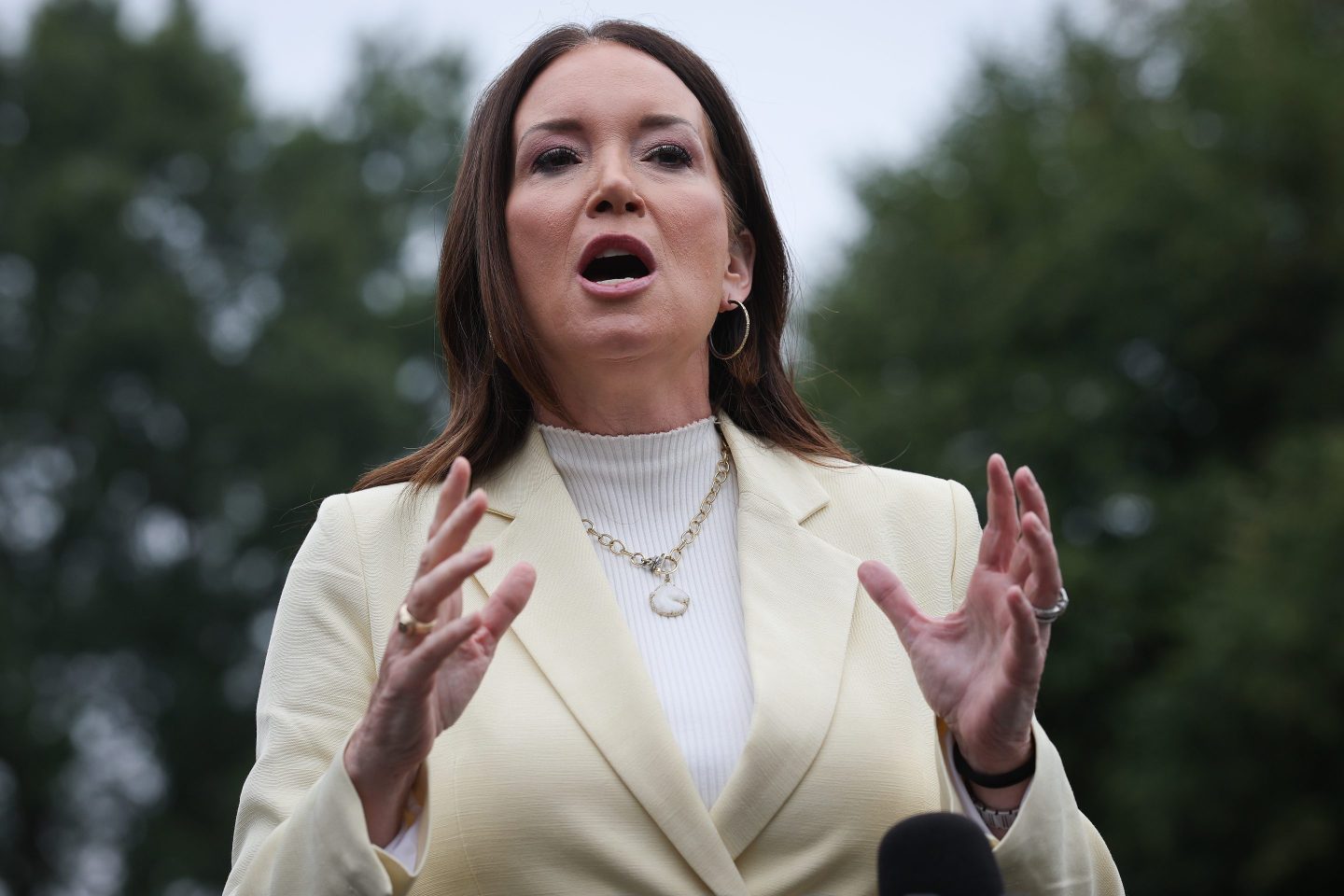
Brooke Rollins, standing outside, speaks and gestures with both hands in front of her.
Agriculture Secretary Brooke Rollins said the Trump administration is weighing using tariff income to help bail out farmers.Win McNamee—Getty Images

President Donald Trump is weighing a bailout program for farmers that would use tariff income, according to Agriculture Secretary Brooke Rollins. The U.S. agricultural industry is preparing for a harvest season that will likely be characterized by dwindling export opportunities and more expensive tools and equipment as a result of the administration’s aggressive tariff policy.

Recommended Video

“There may be circumstances under which we will be very seriously looking to and announcing a package soon,” Rollins told the Financial Times on Wednesday, adding that using tariff income to finance the package would be “absolutely a potential.”

In April, Rollins announced the Trump administration would consider providing aid to farmers after trade groups responded critically to tariff plans.

The administration’s trade policies have already impacted the price of necessary tools for farmers, including a more-than-15% tariff rate on self-propelled machines like tractors and nearly 25% on herbicides and some pesticides, in part because of trade disputes with Canada, according to August data from the North Dakota State University Agricultural Trade Monitor. Agricultural machinery manufacturer John Deere has warned of the adverse impact of tariffs on its own business, including a $600 million hit from the levies in fiscal 2025. 

Retaliatory tariffs from China as a result of the trade war has also hobbled soybean farmers, who previously relied on China for more than 20% of its soybean exports. Chinese tariffs on the crop reached 34%, making U.S.-exported soybeans more expensive to Chinese importers than beans from Brazil. This effectively prices the U.S. out of the Chinese soybean market ahead of the autumn harvest season, according to the American Soybean Association.

“Retaliatory tariffs have blunted U.S. soybean growers’ advantage, restricting their access to the very market where demand is growing fastest,” the trade group said in an August report.

To be sure, not everyone in the agriculture industry is sour on Trump’s trade policies. Some farmers—such as shrimp farmers in Indiana—are celebrating the levies for blocking cheap foreign competitors from gaining U.S. market share. 

The U.S. Department of Agriculture has laid the blame of today’s agriculture struggles on former President Joe Biden, saying his administration inherited a good farm economy, but “erased” Trump’s efforts to keep interest rates low and open new markets, resulting in a $50 billion agricultural trade deficit. 

Agricultural exports reached an all-time high in 2022 under the Biden administration, according to USDA data. But despite the record, in 2023, imports exceeded exports by $21 billion.

The USDA did not provide Fortune any additional information about what a potential farmer bailout program would look like.

“We are constantly assessing the farm economy and exploring the need for further assistance but have not made a determination if an additional program is needed at this time,” a USDA spokesperson told Fortune in a statement.

How will a potential bailout impact farmers?

A bailout from the Trump administration may help to plug the economic holes left by trade dispute fallouts, but long-term erosion in certain agricultural markets will likely remain, according to Wendong Zhang, an associate professor of applied economics and policy at Cornell University’s SC Johnson School of Business.

“It will compensate for the immediate economic losses due to tariffs, but it doesn’t necessarily improve the long-term competitiveness of agriculture on the global stage,” Zhang told Fortune. “This doesn’t help address the reliability of the U.S. in using these policies on the global stage as well.”

A similar scenario played out in 2019, following the slew of tariffs Trump outlined in his first term, Zhang said. Between mid-2018 and 2019, U.S. farmers lost $27 billion in U.S. agricultural exports, according to a 2022 report from the USDA. As a result, Trump gave U.S. farmers $28 billion in subsidies, effectively making those losses whole, Zhang said.

However, economic impacts lingered. While the U.S. regained some of China’s soybean market share from Brazil, that market share remained below pre-retaliatory tariff levels one year after a trade deal was made, according to the USDA report.

Despite damage to the long-term health of the markets, farmers—a loyal constituency of Trump’s—have historically been supportive of tariffs and administrative aid, seeing the potential for long-term financial gain. According to a 2019 study from Zhang and his colleagues, more than half of farmers in Minnesota, Iowa, and Illinois were somewhat or strongly supportive of Trump’s tariffs on Chinese products, despite 76% of them recognizing U.S. farmers would take a hit from the levies. More than 60% admitted U.S. agriculture would lose markets as a result of the tariffs.

These farmers will likely maintain their attitudes about the Trump administration, but the impact of this round of tariffs will be harder to predict and parse through, Zhang explained. Unlike Trump’s first term, when the administration primarily went after trade with China, Trump has imposed tariffs on numerous countries, further complicating the U.S.’ place in global agricultural export markets.

“There’s so many players and so many potential products, and there’s so many moving parts that…it’s really hard to to really know which ones will be affected,” Zhang said.
Join us at the Fortune Workplace Innovation Summit May 19–20, 2026, in Atlanta. The next era of workplace innovation is here—and the old playbook is being rewritten. At this exclusive, high-energy event, the world’s most innovative leaders will convene to explore how AI, humanity, and strategy converge to redefine, again, the future of work. Register now.
About the Author
Sasha Rogelberg
By Sasha RogelbergReporter
LinkedIn iconTwitter icon

Sasha Rogelberg is a reporter and former editorial fellow on the news desk at Fortune, covering retail and the intersection of business and popular culture.

See full bioRight Arrow Button Icon

Latest in Economy

Spanish Prime Minister Pedro Sánchez often praises the financial and social benefits that immigrants bring to the country.
EuropeSpain
In a continent cracking down on immigration and berated by Trump’s warnings of ‘civilizational erasure,’ Spain embraces migrants
By Suman Naishadham and The Associated PressDecember 13, 2025
14 hours ago
EconomyAgriculture
More financially distressed farmers are expected to lose their property soon as loan repayments and incomes continue to falter
By Jason MaDecember 13, 2025
15 hours ago
PoliticsAffordable Care Act (ACA)
With just days to go before ACA subsidies expire, Congress is about to wrap up its work with no consensus solution in sight
By Kevin Freking, Lisa Mascaro and The Associated PressDecember 13, 2025
20 hours ago
HealthAffordable Care Act (ACA)
A Wisconsin couple was paying $2 a month for an ACA health plan. But as subsidies expire, it’s soaring to $1,600, forcing them to downgrade
By Ali Swenson and The Associated PressDecember 13, 2025
21 hours ago
Julian Braithwaite is the Director General of the International Alliance for Responsible Drinking
CommentaryProductivity
Gen Z is drinking 20% less than Millennials. Productivity is rising. Coincidence? Not quite
By Julian BraithwaiteDecember 13, 2025
22 hours ago
EconomyFederal Reserve
Trump names Warsh, Hassett as top Fed contenders, WSJ says
By Jennifer A. Dlouhy and BloombergDecember 12, 2025
1 day ago

Most Popular

placeholder alt text
Economy
Tariffs are taxes and they were used to finance the federal government until the 1913 income tax. A top economist breaks it down
By Kent JonesDecember 12, 2025
2 days ago
placeholder alt text
Success
Apple cofounder Ronald Wayne sold his 10% stake for $800 in 1976—today it’d be worth up to $400 billion
By Preston ForeDecember 12, 2025
2 days ago
placeholder alt text
Success
40% of Stanford undergrads receive disability accommodations—but it’s become a college-wide phenomenon as Gen Z try to succeed in the current climate
By Preston ForeDecember 12, 2025
2 days ago
placeholder alt text
Economy
The Fed just ‘Trump-proofed’ itself with a unanimous move to preempt a potential leadership shake-up
By Jason MaDecember 12, 2025
2 days ago
placeholder alt text
Success
Apple CEO Tim Cook out-earns the average American’s salary in just 7 hours—to put that into context, he could buy a new $439,000 home in just 2 days
By Emma BurleighDecember 12, 2025
2 days ago
placeholder alt text
Economy
For the first time since Trump’s tariff rollout, import tax revenue has fallen, threatening his lofty plans to slash the $38 trillion national debt
By Sasha RogelbergDecember 12, 2025
2 days ago
Rankings
  • 100 Best Companies
  • Fortune 500
  • Global 500
  • Fortune 500 Europe
  • Most Powerful Women
  • Future 50
  • World’s Most Admired Companies
  • See All Rankings
Sections
  • Finance
  • Leadership
  • Success
  • Tech
  • Asia
  • Europe
  • Environment
  • Fortune Crypto
  • Health
  • Retail
  • Lifestyle
  • Politics
  • Newsletters
  • Magazine
  • Features
  • Commentary
  • Mpw
  • CEO Initiative
  • Conferences
  • Personal Finance
  • Education
Customer Support
  • Frequently Asked Questions
  • Customer Service Portal
  • Privacy Policy
  • Terms Of Use
  • Single Issues For Purchase
  • International Print
Commercial Services
  • Advertising
  • Fortune Brand Studio
  • Fortune Analytics
  • Fortune Conferences
  • Business Development
About Us
  • About Us
  • Editorial Calendar
  • Press Center
  • Work At Fortune
  • Diversity And Inclusion
  • Terms And Conditions
  • Site Map

© 2025 Fortune Media IP Limited. All Rights Reserved. Use of this site constitutes acceptance of our Terms of Use and Privacy Policy | CA Notice at Collection and Privacy Notice | Do Not Sell/Share My Personal Information
FORTUNE is a trademark of Fortune Media IP Limited, registered in the U.S. and other countries. FORTUNE may receive compensation for some links to products and services on this website. Offers may be subject to change without notice.