• Home
  • News
  • Fortune 500
  • Tech
  • Finance
  • Leadership
  • Lifestyle
  • Rankings
  • Multimedia
CommentaryPersonal Finance

How Trump can follow through on his campaign promise to stop double-taxing American expats

By
Charles Bruce
Charles Bruce
Down Arrow Button Icon
By
Charles Bruce
Charles Bruce
Down Arrow Button Icon
November 18, 2024, 12:13 PM ET
Charles Bruce is the chairman of American Citizens Abroad Global Foundation and formerly Counsel, Senate Finance Committee. ACAGF is a bipartisan charitable organization.
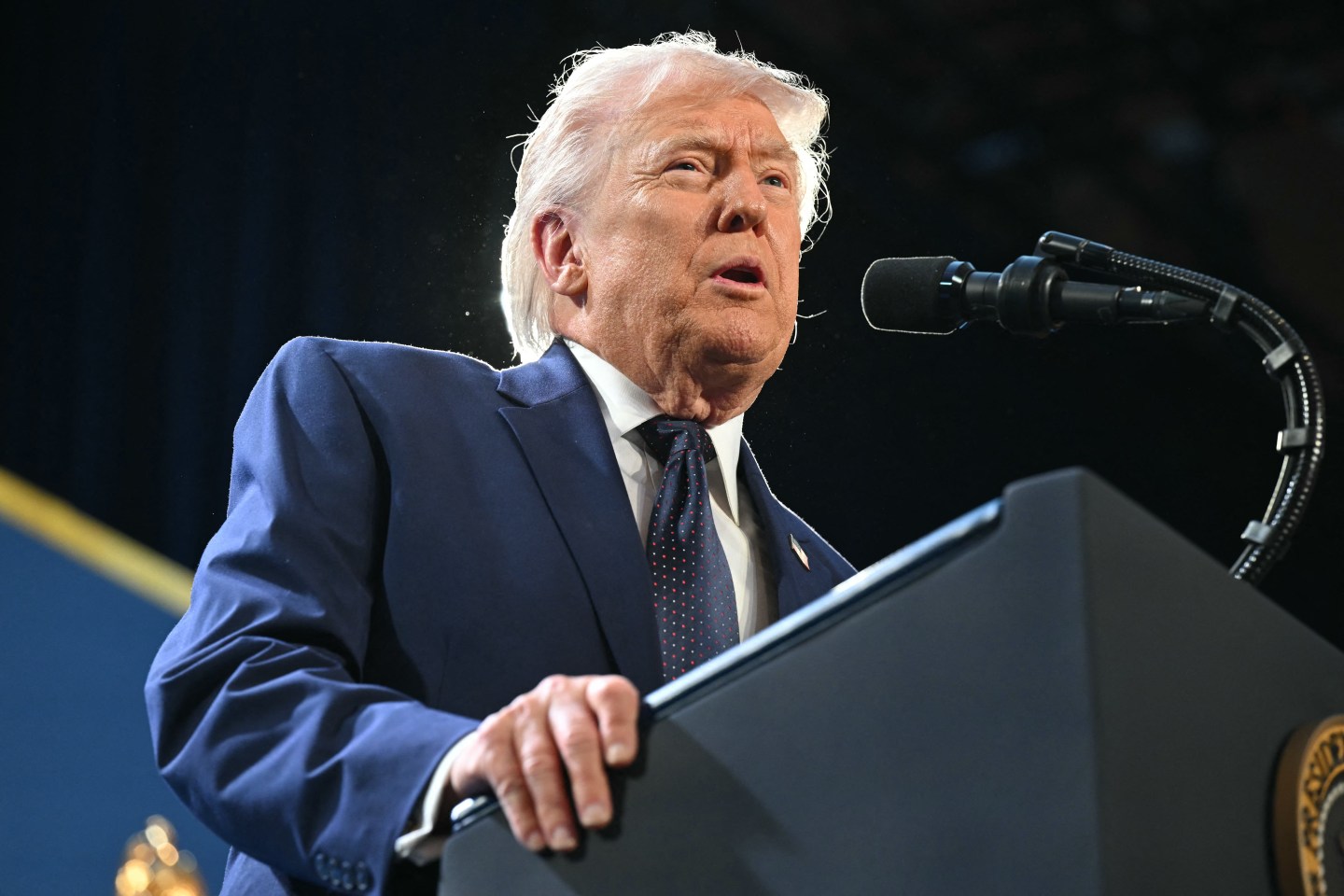
President-elect Donald Trump makes a campaign appearance prior to the election.
President-elect Donald Trump makes a campaign appearance prior to the election.Allison Robbert-Pool—Getty Images

In the final weeks of his campaign, President-elect Donald Trump appealed to an often-overlooked constituency, Americans overseas, with a pledge to end the “double-taxation” of their income. 

But unlike many Trump campaign talking points, this isn’t a partisan issue. In fact, it’s one with broad cross-aisle support. A coalition of organizations ranging from Democrats Abroad, an arm of the Democratic Party, to the fiscally conservative National Taxpayers Union all support eliminating undue tax burdens on Americans overseas.

From a policy perspective, eliminating the current requirement that American expats pay taxes on their foreign income to the United States as well as their country of residence makes perfect sense. Only two other countries require citizenship-based taxation: Eritrea and North Korea. As a simple matter of fairness, no U.S. citizen should be taxed twice. 

But it’s not just about the IRS bill. Expats also face significantly more paperwork, requiring them to hire professional help that may be hard to afford. Contrary to the stereotype perpetuated by the media, most Americans abroad aren’t living in fancy villas. A majority of Americans abroad have a gross household income of less than $100,000.

The tax treatment of income earned overseas also hurts our economy and the economies of our trading partners. While studying and working abroad, Americans acquire skills in all kinds of fields, including finance, natural resources, the sciences, and engineering. When they come home, they bring their new knowledge with them to benefit U.S. enterprises.

Many Americans abroad work for U.S. companies—and thus help bolster U.S. businesses expanding into new markets. And many work in jobs that promote trade.

Double taxation discourages all these activities. It even encourages some to stay abroad permanently. In fact, nearly one-third of Americans living abroad are either planning to renounce their citizenship or are seriously considering it, according to a recent survey. Of these expats, three in four cited the burden of managing and filing U.S. taxes as a primary motivator. This is sad because people should not feel they have to change their lives and the lives of their families based on taxes.

Host countries also benefit from expat U.S. citizens—and are hurt by policies that discourage Americans from living overseas. For one thing, the countries of residence gain talent. American professionals bring diverse skills, knowledge, and perspectives. They fill workforce gaps, contribute to public finances through taxes paid, and provide access to their networks in U.S. markets.

Getting rid of double taxation for U.S. citizens abroad isn’t a new idea. In 2018, Rep. George Holding (R-NC) introduced the Tax Fairness for Americans Abroad Act. And in the past few years, Democrats introduced several bills that would transition the United States to a system in which Americans have the option to pay taxes based only on their place of residency, rather than on citizenship. 

Residency-based taxation (RBT) would not change the way an individual’s U.S. income is taxed, only foreign income. Such a switch wouldn’t require massive redrafting of the Internal Revenue Code—and it needn’t be mandatory for American expats who would rather stick with the current system. According to research we conducted in 2022, residency-based taxation could be adopted without any loss of revenue to the U.S. Treasury.

Naturally, members of Congress do not want to vote for something that appeals to billionaires looking for loopholes to avoid paying taxes. So the next Congress could prevent abuses by excluding certain “tax haven” countries from residency-based taxation policies and making a handful of other nip-and-tuck changes.

This is an issue of enormous importance to a sizable number of American voters. It’s critical that President Trump follows through on this campaign promise.

More must-read commentary published by Fortune:

  • Shell’s Pyrrhic victory may well set the stage for more corporate climate accountability
  • Demis Hassabis-James Manyika: AI will help us understand the very fabric of reality
  • British fintech founder who moved to U.S.: U.K. tech’s problem isn’t taxes—it’s ambition
  • The next wave of AI won’t be driven by LLMs. Here’s what investors should focus on instead

The opinions expressed in Fortune.com commentary pieces are solely the views of their authors and do not necessarily reflect the opinions and beliefs of Fortune.

Fortune Brainstorm AI returns to San Francisco Dec. 8–9 to convene the smartest people we know—technologists, entrepreneurs, Fortune Global 500 executives, investors, policymakers, and the brilliant minds in between—to explore and interrogate the most pressing questions about AI at another pivotal moment. Register here.
About the Author
By Charles Bruce
See full bioRight Arrow Button Icon

Latest in Commentary

Steve Milton is the CEO of Chain, a culinary-led pop-culture experience company founded by B.J. Novak and backed by Studio Ramsay Global.
CommentaryFood and drink
Affordability isn’t enough. Fast-casual restaurants need a fandom-first approach
By Steve MiltonDecember 5, 2025
17 hours ago
Paul Atkins
CommentaryCorporate Governance
Turning public companies into private companies: the SEC’s retreat from transparency and accountability
By Andrew BeharDecember 5, 2025
17 hours ago
Matt Rogers
CommentaryInfrastructure
I built the first iPhone with Steve Jobs. The AI industry is at risk of repeating an early smartphone mistake
By Matt RogersDecember 4, 2025
2 days ago
Jerome Powell
CommentaryFederal Reserve
Fed officials like the mystique of being seen as financial technocrats, but it’s time to demystify the central bank
By Alexander William SalterDecember 4, 2025
2 days ago
Rakesh Kumar
CommentarySemiconductors
China does not need Nvidia chips in the AI war — export controls only pushed it to build its own AI machine
By Rakesh KumarDecember 3, 2025
3 days ago
Rochelle Witharana is Chief Financial and Investment Officer for The California Wellness Foundation
Commentarydiversity and inclusion
Fund managers from diverse backgrounds are delivering standout returns and the smart money is slowly starting to pay attention
By Rochelle WitharanaDecember 3, 2025
3 days ago

Most Popular

placeholder alt text
Economy
Two months into the new fiscal year and the U.S. government is already spending more than $10 billion a week servicing national debt
By Eleanor PringleDecember 4, 2025
2 days ago
placeholder alt text
Success
‘Godfather of AI’ says Bill Gates and Elon Musk are right about the future of work—but he predicts mass unemployment is on its way
By Preston ForeDecember 4, 2025
2 days ago
placeholder alt text
Success
Nearly 4 million new manufacturing jobs are coming to America as boomers retire—but it's the one trade job Gen Z doesn't want
By Emma BurleighDecember 4, 2025
2 days ago
placeholder alt text
Success
Nvidia CEO Jensen Huang admits he works 7 days a week, including holidays, in a constant 'state of anxiety' out of fear of going bankrupt
By Jessica CoacciDecember 4, 2025
2 days ago
placeholder alt text
Real Estate
‘There is no Mamdani effect’: Manhattan luxury home sales surge after mayoral election, undercutting predictions of doom and escape to Florida
By Sasha RogelbergDecember 4, 2025
2 days ago
placeholder alt text
Economy
Tariffs and the $38 trillion national debt: Kevin Hassett sees ’big reductions’ in deficit while Scott Bessent sees a ‘shrinking ice cube’
By Nick LichtenbergDecember 4, 2025
2 days ago
Rankings
  • 100 Best Companies
  • Fortune 500
  • Global 500
  • Fortune 500 Europe
  • Most Powerful Women
  • Future 50
  • World’s Most Admired Companies
  • See All Rankings
Sections
  • Finance
  • Leadership
  • Success
  • Tech
  • Asia
  • Europe
  • Environment
  • Fortune Crypto
  • Health
  • Retail
  • Lifestyle
  • Politics
  • Newsletters
  • Magazine
  • Features
  • Commentary
  • Mpw
  • CEO Initiative
  • Conferences
  • Personal Finance
  • Education
Customer Support
  • Frequently Asked Questions
  • Customer Service Portal
  • Privacy Policy
  • Terms Of Use
  • Single Issues For Purchase
  • International Print
Commercial Services
  • Advertising
  • Fortune Brand Studio
  • Fortune Analytics
  • Fortune Conferences
  • Business Development
About Us
  • About Us
  • Editorial Calendar
  • Press Center
  • Work At Fortune
  • Diversity And Inclusion
  • Terms And Conditions
  • Site Map

© 2025 Fortune Media IP Limited. All Rights Reserved. Use of this site constitutes acceptance of our Terms of Use and Privacy Policy | CA Notice at Collection and Privacy Notice | Do Not Sell/Share My Personal Information
FORTUNE is a trademark of Fortune Media IP Limited, registered in the U.S. and other countries. FORTUNE may receive compensation for some links to products and services on this website. Offers may be subject to change without notice.