• Home
  • Latest
  • Fortune 500
  • Finance
  • Tech
  • Leadership
  • Lifestyle
  • Rankings
  • Multimedia
CommentaryEntrepreneurship

I exited one of the NYC area’s biggest real estate deals at 31. Here’s what I learned

By
Michael Sonnenfeldt
Michael Sonnenfeldt
Down Arrow Button Icon
By
Michael Sonnenfeldt
Michael Sonnenfeldt
Down Arrow Button Icon
March 12, 2026, 6:30 AM ET
sonnenfeldt
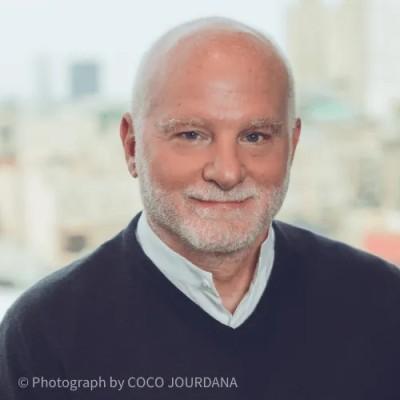
Michael W. Sonnenfeldt, founder and chairman at TIGER 21.courtesy of TIGER 21

Is it luck when an entrepreneur hits big? It is not the lottery, but the returns can feel like it.

Recommended Video

I learned this early. At 31, I exited one of the most successful real estate deals in Metropolitan New York history: the redevelopment of the Harborside Financial Center in Jersey City. At the time, it was the country’s largest commercial renovation. For me, it was my first substantial wealth moment and I had no idea what to do next: What to do with the new capital I acquired and how would I make it matter? 

The more wealth one accumulates, the more fragile one can feel. What begins as a quest for freedom can morph into a fortress mentality. I have seen peers—brilliant, driven individuals—become distracted by the fear of losing what they have built. Instead of leaning into the adaptability that made them successful, they retreat behind walls, both literal and figurative. 

Today we are in a similar societal position: We are on the precipice of the largest societal wealth transfer in history, where an estimated $84 trillion is set to pass down to younger generations over the next two decades. What will we do next? What happens now will define the future of American innovation and entrepreneurship, and that’s why we all should be paying attention. 

For the last 26 years, I have been studying some of the world’s most successful entrepreneurs through my founding of TIGER 21, and I’ve learned a lot about how entrepreneurs find success and how investors create impressive returns. 

Two points are poignant today as we think about our future: One, being a successful founder and entrepreneur rarely ever translates into being an equally successful investor, and two, once wealth is accumulated, the fear of losing wealth can cause loss and inaction. Combined, these two learnings have the potential to shift our entire wealth and societal landscape: It turns out that managing capital is just as important as figuring out how to create it. 

During my teens I tried a dozen different ways to hit the entrepreneurial lottery, from shoveling snow to slinging milk at the local Dairy Barn. Some of my endeavors paid off; others did not. In many ways, that experience reflects something uniquely American: a country structured, culturally and economically, to encourage people to take risks, start businesses, accept failure and accumulate learning as the byproduct of each venture to maximize success the next time around. 

So why do so few entrepreneurs hit it big? The answer lies in how success is spread out. Entrepreneurs often start with very little and build something valuable from scratch. Investors, on the other hand, spread their money across many existing opportunities. Most entrepreneurs don’t make much money, but a tiny number hit it big—so big that they re-shape the entire wealth landscape.

Investor returns, on the other hand, typically preserve wealth with safer investments yielding 8-10% returns, and generally a point or two less for family offices that, unlike most institutional investors, have to maintain cash and liquidity. But even at 10% return over the same 30 years, $1 only grows to $18.  Eighteen times very little is very little, but if you inherit $10 million, that can turn into $180 million at 10% for 30 years, and that’s a horse of another color. 

The key difference is to set expectations based on the shape of likely outcomes, not hopeful pipedreams.  Investor returns tend to follow a bell curve—most people earn around the average. Entrepreneurial outcomes, however, follow a power law distribution. That means a lucky few (Zuckerberg, Gates, Musk etc) earn massive amounts—so much so that they skew the average. It’s like city populations: most cities are small, but a handful are enormous because people flock to them–drawn by opportunity, talent, capital and more—making them even bigger. 

Our country was built on the resilience and creativity of entrepreneurs, people who are willing to take risks, adapt and innovate. Success, in its truest form, is something to celebrate. But there is a troubling shift that occurs when success hardens into excess and gives way to fear, a paradox that emerges all too often. 

Defensive wealth behaviors, however, create ripple effects that weaken social fabric. Communities fracture as inequality deepens. Public trust erodes when resources concentrate at the top. Ironically, the very effort to secure one’s position can destabilize the society that enabled success in the first place.

Why does this happen? Partly because wealth magnifies risk perception. The stakes feel higher, and the margin for error smaller. But the mindset that built success—adaptability, openness and a willingness to embrace uncertainty—remains the antidote. When we lose that, we trade creativity for control and generosity for guardedness. And in doing so, we diminish not only our own sense of purpose but the collective resilience of our communities.

There is another way. Ultimate security does not come from building taller walls or deeper moats. A society can become stronger, more successful and more resilient by strengthening the networks of trust and opportunity that bind us together. That means investing in shared systems—education, healthcare, energy, infrastructure, entrepreneurship—that allow all of us to thrive. We must resist the temptation to see privilege as a prize to defend and instead view success as a platform for meaningful contribution and mentorship. True leadership in this era is not simply about accumulation; it is about stewardship.

As someone who understands the allure of control, I know that the entrepreneurial spirit prizes independence, and wealth amplifies that instinct. But independence without interdependence is an illusion. If we allow fear to dictate our choices, we risk creating a society defined by walls that separate, harden and ultimately collapse under their own weight.

As we look back at the first 250 years of American entrepreneurship and look ahead to our shared future, fear cannot win. We must better understand how we can make an impact, as both investors and entrepreneurs. America’s extraordinary wealth must become focused on creating an entrepreneurial prism refracts into a broader spectrum of responsibility, opportunity and stewardship. This is not a left wing fantasy but centrist reality. When the United States has invested in finding societal solutions, we have all benefitted(social security, education, and even fixing the ozone layer in the 1990s). 

The challenge before us is cultural as much as economic. We must redefine what it means to be secure—not as just owning more, but as belonging to a society that works for all. That requires the same courage that sparked our first ventures to let go of the illusion that more is always better. In the end, resilience is not measured by what we keep, but by what we are willing to invest in others. And the future of our country depends on that choice.

The opinions expressed in Fortune.com commentary pieces are solely the views of their authors and do not necessarily reflect the opinions and beliefs of Fortune.

Join us at the Fortune Workplace Innovation Summit May 19–20, 2026, in Atlanta. The next era of workplace innovation is here—and the old playbook is being rewritten. At this exclusive, high-energy event, the world’s most innovative leaders will convene to explore how AI, humanity, and strategy converge to redefine, again, the future of work. Register now.
About the Author
By Michael Sonnenfeldt
See full bioRight Arrow Button Icon

Latest in Commentary

Finance
Lorem ipsum dolor sit amet, consectetur adipiscing elit, sed do eiusmod tempor incididunt ut labore et dolore magna aliqua. Ut enim ad minim veniam
By Fortune Editors
October 20, 2025
Finance
Lorem ipsum dolor sit amet, consectetur adipiscing elit, sed do eiusmod tempor incididunt ut labore et dolore magna aliqua. Ut enim ad minim veniam
By Fortune Editors
October 20, 2025
Finance
Lorem ipsum dolor sit amet, consectetur adipiscing elit, sed do eiusmod tempor incididunt ut labore et dolore magna aliqua. Ut enim ad minim veniam
By Fortune Editors
October 20, 2025
Finance
Lorem ipsum dolor sit amet, consectetur adipiscing elit, sed do eiusmod tempor incididunt ut labore et dolore magna aliqua. Ut enim ad minim veniam
By Fortune Editors
October 20, 2025
Finance
Lorem ipsum dolor sit amet, consectetur adipiscing elit, sed do eiusmod tempor incididunt ut labore et dolore magna aliqua. Ut enim ad minim veniam
By Fortune Editors
October 20, 2025
Finance
Lorem ipsum dolor sit amet, consectetur adipiscing elit, sed do eiusmod tempor incididunt ut labore et dolore magna aliqua. Ut enim ad minim veniam
By Fortune Editors
October 20, 2025

Most Popular

Finance
Lorem ipsum dolor sit amet, consectetur adipiscing elit, sed do eiusmod tempor incididunt ut labore et dolore magna aliqua. Ut enim ad minim veniam
By Fortune Editors
October 20, 2025
Finance
Lorem ipsum dolor sit amet, consectetur adipiscing elit, sed do eiusmod tempor incididunt ut labore et dolore magna aliqua. Ut enim ad minim veniam
By Fortune Editors
October 20, 2025
Finance
Lorem ipsum dolor sit amet, consectetur adipiscing elit, sed do eiusmod tempor incididunt ut labore et dolore magna aliqua. Ut enim ad minim veniam
By Fortune Editors
October 20, 2025
Finance
Lorem ipsum dolor sit amet, consectetur adipiscing elit, sed do eiusmod tempor incididunt ut labore et dolore magna aliqua. Ut enim ad minim veniam
By Fortune Editors
October 20, 2025
Finance
Lorem ipsum dolor sit amet, consectetur adipiscing elit, sed do eiusmod tempor incididunt ut labore et dolore magna aliqua. Ut enim ad minim veniam
By Fortune Editors
October 20, 2025
Finance
Lorem ipsum dolor sit amet, consectetur adipiscing elit, sed do eiusmod tempor incididunt ut labore et dolore magna aliqua. Ut enim ad minim veniam
By Fortune Editors
October 20, 2025
Fortune Secondary Logo
Rankings
  • 100 Best Companies
  • Fortune 500
  • Global 500
  • Fortune 500 Europe
  • Most Powerful Women
  • Future 50
  • World’s Most Admired Companies
  • See All Rankings
Sections
  • Finance
  • Fortune Crypto
  • Features
  • Leadership
  • Health
  • Commentary
  • Success
  • Retail
  • Mpw
  • Tech
  • Lifestyle
  • CEO Initiative
  • Asia
  • Politics
  • Conferences
  • Europe
  • Newsletters
  • Personal Finance
  • Environment
  • Magazine
  • Education
Customer Support
  • Frequently Asked Questions
  • Customer Service Portal
  • Privacy Policy
  • Terms Of Use
  • Single Issues For Purchase
  • International Print
Commercial Services
  • Advertising
  • Fortune Brand Studio
  • Fortune Analytics
  • Fortune Conferences
  • Business Development
  • Group Subscriptions
About Us
  • About Us
  • Editorial Calendar
  • Press Center
  • Work At Fortune
  • Diversity And Inclusion
  • Terms And Conditions
  • Site Map
  • About Us
  • Editorial Calendar
  • Press Center
  • Work At Fortune
  • Diversity And Inclusion
  • Terms And Conditions
  • Site Map
  • Facebook icon
  • Twitter icon
  • LinkedIn icon
  • Instagram icon
  • Pinterest icon
Michael W. Sonnenfeldt is a serial entrepreneur, investor and philanthropist best known for founding TIGER 21. He is the Founder and Chairman of MUUS & Company, a family office focused on investing in durable, value-aligned assets, which includes investment in sustainable energy production, climate tech and art.

Latest in Commentary

clinton
Commentarydisruption
I was a government official in the 1990s and watched the economy get turned upside-down. It’s happening again
By Maria FlynnApril 15, 2026
1 hour ago
dees
CommentaryNational Security
A retired general’s warning: America can’t fight the AI arms race on tech it doesn’t control
By Robert F. DeesApril 15, 2026
1 hour ago
fudd
CommentarySports
Azzi Fudd: how I learned to use NIL for transformation, not just transactions
By Azzi FuddApril 15, 2026
2 hours ago
crowell
CommentaryRetirement
Retirees are facing a $345,000 bill they never saw coming — and most aren’t prepared
By Andrew CrowellApril 14, 2026
1 day ago
AI agents are acting like employees, but company structures still treat them like software
CommentaryOkta
AI agents are acting like employees, but company structures still treat them like software
By Dan MountstephenApril 13, 2026
2 days ago
trump
CommentaryWhite House
The futility of Trump’s grandiose personal branding of public assets, from ballrooms and bills to ships and planes
By Jeffrey Sonnenfeld and Steven TianApril 13, 2026
2 days ago

Most Popular

Billionaire philanthropist MacKenzie Scott has donated again—a week after gifting millions to a college, she's just given $70 million to Meals on Wheels America
Success
Billionaire philanthropist MacKenzie Scott has donated again—a week after gifting millions to a college, she's just given $70 million to Meals on Wheels America
By Fortune EditorsApril 13, 2026
2 days ago
Retirees are facing a $345,000 bill they never saw coming — and most aren't prepared
Commentary
Retirees are facing a $345,000 bill they never saw coming — and most aren't prepared
By Fortune EditorsApril 14, 2026
1 day ago
He was coding at 12 like Elon Musk and became one of Google’s youngest-ever CMOs—but now says Gen Z is better off ice skating than learning to code
Success
He was coding at 12 like Elon Musk and became one of Google’s youngest-ever CMOs—but now says Gen Z is better off ice skating than learning to code
By Fortune EditorsApril 14, 2026
1 day ago
Anthropic is facing a wave of user backlash over reports of performance issues with its Claude AI chatbot
AI
Anthropic is facing a wave of user backlash over reports of performance issues with its Claude AI chatbot
By Fortune EditorsApril 14, 2026
1 day ago
Palantir CEO says working at his $316 billion software company is better than a degree from Harvard or Yale: ‘No one cares about the other stuff’
Success
Palantir CEO says working at his $316 billion software company is better than a degree from Harvard or Yale: ‘No one cares about the other stuff’
By Fortune EditorsApril 14, 2026
1 day ago
Current price of oil as of April 14, 2026
Personal Finance
Current price of oil as of April 14, 2026
By Fortune EditorsApril 14, 2026
1 day ago

© 2026 Fortune Media IP Limited. All Rights Reserved. Use of this site constitutes acceptance of our Terms of Use and Privacy Policy | CA Notice at Collection and Privacy Notice | Do Not Sell/Share My Personal Information
FORTUNE is a trademark of Fortune Media IP Limited, registered in the U.S. and other countries. FORTUNE may receive compensation for some links to products and services on this website. Offers may be subject to change without notice.