• Home
  • Latest
  • Fortune 500
  • Finance
  • Tech
  • Leadership
  • Lifestyle
  • Rankings
  • Multimedia

Trendingnow

1

Jeff Bezos wants the bottom half of earners to pay zero income tax—he says nurses making just $75K should save $12K a year

2

Apple’s Steve Wozniak says he cofounded the tech giant after 5 rejections from HP—not to ‘make money.’ For years, his paycheck was just $50

3

Indeed chief economist says we’re entering an era of ‘great mismatch’ thanks to a generational imbalance of workers

1

Jeff Bezos wants the bottom half of earners to pay zero income tax—he says nurses making just $75K should save $12K a year

2

Apple’s Steve Wozniak says he cofounded the tech giant after 5 rejections from HP—not to ‘make money.’ For years, his paycheck was just $50

3

Indeed chief economist says we’re entering an era of ‘great mismatch’ thanks to a generational imbalance of workers
CommentaryAI

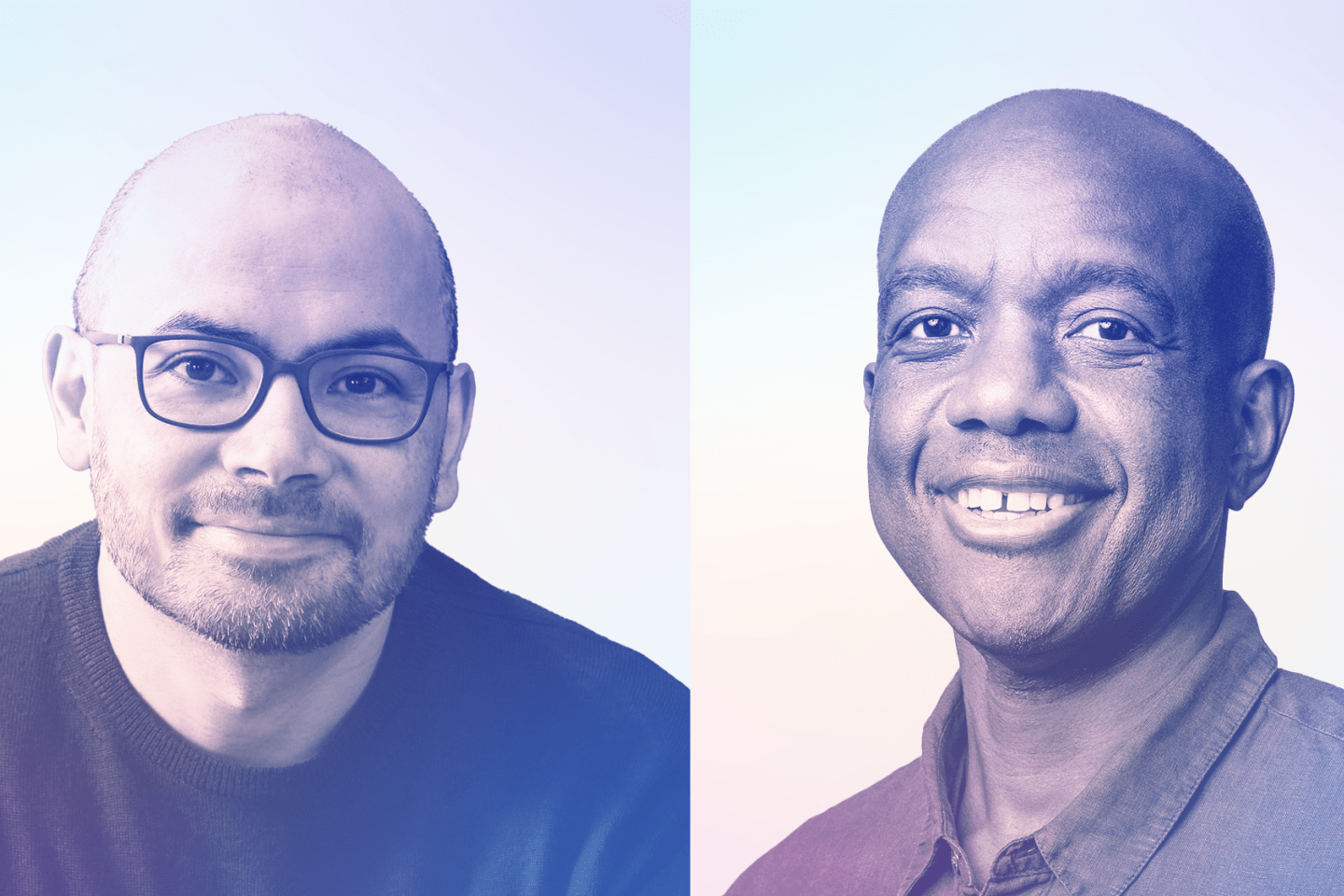
Demis Hassabis-James Manyika: AI will help us understand the very fabric of reality

By
Demis Hassabis
Demis Hassabis
and
James Manyika
James Manyika
Down Arrow Button Icon
By
Demis Hassabis
Demis Hassabis
and
James Manyika
James Manyika
Down Arrow Button Icon
November 18, 2024, 4:50 AM ET
Courtesy of Google

If you want to understand the universe, you can start by reading the greats: Feynman, Weinberg, Curie, Hofstadter, Kant, Spinoza, Turing, and all the brilliant scientists and philosophers who advanced the frontiers of human knowledge and on whose shoulders modern civilization stands.

But in the course of that journey you will also discover that, despite all this incredible progress, there are surprising limits to the things we know. We are still nowhere near answering some of the biggest questions, like the nature of time, consciousness, or the very fabric of reality.

To make progress towards answering these profound questions, new tools and approaches will almost certainly be needed. Artificial intelligence (AI) is one such tool, and we’ve always believed that it could, in fact, be the ultimate tool to help accelerate scientific discovery. 

We’ve been working toward this goal for more than 20 years. DeepMind (now Google DeepMind) was founded with the mission of responsibly building Artificial General Intelligence (AGI), a system that can perform almost any cognitive task at a human level. The immense promise of such systems is that they could then be used to advance our understanding of the world around us, and help us solve some of society’s greatest challenges.

In 2016, after we’d developed AlphaGo, the first AI system to beat a world champion at the complex game of Go, and witnessed its famously creative Move 37 in Game 2, we felt the techniques and methods were in place to start using AI to tackle important open problems in science. 

At the top of that list was the 50-year-old grand challenge of protein folding. Proteins are the building blocks of life. They underpin every biological process in every living thing, from the fibers in your muscles to the neurons firing in your brain. Each protein is specified by its amino acid sequence (roughly its genetic sequence) and spontaneously folds into a three-dimensional structure. The shape of a protein is important because it tells you a lot about what the protein does—information that’s critical for things like understanding diseases, and drug discovery. 

Predicting the 3D shape of a protein directly from its 1D amino acid sequence is known as the “protein folding problem.” It’s incredibly challenging because there are estimated to be more potential ways that an average protein can fold than there are atoms in the universe. 

Finding a protein’s structure experimentally can take years of painstaking and expensive work. It can typically take a grad student their entire PhD to produce just one structure. After a monumental collective effort spanning decades, structural biologists had determined around 170,000 of these structures and deposited them in the Protein Data Bank (PDB).

AlphaFold was our solution to this problem—and it was recognized with this year’s Nobel Prize in Chemistry. AlphaFold learns a complex model of proteins from the structures in the PDB and other related data. It can then, in minutes, predict the structure of a novel protein down to atomic accuracy (i.e., to within the width of an atom on average). As AlphaFold is so fast as well as accurate, over the course of a year, we were able to use it to predict the structure of nearly every protein known to science: over 200 million proteins—a task that would have taken approximately a billion years of PhD time.

To have the most beneficial impact on society, we made AlphaFold and all of its predicted structures freely and openly available for anyone in the world to use, in partnership with the European Bioinformatics Institute (EMBL-EBI). In just three years, over 2 million researchers from 190 countries have used it to advance their important work, from designing enzymes to tackle plastic pollution to creating a molecular syringe capable of delivering therapeutic proteins directly into human cells to developing effective malaria vaccines to combating antimicrobial resistance, and much more. We established Isomorphic Labs to further build on these breakthroughs and use AI to revolutionize the drug discovery process, making it faster and less expensive. This is what we call: science at digital speed.

Indeed, with AI as a tool, scientists are making great progress in nearly every field of scientific endeavor. At Google DeepMind and Google Research, working with academic collaborators, we have been using AI to help control the shape of plasma in a fusion reactor, discover faster matrix multiplication algorithms, make mathematical discoveries, discover new materials, explore quantum dynamics, understand behaviors in the brain, draft the first reference pangenome, advance the synaptic-level mapping of the human brain, and make better weather predictions.

Advances like these are starting to have a very real, beneficial impact on people’s lives. For example, flood prediction is becoming a more frequent and urgent problem due to climate change. Yet only a small percentage of the world’s rivers have streamflow gauges that can provide direct forms of early warning. Using publicly available data, we used AI to accurately predict riverine flooding up to seven days in advance. Scaling up from an initial pilot in Bangladesh, our early-warning Flood Hub platform now covers hundreds of millions of people in over 80 countries around the world, including in vulnerable and data-scarce regions.

Of course, as we pursue bold leaps in scientific progress, we must also embrace our collective responsibility to build AI in a way that benefits humanity and mitigates against potential harms and misuse. Alongside scientists and technologists, we have to ensure philosophers, ethicists, social scientists, and national scientific academies are brought into the conversation about the future of AI.

A safe and prosperous future with AI is possible only if industry works closely together with government, academia, and civil society to chart the way forward. This includes work towards a regulatory framework that fosters innovation and advances AI-enabled opportunities that benefit everyone. 

AI will be one of the most transformative technologies ever invented. We must approach it with the seriousness and respect it deserves. Although there are many challenges to overcome, both technical and ethical, we believe that with enough time and care, human ingenuity will solve them. We have to be both bold and responsible.

As AI accelerates the pace of progress itself, new discoveries will build on each other in a virtuous cycle. We may very well be on the threshold of a new golden age of discovery, one that brings us closer than ever to understanding some of the deepest mysteries of the universe, and our place in it.

More must-read commentary published by Fortune:

  • Shell’s Pyrrhic victory may well set the stage for more corporate climate accountability
  • Americans paid $100B since 2008 to access their own money. I am petitioning the Fed to end this racket
  • British fintech founder who moved to U.S.: U.K. tech’s problem isn’t taxes—it’s ambition
  • The next wave of AI won’t be driven by LLMs. Here’s what investors should focus on instead

The opinions expressed in Fortune.com commentary pieces are solely the views of their authors and do not necessarily reflect the opinions and beliefs of Fortune.

About the Authors
By Demis Hassabis
See full bioRight Arrow Button Icon
By James Manyika
See full bioRight Arrow Button Icon

Latest in Commentary

Finance
Lorem ipsum dolor sit amet, consectetur adipiscing elit, sed do eiusmod tempor incididunt ut labore et dolore magna aliqua. Ut enim ad minim veniam
By Fortune Editors
October 20, 2025
Finance
Lorem ipsum dolor sit amet, consectetur adipiscing elit, sed do eiusmod tempor incididunt ut labore et dolore magna aliqua. Ut enim ad minim veniam
By Fortune Editors
October 20, 2025
Finance
Lorem ipsum dolor sit amet, consectetur adipiscing elit, sed do eiusmod tempor incididunt ut labore et dolore magna aliqua. Ut enim ad minim veniam
By Fortune Editors
October 20, 2025
Finance
Lorem ipsum dolor sit amet, consectetur adipiscing elit, sed do eiusmod tempor incididunt ut labore et dolore magna aliqua. Ut enim ad minim veniam
By Fortune Editors
October 20, 2025
Finance
Lorem ipsum dolor sit amet, consectetur adipiscing elit, sed do eiusmod tempor incididunt ut labore et dolore magna aliqua. Ut enim ad minim veniam
By Fortune Editors
October 20, 2025
Finance
Lorem ipsum dolor sit amet, consectetur adipiscing elit, sed do eiusmod tempor incididunt ut labore et dolore magna aliqua. Ut enim ad minim veniam
By Fortune Editors
October 20, 2025

Most Popular

Finance
Lorem ipsum dolor sit amet, consectetur adipiscing elit, sed do eiusmod tempor incididunt ut labore et dolore magna aliqua. Ut enim ad minim veniam
By Fortune Editors
October 20, 2025
Finance
Lorem ipsum dolor sit amet, consectetur adipiscing elit, sed do eiusmod tempor incididunt ut labore et dolore magna aliqua. Ut enim ad minim veniam
By Fortune Editors
October 20, 2025
Finance
Lorem ipsum dolor sit amet, consectetur adipiscing elit, sed do eiusmod tempor incididunt ut labore et dolore magna aliqua. Ut enim ad minim veniam
By Fortune Editors
October 20, 2025
Finance
Lorem ipsum dolor sit amet, consectetur adipiscing elit, sed do eiusmod tempor incididunt ut labore et dolore magna aliqua. Ut enim ad minim veniam
By Fortune Editors
October 20, 2025
Finance
Lorem ipsum dolor sit amet, consectetur adipiscing elit, sed do eiusmod tempor incididunt ut labore et dolore magna aliqua. Ut enim ad minim veniam
By Fortune Editors
October 20, 2025
Finance
Lorem ipsum dolor sit amet, consectetur adipiscing elit, sed do eiusmod tempor incididunt ut labore et dolore magna aliqua. Ut enim ad minim veniam
By Fortune Editors
October 20, 2025
Fortune Secondary Logo
Rankings
  • 100 Best Companies
  • Fortune 500
  • Global 500
  • Fortune 500 Europe
  • Most Powerful Women
  • World's Most Admired Companies
  • See All Rankings
  • Lists Calendar
Sections
  • Finance
  • Fortune Crypto
  • Features
  • Leadership
  • Health
  • Commentary
  • Success
  • Retail
  • Mpw
  • Tech
  • Lifestyle
  • CEO Initiative
  • Asia
  • Politics
  • Conferences
  • Europe
  • Newsletters
  • Personal Finance
  • Environment
  • Magazine
  • Education
Customer Support
  • Frequently Asked Questions
  • Customer Service Portal
  • Privacy Policy
  • Terms Of Use
  • Single Issues For Purchase
  • International Print
Commercial Services
  • Advertising
  • Fortune Brand Studio
  • Fortune Analytics
  • Fortune Conferences
  • Business Development
  • Group Subscriptions
About Us
  • About Us
  • Press Center
  • Work At Fortune
  • Terms And Conditions
  • Site Map
  • About Us
  • Press Center
  • Work At Fortune
  • Terms And Conditions
  • Site Map
  • Facebook icon
  • Twitter icon
  • LinkedIn icon
  • Instagram icon
  • Pinterest icon

Sir Demis Hassabis is a British computer scientist, Nobel Laureate, artificial intelligence researcher, and entrepreneur. Demis is the co-founder and CEO of Google DeepMind and Isomorphic Labs. James Manyika is Senior VP, Research, Technology & Society at Google.  He oversees Google Research, Google Labs, and Technology & Society. James is Vice Chair of the US National AI Advisory Committee, Co-Chair of the UN’s AI Advisory Body, and a Visiting Professor at Oxford.


Latest in Commentary

David Bennahum
CommentaryMedia
I was one of the internet’s first influencers. AI just killed the whole category — and created something better
By David S. BennahumMay 24, 2026
4 hours ago
employees
CommentarySuccession
Millions of business owners are about to retire. They should sell to their employees
By Matt Helmer and Maxwell JohnsonMay 23, 2026
1 day ago
Ashley Yetman
Commentarydisruption
Everyone is blaming AI for the death of ‘craft.’ Take a good look in the mirror
By Ashley YetmanMay 23, 2026
1 day ago
clay
CommentaryLoneliness
I’ve spent 25 years studying loneliness. AI is about to make it much worse
By Clay RoutledgeMay 23, 2026
1 day ago
ambrose
CommentaryRobotics
Former NASA Robotics Chief: America is building the wrong kind of robots — and China knows it
By Robert AmbroseMay 23, 2026
1 day ago
morris
CommentaryEntrepreneurship
My startup hit $200 million ARR. But first I walked away from 2.5 million YouTube subscribers and nearly went bankrupt
By Joel MorrisMay 23, 2026
1 day ago

Most Popular

Jeff Bezos wants the bottom half of earners to pay zero income tax—he says nurses making just $75K should save $12K a year
Success
Jeff Bezos wants the bottom half of earners to pay zero income tax—he says nurses making just $75K should save $12K a year
By Preston ForeMay 21, 2026
3 days ago
Apple’s Steve Wozniak says he cofounded the tech giant after 5 rejections from HP—not to ‘make money.’ For years, his paycheck was just $50
Success
Apple’s Steve Wozniak says he cofounded the tech giant after 5 rejections from HP—not to ‘make money.’ For years, his paycheck was just $50
By Preston ForeMay 22, 2026
2 days ago
Indeed chief economist says we’re entering an era of ‘great mismatch’ thanks to a generational imbalance of workers
Success
Indeed chief economist says we’re entering an era of ‘great mismatch’ thanks to a generational imbalance of workers
By Emma BurleighMay 22, 2026
2 days ago
Microsoft reports are exposing AI's real cost problem: Using the tech is more expensive than paying human employees
AI
Microsoft reports are exposing AI's real cost problem: Using the tech is more expensive than paying human employees
By Jake AngeloMay 22, 2026
2 days ago
Elon Musk's SpaceX IPO filing just told us what business he's betting on for the future—and it's not rockets
Investing
Elon Musk's SpaceX IPO filing just told us what business he's betting on for the future—and it's not rockets
By Shawn TullyMay 23, 2026
1 day ago
Meet a 21-year-old community college student who's going to China as the first American woman welder in the trades Olympics
Future of Work
Meet a 21-year-old community college student who's going to China as the first American woman welder in the trades Olympics
By Mike Householder and The Associated PressMay 17, 2026
7 days ago

© 2026 Fortune Media IP Limited. All Rights Reserved. Use of this site constitutes acceptance of our Terms of Use and Privacy Policy | CA Notice at Collection and Privacy Notice | Do Not Sell/Share My Personal Information
FORTUNE is a trademark of Fortune Media IP Limited, registered in the U.S. and other countries. FORTUNE may receive compensation for some links to products and services on this website. Offers may be subject to change without notice.