• Home
  • Latest
  • Fortune 500
  • Finance
  • Tech
  • Leadership
  • Lifestyle
  • Rankings
  • Multimedia

Trendingnow

1

FedEx CEO says we are in the middle of the biggest supply chain shift he’s seen in 35 years: ‘We are the referendum’

2

26 Meta employees accuse Mark Zuckerberg of using AI to target 8,000 layoffs against workers on medical, parental or family leave

3

He sold his last company to Palantir. Now he's betting $32 million that robots can fix construction's labor crisis

1

FedEx CEO says we are in the middle of the biggest supply chain shift he’s seen in 35 years: ‘We are the referendum’

2

26 Meta employees accuse Mark Zuckerberg of using AI to target 8,000 layoffs against workers on medical, parental or family leave

3

He sold his last company to Palantir. Now he's betting $32 million that robots can fix construction's labor crisis
CommentaryMilitary

There’s one particular way the Iran War is different from all the others in American history

By
Charles Walldorf
Charles Walldorf
and
The Conversation
The Conversation
Down Arrow Button Icon
By
Charles Walldorf
Charles Walldorf
and
The Conversation
The Conversation
Down Arrow Button Icon
March 11, 2026, 1:47 PM ET
trump
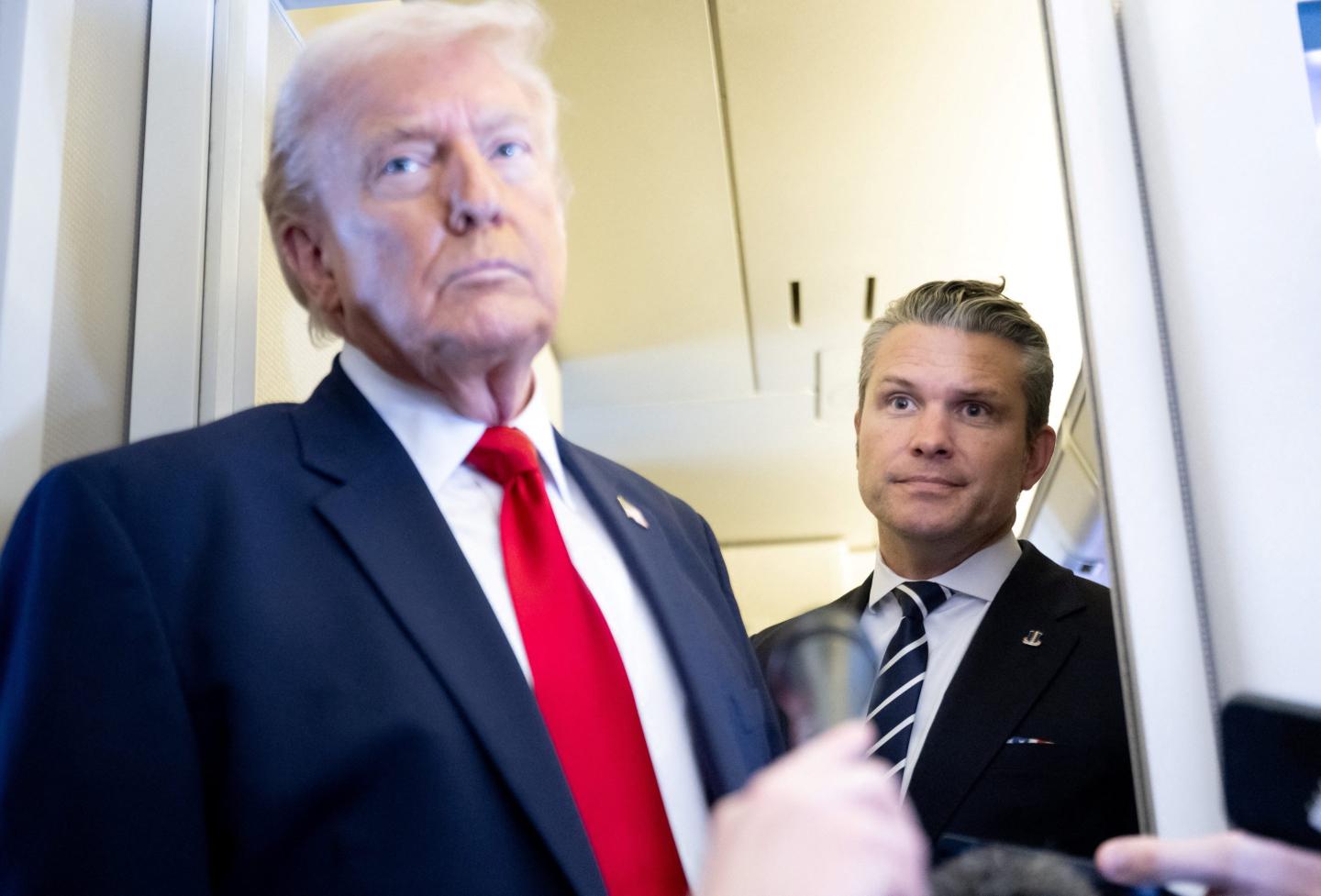
US President Donald Trump speaks with the media as Defense Secretary Pete Hegseth looks on aboard Air Force One during a flight from Dover, Delaware, to Miami, Florida, on March 7, 2026. SAUL LOEB / AFP via Getty Images
Add Fortune on Google for similar content.

It’s clear that regime change is among the biggest objectives of the U.S. war in Iran.

Recommended Video

“I have to be involved in the appointment” of Iran’s next leader, President Donald Trump said on March 5, 2026.

Trump has also said he might put U.S. boots on the ground to get the job done.

Trump now joins a long list of modern U.S. presidents – from Franklin Roosevelt to Harry Truman, Lyndon Johnson, George W. Bush and Barack Obama – who started wars to either overthrow hostile regimes or support embattled friendly governments abroad.

For all the parallels to history, though, Trump’s Iran war is historically unique in one critically important way: In its early stages, the war is not popular with the American public.

A recent CNN poll found that 59% of Americans oppose the war – a trend found in poll after poll since the war began.

As an expert on U.S. foreign policy and regime change wars, my research shows that what’s likely generating public opposition to the Iran war today is the absence of a big story with a grand purpose that has bolstered public support for just about every major U.S.-promoted regime change war since 1900. These broad, purpose-filled narratives generate public buy-in to support the costs of war, which are often high in terms of money spent and lives lost when regime change is at stake.

Two historical examples

In the 1930s and ’40s, a widely accepted – and largely true – story about the dangers of fascism spreading and democracies falling galvanized national support in the United States to enter and then take on the high costs of fighting in World War II.

Likewise, in the 2000s a dominant narrative about preventing a repeat of the Sept. 11, 2001, attacks and stopping terrorism brought strong initial public support for the war in Afghanistan, with 88% support in 2001, and the war in Iraq, with 70% support in 2003.

With no comparable narrative around Iran today, Trump and Republicans could face big problems, especially as costs continue to rise.

No anti-Iran narrative

Iran has been a thorn in the side of many American presidents for a long time. So, what’s missing? Why no grand-purpose narrative at the start of this war?

Two things.

First, grand-purpose narratives are rooted in major geopolitical gains by a rival regime – the danger to the U.S. For the anti-fascism narrative, those events were German troops plowing across Europe and the Japanese attack on Pearl Harbor. For the anti-terrorism narrative, it was planes crashing into the World Trade Center and the Pentagon.

Several soldiers carry a coffin off a plane.
A U.S. Army carry team in Dover, Del., moves a coffin on March 7, 2026, containing the remains of a U.S. soldier killed in the retaliatory Iranian strike on Kuwait’s Port of Shuaiba. Kyle Mazza/Anadolu via Getty Images

Gains like these by rivals prove traumatic to the nation. They also dislodge the status quo and provide the opportunity for new grand-purpose narratives with new policy directions to emerge.

Today, most Americans see no existential danger around Iran. A Marist poll from March 3, 2026, found that 55% of Americans view Iran as a minor threat or no threat at all. And the number who see Iran as a major threat, 44%, is down from 48% in July 2025.

By contrast, 64% of Americans saw Iraq as a “considerable threat” prior to the 2003 U.S. war in Iraq.

The poll numbers on Iran aren’t surprising. Iran is far from a geopolitical menace to the United States today. To the contrary, it’s been in geopolitical retreat in the Middle East in recent years.

In the summer of 2025, Iran’s nuclear nuclear enrichment facilities were significantly damaged – “completely and totally obliterated,” according to Trump, though there is no confirmation of that claim – during the 12-Day war between Iran and Israel.

And in recent years, Tehran has lost a major ally in Syria and witnessed its proxy network all but collapse. Iran has also faced crippling economic conditions and historic protests at home.

As the polls show, none of that has sparked a grand-purpose narrative.

Missing a good story

The second missing factor for narrative formation today is any strong messaging from the White House.

In the months prior to World War II, Roosevelt used his position of authority as president to give speech after speech, setting the context of the traumatic events of the 1930s, explaining the dangers at hand and outlining a course going forward. Though less truthful in its content, Bush did the same for nearly two years before the Iraq War.

Trump did almost none of this storytelling leading up to the Iran war. Five days before the war started, the president devoted three minutes to Iran in a nearly two-hour State of the Union Address.

A man in a suit and tie stands in front of a podium onstage.
President Trump appears at a press conference in Miami on March 9, 2026. Saul Loeb/AFP via Getty Images

Prior to that, he made a comment here and there to the press about Iran, but no storytelling preparing the nation for war. Likewise, since the war began, the administration’s stated reasons for military action keep shifting.

No wonder 54% of Americans polled disapprove of Trump’s handling of Iran and 60% of Americans say Trump has no clear plan for Iran. Also, 60% disapprove of Trump’s handling of foreign policy in general.

By comparison, Americans approved of Bush’s handling of foreign policy by 63% in early 2003.

Absent a cohesive, unifying story, it’s also no surprise there is lots of political fracturing today.

Partisan divides run deep – Democrats and independent voters strongly oppose the war. But Trump’s MAGA coalition is cracking too, with people like Tucker Carlson and Marjorie Taylor Greene sharply criticizing the war.

The way out

If he opts for it, there is an off-ramp for Trump from the Iran war. It’s one he knows well.

When U.S. leaders get caught up in costly regime change wars that outrun national support, they tend to back down, often with far fewer political costs than if they’d continued their unpopular war.

When the disaster referred to as Black Hawk Down hit in Somalia in 1993, killing 18 U.S. Marines, President Bill Clinton opted to end the mission to topple the warlords that ruled the country. Troops came home six months later.

Likewise, after the Benghazi attack killed four Americans in Libya in 2012, Obama pulled out all U.S. personnel working in Libya on nation-building operations.

And just last year, when Trump realized that U.S. ground troops would be necessary to topple the Houthi militant group in Yemen, he negotiated a ceasefire and ended his air war in that country with no significant political fallout.

With Trump’s Iran war, gas prices keep rising, more soldiers are likely to die, and stocks are highly volatile.

Backing down makes a lot of sense. History confirms that.

Charles Walldorf, Professor of Politics and International Affairs, Wake Forest University

This article is republished from The Conversation under a Creative Commons license. Read the original article.

The Conversation
About the Authors
By Charles Walldorf
See full bioRight Arrow Button Icon
By The Conversation
See full bioRight Arrow Button Icon
Add Fortune on Google for similar content.

Latest in Commentary

Finance
Lorem ipsum dolor sit amet, consectetur adipiscing elit, sed do eiusmod tempor incididunt ut labore et dolore magna aliqua. Ut enim ad minim veniam
By Fortune Editors
October 20, 2025
Finance
Lorem ipsum dolor sit amet, consectetur adipiscing elit, sed do eiusmod tempor incididunt ut labore et dolore magna aliqua. Ut enim ad minim veniam
By Fortune Editors
October 20, 2025
Finance
Lorem ipsum dolor sit amet, consectetur adipiscing elit, sed do eiusmod tempor incididunt ut labore et dolore magna aliqua. Ut enim ad minim veniam
By Fortune Editors
October 20, 2025
Finance
Lorem ipsum dolor sit amet, consectetur adipiscing elit, sed do eiusmod tempor incididunt ut labore et dolore magna aliqua. Ut enim ad minim veniam
By Fortune Editors
October 20, 2025
Finance
Lorem ipsum dolor sit amet, consectetur adipiscing elit, sed do eiusmod tempor incididunt ut labore et dolore magna aliqua. Ut enim ad minim veniam
By Fortune Editors
October 20, 2025
Finance
Lorem ipsum dolor sit amet, consectetur adipiscing elit, sed do eiusmod tempor incididunt ut labore et dolore magna aliqua. Ut enim ad minim veniam
By Fortune Editors
October 20, 2025

Most Popular

Finance
Lorem ipsum dolor sit amet, consectetur adipiscing elit, sed do eiusmod tempor incididunt ut labore et dolore magna aliqua. Ut enim ad minim veniam
By Fortune Editors
October 20, 2025
Finance
Lorem ipsum dolor sit amet, consectetur adipiscing elit, sed do eiusmod tempor incididunt ut labore et dolore magna aliqua. Ut enim ad minim veniam
By Fortune Editors
October 20, 2025
Finance
Lorem ipsum dolor sit amet, consectetur adipiscing elit, sed do eiusmod tempor incididunt ut labore et dolore magna aliqua. Ut enim ad minim veniam
By Fortune Editors
October 20, 2025
Finance
Lorem ipsum dolor sit amet, consectetur adipiscing elit, sed do eiusmod tempor incididunt ut labore et dolore magna aliqua. Ut enim ad minim veniam
By Fortune Editors
October 20, 2025
Finance
Lorem ipsum dolor sit amet, consectetur adipiscing elit, sed do eiusmod tempor incididunt ut labore et dolore magna aliqua. Ut enim ad minim veniam
By Fortune Editors
October 20, 2025
Finance
Lorem ipsum dolor sit amet, consectetur adipiscing elit, sed do eiusmod tempor incididunt ut labore et dolore magna aliqua. Ut enim ad minim veniam
By Fortune Editors
October 20, 2025
Fortune Secondary Logo
Rankings
  • 100 Best Companies
  • Fortune 500
  • Global 500
  • Fortune 500 Europe
  • Most Powerful Women
  • World's Most Admired Companies
  • See All Rankings
  • Lists Calendar
Sections
  • Finance
  • Fortune Crypto
  • Features
  • Leadership
  • Health
  • Commentary
  • Success
  • Retail
  • Mpw
  • Tech
  • Lifestyle
  • CEO Initiative
  • Asia
  • Politics
  • Conferences
  • Europe
  • Newsletters
  • Personal Finance
  • Environment
  • Magazine
  • Education
Customer Support
  • Frequently Asked Questions
  • Customer Service Portal
  • Privacy Policy
  • Terms Of Use
  • Single Issues For Purchase
  • International Print
Commercial Services
  • Advertising
  • Fortune Brand Studio
  • Fortune Analytics
  • Fortune Conferences
  • Business Development
  • Group Subscriptions
About Us
  • About Us
  • Press Center
  • Work At Fortune
  • Terms And Conditions
  • Site Map
  • About Us
  • Press Center
  • Work At Fortune
  • Terms And Conditions
  • Site Map
  • Facebook icon
  • Twitter icon
  • LinkedIn icon
  • Instagram icon
  • Pinterest icon

Latest in Commentary

Europe optimized its supply chains for cost. Now it must pay for resilience  
Commentarysupply chains
Europe optimized its supply chains for cost. Now it must pay for resilience  
By Richard SaynorJuly 16, 2026
7 hours ago
tony
Commentarydisruption
Genesys CEO: We can see firsthand how AI is changing — not replacing — work
By Tony BatesJuly 16, 2026
9 hours ago
d
CommentaryParenting
New School economist: Trump Accounts will widen America’s wealth gaps
By Darrick HamiltonJuly 16, 2026
11 hours ago
cape
CommentaryWorld Cup
The legend of Cape Verde: How an island of half a million built the best team at the World Cup
By André MartinJuly 16, 2026
12 hours ago
sb
Commentarynational debt
The national debt is over 100% of GDP and most of Congress is ignoring wishes to rein it in. It’s time to amend the Constitution
By Steve H. Hanke and David M. WalkerJuly 15, 2026
1 day ago
Is your AI really working? Why productivity isn’t the same as progress
Future of WorkBrainstorm Tech
Is your AI really working? Why productivity isn’t the same as progress
By Jamie GarverickJuly 15, 2026
1 day ago

Most Popular

FedEx CEO says we are in the middle of the biggest supply chain shift he’s seen in 35 years: ‘We are the referendum’
C-Suite
FedEx CEO says we are in the middle of the biggest supply chain shift he’s seen in 35 years: ‘We are the referendum’
By Fortune EditorsJuly 15, 2026
1 day ago
26 Meta employees accuse Mark Zuckerberg of using AI to target 8,000 layoffs against workers on medical, parental or family leave
Law
26 Meta employees accuse Mark Zuckerberg of using AI to target 8,000 layoffs against workers on medical, parental or family leave
By Barbara Ortutay, Alexandra Olson and The Associated PressJuly 15, 2026
1 day ago
He sold his last company to Palantir. Now he's betting $32 million that robots can fix construction's labor crisis
Innovation
He sold his last company to Palantir. Now he's betting $32 million that robots can fix construction's labor crisis
By Lily Mae LazarusJuly 15, 2026
1 day ago
Trump's 'American Flag Blue' in the Lincoln Memorial pool is already gray — and the Olympic canoer 'vandal' is fighting his arrest
Politics
Trump's 'American Flag Blue' in the Lincoln Memorial pool is already gray — and the Olympic canoer 'vandal' is fighting his arrest
By Matthew Daly and The Associated PressJuly 16, 2026
9 hours ago
MacKenzie Scott, Melinda French Gates, and Lauren Sánchez Bezos are rewriting the rules of billionaire giving—one quietly, one strategically, one very publicly
Newsletters
MacKenzie Scott, Melinda French Gates, and Lauren Sánchez Bezos are rewriting the rules of billionaire giving—one quietly, one strategically, one very publicly
By Sydney LakeJuly 14, 2026
2 days ago
Jamie Dimon understands why people are anti-rich: 'We have, in fact, left the lower-income folks behind' and 'that's kind of annoying'
Economy
Jamie Dimon understands why people are anti-rich: 'We have, in fact, left the lower-income folks behind' and 'that's kind of annoying'
By Eleanor PringleJuly 15, 2026
1 day ago

© 2026 Fortune Media IP Limited. All Rights Reserved. Use of this site constitutes acceptance of our Terms of Use and Privacy Policy | CA Notice at Collection and Privacy Notice | Do Not Sell/Share My Personal Information
FORTUNE is a trademark of Fortune Media IP Limited, registered in the U.S. and other countries. FORTUNE may receive compensation for some links to products and services on this website. Offers may be subject to change without notice.