The secret to brewing up a $3 billion business idea: a beloved family recipe, a bootstrapped business plan, and a briefcase full of beer.
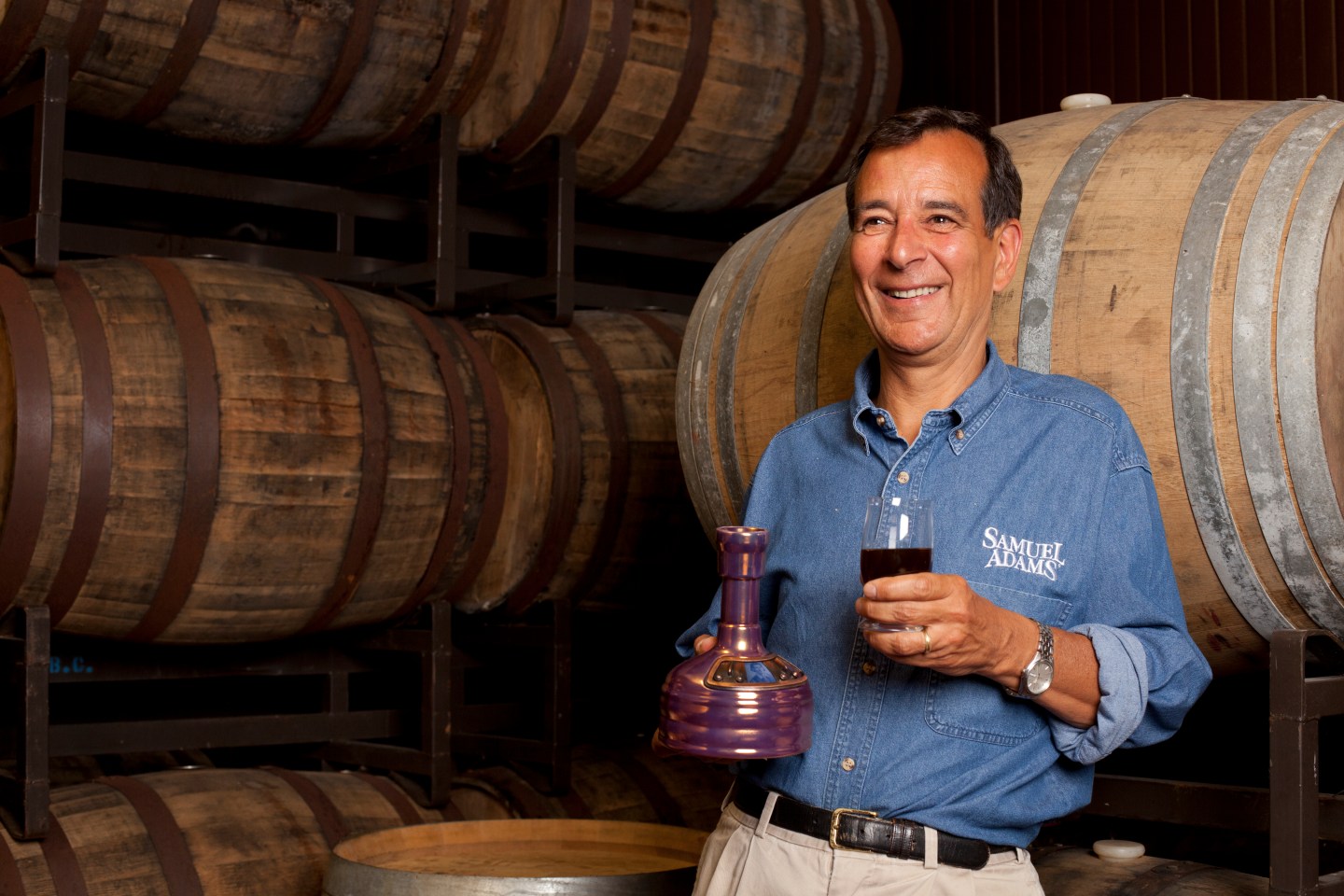
Those are just some of the ingredients Samuel Adams founder Jim Koch used to launch his Boston-based beer brand in 1984. The then-34-year-old aspiring entrepreneur had just quit his six-figure gig at Boston Consulting Group—a decision his brewmaster father referred to as one of the “stupidest” things he had ever done—with a dream of launching a great American beer company.
“You’ll never be very big, but you’ll probably stay out of the welfare line,” Koch recalled his father saying in an interview with Fortune.
But starting from scratch wasn’t easy, especially with an employee base of just two people: Koch, and his secretary, Rhonda.
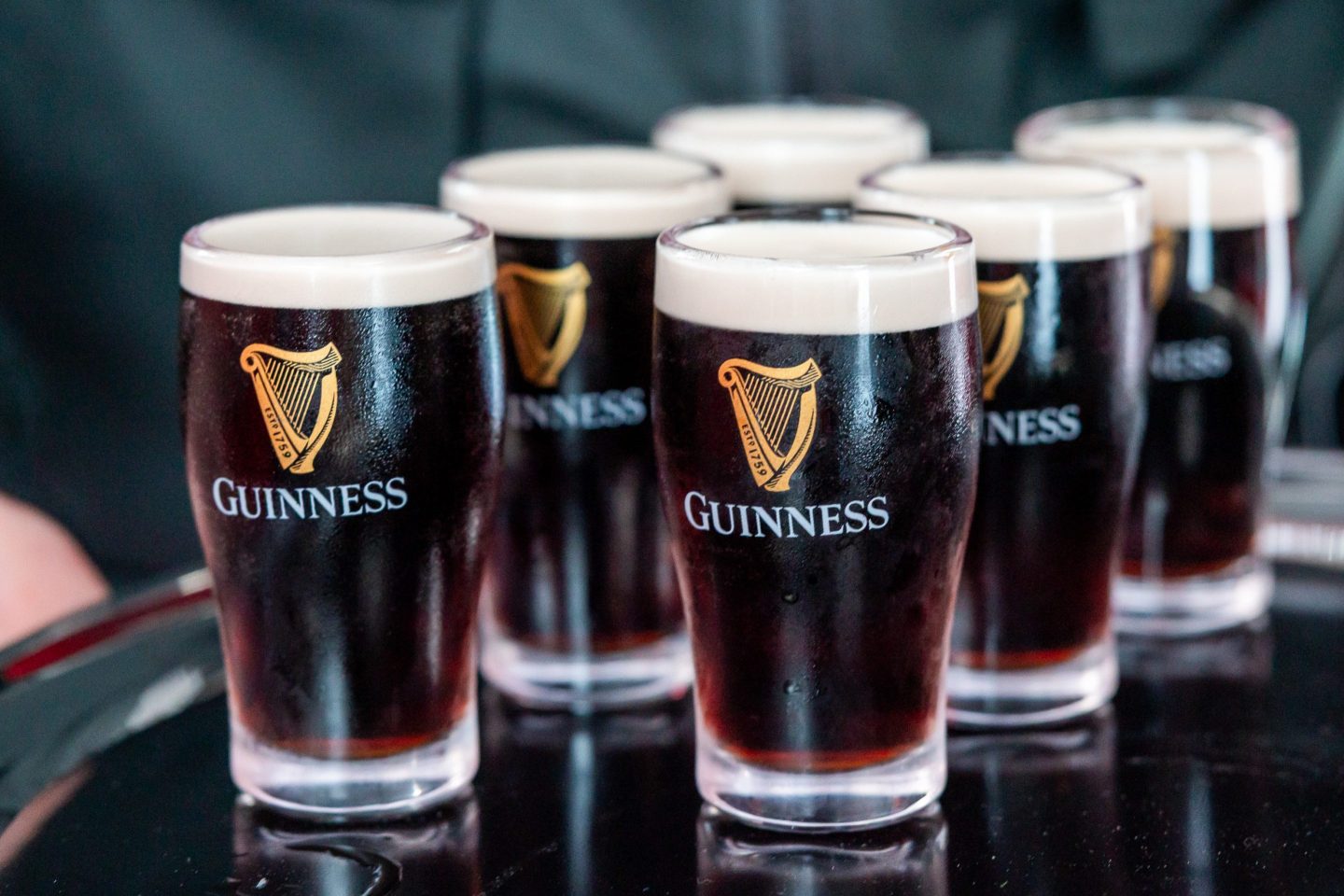
Koch hustled around Boston, knocking on bar doors and hauling a suitcase containing seven beers, two ice packs, and a pair of cups to convince bartenders and managers to taste his concoction and serve it at their establishments.
“I had about a 5% success rate, but every day I could make 20 calls, and I’d get one new account,” Koch said. “We grew from there, one account at a time.”
Now, Koch’s brand is one of America’s most recognized beers, and resides under the Boston Beer Company’s larger umbrella with the likes of Twisted Tea and Angry Orchard Cider.
Koch spoke with Fortune about how his passion for brewing high-quality beer sparked an alcohol conglomerate, plus a nonprofit bankrolling untraditional success stories.
This interview has been lightly condensed and edited for clarity.
What is Samuel Adams?
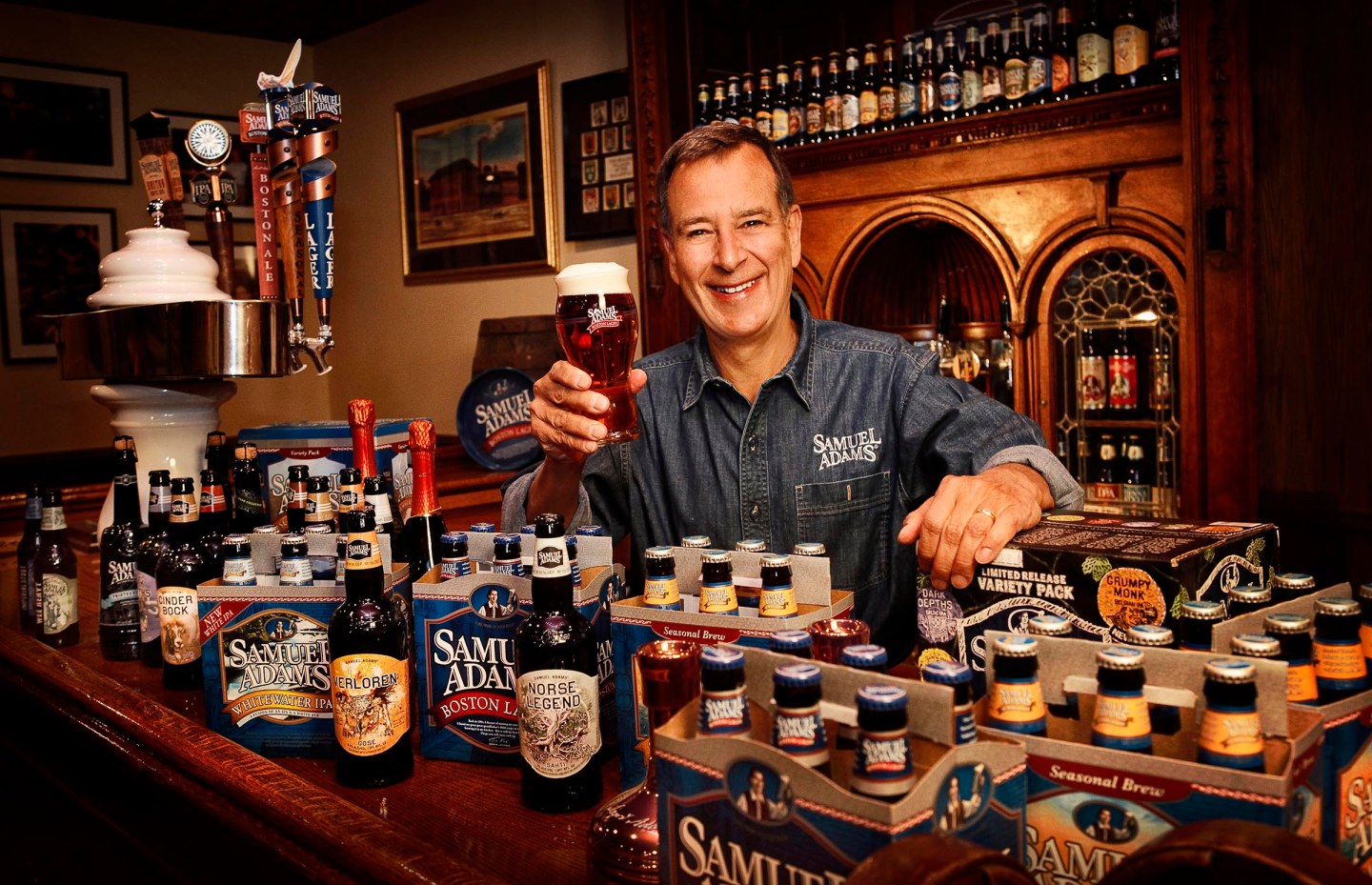
Samuel Adams is one of the pioneering craft beers in the United States. I started it 40 years ago in my kitchen, and since then it’s grown into the Boston Beer Company, and we now make other alcoholic beverages. We make Angry Orchard Cider and an alcoholic hard tea called Twisted Tea, we pioneered hard seltzer with Truly Hard Seltzer, and we merged five years ago with my good friend Sam Calagione, the founder of Dogfish Head.
I’m actually the sixth-oldest son in a row to be a brewer here in the United States. My dad was a brewmaster, my grandfather, my great-grandfather, my great-great-grandfather and my great-great-great-grandfather were all brewers.
It is in my blood. It’s about .05%, so I’m legal.
When I started Samuel Adams, I used a family recipe. It came from my great-great-grandfather’s brewery in St Louis in the 1860s, 70s, and 80s. My dad had actually brewed that beer when he was a brewmaster in Ohio.
What was your childhood like?
Life was pretty normal. I guess it was normal to have beer everywhere, so it is in my blood. I had three other siblings.
My first job was when I was 12 years old and it was delivering newspapers. In college, I delivered newspapers for four years and cleaned dorm rooms. My family just had a very strong work ethic. We worked, we had a farm. There was always something to be done there, and that was just part of our togetherness as a family, doing things, projects, chores. Working a lot never felt like an imposition.
I was very lucky because I went to college in the ‘60s when it was not outrageously expensive. By today’s standards, it’s ridiculously cheap. I went to Harvard—and tuition, room, and board all together were $3,000, so the idea of working your way through college was realistic. I worked in the summers; I tarred driveways, I worked in a mattress factory. I was fortunate enough to have real jobs that did not rely on brain power. Just moving stuff around and working 10-hour shifts in a factory. To me, they were part of my education.
Did you always want to be a brewer?
After my senior year, I entered the JD/MBA program at Harvard. I did the first two years of that program and I realized, “I’m not sure I want to do this. I’m not sure I want to be a corporate lawyer.”
I’d been going to school since I was five years old. I’d never really done anything in the real world, and yet, I’m on this path leading me to a place I’m not sure I want to be.
So I dropped out.
I spent three-and-a-half years working at Outward Bound running wilderness courses, and that was certainly a very terrific learning experience about leadership. After three-and-a-half years, I decided, “All right, I’m ready to go back. I’m going to find something that I want to do when I finish the program.” So I completed the [JD/MBA] course, and went from there to Boston Consulting Group.
After seven years at Boston Consulting Group, I realized that I probably didn’t want to do that for the rest of my life. And then I realized the rest of my life starts tomorrow, so I went in and I gave my notice. I didn’t really know what I was going to do. I transitioned out, and I had eight months to figure out what’s next. I realized I didn’t want to work for a big company, so going to any of my clients was not an option.
And I thought, “You know, I think what I really want to do is what my family has always done, which is make beer.”
I told my dad I was going to leave this pretty good job with BCG to start a small brewery. I thought he would put his arm around me [and say], “It’s so great that you’re continuing this 150-year-old family tradition. I’m so happy about that.”
Well, that did not happen. He looked at me and he said, “Jim, you’ve done some stupid things in your life. This is about the stupidest.”
Because in his mind, when he’d been a brewer, the big companies were consolidating and breweries were going out of business.
There was no craft brewing in the United States. The term hadn’t even been invented. The whole idea of small-scale brewing and trying to make a living was unheard of.
I explained to him, “Look, Dad, I’m not going to compete with these big brewers. They will kill me. I get that. I’m going to start something totally different. I’m going to make really high-quality beer like nobody is making in this country.”
And he understood that, he understood what great beer was. The American beer industry had dumbed itself down so far that there was actually this open space where I could take a 150-year-old recipe from my family, use traditional ingredients and traditional brewing processes, and make a beer that tastes like nothing that was on the market. That’s when it clicked for him, “Okay, I get it. You’ll never be very big, but you’ll probably stay out of the welfare line.”
How did you come up with the name for Samuel Adams?
So after I had a recipe, I needed a name. The original name for the beer was Louis Koch Lager. My name is German, it’s spelled K-O-C-H, and nobody can spell it or pronounce it. So I knew I needed something different, and I wanted a name that would be assertively American. I didn’t want a fake imported name. I wanted to be very proud about brewing great beer here in the United States, and I hoped to create, in a way, a revolution in brewing in the U.S.
In 1984, 1985, nobody knew who Sam Adams was. He really didn’t become famous in the U.S. until he became a beer, but historically, Samuel Adams was the original revolutionary. He was the founding father that started the whole revolution. Here in Boston, he antagonized the British, he was a propagandist, he organized the Sons of Liberty and the Committees of Correspondence.
He was a revolutionary, and I wanted to create “beer independence” for America in the same way that Samuel Adams and the rest of the Patriots and founding fathers created political independence.
What was starting the business like?
Honestly, starting Samuel Adams was easier than it seems. I didn’t have much money. I raised $140,000 from friends and family, that took a weekend. People could invest $10,000, $25,000, so I didn’t need a whole bunch of people, and I had $100,000 of my own money. We didn’t have bootstraps—it might have been shoestrings—because when I started, there were only two people. We didn’t have an office, we didn’t have computers. I did it all with notepads for invoices.
It became very clear to me that there were only two things that we needed to do extraordinarily well: One was we needed to make a great beer, and the other was we had to work our asses off to sell it. I just put cold beer in my briefcase with those blue cool packs. I could get seven beers, two blue cool packs and a sleeve of cups, and I went from bar to bar and tried to get bartenders, bar managers, [and] owners to taste my beer and to put it into their bar. I had about a 5% success rate, but every day I could make 20 calls, and I’d get one new account. We grew from there, one account at a time.
Selling is this really, really important skill that business schools don’t teach. Harvard Business School doesn’t have any courses in selling, just simple selling. They have courses in sales management, dozens of courses in marketing, but no courses in how you sell something to somebody. So, like any over-educated person, when I realized I couldn’t find a distributor who would sell my beer—they all thought this idea was crazy—I had to learn how to sell. I had no choice. If I didn’t go from bar to bar with the cold beer in my briefcase and get people to carry it, I was going to go broke really quickly. And nobody told me how important sales are, so I actually went out and bought a book. It was Mastering The Art Of Selling by Tom Hopkins, and I read the book and I went out and practiced what I learned there.
Who did you launch your company with?
My dad gave me some good advice when I started Sam Adams. He told me, “Jim, when you start a company, it’s kind of lonely, and it’s much better if you have a partner. It’s very much better if that partner is different from you.”
So I took that advice and I looked around Boston Consulting Group, which had extraordinarily talented people in the ‘70s. People like Mitt Romney, Benjamin Netanyahu were there, but they were all like me. They were all over-educated white guys who lived in the suburbs. Then I realized, I know the person that I want to go on this journey with. Her name was Rhonda, and Rhonda was my secretary. She was great at balancing people, management, accomplishing tasks, follow-up, all the things that I wasn’t particularly good at. And I had three Harvard degrees, we had more Harvard degrees than we needed.
Rhonda has not gone to college; she went to secretarial school, and bartended at night. Bars were kind of her natural habitat, and that kind of gave us a full set of skills. So we worked together for 20 years. She helped build the company [and] she had 200 people working for when she went out, and she eventually started her own distillery here in Boston. So my first hire was my best hire.
Six weeks after Samuel Adams hit the market, we were invited to compete at the Great American Beer Festival. And Samuel Adams got picked as the best beer in America. So that was very cool. This little company–two people–was making the best beer in America.
Did you ever think that Sam Adams would be this successful?
I never thought Samuel Adams would be this successful. It’s embarrassing to look at my original business plan.
I was making a lot of money and charging a lot as a management consultant. I was supposed to know what I was doing, I was supposed to know how to do a business plan. My original business plan was that we would eventually grow over five years all the way up to a million-and-two dollars in sales. We would be eight people, and after five years we would plateau. It’s 40 years later and we’re not a million-and-two dollars in sales, we’re over $2 billion. We’re not eight people, we’re 2,800 people. We’re still continuing to innovate, bring out new products, and grow.
What’s the best business advice you’ve ever received?
It came from my grandmother, who was this sort of Norman Rockwell, Ohio farm lady. This was when I first got into Harvard and was going off to go to this fancy Ivy League school. She reminded me, “Jim, remember, humility is a virtue.”
I think if you approach business with humility and gratitude for the success that you have, you will have a happy and rewarding life.
She also told me, “Jim, remember, half the world is below average and you’re going to go off to Harvard, and you’re never going to see that half, but I can guarantee you, I’m not a mathematician, but I know half the world is below average. And when people pray to God, do you think he hears the prayers of the wealthy and well born first? Or do you think he hears the prayers of the other half first?”
If you could have a beer with any CEO, living or dead, who would you choose?
If I could have a beer with any CEO living or dead, it has to be Steve Jobs. He created a revolution, a big one. I just made beer.