The stock market ripped Monday morning after the White House signaled it may no longer be America’s job to reopen the Strait of Hormuz.
The S&P 500 rose more than 1.5%, while the Nasdaq climbed nearly 2%.
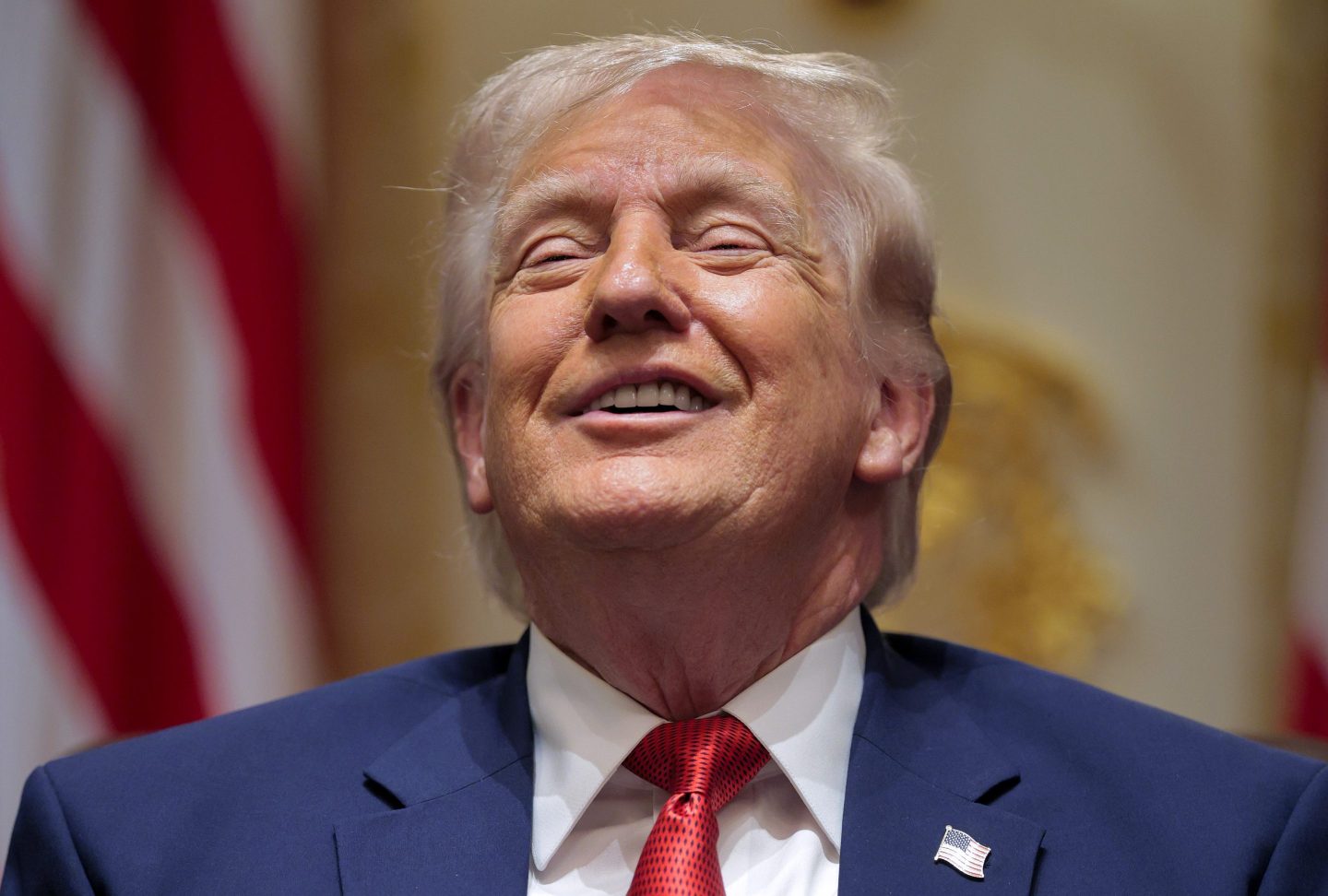
Overnight, a Wall Street Journal report indicated that President Trump would be ready to walk away from the war in Iran; by the morning, he was telling allies that they should “build up some delayed courage, go to the Strait, and just TAKE IT.”
“You’ll have to start learning how to fight for yourself, the U.S.A. won’t be there to help you anymore, just like you weren’t there for us,” Trump wrote on his social media platform, Truth Social.
Meanwhile, the average price of gas in the U.S. crossed $4 a gallon Tuesday, up more than a dollar from $2.98 on Feb. 27, the day before the war began. It’s the first time gas prices have crossed the $4 threshold since 2022, when Russia’s invasion of Ukraine triggered an energy crisis. At the same time, Trump’s approval rating is tanking; according to Nate Silver, it’s now at –16.7, a record low for his second term.
Throughout the war, the White House has catered its messaging to the stock market, which is desperately trying to hold on to its yearslong rally, even as consumer costs climb. And while Americans face pain at the pump, Southeast Asia is confronting fuel shortages that are forcing people to work from home or even wear short sleeves to conserve air conditioning.
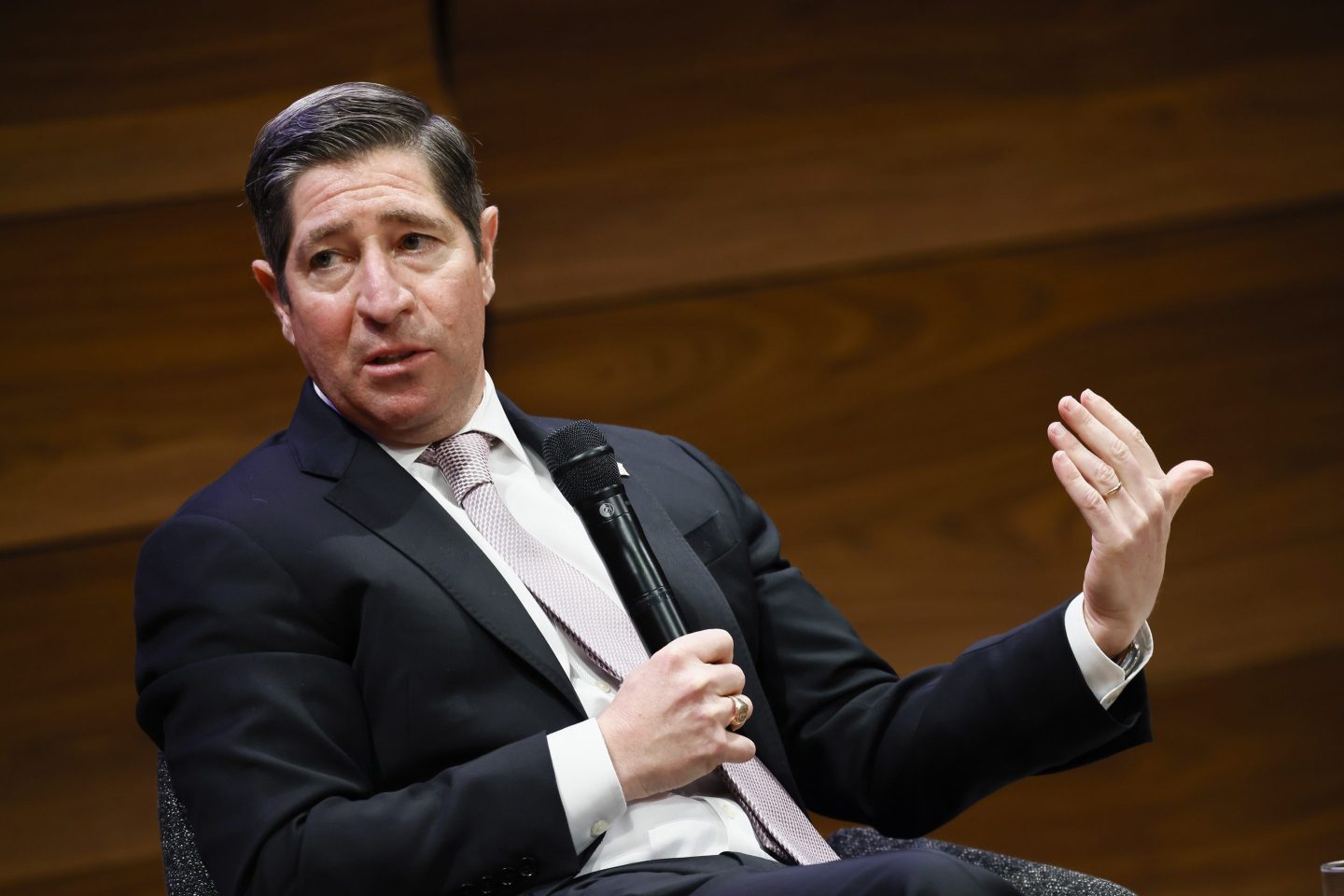
As Trump continues to optimize for the American market, he reinforces a type of “America-first” trade, where those who are invested win while other nations absorb the cost. Recently, Gulf allies of the U.S. have implored Trump to continue the war until the Iranian regime is fully crippled—unable to fund its proxies or continue to hold the strait as a point of leverage. Jamie Dimon echoed the view during an interview with Brian Kilmeade on Fox News Tuesday morning, saying: “It’s much more important that this be successfully completed than what the market does.
“We should all hope that these bad people—that we win this thing and clean up the straits and that Iran is no longer a threat to everybody,” Dimon said.
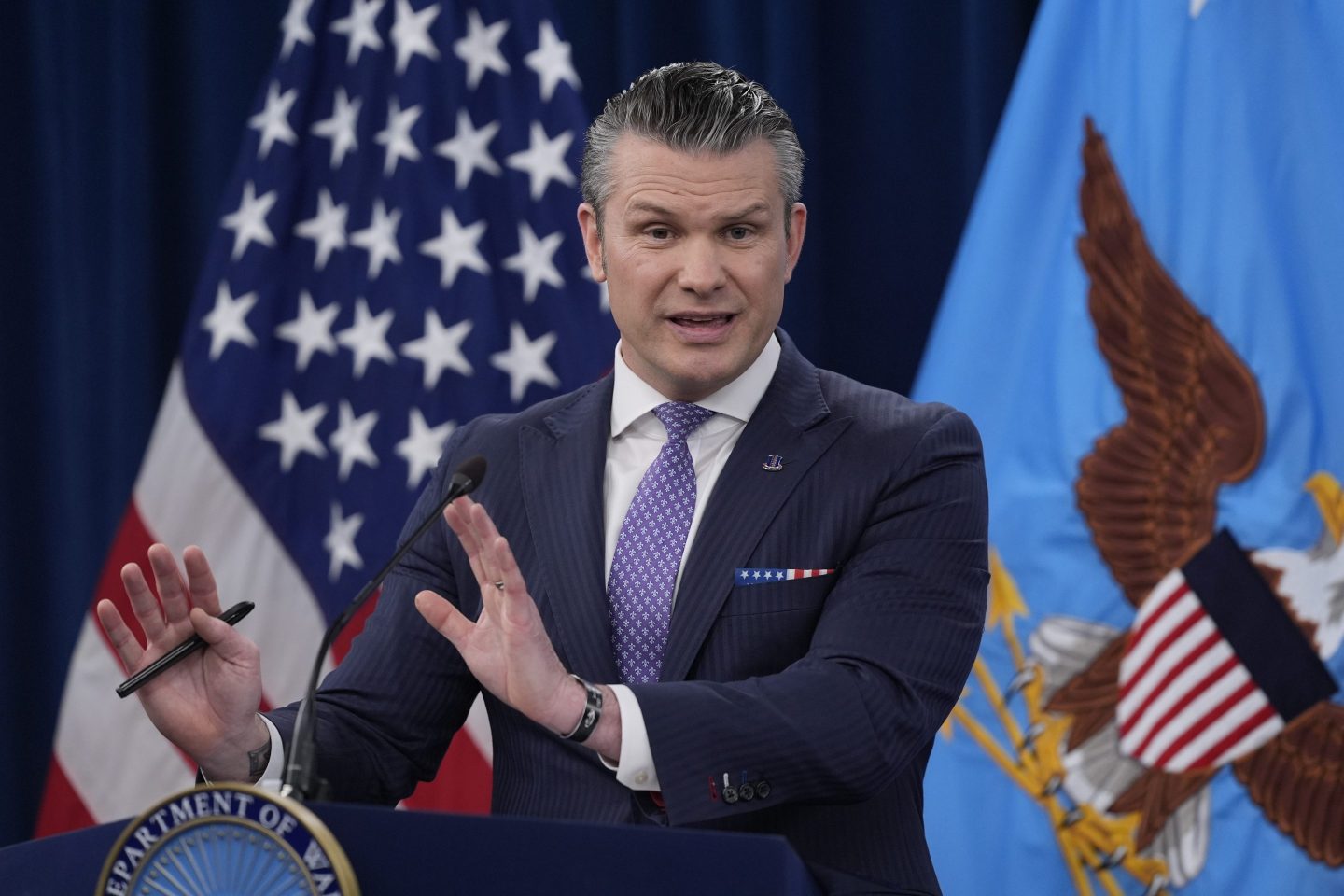
However, the White House, on multiple fronts, has tried to tamp down expectations for the Strait of Hormuz. White House press secretary Karoline Leavitt confirmed Monday that reopening the Strait of Hormuz is not one of the “core objectives” Trump has set for the military campaign, and Defense Secretary Pete Hegseth reinforced the message Tuesday morning at a very friendly presser at the Pentagon, listing the destruction of Iran’s missiles, drones, and navy as the mission’s goal, but not Hormuz.
“This Strait of Hormuz issue is not just a United States of America problem,” Hegseth said.
Leavitt added Tuesday that once the war is over, gas prices “will plummet back to the multiyear lows American drivers enjoyed before these short-term disruptions.”
The stock market appeared to read it as de-escalation: If the U.S. pulls out, it removes the worst-case scenario of a prolonged ground campaign that sends oil even higher. But walking away doesn’t solve the underlying problem; the price of oil also climbed Tuesday as West Texas Intermediate now sits at $103 at the time of writing, nearly double where it started this year. BlackRock CEO Larry Fink warned this week that oil could hit $150 and cause a global recession if Iran remains a threat to Hormuz after the war ends.
The damage to the real economy is already compounding. Ultimately, even as the U.S. leverages its strategic reserves, oil is a global commodity, and as commodities researcher Rory Johnston likes to say: “A barrel of oil lost anywhere is a barrel of oil lost everywhere.” Oxford Economics cut its global industrial growth forecast to 2.5% this year, warning that energy-intensive sectors like transport, utilities, and petrochemicals face severe cost spikes and production declines. Its senior economist Nico Palesch warned in a note Tuesday morning of the potential for “supply-chain disruptions on par with what was seen in the COVID-19 pandemic” if the strait’s closure isn’t resolved.
The United Nations Development Program also warned Tuesday that the war could push up to 4 million people in the Middle East into poverty, with the region facing GDP losses of $120 billion to $194 billion. More than 3,000 people have been killed across the Middle East since the war began: 1,900 in Iran, 1,200 in Lebanon, 19 in Israel, and 13 U.S. service members.
Meanwhile, on the other side of its mouth, the administration keeps ramping up its threats on Iran. Trump shared a video on Truth Social Monday night showing a massive ammunition depot in Isfahan being hit by American bombers, an attack Hegseth confirmed involved 2,000-pound bunker busters to destroy missiles. The chairman of the Joint Chiefs of Staff added that the U.S. has begun flying B-52 bombers over Iran, aircraft capable of carrying nuclear weapons.
On the ground, thousands of special operations forces—Navy SEALs, Army Rangers, Marines—are in the region. Hegseth said strikes will intensify if no deal is reached with Iran soon, while Trump himself has threatened to “obliterate” Iran’s power plants, oil wells, and Kharg Island—and “possibly all desalination plants,” which millions of people across the Middle East depend on for drinking water. Human Rights Watch has said bombing them would constitute a war crime. Asked about it, the chairman of the Joint Chiefs said only that the military would run any such target through its “normal procedures.”
Meanwhile, Iran has little incentive to negotiate. Daily ship traffic through the strait has fallen roughly 90% to 95% since the war began. Iran’s parliament has approved a plan to formalize tolls on vessels passing through, codifying its control over the chokepoint, which it has already reaped the benefits of: Iran is earning far more per barrel than before the war. With those sorts of incentives to keep it closed, Tehran might not be in the negotiating mood.
No other country has stepped up to take charge of opening up the strait. Trump railed against allies on Truth Social, particularly France, which he said has been “VERY UNHELPFUL” as it blocked Israeli planes carrying fuel from flying over its airspace. “THE USA WILL REMEMBER!!”