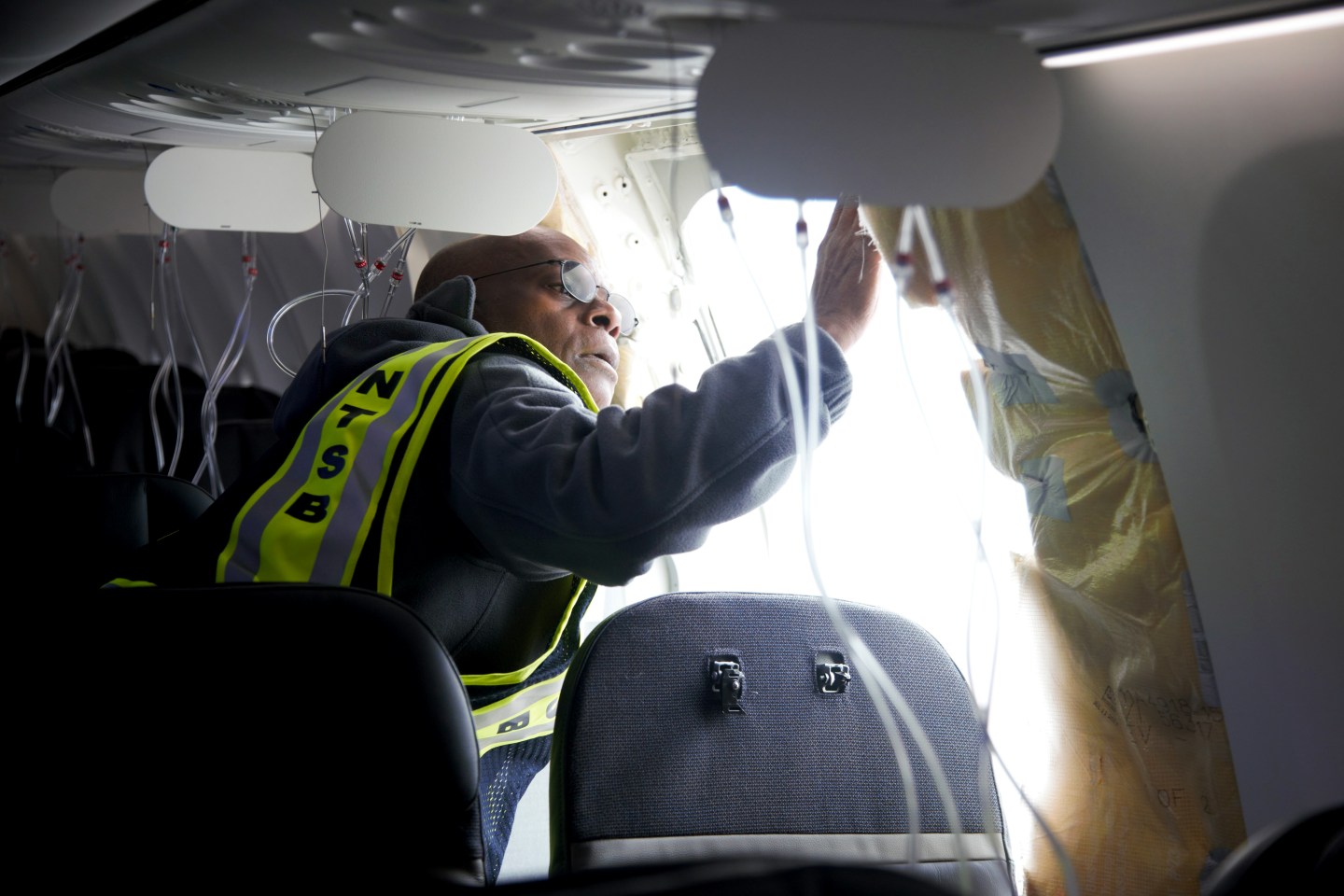
A few months after a video of a Boeing plane flying with a gaping hole in its side stunned the country, Boeing whistleblower John Barnett died of an apparent suicide. A quality manager in North Carolina for 32 years, Barnett was supplying evidence to a whistleblower lawsuit that alleged one in four oxygen masks on Boeing planes could be defective, and that certain parts of Boeing aircraft speeding through the production line were sub-par.
When a person like John Barnett brings forward sensitive information about a physical or digital product, or a powerful person, lawyers, regulators, and journalists swoop in to amplify and act from the information brought to light. Laws are rewritten, defective products are recalled, and personnel changes are made. These are all important seismic shifts that protect the general public, consumers, investors, and the workforce. But a lesser talked-about and deeply critical issue is what is at stake for the human being bringing that information forward.
As it turns out, going against the herd, obliterating one’s financial security, and forgoing the blissful ignorance or cognitive dissonance we sometimes need to move forward can do terrible things to a person’s mental health and psychological well-being.
What whistleblowers go through
Criticisms against whistleblowers are that they are attention-seeking, maladaptive, or bitter and disgruntled for going against the status quo. Or perhaps that they have a messiah complex or a vengeful side, or that they are not a team player.
Sometimes, there is truth to this. In my work helping whistleblowers, out of personal preference, I have declined to work with people whose motivations seem to be too selfish or self-righteous. Some people need to process quietly, channel experiences through art, or only pursue psychological help rather than reveal information, bring forward a story, or formally whistleblow.
But even if anger–a propulsive feeling central to human nature–is the motivation for whistleblowing, people like John Barnett are doing it to also benefit the public at extreme personal, financial, and emotional costs. For most, going against a large employer such as Boeing or any powers that be is an incredibly alienating experience. Not only is someone risking their livelihood, but they are also inviting in sometimes brutal retaliation that can wrack up legal fees, forever make them questionable job candidates, force them to question their own reality, and alienate them from their friends and family. It’s the perfect storm, annihilating all the support systems necessary to survive as a human.
There has been significant backlash to “woke” culture, and the idea that people “complain” or assume victim personas following the act of speaking up. Too often, without community or hope for a future, people can and will take on that identity and have a difficult time moving on. I have seen both situations: Whistleblowers who spiral into a difficult place unable to forge positive relationships or find work again, and whistleblowers who have moved on and are thriving as artists, sustainability engineers, family members, and small business owners. The latter have been buoyed by funding and job opportunities, turning to a network or community to take up gainful employment and create more meaning in their lives outside of the one act of speaking up.
Sadly, some whistleblowers face intimidation that makes them fear for their physical safety. I have heard stories of people feeling that they are being followed, as well as whistleblowers who face online harassment, serious threats, and damaging claims. To counteract this, people install security cameras at their homes, conduct cybersecurity audits to ensure their devices and locations are not being tracked, file police reports, receive orders of protection from harassers, or sometimes even move cities if possible.
What can we do?
As a functioning society, we need people who are not necessarily people pleasers or susceptible to groupthink to point out our blind spots. But without more ways to preserve their personal well-being, we could lose some of their critical insights.
First, we need to beef up programs that provide people with financial parachutes to speak up. The Justice Department recently announced a new whistleblower reward pilot program, and there have been calls to strengthen programs at the National Highway Transportation Safety Administration and the Federal Aviation Administration to protect airline and car industry workers. Outside of transportation, the Catherine Oxenberg Foundation has created a fund for whistleblowers, providing interim funds for victims of cults and sex trafficking to move on while bringing their abusers to justice.
But beyond these programs, it is still expected that people become martyrs to bring forward information. This is not to say that journalists, government workers, and those in Hollywood desire to throw anyone under the bus. But it shouldn’t be that only Hollywood benefits from someone’s whistleblower story.
Culturally, we should rethink our collective distaste for people making money from their stories. Why should someone be able to make money as a “creator” who provides skincare tips or career advice, but someone who hypothetically has information about an exploding car cannot? It is naive to believe that altruism is always the only thing at the core of all of this. The existing checks and balances in place thanks to journalism and government are enough to weed out those coming forward with stories solely for a quick buck or to catapult themselves to fame.
Employers who support a person’s valid whistleblower claim should also tell their stories. While many companies have private hotlines with confidentiality risks to consider, telling the positive stories of implementing business changes brought about by whistleblowing is not only good corporate practice that could stave off a lot of future shareholder pain, but it also signals to employees that they do make a difference and that they matter. Feeling a lack of agency or power over the fate of the world or one’s life can lead to hopelessness, something that can snowball into depression. These employers could join job boards for companies who have been friendly to past whistleblowers, and perhaps even consider removing non-disclosure clauses from contracts in certain instances.
Last but not least, psychotherapy for both whistleblowers and family members who provide them with support during this time is a life-saving necessity. Psychology and psychiatry programs can develop curricula focused specifically on whistleblowing, with psychologists who create programs for people to regulate their nervous systems and build the coping mechanisms to move through gaslighting and shame, and the after-effects of whistleblowing which could include insomnia, post-traumatic stress disorder, or substance abuse. While lawyers and journalists must be clinical in their work, which can sometimes appear to be terse and uncaring bedside manner, therapists and mental health professionals can fill a gap, making sure that people feel cared for on an emotional level.
We do not know all the causes and reasons for why John Barnett reportedly decided to tragically take his life. Each person is incredibly psychologically different, with a myriad of lived experiences that shape their emotional reactions and decisions every day. But if there is more we can do to protect and invest in people like John Barnett who protect us. We owe it to them to try.
Ariella Steinhorn is the founder of Superposition and Lioness.
More must-read commentary published by Fortune:
- Here’s how the U.S., Europe, and China are faring in the post-pandemic race for economic growth
- Global trade is at a critical juncture–and we can’t take it for granted, WTO meeting chair warns
- The U.S. housing market is headed into a pivotal spring season as home sellers wait for their sweet spot, according to Opendoor
- The anti-DEI movement has gone from fringe to mainstream. Here’s what that means for corporate America
The opinions expressed in Fortune.com commentary pieces are solely the views of their authors and do not necessarily reflect the opinions and beliefs of Fortune.