When business leaders got serious about bringing workers back to the office last year, they dabbled with different strategies to lure them out of their work-from-home silos. Some offered free lunch, while others tried loosening office dress expectations and increasing the amount of private space for head-down work.
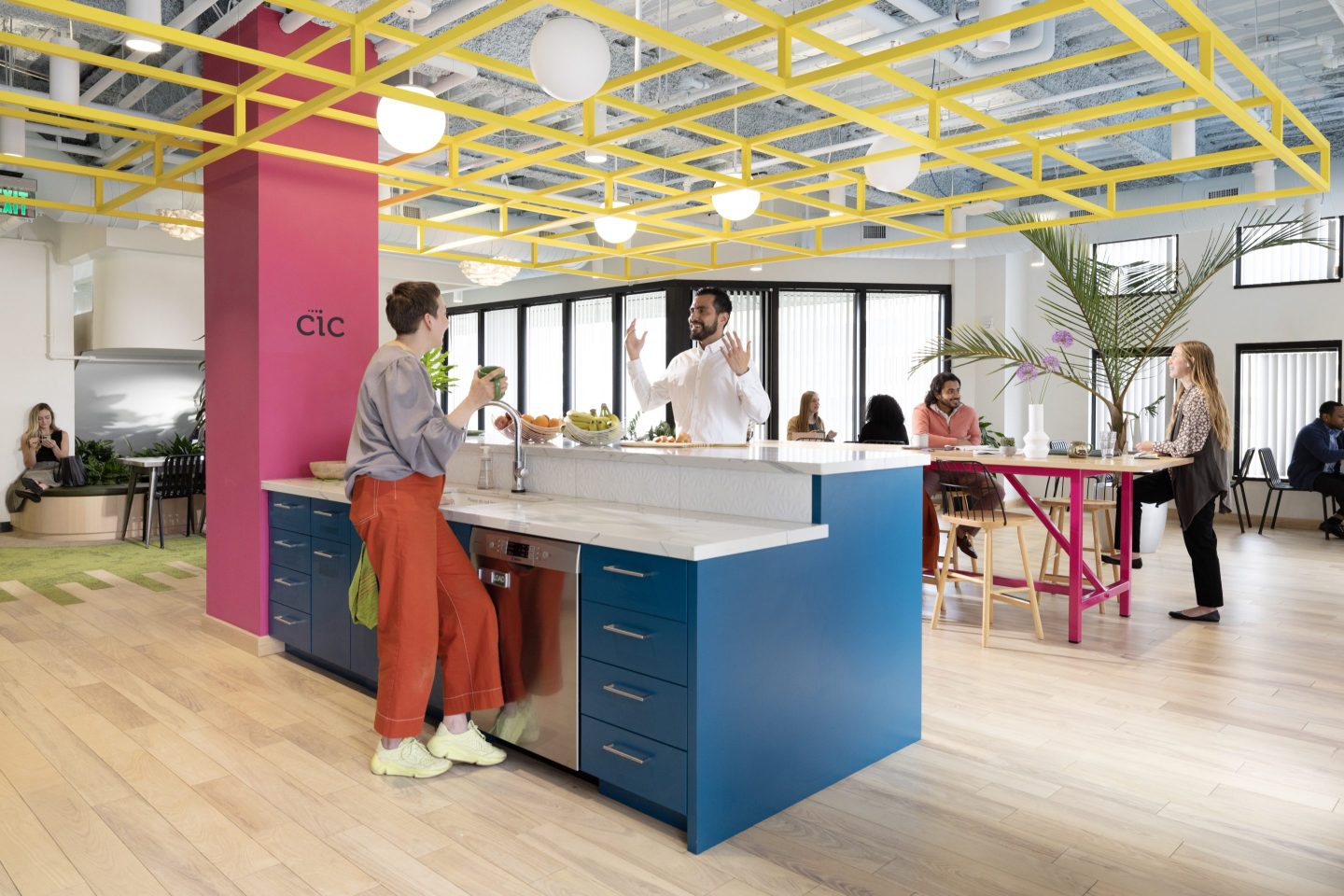
But as hybrid work becomes the norm, with bosses and employees settling into an RTO stalemate, managers need to think beyond just the work-versus-home dichotomy, according to Tim Rowe, founder and CEO of CIC, a company that manages more than a million square feet of co-working and event spaces around the world, hosting around 2,300 companies and north of 14,000 workers with membership cards.
“There’s an element that people are looking for, which is also a third place in the office,” Rowe told Fortune.
A term popularized by sociologist Ray Oldenburg, a “third place” is typically a public gathering spot like a coffee shop or bar; home is the “first place,” and the workplace is the second. The idea of third places as potential work environments became popular as the pandemic dragged on, when desk workers searched for a middle ground between being cooped up at home all day, and returning to offices that no longer felt relevant.
But Rowe says that managers shouldn’t just think about holding a happy hour at a local pub—they need to create a third place within the office itself, as a way of making the workplace meaningful again. Rowe had found that hosting events and gatherings—around 1,000 a year across different offices—brings different teams of workers together, and allows them to share ideas with people they otherwise might not have met. A recent gathering brought out a few hundred people, and consisted of several breakout discussions on solar power, along with general mingling and an open bar.
Collaboration took a hit with the rise of remote work, and in a hybrid world it often doesn’t happen naturally. Bringing social events to the workplace, he says, is a way to change that. That could include a panel discussion accompanied by an open bar, catered lunches while someone presents on a topic not directly related to work, or bringing in guest speakers for conversations where employees can also mingle, Rowe says. It’s about putting productivity on the back burner, if only just for a moment.
“There’s this opportunity for something that’s a little more connected and a little more inspiring. These are some of the elements companies are reaching for in what we’d call creating community or creating culture,” Rowe says.
Roughly 90% of employees want some kind of in-person office experience, according to research from CIC, conducted by Harvard Business Review Analytic Services. They want the social, collaborative, community elements the office has been known to foster. And leaders clearly want people in the office. Research suggests in-person collaboration delivers better innovation results, and top behavioral researcher Ben Waber previously told Fortune that bosses should “view physical offices as a management tool.” When it comes to creating that third place within an office, Rowe argues it’s important for innovation, and also serves as a rewarding “carrot,” as opposed to a punishing office mandate.
“There’s a fundamental human need most of us have for social contact, and if the office environment fulfills that need, you’re more likely to come to the office,” he says.
Some major companies have long delivered a “third place” office experience to workers. Google, for example, holds the Talks at Google speaker series, in which it brings in thought leaders, authors, actors, and creatives for a sort of informal interview. Last year, the insurance giant Allstate redesigned its 15 global offices, which the company calls “pods,” outfitting them with a quiet space for head-down work, an open collaborative space for events, and café spaces where workers could connect socially and host events—a type of third place within an office.
“Just like you would walk into a café sitting out on the street, we’re trying to create that environment,” Allstate chief human resource officer Bob Toohey tells Fortune.
He says the company thinks about its offices as a place where employee communities gather for any number of reasons, not simply work. “We want to create a flexible environment; we want to create an environment where people come to be social, collaborate, share ideas, and do purposeful work,” he says.
The company also allocated $10 million to company leaders around the world to come up with creative ways to bring their teams and others together in the office. Some held watch parties for sporting events, others organized career learning and development sessions for younger colleagues, and then there were Lego building events to promote strategic thinking.
“Bringing together people around those events, you see the energy,” says Toohey. In a recent employee survey, he says, Allstate found that 90% of employees feel connected to their teams, and around 65% feel connected to cross teams. He says creating a third-place environment in the office helped create that feeling of connectedness and helped bring workers back to work in person.
“We want to make it simple for everybody to connect together,” Toohey says. “I think we’re on the right path.”