
• Home
  • Latest
  • Fortune 500
  • Finance
  • Tech
  • Leadership
  • Lifestyle
  • Rankings
  • Multimedia

Trendingnow

1

Mark Cuban says he has the solution to growing income inequality, and it's to reward every employee—from CEO to janitor—with company stock

2

‘I want to die broke’: Billionaire philanthropist Denny Sanford dies after giving away $4 billion

3

'Dr. Doom' Nouriel Roubini says we're headed for universal basic income or 'some form of socialism' as AI revolutionizes work—He calls that optimistic

1

Mark Cuban says he has the solution to growing income inequality, and it's to reward every employee—from CEO to janitor—with company stock

2

‘I want to die broke’: Billionaire philanthropist Denny Sanford dies after giving away $4 billion

3

'Dr. Doom' Nouriel Roubini says we're headed for universal basic income or 'some form of socialism' as AI revolutionizes work—He calls that optimistic
Leadershipreturn to office

A top behavioral researcher says that if CEOs want workers back in person they need to ‘view physical offices as a management tool’

Geoff Colvin
By
Geoff Colvin
Geoff Colvin
Senior Editor-at-Large
Down Arrow Button Icon
Geoff Colvin
By
Geoff Colvin
Geoff Colvin
Senior Editor-at-Large
Down Arrow Button Icon
August 14, 2023, 3:05 PM ET
The location of the office coffee machine predicts roughly 20% of interactions, notes Ben Waber of MIT Media Lab.
The location of the office coffee machine predicts roughly 20% of interactions, notes Ben Waber of MIT Media Lab.Westend61/Getty Images
Add Fortune on Google for similar content.

As CEOs bring workers back to the office, they’re hoping to see in-person interactions that boost collaboration and innovation—but those magic moments don’t always happen. Is it because some employees hired during the pandemic have never experienced office life? Are workers still filling their days with video calls? Or is the office layout inherently toxic to connection?

Recommended Video

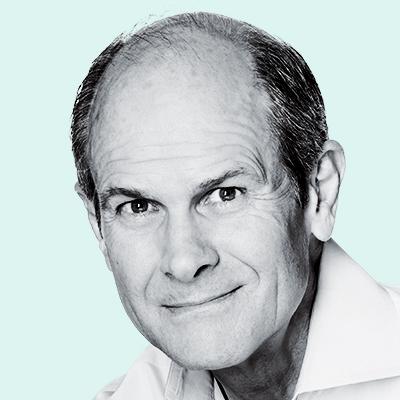
Ben Waber was ahead of his time in studying all those workplace issues and more. In 2012 he wrote a Bloomberg Businessweek article advocating for working from home. A year earlier he had cofounded Humanyze, a behavioral analytics company focused on the workplace that grew out of the MIT Media Lab, where he was (and still is) a visiting scientist. Today he’s also Humanyze’s president, advising companies on workplace design, corporate culture, and other issues related to their most valuable asset: human capital.

The Media Lab pioneered the collection and analysis of data from emails, chats, and meetings to draw insight into which factors nourish or kill creativity, productivity, and team effectiveness.

In a recent talk with Fortune, Waber, 39, explains how most companies approach RTO (haphazardly), how to do it right, why working from home is bad for innovation, the awesome power of the office coffee machine, and much more.

This interview was edited and condensed for clarity.

Fortune: How well are companies managing the way they bring employees back to the office?

Waber: I don’t think anyone knows what they’re doing. Some CEOs have a subjective belief about what physical office space does, but normally the decision is being made like this: The CEO wants people in five days a week, but the company ran a survey, and if we did that, a lot of people said they would quit. People say they’re willing to come in one day a week. Three is between one and five, so let’s do three.

That is typically the decision-making process. Sometimes the CEO just rams [five days a week] through, and sometimes it’s the other way, where the CEO likes working remotely [full-time] and doesn’t really want to be in the office, so they’re like, “Okay, let’s do that.” I think, fundamentally, both are totally incorrect.

So how should CEOs do it?

View physical offices as a management tool. When people are in an office, in general they communicate more with people in teams that they don’t normally talk to. So to the extent that a certain team or division or organization needs more of that, then being in the office more is better.

It changes over time. Maybe this quarter I’m trying to come up with new product ideas, so my team needs to communicate more with other teams. Then being in the office more is going to be more effective. But once we’re in execution mode, it could be that we need to do much more focus work, and we need to rely more on strong ties. For that, remote work tends to be more effective.

How do managers know exactly when and how to shift?

Without quantitative data, it is going to be very challenging for companies to make these changes. You need to be able to tell people, “Your team, when you’re working remotely, is communicating about 20% less with the team you need to work with. Our hypothesis is that both teams being in the office on the same day of the week is going to improve that, but we don’t know. So that’s what we’ll do for the next month, and then we’ll look at the data. And if it doesn’t work, we’ll try something else.”

This is a very different way of managing. You’re never done with your workplace strategy. But this is your job if you’re a CEO or you’re in real estate. People just want to turn the crank—“Here’s how we’ve always done it, and let’s keep doing it that way.” Boards aren’t calling their CEOs on this, even though a Fortune 500 company could be destroying literally billions of dollars in value by doing these myopic things.

You’re describing a way of making these decisions that practically nobody did before the pandemic. Most managers have no previous experience, right?

Right. When I ask CEOs, “Why do you think people need to come into the office five days a week?” They say, “Well, that’s how I did it, and I’m successful.” That tells me absolutely nothing.

What’s the most important thing for bosses to know about remote work?

People feel productive when they’re working from home, and they tend to get more focus work done. Of course, the whole reason we’re in companies is because together, we can do things we couldn’t do by ourselves. So collaboration is important. But it’s not that people aren’t collaborating when they’re remote. What you see is, they spend a lot more time with their strong ties. When that is necessary, remote work is a good tool to accentuate those ties. The problem is that weak ties go down the tubes, and those are the most predictive thing for innovation.

Some employees complain that their workplace layout isn’t conducive to collaboration. What have you found?

The layout matters an awful lot. The distance you have to walk, or whether you can see another person, really matters for how likely you are to communicate. When desks start to get longer, the likelihood that you will talk to the person next to you diminishes. If you have to walk more than 10 meters, then interaction [rate] reduces quickly. When you’re on another floor, communication drops precipitously. If you’re on a company campus and in different buildings, you could be in another city. It‘s almost the same.

The location of the coffee machine matters a ton. It predicts roughly 20% of interaction within offices. It’s about the same order of magnitude as the predictive power of where you are on the organization chart. If I put a coffee machine in between two teams, they will communicate more. If I put it in the center of a team area, on the other hand, that team will communicate more internally.

CEOs often stress the value of in-person interaction for propagating the corporate culture. Are they right?

One of the primary methods of cultural transmission is the networks that we have at work, with proximity dramatically driving interaction. If I change where you sit in an office tomorrow, I significantly change who you talk to. There is no equivalent of that virtually. I would argue most companies don’t make enough use of that tool. Japanese companies do change seats once a year. I think you could do it a lot more, but it shows the idea that that does have an effect. You bump against people. Again, the coffee machine has a huge effect. There are no equivalent management tools that exist universally [including remotely].  

About the Author
Geoff Colvin
By Geoff ColvinSenior Editor-at-Large
LinkedIn iconTwitter icon

Geoff Colvin is a senior editor-at-large at Fortune, covering leadership, globalization, wealth creation, the infotech revolution, and related issues.

See full bioRight Arrow Button Icon
Add Fortune on Google for similar content.

Latest in Leadership

Finance
Lorem ipsum dolor sit amet, consectetur adipiscing elit, sed do eiusmod tempor incididunt ut labore et dolore magna aliqua. Ut enim ad minim veniam
By Fortune Editors
October 20, 2025
Finance
Lorem ipsum dolor sit amet, consectetur adipiscing elit, sed do eiusmod tempor incididunt ut labore et dolore magna aliqua. Ut enim ad minim veniam
By Fortune Editors
October 20, 2025
Finance
Lorem ipsum dolor sit amet, consectetur adipiscing elit, sed do eiusmod tempor incididunt ut labore et dolore magna aliqua. Ut enim ad minim veniam
By Fortune Editors
October 20, 2025
Finance
Lorem ipsum dolor sit amet, consectetur adipiscing elit, sed do eiusmod tempor incididunt ut labore et dolore magna aliqua. Ut enim ad minim veniam
By Fortune Editors
October 20, 2025
Finance
Lorem ipsum dolor sit amet, consectetur adipiscing elit, sed do eiusmod tempor incididunt ut labore et dolore magna aliqua. Ut enim ad minim veniam
By Fortune Editors
October 20, 2025
Finance
Lorem ipsum dolor sit amet, consectetur adipiscing elit, sed do eiusmod tempor incididunt ut labore et dolore magna aliqua. Ut enim ad minim veniam
By Fortune Editors
October 20, 2025

Most Popular

Finance
Lorem ipsum dolor sit amet, consectetur adipiscing elit, sed do eiusmod tempor incididunt ut labore et dolore magna aliqua. Ut enim ad minim veniam
By Fortune Editors
October 20, 2025
Finance
Lorem ipsum dolor sit amet, consectetur adipiscing elit, sed do eiusmod tempor incididunt ut labore et dolore magna aliqua. Ut enim ad minim veniam
By Fortune Editors
October 20, 2025
Finance
Lorem ipsum dolor sit amet, consectetur adipiscing elit, sed do eiusmod tempor incididunt ut labore et dolore magna aliqua. Ut enim ad minim veniam
By Fortune Editors
October 20, 2025
Finance
Lorem ipsum dolor sit amet, consectetur adipiscing elit, sed do eiusmod tempor incididunt ut labore et dolore magna aliqua. Ut enim ad minim veniam
By Fortune Editors
October 20, 2025
Finance
Lorem ipsum dolor sit amet, consectetur adipiscing elit, sed do eiusmod tempor incididunt ut labore et dolore magna aliqua. Ut enim ad minim veniam
By Fortune Editors
October 20, 2025
Finance
Lorem ipsum dolor sit amet, consectetur adipiscing elit, sed do eiusmod tempor incididunt ut labore et dolore magna aliqua. Ut enim ad minim veniam
By Fortune Editors
October 20, 2025
Fortune Secondary Logo
Rankings
  • 100 Best Companies
  • Fortune 500
  • Global 500
  • Fortune 500 Europe
  • Most Powerful Women
  • World's Most Admired Companies
  • See All Rankings
  • Lists Calendar
Sections
  • Finance
  • Fortune Crypto
  • Features
  • Leadership
  • Health
  • Commentary
  • Success
  • Retail
  • Mpw
  • Tech
  • Lifestyle
  • CEO Initiative
  • Asia
  • Politics
  • Conferences
  • Europe
  • Newsletters
  • Personal Finance
  • Environment
  • Magazine
  • Education
Customer Support
  • Frequently Asked Questions
  • Customer Service Portal
  • Privacy Policy
  • Terms Of Use
  • Single Issues For Purchase
  • International Print
Commercial Services
  • Advertising
  • Fortune Brand Studio
  • Fortune Analytics
  • Fortune Conferences
  • Business Development
  • Group Subscriptions
About Us
  • About Us
  • Press Center
  • Work At Fortune
  • Terms And Conditions
  • Site Map
  • About Us
  • Press Center
  • Work At Fortune
  • Terms And Conditions
  • Site Map
  • Facebook icon
  • Twitter icon
  • LinkedIn icon
  • Instagram icon
  • TikTok icon
  • YouTube icon

Latest in Leadership

wilt
Arts & EntertainmentAuction
Gen Z entrepreneur found a Wilt Chamberlain Lakers warm-up for $3.07 outside Portland — it was a $90,000 genuine article
By Claire Rush and The Associated PressJuly 21, 2026
2 hours ago
cpk
SuccessBook Excerpt
The California Pizza Kitchen story: how two lawyers quit the courtroom to reinvent restaurants
By Rick RosenfieldJuly 21, 2026
2 hours ago
k
Commentarypower
What I keep hearing from Fortune 500 CEOs: ‘We have no idea what we’re actually paying for power’
By Kiran BhatrajuJuly 21, 2026
3 hours ago
Bolt CEO Ryan Breslow
CommentaryHuman resources
The CEO who fired HR was right. About the wrong thing.
By KeyAnna SchmiedlJuly 21, 2026
3 hours ago
Jersey Mike's Subs restaurant.
C-SuiteCFO Daily
Jersey Mike’s tests how far investors will stretch on restaurant IPO valuations
By Sheryl EstradaJuly 21, 2026
3 hours ago
Jamie Dimon, chief executive officer of JPMorgan Chase & Co.
Economynational debt
Jamie Dimon won’t put more of his own money into the long end of the bond market right now—thanks to the $39 trillion national debt
By Eleanor PringleJuly 21, 2026
4 hours ago

Most Popular

Mark Cuban says he has the solution to growing income inequality, and it's to reward every employee—from CEO to janitor—with company stock
Success
Mark Cuban says he has the solution to growing income inequality, and it's to reward every employee—from CEO to janitor—with company stock
By Sasha RogelbergJuly 20, 2026
21 hours ago
‘I want to die broke’: Billionaire philanthropist Denny Sanford dies after giving away $4 billion
Success
‘I want to die broke’: Billionaire philanthropist Denny Sanford dies after giving away $4 billion
By Sydney LakeJuly 20, 2026
1 day ago
'Dr. Doom' Nouriel Roubini says we're headed for universal basic income or 'some form of socialism' as AI revolutionizes work—He calls that optimistic
AI
'Dr. Doom' Nouriel Roubini says we're headed for universal basic income or 'some form of socialism' as AI revolutionizes work—He calls that optimistic
By Jason MaJuly 18, 2026
3 days ago
Current price of silver as of Monday, July 20, 2026
Personal Finance
Current price of silver as of Monday, July 20, 2026
By Joseph HostetlerJuly 20, 2026
1 day ago
It’s not just Taco Bell lettuce and possible glass in Pillsbury rolls: Food and drink recall events reached a 6-year year-over-year high
Retail
It’s not just Taco Bell lettuce and possible glass in Pillsbury rolls: Food and drink recall events reached a 6-year year-over-year high
By Sasha RogelbergJuly 20, 2026
1 day ago
Current price of oil as of July 20, 2026
Personal Finance
Current price of oil as of July 20, 2026
By Joseph HostetlerJuly 20, 2026
1 day ago

© 2026 Fortune Media IP Limited. All Rights Reserved. Use of this site constitutes acceptance of our Terms of Use and Privacy Policy | CA Notice at Collection and Privacy Notice | Do Not Sell/Share My Personal Information
FORTUNE is a trademark of Fortune Media IP Limited, registered in the U.S. and other countries. FORTUNE may receive compensation for some links to products and services on this website. Offers may be subject to change without notice.