I always say that women in business need to follow a rule of thirds for our jobs: We should have 1/3 of our job nailed, 1/3 as a stretch, and 1/3 as pure, white-knuckle terror. But why?
Women are systemically undervalued, less likely to be promoted even when we ask for it, and tend to underestimate our own qualifications.
I’m an Indian immigrant and one of only 5% of female CEOs in the financial services sector globally. This reality can create discomfort in certain circumstances.
I was recently scheduled to meet another C-suite executive. When I walked in to meet him, he immediately started speaking to me about table placements and seating assignments–it was clear he assumed I was the caterer. I waited for him to take a breath and then introduced myself. His embarrassment was clear, and we moved on.
Sometimes, my job is to simply occupy my position without apology or explanation. And yes, that can be in the stretch zone. People with less positional privilege (race, gender, etc.) have been historically trained to apologize when something as natural as occupying space makes those with more positional privilege feel uncomfortable.
We can’t will away the everyday misfortune of gender inequality–but the head office needs to step in. I’ve found the rule of thirds applies to everyone at the top of the corporate ladder, regardless of gender.
In today’s workplace, where as many as five generations may be represented, corporate leaders are dealing with changing expectations about what it means to be in a position of power. My role carries new demands compared with previous generations. It might as well be called the Chief Empathy Officer, because that’s what’s at the heart of modern professionalism.
This is to say that what’s considered “professional” has changed a lot since I was wearing a shoulder-padded power suit in the 1980s–and for the better. When I started in banking, the boss was usually a business-suit-clad white man in a corner office with a closed door–and he was “all business” with employees.
Today, leadership is more about actively listening, being authentic and transparent about decision-making, and taking a stand on social issues. Expectations of corporate leadership have evolved in the past several years, particularly among younger generations.
Gen Z and Millennials now make up nearly half of full-time workers in the U.S.–and their workplace priorities have shifted irreversibly. A Gallup study reported that they think the most important thing for an employer is to take an interest in employee well-being. Younger consumers increasingly expect business leaders to take a stand on social and environmental issues: per the Edelman Trust Barometer, 73% of Gen Z consumers patronize brands based on personal beliefs and values.
The empathy you give
Bridging generational gaps is the glue that can hold organizations together. This is no easy task, especially when different generations vary in their approach to addressing conflict.
Empathy is essential to bridging these gaps, something I saw early in my career. I had a wonderful manager who opened my eyes to the value of empathetic leadership–the ability to focus on and understand the needs of others. I realized the more senior you become in an organization, the more of yourself you have to give.
The key to empathy is attunement: We must be attuned to our own positionality, the power dynamics that got us (and keep us) here, and the occasionally vast delta between our intention and our impact. We need to challenge the traditional feedback hierarchy–not only in business but in society–which mandates that the more privilege you have, the less you have to listen to others.
Consequently, things said to the CEO tend to be 70% true (the percentage is even lower for compliments). This has to change if we’re going to lead transparently and fearlessly in today’s multi-generational workplace. It’s how we grow both as leaders and as humans.
Taking a hard look at incidents like the one I mentioned and their impact on my career are definitely in my stretch zone. In the U.S., I’m identified as a woman of color–but only recently have I come to understand the importance of acknowledging that this is who I am, for myself and for my staff, too. I lead an inclusive organization where all of our employees should feel comfortable bringing their authentic selves to work, which sometimes is a white-knuckle effort.
It may be surprising that my white-knuckle moments aren’t limited to multi-billion-dollar business decisions. It’s even more challenging to become aware of the privileges that helped me arrive at my leadership role, such as wealth and social class. No matter how difficult, this kind of self-awareness is what the modern C-suite needs to practice in order to better understand our employees.
Powerful, modern leadership requires empathy in a way that wasn’t expected in previous generations. It requires us to do the hard work of acknowledging the power dynamics that got us here, the power dynamics that still exist, and the new professional paradigm that requires us, above all else, to be human.
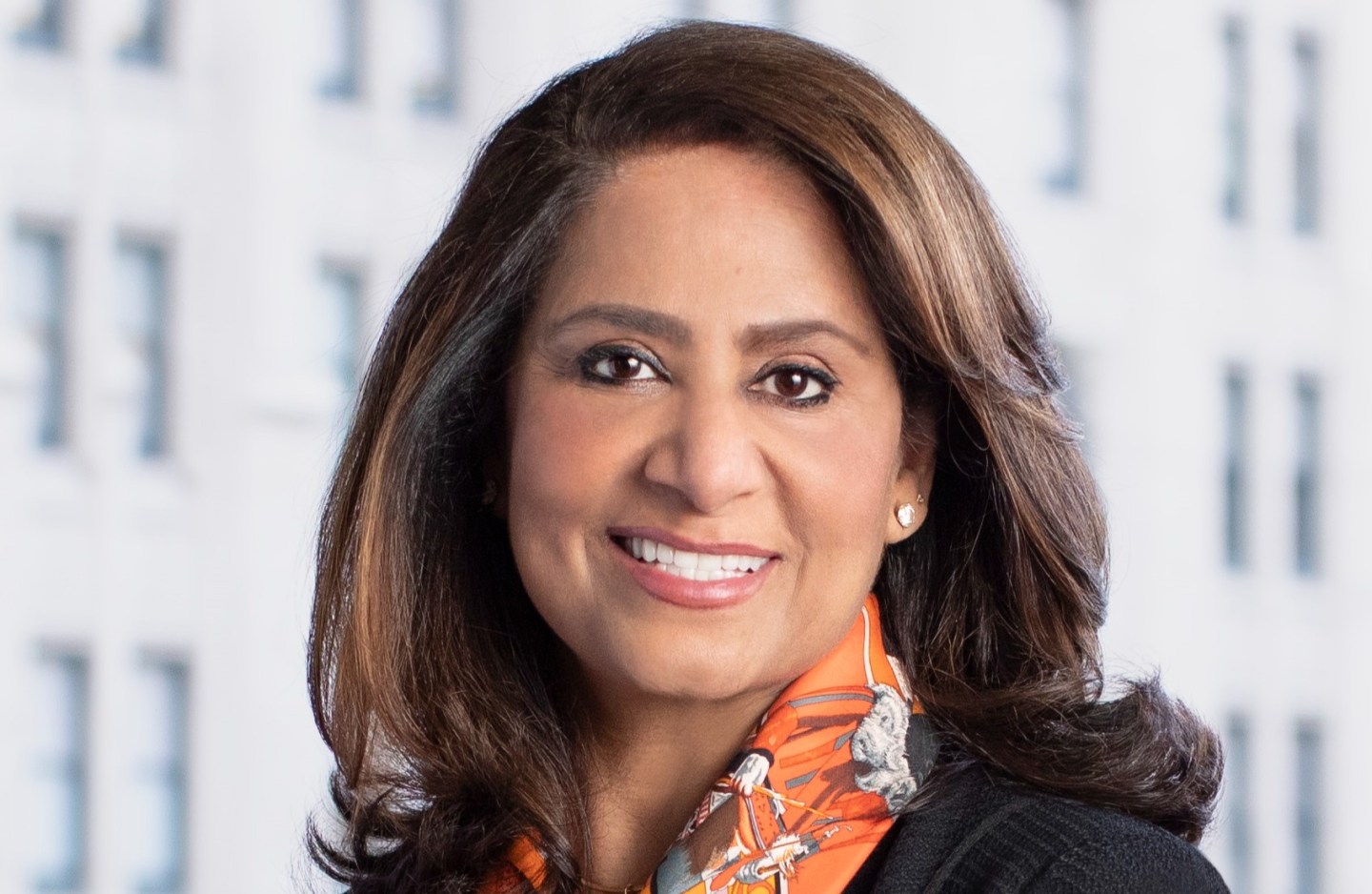
Nandita Bakhshi is the CEO of Bank of the West.
The opinions expressed in Fortune.com commentary pieces are solely the views of their authors and do not necessarily reflect the opinions and beliefs of Fortune.
More must-read commentary published by Fortune:
- The Fed is oversteering on inflation–every signal suggests it’s already cooling
- Patagonia: ‘We are turning capitalism on its head by making the Earth our only shareholder’
- I got rich by betting that inequality would destroy the U.S. and U.K. I’m sorry
- Remote work isn’t hurting our mental well-being. The lack of work-life boundaries is