Strong leaders are willing to adapt. You may start with a singular vision of your company’s future only to find that vision upended by an unexpected challenge.
When my company, Owler, was just getting off the ground, I encountered one of these transformational challenges. And the lessons it taught me about humility, adaptability and empathy have transformed my leadership style.
Crowdsourcing gone awry
Our initial idea at Owler was to improve the quality of data that sales teams could access about prospective companies. Individual contributors to our platform managed the Owler page of a specific company, and the page manager profited when someone bought data from the page.
In order to quickly ramp up our offering, we decided to crowdsource a community of buyers and sellers. We reached out to former colleagues, posted on newsletters, and even considered running around different cities in an owl costume (a strategy we regrettably passed on). Eventually, we started incentivizing contributors, which backfired.
A group of college students on Reddit gamed our system by providing inaccurate data while still receiving payments. We paid out more than $200,000 to users before realizing what was happening. The timing couldn’t have been worse — we’d recently secured $19.3 million from investors to upscale our operations, and the Reddit fiasco revealed a major flaw in our crowdsourcing model.
So, less than three weeks after receiving nearly $20 million in funding, we were faced with the stomach-churning realization that the model we’d spent the last two years working on wasn’t good enough. Even worse, we had to tell our investors and come up with a new plan. For the next six weeks our lives were entirely devoted to brainstorming new ideas and potential fixes. Often, it felt like every new path to a solution that we found would inevitably bring us back to another dead end. But after identifying the most glaring issues with our previous model and spending untold hours in front of a whiteboard, we finally came up with a plan we believed in.
Then came the meeting with our investors, which was truly a do-or-die moment. Without their support, we would have had no choice but to shut down the company. Fortunately, they trusted our new vision. Our team’s resilience in the face of failure and our investors’ faith in us have enabled our platform to reach more than 5 million users, and in 2021 SaaS media monitoring company Meltwater acquired Owler for $24.5 million
Lessons business leaders can learn from our experience
In the 11 years since, I’ve often thought about why we were able to successfully pull out of such a dire situation. More than any single factor, I believe, a confluence of decisions and realizations—each of them equally important–helped get us through.
- Don’t focus on growth for growth’s sake
In its early stages, Owler’s priority was building a user base. Our product was free, and we figured we would monetize the platform once we attracted more users. However, pursuing growth for growth’s sake, without having to consider how paying customers judged our product, created a dangerous blind spot.
End users who pay for a platform are naturally more invested in the service than the users who accessed Owler for free early on. We missed an opportunity to get quality users and to strengthen our product based on their feedback. Without concrete revenue metrics, we couldn’t gauge how our product performed in real life and adjust accordingly — until our $200,000 misstep.
- Crowdsource with a plan, and be ready to switch gears
Our initial crowdsourcing experiments didn’t pan out, but that doesn’t mean crowdsourcing can’t be an effective business strategy. Relationships with contributors and consumers can provide real value — so long as you have a well-conceived plan, and a willingness to pivot quickly.
First, communicate with your contributors. A study of 70,000 organizations that have crowdsourced ideas found that more than 88% of people who submit ideas don’t ever receive feedback. Whether it’s ideas or data, your organization should acknowledge as many contributors as possible. That simple act can go a long way toward developing an engaged user base.
Second, don’t go into denial if your initial crowdsourcing projects fail. It’s never easy to admit when you’re wrong, especially when you’ve invested time, money, and energy into a new business venture. But stubbornness or flat-out denial prevents you from learning from the experience. If our team had failed to acknowledge the deficiencies of our first crowdsourcing model and doubled down on it, our investors would have taken their money back and sent us on our way. By evaluating the situation objectively, we found, and took the right next step.
- Empathetic leadership drives innovation and engagement
You’re bound to make mistakes as a leader. And when you do, incorporating empathy into your response will enable you to bounce back stronger than before.
Owler focused on being an empathetic company early on – we supported our employees regardless of where or when they worked, and we took deliberate steps to build camaraderie throughout the organization. When crisis struck, the employee buy-in and goodwill Owler had accrued paid dividends. It wasn’t a coincidence. Seventy-six percent of employees with empathetic senior leadership report higher work engagement levels than employees with less empathetic leaders.
What does empathy look like in practice? It means seeking out feedback from employees on where they’re satisfied and dissatisfied in their roles. It means taking a step back to consider how your decisions will affect them. Lastly, it means understanding that empathy isn’t a one-and-done thing–it’s a habit.
Owler wouldn’t be in the position we are in today without a lot of luck, lessons learned, and empathy (including from our investors, who gave us a chance to recover from our misstep). We’re a stronger company, and I’m a better leader, because of it.
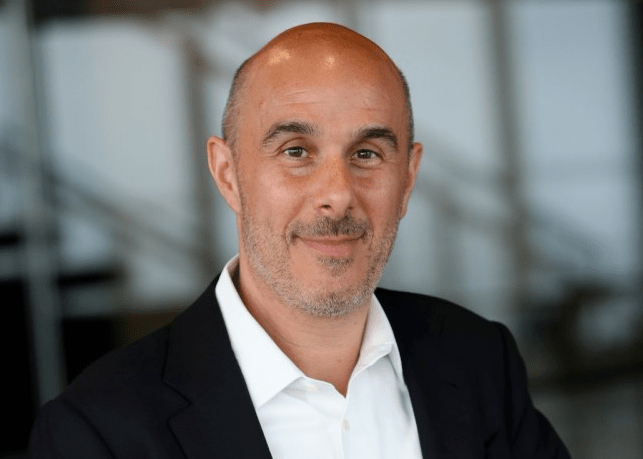
Tim Harsch is the co-founder and CEO of Owler, a community-driven business information and insights platform.
The opinions expressed in Fortune.com commentary pieces are solely the views of their authors and do not necessarily reflect the opinions and beliefs of Fortune.
More must-read commentary published by Fortune:
- The Fed is oversteering on inflation–every signal suggests it’s already cooling
- Patagonia: ‘We are turning capitalism on its head by making the Earth our only shareholder’
- The fundamental reason house prices will fall this fall
- ‘Boomerang employees’ could be the untapped talent pool bosses have been looking for
- Don’t spoil the unique chemistry between America’s universities and pharmaceutical companies
Sign up for the Fortune Features email list so you don’t miss our biggest features, exclusive interviews, and investigations.