There was no way to know that I would be launching a business only a couple of years before the economy slid into the Great Recession. In 2008, Sprinkles opened its fifth and largest location yet in the upscale Palo Alto shopping center.
Within days, my business outlook turned from promising to bleak. How do you build a business during one of the worst economic downturns in modern times?
Ultimately, it comes down to strengthening your brand.
Offer a smaller piece of the brand
Consumers pull back on spending during downturns, but there are still small luxuries and strong brands that people will make room for in their budget.
The term “lipstick effect” was coined by Leonard Lauder in 2001, when he observed that lipstick sales tend to be inversely correlated to economic health. The idea is that many consumers will find the cash for small indulgences during hard times, even as they forgo buying bigger, more expensive items. And it’s not an urban legend. A well-known beauty founder told me recently that sales of her upscale lip scrubs had soared during the Great Recession.
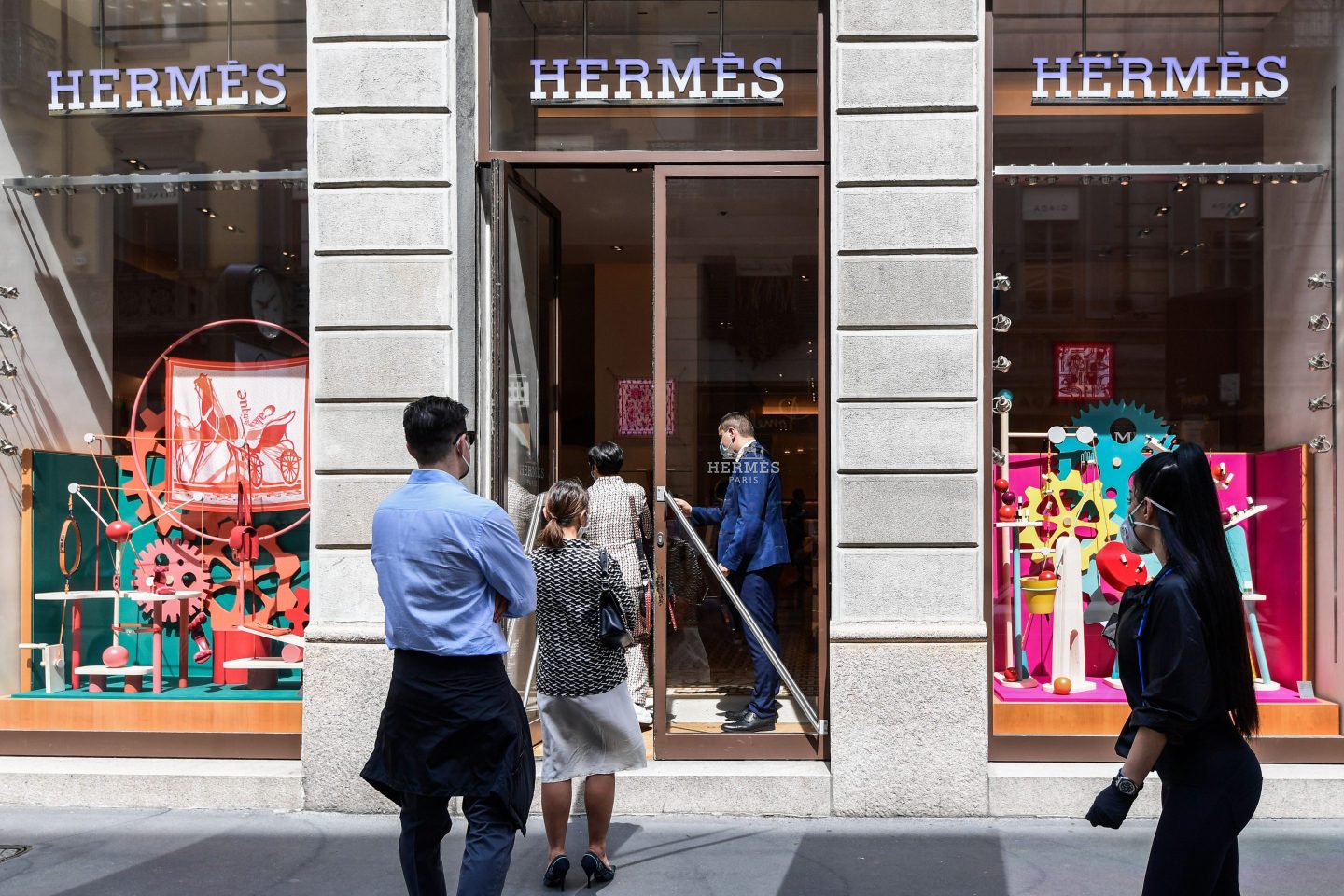
Even notoriously exclusive French brand Hermes, known for its inaccessible luxury handbags, is expanding into beauty in this downturn. Compared to its bags, Hermes lipstick is downright democratic, available to the masses at some department stores and even online. However, it’s still one of the most expensive lipsticks on the market ($69). With the eye-catching design of their lipstick cases, Hermes provides their customers with brand bang for buck. Since lipstick is the only makeup that is Emily Post-approved to be applied in public, you can flaunt that expensive lipstick in front of your friends.
It’s time to consider: What’s your recession-proof hero product? Do you already have a “lipstick” in your product line? Is your brand strong enough that customers will make room for it within their smaller budget? If not, can you offer a smaller piece of your brand?
Fight the urge to slash sales and marketing budget
When revenue starts to slow, the first casualties are usually marketing and advertising. Microsoft, which spent an estimated $294.8 million in TV advertising in 2021, has already cut its TV ad spending for the upcoming season.
Although it’s tempting to cut out all marketing-related expenses in a market downturn, this impulse can be shortsighted. Market downturns offer an opportunity to take market share and gain a competitive advantage. Studies have shown that the brands that cut ad spending during a recession tend to lose market awareness and cede brand recognition to those who continued to invest. In a less noisy ad environment, it’s easier to be seen and heard–and it’s less expensive to get in front of those customers.
Resist any knee-jerk reaction to cut all unnecessary marketing expenditures. Marketing and advertising could very well be the unexpected workhorse to carry you through an economic depression. In fact, a colleague in the consumer packaged goods wellness space was barreling towards her Series A but has recently pumped the brakes to give herself time to weather an unpredictable market. She is currently focused on being judicious with spending and extending her runway. However, she just hired a new CMO who she believes will be key to successfully scaling her business.
Find the fun
Consumers are looking for frivolity and fun during economic depressions, especially one that comes on the heels of a morale-crushing pandemic. Brands that can offer a form of escapism will come out on top.
It’s not hard to see why this summer’s blockbusters Top Gun Maverick and Jurassic World Dominion have been a massive success. They played on happy memories from the past to offer some respite amid a storm of uncertainty. Leveraging nostalgia can also be a creative way for a newer business to signal that they are dependable and trustworthy. Branded memes are even on the rise as a way for brands to communicate with customers online. They show the brand is culturally current and add a dose of levity and fun.
Now more than ever, brands should be capitalizing on humor, nostalgia, and levity. Marketing Brew’s theory is that the 80s are back, with a wide-ranging use of 80s aesthetics in advertising.
For example, Vacation is a sunscreen brand that has blown up with its retro 80s nostalgia. Although its vegan, reef-friendly formula is very much a modern product, everything else–from its website to packaging and ad campaigns–evokes a time of big hair and shoulder pads. Even the coconut scent of its sunscreen transports you back to the days of “laying out” by the pool lathering Hawaiian Tropic in pursuit of the ultimate tan.
Avoid deep discounts
It can be tempting to push sales and offer deep discounts in an effort to thin out a bloated inventory or spark excitement amongst a stagnant customer base.
Ultimately, it’s a bad idea. Though customers will be drawn to slashed prices, it will squeeze margins during a time when costs are at an all-time inflationary high. Plus, there’s an implied value to any price tag. Continually discounting not only trains your customers to wait for the next price drop or flash sale, but it starts to erode the perceived value of your brand. In the short term, you effectively train customers to recognize markups and never pay full price. And, perhaps more importantly, you devalue your brand.
In the first year of Sprinkles, customers would come in towards the end of the day expecting discounted cupcakes and be surprised to learn the price remained the same. Customers had been taught by other bakeries to expect that the product at the end of the day was worth less than at the beginning. But with our just-in-time baking system, these cupcakes were as fresh as their morning relatives. Even then, as tempting as it was to sell off those last few cupcakes at a discount right before closing, I knew we had to stand firmly behind the price. I preferred to donate those cupcakes than to eat into the value of our brand.
Economic downturns aren’t exactly the harbingers of a business boom–but they can be an opportunity to get creative with your product and explore new avenues for marketing in ways you might not have otherwise.
Buckle up, tighten the purse strings, and schedule a few more creative brainstorms. Just remember: Your product is nothing without a strong brand, so in this upcoming storm, make sure it’s safe and sound.
Candace Nelson is the founder of Sprinkles, Pizzana, and CN2 Ventures.
The opinions expressed in Fortune.com commentary pieces are solely the views of their authors and do not reflect the opinions and beliefs of Fortune.
More must-read commentary published by Fortune:
- Here come the Roarin’ 20s. Invest until it hurts
- Why remote work will win this fall
- A list of companies supporting abortion rights after the Roe v. Wade ruling shows which firms are stepping up, and why
- Career hoarding is on the rise—but it comes at a cost
- Venture capital is hard–and it’s supposed to be
Sign up for the Fortune Features email list so you don’t miss our biggest features, exclusive interviews, and investigations.