• Home
  • Latest
  • Fortune 500
  • Finance
  • Tech
  • Leadership
  • Lifestyle
  • Rankings
  • Multimedia
CommentaryPlastic pollution

Plastic credits alone won’t save our planet

By
Laura Peano
Laura Peano
Down Arrow Button Icon
By
Laura Peano
Laura Peano
Down Arrow Button Icon
February 28, 2022, 10:30 AM ET
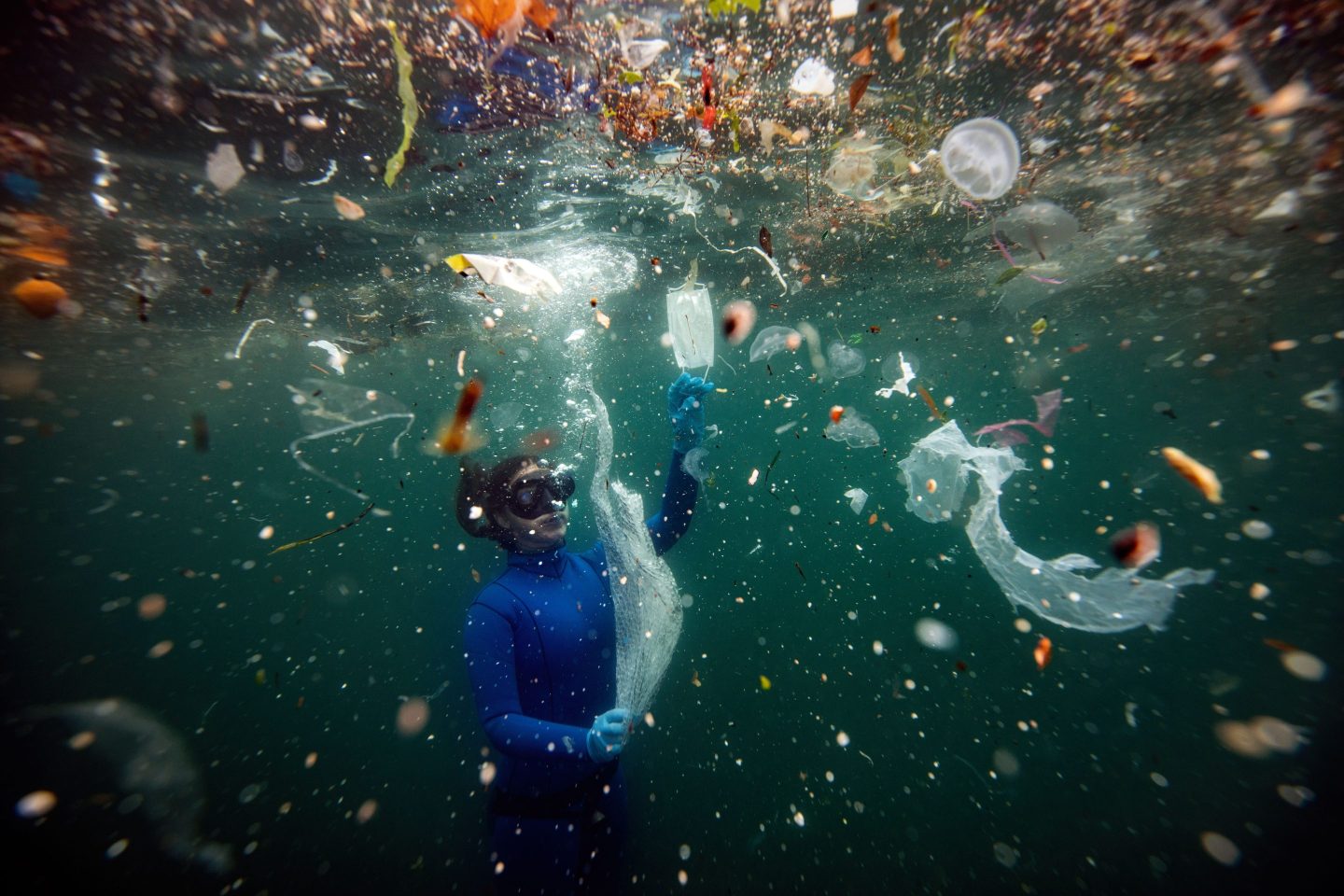
Divers examine plastic waste in Turkey.
Climate conferences are regularly held, but not a single international agreement on plastics exists, despite the irreversible impact it represents for the planet.Sebnem Coskun—Anadolu Agency/Getty Images

Leaders are heading to Nairobi this week for the fifth session of the United Nations Environment Assembly (UNEA 5.2), and it’s not just your run-of-the-mill conference. At the top of the agenda are talks to align the international community on the creation of a global, legally binding treaty to reduce plastic pollution.

Brands, policymakers, and NGOs alike are calling for one in order to keep plastic out of nature, reduce its production, and address what’s already in existence. And for good reason. Plastic production alone increased 79% between 2000 and 2015, and the trend isn’t slowing.

While the UN’s climate change conferences are recurrent, not a single international agreement on plastics exists despite the colossal cost and irreversible impact it represents for society and the planet.

In a bid to stop the bleeding and deal with the plastic flooding into nature, a new trend has emerged, with a twist of déjà vu: plastic credits. Some players, such as standard-setter Verra, are including plastic credits, or offsets, in frameworks and guidelines for corporations to reduce their contributions to the plastic crisis.

Put simply, a plastic credit represents a ton of plastic waste removed from nature and can be used to offset a company’s plastic footprint. These credits fund organizations that collect waste from the environment, supporting infrastructure financing and boosting recycling rates in countries that have disproportionately borne the brunt of plastic waste. Like the better-known carbon credits, plastic credits aim to fast-track companies’ efforts to achieve “plastic neutrality.”

While these plastic credits are a key part of the solution, with years of carbon credits under our belt, companies must learn from the past to avoid the common pitfalls of offsets and their use as a “license to pollute.” In other words, purchasing a few plastic credits while operating business as usual is not a credible plan. Instead, companies should follow the three golden rules: measure, reduce, and compensate—and engage the entire corporate value chain in the process.

To reduce its contribution to plastic pollution, a company should start by measuring its plastic footprint, then drastically and systematically reduce its single-use plastic packaging—and plastic more broadly—all while avoiding sustainability trade-offs. Switching to packaging made from natural fibers risks transferring the environmental impact from pollution to land and forest degradation, for example.

The second important change is to shift to sustainability-vetted, eco-designed materials (i.e., materials created with consideration for the environmental impacts across their entire life cycle, from manufacturing to disposal). At the very least, companies should switch to 100% recycled and recyclable plastic, all while striving for circularity—or keeping materials in use through a “closed-loop” system versus single use and disposal. In the absence of unified collection and recycling systems in certain markets, companies need to do a deep dive into the different service providers in each country or even contribute to their creation if necessary.

Companies must go even further by contributing to plastic pollution reduction outside of their own business activities by participating in establishing the infrastructure for collection and recycling where it’s lacking. This process may take some time because it requires engaging with the relevant stakeholders across different markets. In the meantime, a company can rely on plastic credits to offset any residual volumes of plastic waste from its footprint—but only after it has implemented eco-design actions to reduce its contribution to plastic pollution in the first place.

While years of experience with carbon credits should make it easier to navigate plastic credits, there’s a different set of challenges at play. One of the main difficulties lies in the nature of plastic and its many forms. Decisions companies make need to consider different categories of plastic and their associated environmental costs, addressing questions such as “is bio-based plastic actually any better?” and “what about compostable petroleum-based plastics?”

Much of the plastic waste that already exists has no value. Unlike aluminum, for example, where a market already exists, we first need to increase the demand for plastic waste in order to feed the recycling sector and turn something previously regarded as waste into something of value. Legal obligations, like extended producer responsibility (EPR) programs, or financial incentives will play a critical part in establishing the market.

The plastics crisis is a global issue, but the solutions put forth should be adapted to local contexts. The sale and disposal of packaging in Sweden is different from Cambodia.

There are several firms that sell plastic credits today, but the market remains entirely voluntary. The onus is on companies to do their due diligence on crediting schemes and select only those that ensure social and environmental safeguards.

Ultimately, companies must keep the end goal in sight: Plastic credits should only take place alongside efforts to shift to a truly circular business model. Certain industries—consumer goods in particular—face mounting legal and consumer pressures and are starting to get serious about tackling plastics.

By supporting a global treaty now, business leaders have an opportunity to stay ahead of the curve and lead their industries forward.

Laura Peano is the global plastics lead at Quantis.

More must-read commentary published by Fortune:

  • Corporations, not governments, can create a better world
  • Former Ukraine prime minister: Only together can we defeat Putin’s plans for global autocracy
  • The Biden Administration: How not to impose sanctions
  • How the European gas market fuels Putin’s obsession with Ukraine
  • The Great Resignation calls for a Glorious Re-Engagement

Never miss a story: Follow your favorite topics and authors to get a personalized email with the journalism that matters most to you.
About the Author
By Laura Peano
See full bioRight Arrow Button Icon

Latest in Commentary

Finance
Lorem ipsum dolor sit amet, consectetur adipiscing elit, sed do eiusmod tempor incididunt ut labore et dolore magna aliqua. Ut enim ad minim veniam
By Fortune Editors
October 20, 2025
Finance
Lorem ipsum dolor sit amet, consectetur adipiscing elit, sed do eiusmod tempor incididunt ut labore et dolore magna aliqua. Ut enim ad minim veniam
By Fortune Editors
October 20, 2025
Finance
Lorem ipsum dolor sit amet, consectetur adipiscing elit, sed do eiusmod tempor incididunt ut labore et dolore magna aliqua. Ut enim ad minim veniam
By Fortune Editors
October 20, 2025
Finance
Lorem ipsum dolor sit amet, consectetur adipiscing elit, sed do eiusmod tempor incididunt ut labore et dolore magna aliqua. Ut enim ad minim veniam
By Fortune Editors
October 20, 2025
Finance
Lorem ipsum dolor sit amet, consectetur adipiscing elit, sed do eiusmod tempor incididunt ut labore et dolore magna aliqua. Ut enim ad minim veniam
By Fortune Editors
October 20, 2025
Finance
Lorem ipsum dolor sit amet, consectetur adipiscing elit, sed do eiusmod tempor incididunt ut labore et dolore magna aliqua. Ut enim ad minim veniam
By Fortune Editors
October 20, 2025

Most Popular

Finance
Lorem ipsum dolor sit amet, consectetur adipiscing elit, sed do eiusmod tempor incididunt ut labore et dolore magna aliqua. Ut enim ad minim veniam
By Fortune Editors
October 20, 2025
Finance
Lorem ipsum dolor sit amet, consectetur adipiscing elit, sed do eiusmod tempor incididunt ut labore et dolore magna aliqua. Ut enim ad minim veniam
By Fortune Editors
October 20, 2025
Finance
Lorem ipsum dolor sit amet, consectetur adipiscing elit, sed do eiusmod tempor incididunt ut labore et dolore magna aliqua. Ut enim ad minim veniam
By Fortune Editors
October 20, 2025
Finance
Lorem ipsum dolor sit amet, consectetur adipiscing elit, sed do eiusmod tempor incididunt ut labore et dolore magna aliqua. Ut enim ad minim veniam
By Fortune Editors
October 20, 2025
Finance
Lorem ipsum dolor sit amet, consectetur adipiscing elit, sed do eiusmod tempor incididunt ut labore et dolore magna aliqua. Ut enim ad minim veniam
By Fortune Editors
October 20, 2025
Finance
Lorem ipsum dolor sit amet, consectetur adipiscing elit, sed do eiusmod tempor incididunt ut labore et dolore magna aliqua. Ut enim ad minim veniam
By Fortune Editors
October 20, 2025
Rankings
  • 100 Best Companies
  • Fortune 500
  • Global 500
  • Fortune 500 Europe
  • Most Powerful Women
  • Future 50
  • World’s Most Admired Companies
  • See All Rankings
Sections
  • Finance
  • Leadership
  • Success
  • Tech
  • Asia
  • Europe
  • Environment
  • Fortune Crypto
  • Health
  • Retail
  • Lifestyle
  • Politics
  • Newsletters
  • Magazine
  • Features
  • Commentary
  • Mpw
  • CEO Initiative
  • Conferences
  • Personal Finance
  • Education
Customer Support
  • Frequently Asked Questions
  • Customer Service Portal
  • Privacy Policy
  • Terms Of Use
  • Single Issues For Purchase
  • International Print
Commercial Services
  • Advertising
  • Fortune Brand Studio
  • Fortune Analytics
  • Fortune Conferences
  • Business Development
About Us
  • About Us
  • Editorial Calendar
  • Press Center
  • Work At Fortune
  • Diversity And Inclusion
  • Terms And Conditions
  • Site Map
  • Facebook icon
  • Twitter icon
  • LinkedIn icon
  • Instagram icon
  • Pinterest icon

Most Popular

placeholder alt text
Future of Work
Ford CEO has 5,000 open mechanic jobs with up to 6-figure salaries from the shortage of manually skilled workers: 'We are in trouble in our country'
By Marco Quiroz-GutierrezJanuary 31, 2026
1 day ago
placeholder alt text
Economy
'I just don't have a good feeling about this': Top economist Claudia Sahm says the economy quietly shifted and everyone's now looking at the wrong alarm
By Eleanor PringleJanuary 31, 2026
2 days ago
placeholder alt text
Success
Ryan Serhant starts work at 4:30 a.m.—he says most people don’t achieve their dreams because ‘what they really want is just to be lazy’
By Preston ForeJanuary 31, 2026
1 day ago
placeholder alt text
Success
Alexis Ohanian walked out of the LSAT 20 minutes in, went to a Waffle House, and decided he was 'gonna invent a career.' He founded Reddit
By Preston ForeJanuary 31, 2026
1 day ago
placeholder alt text
Economy
Meet the first CEO of the IRS: A Jamie Dimon protege facing a $5 trillion test this tax season
By Shawn TullyJanuary 31, 2026
1 day ago
placeholder alt text
Big Tech
The Chan Zuckerberg Initiative cut 70 jobs as the Meta CEO’s philanthropy goes all in on mission to 'cure or prevent all disease'
By Sydney LakeFebruary 1, 2026
10 hours ago

© 2026 Fortune Media IP Limited. All Rights Reserved. Use of this site constitutes acceptance of our Terms of Use and Privacy Policy | CA Notice at Collection and Privacy Notice | Do Not Sell/Share My Personal Information
FORTUNE is a trademark of Fortune Media IP Limited, registered in the U.S. and other countries. FORTUNE may receive compensation for some links to products and services on this website. Offers may be subject to change without notice.


Latest in Commentary

dewar
CommentaryLeadership
The AI adoption story is haunted by fear as today’s efficiency programs look like tomorrow’s job cuts. Leaders need to win workers’ trust
By Carolyn DewarFebruary 1, 2026
7 hours ago
CommentaryLeadership
How Trump helped Harvard: 5 ‘Crimson’ leadership lessons on standing up to bullies 
By Jeffrey Sonnenfeld, Steven Tian and Stephen HenriquesFebruary 1, 2026
10 hours ago
Economygeopolitics
BRICS could become a new pillar of global governance—if its rapid growth doesn’t erode its newfound clout
By Brian WongJanuary 31, 2026
22 hours ago
taxi
Commentaryregulation
America’s AI regulatory patchwork is crushing startups and helping China
By James Richardson and Eric TanenblattJanuary 30, 2026
2 days ago
EuropeLetter from London
Struggling to remain relevant during the AI watercooler chat? Talk about your latest ‘new collar’ hire
By Kamal AhmedJanuary 29, 2026
3 days ago
trump
Commentaryregulation
Trump is driving capital out of capitalism
By Andrew BeharJanuary 29, 2026
3 days ago