• Home
  • News
  • Fortune 500
  • Tech
  • Finance
  • Leadership
  • Lifestyle
  • Rankings
  • Multimedia
CommentaryCOP26

Consensus over hydrogen at COP26 can dramatically speed up the energy transition

By
Marco Alverà
Marco Alverà
Down Arrow Button Icon
By
Marco Alverà
Marco Alverà
Down Arrow Button Icon
November 1, 2021, 4:31 PM ET
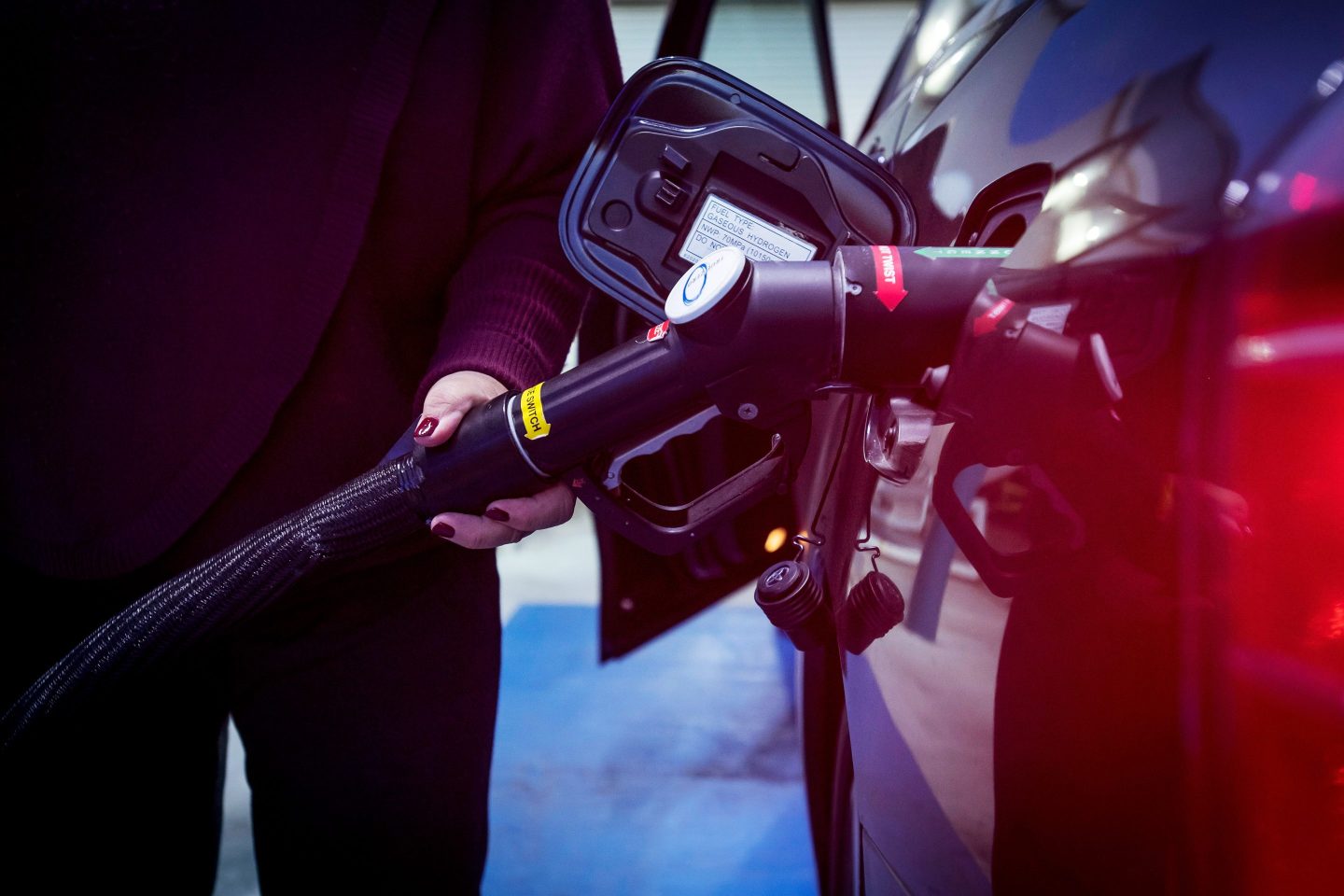
Renewable energy can be stored as hydrogen to be easily used across our existing energy infrastructure.
Renewable energy can be stored as hydrogen to be easily used across our existing energy infrastructure.David Paul Morris—Bloomberg/Getty Images

We are on the cusp of an energy revolution that could see hydrogen play a key role in the way we bring fully decarbonized energy to our homes, offices, and factories.

In 2004 when I was working at Enel, I went to Japan and studied hydrogen. I wrote a report saying, “I love this technology, but it will never work. It’s too expensive.” I was a skeptic, but I was converted four years ago by my team here at Snam. I wrote a story with them that showed how powerful hydrogen can be in the battle against climate change, and how necessary hydrogen is to wean the world off hydrocarbons and put it on a path to net zero.

The fact that renewable electricity is now so cheap to produce is a game changer. Not only does it allow renewables to gradually replace fossil fuels in power generation, but it enables clean energy to reach new sectors in which direct electrification is either too costly or difficult.

For the energy transition to succeed, we need to move vast amounts of intermittent solar and wind energy from where it is ample and cheap to where it is consumed. This is where hydrogen steps in, not as a primary energy source but rather as an energy carrier.

Green hydrogen, which is produced by splitting water with green electricity, is by far the most cost-effective and efficient way of moving energy over long distances, especially when using the existing gas infrastructure. The additional cost of using green hydrogen instead of fossil fuels is minimal. Manufacturing a car with steel made from green hydrogen adds less than 1% to the cost.

Hydrogen is also far easier to store over long periods of time. It is often the cheapest and sometimes the only option to fully decarbonize heavy industry, long-distance mobility, and winter heating. It also provides the resilience and flexibility the energy system so badly needs to avoid extreme price volatility and blackouts.

By 2050, clean hydrogen will make up as much as 25% of our net-zero energy mix, according to Bloomberg New Energy Finance (BNEF), generating a $20 trillion infrastructure investment opportunity, new technologies, companies, jobs, and ultimately a cheaper energy system than we have now.

So as the policymakers, media, scientists, and businesses make plans in Glasgow, here are my four suggestions to speed up the development of hydrogen by a decade, saving 40 gigatonnes of emissions and $2.5 trillion in abatement costs.

1. Let’s define what “clean” hydrogen really is. Some methods of producing hydrogen emit significant quantities of CO2. We need a global organization to define and certify what counts as “clean,” expressed in terms of grams of CO2-equivalent emissions along the value chain for every kilogram of hydrogen produced. This will enable clean hydrogen to be traded across markets and different colors of hydrogen to compete, reducing cost and increasing liquidity and security.

2. We can create visible demand. Governments, regions, cities, and companies should announce clear hydrogen targets. This could be backed up with measures such as including mandatory quotas for certain sectors, or incentives to cover the extra cost of using green hydrogen compared with existing fuels.

3. We can leverage development. Green investment should be funneled to those countries with more space, sunlight, or wind. These are often developing countries, so at the same time, this would allow developed nations to make good on their promise to mobilize $100 billion a year in climate finance.

To cut the time required for this money to be deployed, a collaboration between international financial institutions and the private sector should build standardized, replicable, and bankable projects. For instance, as existing coal plants are phased out, they could be transformed into renewable/hydrogen hubs, generating soon-to-be-cheaper energy.

4. A system of eco-labeling would enable consumers to signal their willingness to pay for green products, which will boost the development of the market.

So when the dust settles in Glasgow, hopefully, hydrogen will have secured its place as a game-changing fuel of the future.

Marco Alverà is the CEO of Snam and the author of The Hydrogen Revolution.

More must-readcommentary published by Fortune:

  • Government intervention is more of an American tradition than we care to admit
  • Great workplace design can combat the ‘Great Resignation’
  • Coursera and the uncertain future of higher education
  • Ukraine wants to build a top crypto jurisdiction, not the Wild West
  • To fix the planet’s broken food systems, we must count their hidden costs

Subscribe to Fortune Daily to get essential business stories straight to your inbox each morning.
About the Author
By Marco Alverà
See full bioRight Arrow Button Icon

Latest in Commentary

Matt Rogers
CommentaryInfrastructure
I built the first iPhone with Steve Jobs. The AI industry is at risk of repeating an early smartphone mistake
By Matt RogersDecember 4, 2025
3 hours ago
Jerome Powell
CommentaryFederal Reserve
Fed officials like the mystique of being seen as financial technocrats, but it’s time to demystify the central bank
By Alexander William SalterDecember 4, 2025
3 hours ago
Rakesh Kumar
CommentarySemiconductors
China does not need Nvidia chips in the AI war — export controls only pushed it to build its own AI machine
By Rakesh KumarDecember 3, 2025
1 day ago
Rochelle Witharana is Chief Financial and Investment Officer for The California Wellness Foundation
Commentarydiversity and inclusion
Fund managers from diverse backgrounds are delivering standout returns and the smart money is slowly starting to pay attention
By Rochelle WitharanaDecember 3, 2025
1 day ago
Ayesha and Stephen Curry (L) and Arndrea Waters King and Martin Luther King III (R), who are behind Eat.Play.Learn and Realize the Dream, respectively.
Commentaryphilanthropy
Why time is becoming the new currency of giving
By Arndrea Waters King and Ayesha CurryDecember 2, 2025
2 days ago
Trump
CommentaryTariffs and trade
The trade war was never going to fix our deficit
By Daniel BunnDecember 2, 2025
2 days ago

Most Popular

placeholder alt text
North America
Jeff Bezos and Lauren Sánchez Bezos commit $102.5 million to organizations combating homelessness across the U.S.: ‘This is just the beginning’
By Sydney LakeDecember 2, 2025
2 days ago
placeholder alt text
Economy
Two months into the new fiscal year and the U.S. government is already spending more than $10 billion a week servicing national debt
By Eleanor PringleDecember 4, 2025
5 hours ago
placeholder alt text
Economy
Ford workers told their CEO 'none of the young people want to work here.' So Jim Farley took a page out of the founder's playbook
By Sasha RogelbergNovember 28, 2025
6 days ago
placeholder alt text
North America
Anonymous $50 million donation helps cover the next 50 years of tuition for medical lab science students at University of Washington
By The Associated PressDecember 2, 2025
2 days ago
placeholder alt text
Economy
Scott Bessent calls the Giving Pledge well-intentioned but ‘very amorphous,’ growing from ‘a panic among the billionaire class’
By Nick LichtenbergDecember 3, 2025
23 hours ago
placeholder alt text
Innovation
Google CEO Sundar Pichai says we’re just a decade away from a new normal of extraterrestrial data centers
By Sasha RogelbergDecember 1, 2025
3 days ago
Rankings
  • 100 Best Companies
  • Fortune 500
  • Global 500
  • Fortune 500 Europe
  • Most Powerful Women
  • Future 50
  • World’s Most Admired Companies
  • See All Rankings
Sections
  • Finance
  • Leadership
  • Success
  • Tech
  • Asia
  • Europe
  • Environment
  • Fortune Crypto
  • Health
  • Retail
  • Lifestyle
  • Politics
  • Newsletters
  • Magazine
  • Features
  • Commentary
  • Mpw
  • CEO Initiative
  • Conferences
  • Personal Finance
  • Education
Customer Support
  • Frequently Asked Questions
  • Customer Service Portal
  • Privacy Policy
  • Terms Of Use
  • Single Issues For Purchase
  • International Print
Commercial Services
  • Advertising
  • Fortune Brand Studio
  • Fortune Analytics
  • Fortune Conferences
  • Business Development
About Us
  • About Us
  • Editorial Calendar
  • Press Center
  • Work At Fortune
  • Diversity And Inclusion
  • Terms And Conditions
  • Site Map

© 2025 Fortune Media IP Limited. All Rights Reserved. Use of this site constitutes acceptance of our Terms of Use and Privacy Policy | CA Notice at Collection and Privacy Notice | Do Not Sell/Share My Personal Information
FORTUNE is a trademark of Fortune Media IP Limited, registered in the U.S. and other countries. FORTUNE may receive compensation for some links to products and services on this website. Offers may be subject to change without notice.