• Home
  • Latest
  • Fortune 500
  • Finance
  • Tech
  • Leadership
  • Lifestyle
  • Rankings
  • Multimedia

Trendingnow

1

Jeff Bezos wants the bottom half of earners to pay zero income tax—he says nurses making just $75K should save $12K a year

2

Despite a $500 million net worth, Shaq just finished his fourth degree. He warns graduates: 'Your character will take you further than your resume'

3

Bolt CEO says he let go of his entire HR team for creating problems that didn’t exist: ‘Those problems disappeared when I let them go’ 

1

Jeff Bezos wants the bottom half of earners to pay zero income tax—he says nurses making just $75K should save $12K a year

2

Despite a $500 million net worth, Shaq just finished his fourth degree. He warns graduates: 'Your character will take you further than your resume'

3

Bolt CEO says he let go of his entire HR team for creating problems that didn’t exist: ‘Those problems disappeared when I let them go’ 
CommentaryU.S. Politics

Government intervention is more of an American tradition than we care to admit

By
Richard Vague
Richard Vague
Down Arrow Button Icon
By
Richard Vague
Richard Vague
Down Arrow Button Icon
October 22, 2021, 6:56 AM ET
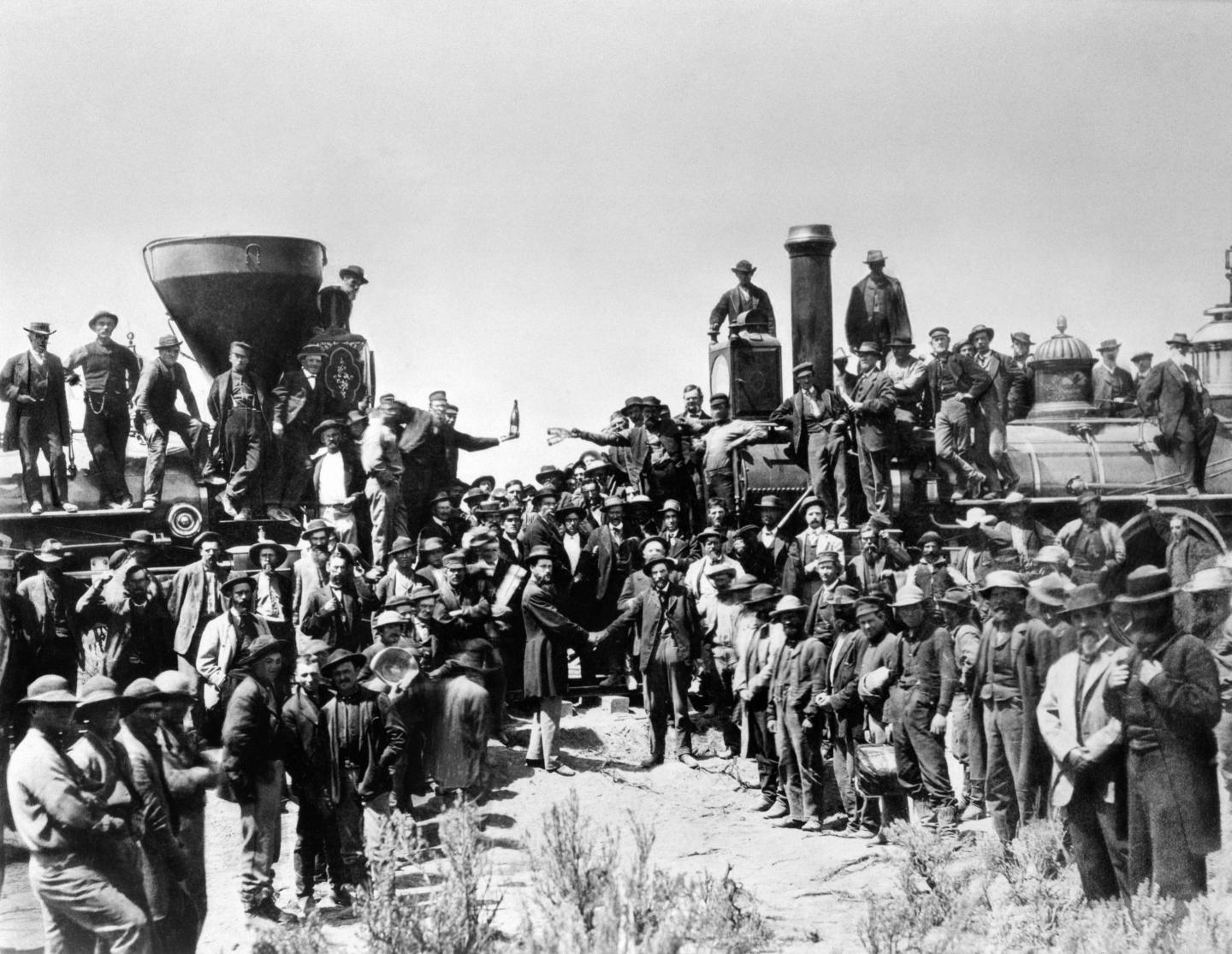
The Transcontinental Railroad and the internet could not have been developed without U.S. government support.
The Transcontinental Railroad and the internet could not have been developed without U.S. government support.ClassicStock—Getty Images

As the House of Representatives grapples with a $1 trillion bill promoted by President Biden to upgrade the country’s infrastructure, the U.S. market faces its latest government intervention in the economy. Conservatives have long contended that business and the economy do better when the government simply gets out of the way, stops trying to pick winners, and lets the market guide investment.  

But it has never been that simple. 

In fact, the government has often played a beneficial role in the market, and the lines between the U.S. government and business have always been permeable and blurred. The two have been deeply enmeshed, for better or worse, throughout the country’s history.  

America’s government actively intervened during the American Revolution, teaching the art of interchangeable parts and financing the expansion of small manufacturers. After the war, Alexander Hamilton and Tench Coxe led the government’s active promotion of “useful manufactures” and even aided in the theft of secrets from Industrial Revolution pioneers in Britain. 

The epochal transportation projects in our early history, including the Erie Canal, which defined its era, and the Transcontinental Railroad, which bound the nation together, would not have been possible without government support. These projects were simply too large to finance with private capital, but they transformed the nation’s private sector business. 

Government land sales and grants also boosted business. Abraham Lincoln’s Homestead Acts were a boon to small farmers and helped settle the West. Strategically, they were enacted to help block the spread of slave-based plantations to the newly acquired territories.

Wars and the Cold War, though they brought great tragedy, were also great accelerators of the technology that business would later capitalize on. Innovations from World War II brought vast improvements to flight technology, medicine, and more. Cold War government demand for microchips for missiles and space exploration alone reduced the price of a single chip from $32 in 1961 to $1.25 just 10 years later.  

The government’s visible hand in American business continued, and in more recent times led to the birth of the digital era. The creation of the internet itself was funded by the government. The 12 major technologies that make possible the iPhone, including GPS, multi-touch screens, and key aspects of cellular technology emerged directly or indirectly from government-funded research. 

Today, the same kind of government support is needed to fend off the challenge from China. We are locked in an economic battle for leadership in critical emerging technologies such as genetic engineering, advanced telecommunications, and supercomputing. China’s government support for basic research has enabled it to quickly catch up to U.S. technology in many of these areas. 

The danger is that throughout our history, government involvement has often come with corruption, waste, and dysfunction. The Erie Canal’s success was followed by government-funded canal boondoggles in other states. The Transcontinental Railroad was accompanied by brazen financial scandals. War bred corrupt profiteers. 

The government-business partnership has had its ups and downs. In any case, it’s almost impossible to draw a solid line between business and government. They have always managed to entwine themselves. 

As he was writing his reports on government debt, banking, and manufacturing, Hamilton lived across the street from both the nation’s first bank president, Thomas Willing, and one of its most notable bond speculators, William Bingham. He was a customer of Willing’s and dined frequently with both. Their influence on his thinking was both overt and inevitable. 

There has always been far too much at stake for business not to attend raptly to the machinery of government. Likewise, there has always been far too much at stake in the economic well-being of the country and its citizens for government to ignore the activities of business.  

We will likely see this all play out again if Biden’s infrastructure bill becomes law. The nation’s infrastructure has fallen into disrepair, so there is much that is necessary and good to be achieved. But vigilance will be needed to thwart waste and corruption.

Thus has it always been. 

Richard Vague serves as Pennsylvania Banking and Securities Secretary. Prior to his 2020 appointment, he was managing partner of Gabriel Investments and chair of the Governor’s Woods Foundation, a nonprofit. Previously, he was cofounder, chairman, and CEO of Energy Plus. Vague was also cofounder and CEO of two banks and founder of the economic data service Tychos. His new book is An Illustrated Business History of the United States. The opinions expressed are solely his own and do not represent those of the Commonwealth of Pennsylvania.

Subscribe to Fortune Daily to get essential business stories delivered straight to your inbox each morning.

About the Author
By Richard Vague
See full bioRight Arrow Button Icon

Latest in Commentary

Finance
Lorem ipsum dolor sit amet, consectetur adipiscing elit, sed do eiusmod tempor incididunt ut labore et dolore magna aliqua. Ut enim ad minim veniam
By Fortune Editors
October 20, 2025
Finance
Lorem ipsum dolor sit amet, consectetur adipiscing elit, sed do eiusmod tempor incididunt ut labore et dolore magna aliqua. Ut enim ad minim veniam
By Fortune Editors
October 20, 2025
Finance
Lorem ipsum dolor sit amet, consectetur adipiscing elit, sed do eiusmod tempor incididunt ut labore et dolore magna aliqua. Ut enim ad minim veniam
By Fortune Editors
October 20, 2025
Finance
Lorem ipsum dolor sit amet, consectetur adipiscing elit, sed do eiusmod tempor incididunt ut labore et dolore magna aliqua. Ut enim ad minim veniam
By Fortune Editors
October 20, 2025
Finance
Lorem ipsum dolor sit amet, consectetur adipiscing elit, sed do eiusmod tempor incididunt ut labore et dolore magna aliqua. Ut enim ad minim veniam
By Fortune Editors
October 20, 2025
Finance
Lorem ipsum dolor sit amet, consectetur adipiscing elit, sed do eiusmod tempor incididunt ut labore et dolore magna aliqua. Ut enim ad minim veniam
By Fortune Editors
October 20, 2025

Most Popular

Finance
Lorem ipsum dolor sit amet, consectetur adipiscing elit, sed do eiusmod tempor incididunt ut labore et dolore magna aliqua. Ut enim ad minim veniam
By Fortune Editors
October 20, 2025
Finance
Lorem ipsum dolor sit amet, consectetur adipiscing elit, sed do eiusmod tempor incididunt ut labore et dolore magna aliqua. Ut enim ad minim veniam
By Fortune Editors
October 20, 2025
Finance
Lorem ipsum dolor sit amet, consectetur adipiscing elit, sed do eiusmod tempor incididunt ut labore et dolore magna aliqua. Ut enim ad minim veniam
By Fortune Editors
October 20, 2025
Finance
Lorem ipsum dolor sit amet, consectetur adipiscing elit, sed do eiusmod tempor incididunt ut labore et dolore magna aliqua. Ut enim ad minim veniam
By Fortune Editors
October 20, 2025
Finance
Lorem ipsum dolor sit amet, consectetur adipiscing elit, sed do eiusmod tempor incididunt ut labore et dolore magna aliqua. Ut enim ad minim veniam
By Fortune Editors
October 20, 2025
Finance
Lorem ipsum dolor sit amet, consectetur adipiscing elit, sed do eiusmod tempor incididunt ut labore et dolore magna aliqua. Ut enim ad minim veniam
By Fortune Editors
October 20, 2025
Fortune Secondary Logo
Rankings
  • 100 Best Companies
  • Fortune 500
  • Global 500
  • Fortune 500 Europe
  • Most Powerful Women
  • World's Most Admired Companies
  • See All Rankings
  • Lists Calendar
Sections
  • Finance
  • Fortune Crypto
  • Features
  • Leadership
  • Health
  • Commentary
  • Success
  • Retail
  • Mpw
  • Tech
  • Lifestyle
  • CEO Initiative
  • Asia
  • Politics
  • Conferences
  • Europe
  • Newsletters
  • Personal Finance
  • Environment
  • Magazine
  • Education
Customer Support
  • Frequently Asked Questions
  • Customer Service Portal
  • Privacy Policy
  • Terms Of Use
  • Single Issues For Purchase
  • International Print
Commercial Services
  • Advertising
  • Fortune Brand Studio
  • Fortune Analytics
  • Fortune Conferences
  • Business Development
  • Group Subscriptions
About Us
  • About Us
  • Press Center
  • Work At Fortune
  • Terms And Conditions
  • Site Map
  • About Us
  • Press Center
  • Work At Fortune
  • Terms And Conditions
  • Site Map
  • Facebook icon
  • Twitter icon
  • LinkedIn icon
  • Instagram icon
  • Pinterest icon

Latest in Commentary

brotman
CommentaryVenture Capital
I’ve spent 25 years in venture capital. Here’s how it quietly shut ordinary Americans out of the AI wealth boom—and what could fix it
By Steve BrotmanMay 22, 2026
6 hours ago
cox
CommentarySuccession
McKinsey studied 200 family business successions. The biggest problem wasn’t the heir — it was the outgoing CEO
By Acha Leke and Chaitali MukherjeeMay 22, 2026
7 hours ago
himanshu
CommentaryLayoffs
I’ve led companies through every major tech disruption. AI washing is the same mistake, every time
By Himanshu PalsuleMay 22, 2026
9 hours ago
trump
CommentaryWhite House
Trump Accounts have a bigger problem than billionaire stock donations
By Jin Huang and Stephen RollMay 21, 2026
1 day ago
brigham
CommentaryRailroads
The U.S. freight network is broken by design. One merger could start fixing it
By Brigham A. McCownMay 21, 2026
1 day ago
Elon Musk sits with his fists together, looking up.
Commentaryspace
SpaceX will be worth trillions, but the space station that made it possible is worth even more — if we don’t squander it
By Tejpaul BhatiaMay 20, 2026
2 days ago

Most Popular

Jeff Bezos wants the bottom half of earners to pay zero income tax—he says nurses making just $75K should save $12K a year
Success
Jeff Bezos wants the bottom half of earners to pay zero income tax—he says nurses making just $75K should save $12K a year
By Preston ForeMay 21, 2026
1 day ago
Despite a $500 million net worth, Shaq just finished his fourth degree. He warns graduates: 'Your character will take you further than your resume'
Success
Despite a $500 million net worth, Shaq just finished his fourth degree. He warns graduates: 'Your character will take you further than your resume'
By Preston ForeMay 20, 2026
2 days ago
Bolt CEO says he let go of his entire HR team for creating problems that didn’t exist: ‘Those problems disappeared when I let them go’ 
Workplace Culture
Bolt CEO says he let go of his entire HR team for creating problems that didn’t exist: ‘Those problems disappeared when I let them go’ 
By Preston ForeMay 19, 2026
3 days ago
Pay transparency is exposing a bigger problem: Most companies can't explain why they pay what they pay
Workplace Culture
Pay transparency is exposing a bigger problem: Most companies can't explain why they pay what they pay
By Sydney LakeMay 20, 2026
2 days ago
Current price of oil as of May 21, 2026
Personal Finance
Current price of oil as of May 21, 2026
By Joseph HostetlerMay 21, 2026
1 day ago
McKinsey partner says up to 50% of work hours could be transformed within the next 5 years
AI
McKinsey partner says up to 50% of work hours could be transformed within the next 5 years
By Emma BurleighMay 21, 2026
1 day ago

© 2026 Fortune Media IP Limited. All Rights Reserved. Use of this site constitutes acceptance of our Terms of Use and Privacy Policy | CA Notice at Collection and Privacy Notice | Do Not Sell/Share My Personal Information
FORTUNE is a trademark of Fortune Media IP Limited, registered in the U.S. and other countries. FORTUNE may receive compensation for some links to products and services on this website. Offers may be subject to change without notice.