• Home
  • Latest
  • Fortune 500
  • Finance
  • Tech
  • Leadership
  • Lifestyle
  • Rankings
  • Multimedia

Trendingnow

1

MacKenzie Scott alone accounted for one-third of America's $19.2 billion in megagifts last year

2

As Big Tech showers employees with perks to win the talent war, Nvidia built a nearly $5 trillion company by making people pay for their own lunch

3

Philanthropy leader at Warren Buffett and Bill Gates’ Giving Pledge says children of billionaires are pushing them to give their wealth away faster

1

MacKenzie Scott alone accounted for one-third of America's $19.2 billion in megagifts last year

2

As Big Tech showers employees with perks to win the talent war, Nvidia built a nearly $5 trillion company by making people pay for their own lunch

3

Philanthropy leader at Warren Buffett and Bill Gates’ Giving Pledge says children of billionaires are pushing them to give their wealth away faster
CommentaryVenture Capital

Gordon Ritter: I predicted AI’s learning loop a decade ago. The doomers are still measuring the wrong thing

By
Gordon Ritter
Gordon Ritter
Down Arrow Button Icon
By
Gordon Ritter
Gordon Ritter
Down Arrow Button Icon
June 11, 2026, 8:30 AM ET
gordon
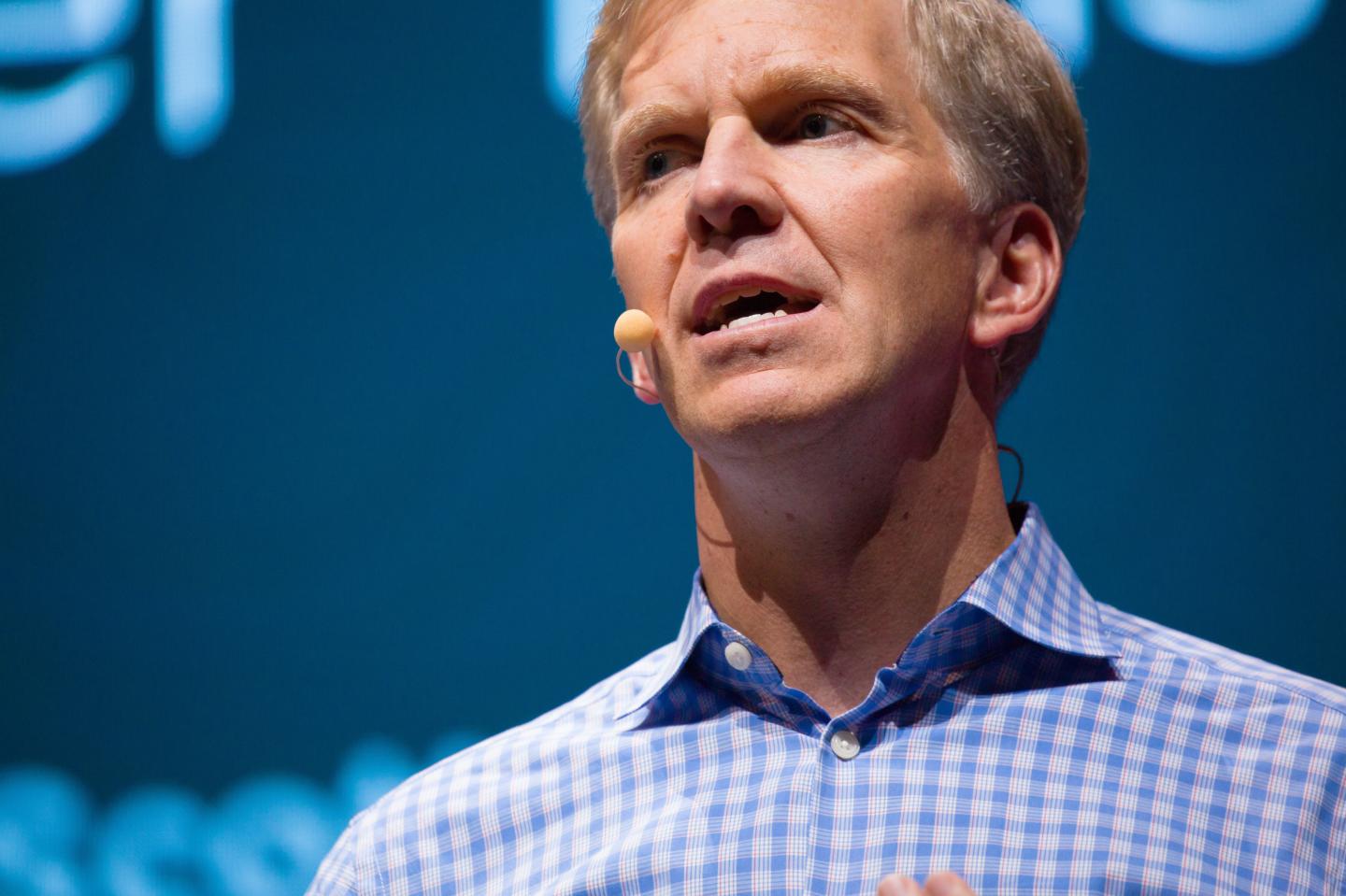
Gordon Ritter, Founder and General Partner at Emergence Capital.courtesy of Emergence Capital
Add Fortune on Google for similar content.

In June 2025, Jim Farley said AI would replace half of all white-collar workers in America. Dario Amodei put unemployment as high as 20%. For more than a year, executives have reframed the future of knowledge work as a countdown clock.

Recommended Video

I want to make the opposite case — and I want to be honest that I have skin in it.

In 2017, my firm wrote about what we called Coaching Networks: software that uses machine learning to guide workers in real time, gathering data from a distributed network of people and learning the techniques that actually work. The idea that mattered most was this: the human being is the mutation engine in the system. Software learns what’s already proven. But genuinely new moves — the ones no model could have predicted — come from creative people finding a better way. The system spreads those mutations to everyone else. The cycle repeats.

We were early. The technology wasn’t ready. It is now. And the idea has aged a great deal better than the doom has.

The Countdown Gets the Wrong Number

AI is extraordinary at optimization. Give it a goal and it will find a faster, cheaper path than any team you could assemble. What it cannot do is decide which goal is worth pursuing, or make the judgment call when the model has no answer. Those are the moments that move markets and start companies. They are the hardest moments to automate, because there is nothing yet to imitate.

The work that survives is not the work that sits below the model. It is the work that sits above it.

This is not a thought experiment. The companies furthest ahead are already organizing around it. McKinsey built Lilli, an internal assistant that indexes the firm’s proprietary knowledge for tens of thousands of consultants. Bain built thousands of custom GPTs on top of its OpenAI partnership. EY has tens of thousands of AI agents in production, not as a science project but as a remaking of how institutional knowledge gets created. Ramp gives every employee agentic capability; when someone finds a workflow that works, it gets packaged into a reusable skill and shared across the company. Veeva is embedding the same principle into an entire industry, with deep agentic integration across the applications that run life sciences companies.

What these companies share is a direction. They are pointing AI inward, compounding human intelligence and keeping it inside the building. Companies losing ground are pointing it outward, letting their best thinking drain into tools they do not control.

Why the Advantage Compounds

There is a technical reason this works, and it is the most underappreciated idea in enterprise AI right now.

Every time a person works with an internal system, that interaction leaves a trace: a record of what the system did and how a human responded — every correction, every preference, every edge case. Traces are not data you can buy or scrape. They are earned one interaction at a time. They feed the domain-specific training loops that turn raw use into steadily better performance. Better performance drives more use. More use produces more traces. The gap widens with every cycle.

Foundation model providers capture general intelligence from every customer they serve. But the traces that encode how your analysts build a model, how your operators make a call, how your team actually decides — those belong to whoever builds the system to capture them. A company that starts today holds an advantage a competitor starting next year cannot simply purchase. The traces are structurally exclusive. That is real intellectual property, and it compounds on its own.

The Risk Nobody Is Managing

When your people use public AI tools to describe how your team works, they are teaching those tools how you operate. The exposure most leaders worry about is data — the sensitive file leaving the building. The subtler exposure is process. A multi-step session with an agent encodes your sequencing, your priorities, and your decision logic. That reasoning path is among the most valuable things a model can learn from.

Enterprise contracts usually prohibit training on your data. The protection around behavioral traces is far less settled. Anthropic changed its consumer terms in August 2025 so that chats from free, Pro, and Max accounts train future models by default unless the user opts out. AI labs are actively hiring lawyers, doctors, and financial analysts to teach foundation models how to reason like industry insiders — recruiting from your talent pool to learn what makes your industry tick. One study found that 77% of employees paste data into generative AI tools, with 82% of that activity running through personal accounts nobody is managing.

When Anthropic released legal plugins for Claude in early 2026, Thomson Reuters fell roughly 18% in a single session. RELX and Wolters Kluwer dropped double digits. Analysts called the reaction overdone, and whether those losses hold is still an open question. But the signal underneath the volatility is the one that matters: software by itself is not a durable layer. After a career building and backing technology companies, that is not a small thing to say. The durable layer is how your people think, decide, and work together — captured and sustained within the company.

Where This Lands

Automate everything you can. Optimization is free money and you should take it all. But optimization is not the edge, because soon everyone will have it. The edge is the judgment that changes the goal, and the creativity that produces a move the model has never seen.

Your people are the only truly defensible algorithm you have. Not because AI cannot do more — it will — but because the specific way your organization thinks and adapts cannot be reconstructed from the outside. It is built from billions of lived experiences, recombined fresh whenever someone meets a problem no one has solved before.

The doomers are counting jobs. The winners are counting traces.

Build the layer that captures yours. Keep the mutations yours.

The opinions expressed in Fortune.com commentary pieces are solely the views of their authors and do not necessarily reflect the opinions and beliefs of Fortune.

About the Author
By Gordon Ritter
See full bioRight Arrow Button Icon
Add Fortune on Google for similar content.

Latest in Commentary

Finance
Lorem ipsum dolor sit amet, consectetur adipiscing elit, sed do eiusmod tempor incididunt ut labore et dolore magna aliqua. Ut enim ad minim veniam
By Fortune Editors
October 20, 2025
Finance
Lorem ipsum dolor sit amet, consectetur adipiscing elit, sed do eiusmod tempor incididunt ut labore et dolore magna aliqua. Ut enim ad minim veniam
By Fortune Editors
October 20, 2025
Finance
Lorem ipsum dolor sit amet, consectetur adipiscing elit, sed do eiusmod tempor incididunt ut labore et dolore magna aliqua. Ut enim ad minim veniam
By Fortune Editors
October 20, 2025
Finance
Lorem ipsum dolor sit amet, consectetur adipiscing elit, sed do eiusmod tempor incididunt ut labore et dolore magna aliqua. Ut enim ad minim veniam
By Fortune Editors
October 20, 2025
Finance
Lorem ipsum dolor sit amet, consectetur adipiscing elit, sed do eiusmod tempor incididunt ut labore et dolore magna aliqua. Ut enim ad minim veniam
By Fortune Editors
October 20, 2025
Finance
Lorem ipsum dolor sit amet, consectetur adipiscing elit, sed do eiusmod tempor incididunt ut labore et dolore magna aliqua. Ut enim ad minim veniam
By Fortune Editors
October 20, 2025

Most Popular

Finance
Lorem ipsum dolor sit amet, consectetur adipiscing elit, sed do eiusmod tempor incididunt ut labore et dolore magna aliqua. Ut enim ad minim veniam
By Fortune Editors
October 20, 2025
Finance
Lorem ipsum dolor sit amet, consectetur adipiscing elit, sed do eiusmod tempor incididunt ut labore et dolore magna aliqua. Ut enim ad minim veniam
By Fortune Editors
October 20, 2025
Finance
Lorem ipsum dolor sit amet, consectetur adipiscing elit, sed do eiusmod tempor incididunt ut labore et dolore magna aliqua. Ut enim ad minim veniam
By Fortune Editors
October 20, 2025
Finance
Lorem ipsum dolor sit amet, consectetur adipiscing elit, sed do eiusmod tempor incididunt ut labore et dolore magna aliqua. Ut enim ad minim veniam
By Fortune Editors
October 20, 2025
Finance
Lorem ipsum dolor sit amet, consectetur adipiscing elit, sed do eiusmod tempor incididunt ut labore et dolore magna aliqua. Ut enim ad minim veniam
By Fortune Editors
October 20, 2025
Finance
Lorem ipsum dolor sit amet, consectetur adipiscing elit, sed do eiusmod tempor incididunt ut labore et dolore magna aliqua. Ut enim ad minim veniam
By Fortune Editors
October 20, 2025
Fortune Secondary Logo
Rankings
  • 100 Best Companies
  • Fortune 500
  • Global 500
  • Fortune 500 Europe
  • Most Powerful Women
  • World's Most Admired Companies
  • See All Rankings
  • Lists Calendar
Sections
  • Finance
  • Fortune Crypto
  • Features
  • Leadership
  • Health
  • Commentary
  • Success
  • Retail
  • Mpw
  • Tech
  • Lifestyle
  • CEO Initiative
  • Asia
  • Politics
  • Conferences
  • Europe
  • Newsletters
  • Personal Finance
  • Environment
  • Magazine
  • Education
Customer Support
  • Frequently Asked Questions
  • Customer Service Portal
  • Privacy Policy
  • Terms Of Use
  • Single Issues For Purchase
  • International Print
Commercial Services
  • Advertising
  • Fortune Brand Studio
  • Fortune Analytics
  • Fortune Conferences
  • Business Development
  • Group Subscriptions
About Us
  • About Us
  • Press Center
  • Work At Fortune
  • Terms And Conditions
  • Site Map
  • About Us
  • Press Center
  • Work At Fortune
  • Terms And Conditions
  • Site Map
  • Facebook icon
  • Twitter icon
  • LinkedIn icon
  • Instagram icon
  • Pinterest icon
Gordon Ritter is Founder and General Partner at Emergence Capital, where he led the first major investment in a fledgling cloud computing company called Salesforce. His ability to see around corners continued with Veeva Systems, which he backed in 2008 when the company had just 25 employees and less than $1 million in revenue. Today, Gordon remains Veeva chairman. Gordon’s expertise is rooted in his own entrepreneurial journey. Over 15 years, he founded and built companies that broke new ground in technology. Among them was Software As Service, co-founded with Salesforce CEO Marc Benioff, which became the foundation for the Salesforce Platform. Another, Whistle Communications, was acquired by IBM, where Gordon went on to lead its $3 billion Global Small Business division.
 

Latest in Commentary

senate
CommentaryCongress
One rare bipartisan AI bill is moving through Congress. Here’s why it deserves to pass
By Neil Björkman and Betsy BrewerJuly 1, 2026
10 hours ago
I know how Gen Z can survive the ‘jobpocalypse’ because I built an AI company — in 2015
CommentaryCareers
I know how Gen Z can survive the ‘jobpocalypse’ because I built an AI company — in 2015
By Jeremy FainJuly 1, 2026
11 hours ago
mr
Commentary250 Years of Innovation
America needs 3.8 million manufacturing workers. This CEO has a blueprint to find them
By Mark RayfieldJuly 1, 2026
11 hours ago
usa
Commentary250 Years of Innovation
America at 250: why the Constitution was built to restrain government, not celebrate majority rule
By Steve H. HankeJuly 1, 2026
11 hours ago
t
CommentaryMedia
Netflix could turn NBC into its biggest bet yet — and this time, the math actually works
By Jeffrey Sonnenfeld and Steven TianJune 30, 2026
1 day ago
wb
CommentaryLeadership
I grew BDO from $600 million to $3.4 billion. Here’s the 3-part formula that made it possible
By Wayne BersonJune 30, 2026
1 day ago

Most Popular

MacKenzie Scott alone accounted for one-third of America's $19.2 billion in megagifts last year
Success
MacKenzie Scott alone accounted for one-third of America's $19.2 billion in megagifts last year
By Sydney LakeJune 25, 2026
7 days ago
As Big Tech showers employees with perks to win the talent war, Nvidia built a nearly $5 trillion company by making people pay for their own lunch
Big Tech
As Big Tech showers employees with perks to win the talent war, Nvidia built a nearly $5 trillion company by making people pay for their own lunch
By Marco Quiroz-GutierrezJuly 1, 2026
14 hours ago
Philanthropy leader at Warren Buffett and Bill Gates’ Giving Pledge says children of billionaires are pushing them to give their wealth away faster
Success
Philanthropy leader at Warren Buffett and Bill Gates’ Giving Pledge says children of billionaires are pushing them to give their wealth away faster
By Preston ForeJune 27, 2026
4 days ago
Elon Musk on MacKenzie Scott giving away $26 billion of her fortune: 'Sadly,' it makes the world a worse place
Success
Elon Musk on MacKenzie Scott giving away $26 billion of her fortune: 'Sadly,' it makes the world a worse place
By Sydney LakeJune 29, 2026
2 days ago
The Supreme Court's birthright citizenship ruling hands the U.S. economy a $7.7 trillion win
Newsletters
The Supreme Court's birthright citizenship ruling hands the U.S. economy a $7.7 trillion win
By Diane BradyJuly 1, 2026
12 hours ago
The U.S. Army is opening military bases to private billions — here's why that changes everything for the next 250 years
Commentary
The U.S. Army is opening military bases to private billions — here's why that changes everything for the next 250 years
By Marc AndersenJune 30, 2026
1 day ago

© 2026 Fortune Media IP Limited. All Rights Reserved. Use of this site constitutes acceptance of our Terms of Use and Privacy Policy | CA Notice at Collection and Privacy Notice | Do Not Sell/Share My Personal Information
FORTUNE is a trademark of Fortune Media IP Limited, registered in the U.S. and other countries. FORTUNE may receive compensation for some links to products and services on this website. Offers may be subject to change without notice.