• Home
  • Latest
  • Fortune 500
  • Finance
  • Tech
  • Leadership
  • Lifestyle
  • Rankings
  • Multimedia

Trendingnow

1

Despite a $500 million net worth, Shaq just finished his fourth degree. He warns graduates: 'Your character will take you further than your resume'

2

Jeff Bezos wants the bottom half of earners to pay zero income tax—he says nurses making just $75K should save $12K a year

3

Bolt CEO says he let go of his entire HR team for creating problems that didn’t exist: ‘Those problems disappeared when I let them go’ 

1

Despite a $500 million net worth, Shaq just finished his fourth degree. He warns graduates: 'Your character will take you further than your resume'

2

Jeff Bezos wants the bottom half of earners to pay zero income tax—he says nurses making just $75K should save $12K a year

3

Bolt CEO says he let go of his entire HR team for creating problems that didn’t exist: ‘Those problems disappeared when I let them go’ 
Commentary

To fix the planet’s broken food systems, we must count their hidden costs

By
Rajiv J. Shah
Rajiv J. Shah
Down Arrow Button Icon
By
Rajiv J. Shah
Rajiv J. Shah
Down Arrow Button Icon
October 22, 2021, 1:30 PM ET
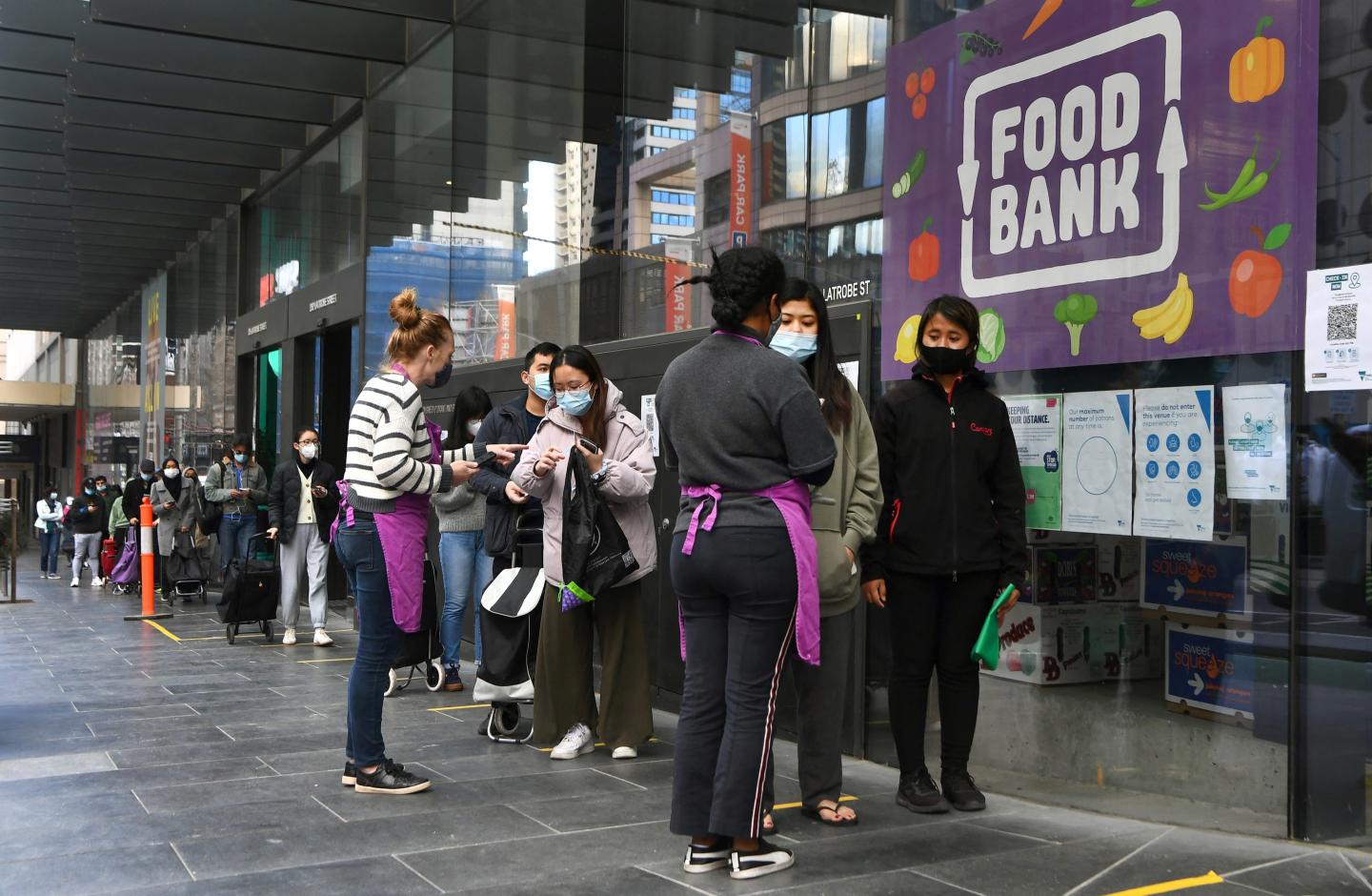
A food bank in Melbourne on Aug. 13, 2021. “The pandemic has revealed how unfit the global food system is for the 21st century—and how unprepared it is for crises,” writes Rajiv J. Shah.
A food bank in Melbourne on Aug. 13, 2021. “The pandemic has revealed how unfit the global food system is for the 21st century—and how unprepared it is for crises,” writes Rajiv J. Shah.WILLIAM WEST—AFP/Getty Images

Of all the heartbreaking scenes the world has witnessed over the course of the pandemic, there are a few that will be remembered long after the last COVID-19 case. People waiting outside food banks, whether in packed parking lots in Texas or in long lines on South Africa’s Eastern Cape. Masked workers showing up for their shifts at meat processing plants across the United States, despite alarming outbreaks. In two years and just a few images, the pandemic has revealed how unfit the global food system is for the 21st century—and how unprepared it is for crises.  

Reforming that system requires understanding how expensive food really is. The global food system is full of hidden costs—to people’s health, to the climate, and to workers. Only by understanding what our food actually costs us can we understand—and have the incentive to— change the system in ways that avoid breakdowns like those from the pandemic. Such knowledge also offers the world an opportunity to achieve transformative change: by revealing where to make investments that can have outsize benefits. 

Consider the United States as an example. In 2019, American consumers spent an estimated $1.1 trillion on food. Yet when you take into account hidden costs to the planet and its people, that number is far higher: $3.2 trillion per year, according to a report we at the Rockefeller Foundation recently released. Understanding this number—and, in some cases, breaking it into its component parts—can not only help stakeholders address the overall costs of the food system, but help them design a more equitable, healthy, and resilient one.  

That starts by accounting for diet-related health care issues, which add up to over $1 trillion a year, while costing hundreds of thousands of Americans their lives. The single biggest hidden cost of the food system is the health care required to address conditions from hypertension to cancer and diabetes—all linked to the low-quality, highly processed food the system produces. These conditions lead to nearly 700,000 deaths a year in the United States, and contributed to higher death rates from COVID-19.  

Additionally, a vast number of food sector jobs come with low wages, poor working conditions, and few benefits for the farmers, fishers, ranchers, and food workers who produce and deliver food. As the pandemic has made explicit, these workers—many of them workers of color—bear the brunt of an unequal, unsustainable food system. That cost must be considered. 

Finally, stakeholders must account for the present and future costs of environmental impact. What we eat—and how we grow and distribute it—contributes to water and air pollution, reduces biodiversity, and produces greenhouse gas emissions that cause climate change. In all, the environmental toll is $900 billion each year.   

Even if Americans don’t grasp the full costs of the food system, they are certainly paying the price: in the impacts of issues like chronic disease, worker injustice, and climate change, and in the form of massive federal subsidies going to industrial agriculture and the other corporate interests that influence the food system.  

These are just the costs of food in the United States. Last month, leaders and advocates gathered at the first-ever UN Food Systems Summit to chart a course for transforming how food is produced around the world—which will require true-cost accounting. A draft paper commissioned by the UN Summit’s Scientific Group estimated that the hidden costs of the global food system are almost double the costs of global food consumption. It also highlighted how China, Colombia, India, Indonesia, and several other nations have begun to adopt this model.  

True-cost accounting does not just highlight problems, it reveals a pathway to solutions. By accounting for true cost, as a new report from the Global Alliance for the Future of Food makes clear, producers can find sustainable approaches that save money, improve nutrition, and boost profits. It can also help countries unlock progress on many of humanity’s challenges: In addition to building more nutritious, more equitable food systems, these investments also offer cost-effective ways to counter chronic disease, racial and other inequities, and the climate crisis. 

Systems-level changes require that stakeholders come together to work toward a common goal. It’s not always easy, but the past year is proof that it’s possible. Because for every heartbreaking image we’ve seen over the course of COVID-19, we’ve also seen an inspiring one. New York City schools providing free meals to kids and adults alike during, and even after, classrooms went remote. People donating meals to health care workers and setting up emergency funds for food service workers.   

Together, we have the opportunity to transform our global food system—and, with true-cost accounting, we have the tools to make that transformation possible. 

Rajiv J. Shah is the president of the Rockefeller Foundation.  

Subscribe to Fortune Daily to get essential business stories delivered straight to your inbox each morning.

About the Author
By Rajiv J. Shah
See full bioRight Arrow Button Icon

Latest in Commentary

Finance
Lorem ipsum dolor sit amet, consectetur adipiscing elit, sed do eiusmod tempor incididunt ut labore et dolore magna aliqua. Ut enim ad minim veniam
By Fortune Editors
October 20, 2025
Finance
Lorem ipsum dolor sit amet, consectetur adipiscing elit, sed do eiusmod tempor incididunt ut labore et dolore magna aliqua. Ut enim ad minim veniam
By Fortune Editors
October 20, 2025
Finance
Lorem ipsum dolor sit amet, consectetur adipiscing elit, sed do eiusmod tempor incididunt ut labore et dolore magna aliqua. Ut enim ad minim veniam
By Fortune Editors
October 20, 2025
Finance
Lorem ipsum dolor sit amet, consectetur adipiscing elit, sed do eiusmod tempor incididunt ut labore et dolore magna aliqua. Ut enim ad minim veniam
By Fortune Editors
October 20, 2025
Finance
Lorem ipsum dolor sit amet, consectetur adipiscing elit, sed do eiusmod tempor incididunt ut labore et dolore magna aliqua. Ut enim ad minim veniam
By Fortune Editors
October 20, 2025
Finance
Lorem ipsum dolor sit amet, consectetur adipiscing elit, sed do eiusmod tempor incididunt ut labore et dolore magna aliqua. Ut enim ad minim veniam
By Fortune Editors
October 20, 2025

Most Popular

Finance
Lorem ipsum dolor sit amet, consectetur adipiscing elit, sed do eiusmod tempor incididunt ut labore et dolore magna aliqua. Ut enim ad minim veniam
By Fortune Editors
October 20, 2025
Finance
Lorem ipsum dolor sit amet, consectetur adipiscing elit, sed do eiusmod tempor incididunt ut labore et dolore magna aliqua. Ut enim ad minim veniam
By Fortune Editors
October 20, 2025
Finance
Lorem ipsum dolor sit amet, consectetur adipiscing elit, sed do eiusmod tempor incididunt ut labore et dolore magna aliqua. Ut enim ad minim veniam
By Fortune Editors
October 20, 2025
Finance
Lorem ipsum dolor sit amet, consectetur adipiscing elit, sed do eiusmod tempor incididunt ut labore et dolore magna aliqua. Ut enim ad minim veniam
By Fortune Editors
October 20, 2025
Finance
Lorem ipsum dolor sit amet, consectetur adipiscing elit, sed do eiusmod tempor incididunt ut labore et dolore magna aliqua. Ut enim ad minim veniam
By Fortune Editors
October 20, 2025
Finance
Lorem ipsum dolor sit amet, consectetur adipiscing elit, sed do eiusmod tempor incididunt ut labore et dolore magna aliqua. Ut enim ad minim veniam
By Fortune Editors
October 20, 2025
Fortune Secondary Logo
Rankings
  • 100 Best Companies
  • Fortune 500
  • Global 500
  • Fortune 500 Europe
  • Most Powerful Women
  • World's Most Admired Companies
  • See All Rankings
  • Lists Calendar
Sections
  • Finance
  • Fortune Crypto
  • Features
  • Leadership
  • Health
  • Commentary
  • Success
  • Retail
  • Mpw
  • Tech
  • Lifestyle
  • CEO Initiative
  • Asia
  • Politics
  • Conferences
  • Europe
  • Newsletters
  • Personal Finance
  • Environment
  • Magazine
  • Education
Customer Support
  • Frequently Asked Questions
  • Customer Service Portal
  • Privacy Policy
  • Terms Of Use
  • Single Issues For Purchase
  • International Print
Commercial Services
  • Advertising
  • Fortune Brand Studio
  • Fortune Analytics
  • Fortune Conferences
  • Business Development
  • Group Subscriptions
About Us
  • About Us
  • Press Center
  • Work At Fortune
  • Terms And Conditions
  • Site Map
  • About Us
  • Press Center
  • Work At Fortune
  • Terms And Conditions
  • Site Map
  • Facebook icon
  • Twitter icon
  • LinkedIn icon
  • Instagram icon
  • Pinterest icon

Latest in Commentary

trump
CommentaryWhite House
Trump Accounts have a bigger problem than billionaire stock donations
By Jin Huang and Stephen RollMay 21, 2026
20 hours ago
brigham
CommentaryRailroads
The U.S. freight network is broken by design. One merger could start fixing it
By Brigham A. McCownMay 21, 2026
21 hours ago
Elon Musk sits with his fists together, looking up.
Commentaryspace
SpaceX will be worth trillions, but the space station that made it possible is worth even more — if we don’t squander it
By Tejpaul BhatiaMay 20, 2026
1 day ago
trader
CommentarySoftware
The 50-year-old law that governed every software company just broke. Here’s what replaces it
By Martin Casado and Abhishek NagarajMay 20, 2026
2 days ago
FJ Campbell, MD, is chief medical officer at Ardent Health.
CommentaryHealth
A doctor shortage is coming. AI could be the only realistic fix
By FJ CampbellMay 20, 2026
2 days ago
trump
CommentaryCongress
Milken-Harris Poll: 80% of Americans want AI workforce programs now — and Washington hasn’t delivered
By Karen Kornbluh and Libby RodneyMay 20, 2026
2 days ago

Most Popular

Despite a $500 million net worth, Shaq just finished his fourth degree. He warns graduates: 'Your character will take you further than your resume'
Success
Despite a $500 million net worth, Shaq just finished his fourth degree. He warns graduates: 'Your character will take you further than your resume'
By Preston ForeMay 20, 2026
2 days ago
Jeff Bezos wants the bottom half of earners to pay zero income tax—he says nurses making just $75K should save $12K a year
Success
Jeff Bezos wants the bottom half of earners to pay zero income tax—he says nurses making just $75K should save $12K a year
By Preston ForeMay 21, 2026
16 hours ago
Bolt CEO says he let go of his entire HR team for creating problems that didn’t exist: ‘Those problems disappeared when I let them go’ 
Workplace Culture
Bolt CEO says he let go of his entire HR team for creating problems that didn’t exist: ‘Those problems disappeared when I let them go’ 
By Preston ForeMay 19, 2026
2 days ago
Pay transparency is exposing a bigger problem: Most companies can't explain why they pay what they pay
Workplace Culture
Pay transparency is exposing a bigger problem: Most companies can't explain why they pay what they pay
By Sydney LakeMay 20, 2026
1 day ago
A 'proudly autistic' workplace expert says putting neurodivergent employees in a typical office is like dropping a polar bear in Austin, Texas
Conferences
A 'proudly autistic' workplace expert says putting neurodivergent employees in a typical office is like dropping a polar bear in Austin, Texas
By Tristan BoveMay 20, 2026
1 day ago
Meet a 21-year-old community college student who's going to China as the first American woman welder in the trades Olympics
Future of Work
Meet a 21-year-old community college student who's going to China as the first American woman welder in the trades Olympics
By Mike Householder and The Associated PressMay 17, 2026
5 days ago

© 2026 Fortune Media IP Limited. All Rights Reserved. Use of this site constitutes acceptance of our Terms of Use and Privacy Policy | CA Notice at Collection and Privacy Notice | Do Not Sell/Share My Personal Information
FORTUNE is a trademark of Fortune Media IP Limited, registered in the U.S. and other countries. FORTUNE may receive compensation for some links to products and services on this website. Offers may be subject to change without notice.