Top companies have touted their commitment to diversity, equity, and inclusion for over a decade. But obstacles to inclusion persist, particularly for women and people of color.
In 2019, women were about 47% of the U.S. labor force, but only 40% of managers, according to data from the U.S. Bureau of Labor Statistics. And in 2018, white women held 32.6% of all management positions, while the share of women of color in management positions showed an even bleaker picture: Latinas represented 6.2% of management roles, Black women represented 3.8%, and Asian women represented 2.4%.
It’s clear there’s still a sizable gap between what companies say about diversity and inclusion and what they actually do. In a 2018 Allegis Group report, 72% of companies said they had a strategy for diversity and inclusion, yet only 37% reported having diversity hiring targets and just 31% described fairness in compensation as a goal. And in 2016, 78% of CEOs at U.S. companies listed gender diversity as a top priority, according to McKinsey. But, as the New York Times pointed out, as of 2018, women were outnumbered in top jobs at Fortune 500 companies by “men named John.”
In an increasingly diverse world, it is no longer enough to pay lip service to diversity, equity, and inclusion while carrying on with business as usual. For companies to drive the cultural conversation instead of just reacting to it, the challenge is to move from talking about inclusive workplaces to implementing it—and realizing the well-documented rewards.
Companies can and should work to close the “say-do” gap in three key areas: pay equity, board diversity, and male championship. These are important areas, because forward-thinking leaders, including men like Goldman Sachs CEO David Solomon, understand the benefits of getting them done, but are inconsistent in implementing them.
Establishing hard targets, including a timeline by which an organization expects to achieve goals like gender parity and proportionate representation of people of color in senior leadership positions, is a great start. Staying accountable for meeting those targets by setting achievable metrics and transparently tracking progress with quarterly or annual reporting similar to the Bloomberg Gender-Equality Index—and retooling ineffective efforts—are also essential to creating lasting change.
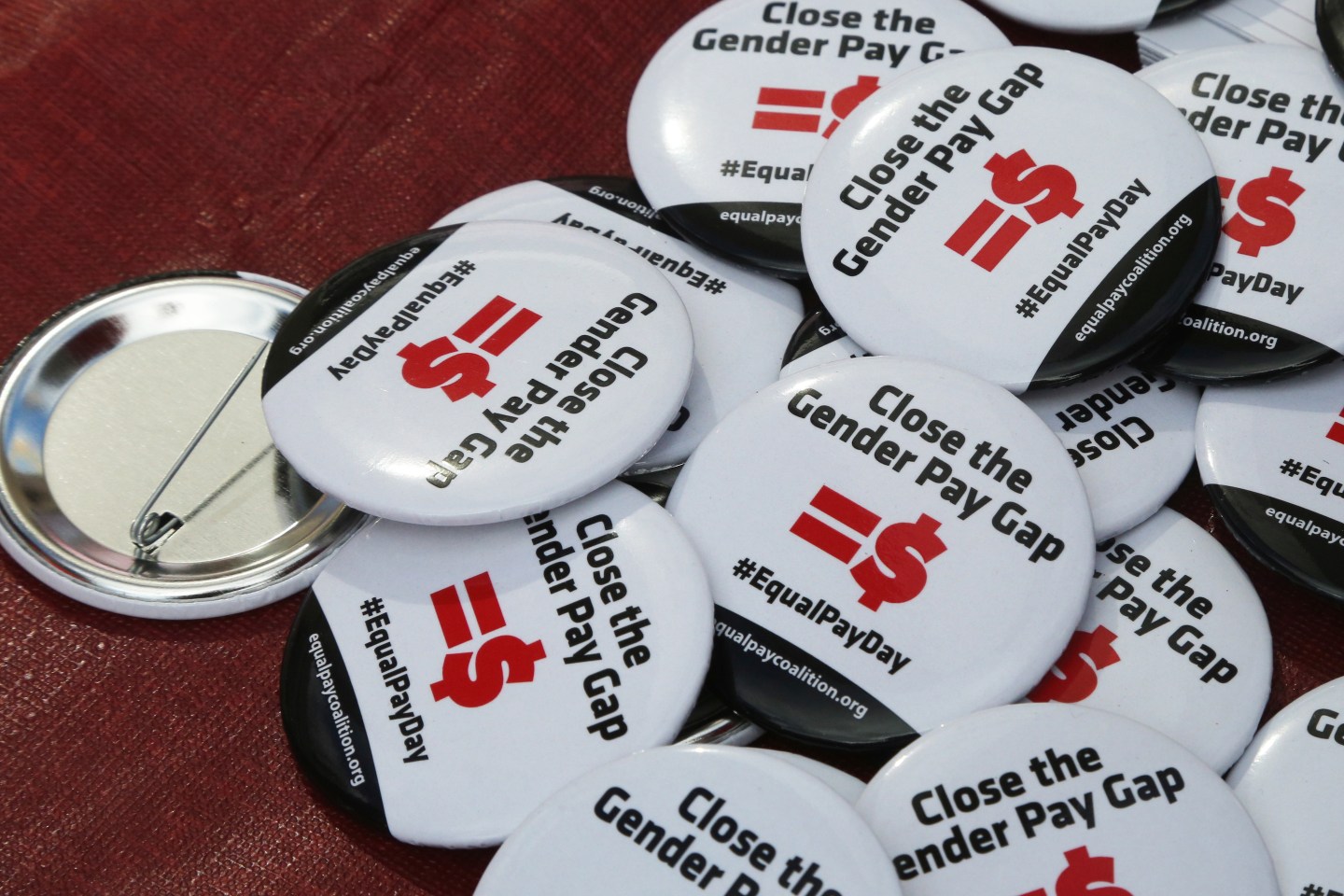
Instead of supporting the concept of equal pay in principle, companies must act decisively to close the pay gap. This requires ensuring equal pay for comparable work by conducting annual pay audits and setting aside funds to correct for identified wage gaps, and developing an infrastructure of gender parity across management levels. Pay equity can be achieved with greater transparency in compensation.
In addition to promoting fairness, publicizing salary bands makes it easier to hire and retain top talent and plan for future growth. Attaining equal representation at all levels requires a sustained, multi-pronged approach, including a commitment to equalizing compensation, offering flexible work arrangements (and ensuring there is no penalty for using them), and rooting out bias in performance review systems.
Every S&P 500 company now has at least one woman on its board—but smart companies won’t stop there. A 2016 study of 1,691 firms released by the international nonprofit European Corporate Governance Institute found “evidence that firms with a larger fraction of female directors on their board have greater dividend payouts.”
Greater diversity also yields better business outcomes: A 2018 McKinsey study of 1,000 companies in 12 countries revealed that companies with executive teams in the top quartile for gender diversity were 21% more likely to achieve greater-than-average profitability—and that “ethnic and cultural diversity” increased performance by 33%.
Of course, women and people of color cannot transform organizations alone. Most women and people of color do not hold top executive roles and cannot unilaterally include themselves; inclusion must be modeled from the top down. Because (mainly white) men are overrepresented in decision-making roles, it is essential for men to be gender partners to advocate for equality. Male leaders should commit, not only to sponsoring diverse and high-performing women and people of color, but to identifying and promoting workplace policies and culture they need to succeed, by measuring clearly defined goals, and by evaluating recruitment, promotion, and talent development processes for gender bias.
In addition to lowering morale, companies that fail to weed out barriers to women and people of color’s advancement will lose talented employees, customers, and a competitive edge in today’s global marketplace. The workplace of the future is one in which anyone with talent, drive, and innovation can advance—and thrive. The businesses that will lead in this new world are the ones that close the gap between talking about inclusion, and making it happen.
Lorraine Hariton is president and CEO of Catalyst.
More opinion in Fortune:
—Coronavirus shows why we need vaccines before, not after, an outbreak
—How Democrats’ impeachment campaign helped Trump
—Being a CEO is more tenuous than ever. How I survived 30 years at Aflac
—How Warren Buffett built Berkshire Hathaway
—Are the Houston Astros irredeemable cheaters? Or are they all of us?
Listen to our audio briefing, Fortune 500 Daily