This is the web version of Business x Design, a newsletter on the power of design. Sign up here to get it in your inbox.
New Year’s greetings from Hong Kong. I’ve been thinking lately about the design of airports, perhaps because I’ve been through so many of them in the last couple of months. It’s also because each time I return from Asia to the United States, the gap in customer experience seems to widen.
Over the holidays I shuttled—kids in tow—from Hong Kong through airports in Los Angeles, Salt Lake City, and San Francisco, before returning to Hong Kong. The contrast on opposite sides of the Pacific was jarring.
In Hong Kong, even amidst citywide protests that have prompted an unprecedented security crackdown, departure was fast and painless. We zipped through check-in, security, and immigration in about 20 minutes—leaving ample time to savor dim sum in the ultra-posh Cathay Pacific lounge.
In Los Angeles, despite a three-hour layover, we barely made our connection. Immigration took forever. We waited endlessly for luggage, then queued for an eternity in customs, only to be randomly singled out for inspection and sent to another line. Navigating from the international terminal to the gate for our domestic connection was an ordeal worthy of Beckett. Security staff behaved like prison guards. Food? Forget about it.
My kids, who have grown up in Asia but take pride in their U.S. citizenship, were appalled.
In fairness, airports in the U.S. are a lot older—the average age is about 40 years—than those in Asia. And the three U.S. airports we visited on our last trip are among the 50 American hubs currently under renovation. (Others include the airport everyone loves to hate, New York’s LaGuardia, which is getting an $8 billion overhaul.)
All told, U.S. airports are spending an estimated $70 billion to get their collective acts together. Will this flurry of construction bring customer experience at U.S. airports equal to that of the best airports in Asia?
I doubt it.
That’s partly because most American airports are owned by state or local governments and funded through a combination of federal grants, local user fees, and tenant rents. The emphasis is on security and how to get passengers to spend as much as possible between curb and jetway. In contrast, Asia’s best airports benefit from direct support from national governments who view aviation infrastructure with a broader perspective, as a critical component of economic development strategy.
Planners for Asia’s leading airports take customer experience seriously. Singapore Changi Airport, ranked by Skytrax as the world’s best airport for seven years in a row, is clean, efficient, well laid-out, with abundant shopping and dining options. Queuing for taxis is a hassle, but the tree-lined drive from airport to downtown is spectacularly beautiful.
Changi welcomed more than 65 million passengers in 2018, making it the world’s 7th busiest airport All told, Singapore’s aviation sector generates 6 percent of the city-state’s GDP and accounts for about 160,000 jobs.
Singapore continues to double down on its commitment to Changi. Last June, the city opened Jewel, a sprawling, $1.3 billion air terminal described by its Israeli-Canadian architect Moshe Safdie as a “mystical paradise garden.”
Delegates to last year’s Brainstorm Design 2019 got a sneak preview of Jewel. You have to see it to believe it. The facility includes an indoor tropical forest with more than 2,000 trees, a “canopy park” that allows visitors to walk on a rope mesh over its 10-story atrium, round-the-clock cinemas, and nearly 300 high-end shops and restaurants. The centerpiece is the world’s largest indoor waterfall. (Check out the astonished reviews of Jewel here, here, here, and here.)
And yet Jewel is more than just an airport with a fancy shopping mall. Changi’s planners have thought through every detail, and thoroughly embraced the concept of design thinking. At Brainstorm Design 2018, Changi Airport Group CEO Lee Seow Hiang told Fortune CEO Alan Murray that his model for Jewel was Apple: He wanted to make customers love his airport as much as they love their iPhones.
Speaking of Singapore, there’s still time to register for Brainstorm Design 2020. This year’s program, organized under the theme of “Designing our Destiny,” features an all-star roster of design luminaries. Among them:
- Waymo design head YooJung Ahn
- Design ethicist Cennydd Bowles
- Walmart design head Valerie Casey
- Oracle president of user experience design Hillel Cooperman
- From IBM, distinguished designers Adam Cutler and Joni Saylor, as well as design director for AI transformation Jennifer Sukis
- Twitter design and research vice president Dantley Davis
- Salesforce chief ethical and humane use officer Paula Goldman
- Author and former Fast Company design editor Cliff Kuang
- Ikea design manager Eva Lilja Löwenhielm
- Design and tech guru John Maeda
- PepsiCo chief Design officer Mauro Porcini
- Architect Ole Scheeren
- Stanford d.school executive director Sarah Stein Greenberg
This year promises to be our best Brainstorm Design ever. The dates are March 25 and 26. Sign up here, and see more design news below.
Clay Chandler
@ClayChandler
Clay.Chandler@Fortune.com
VISION, EMPATHY, SCALE
This edition of Business x Design was curated by Margaret Rhodes.
CES 2020. The Consumer Electronics Show is in full swing. Tech reporters have descended upon Las Vegas and begun the annual effort of sifting through a sea of consumer goods to find the most surprising, innovative products. So far, there’s plenty of the expected: Connected toothbrushes, novelty robots, and many, many TVs. But there’s also a sensor-laden bike helmet that sends safe turn signals, a litter box with cat facial recognition (so you can discern which cat may need a new diet), and a smart pillow that inflates to better support those with sleep apnea—products that don’t need a kitchen sink’s worth of tech features in order to be meaningful. [WIRED]
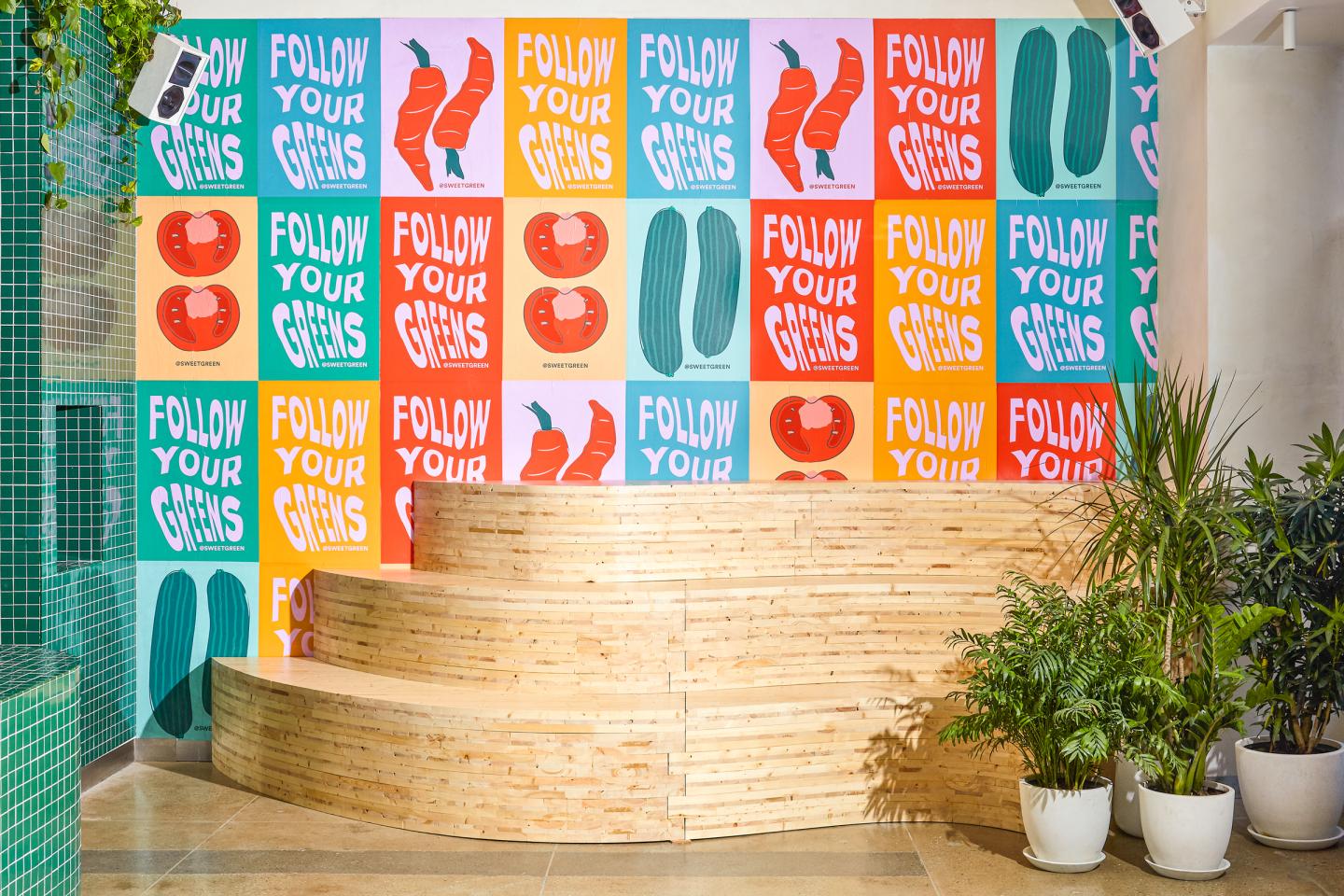
High-tech greens. Last fall, Sweetgreen debuted Sweetgreen 3.0, a new store format that replaces physical lines with touchscreen kiosks and a mobile app for ordering. This year, the fast-casual salad chain wants to perfect the new model and use its strategy to scale from restaurants up to what one co-founder calls a “food-platform.” If it works, this new experience would propel Sweetgreen (already valued at $1.6 billion) into a self-contained ecosystem of consumer data, product creation, and delivery—not unlike tech behemoths such as Amazon or Netflix. [The New York Times]
Going electric. Tesla had a big 2019: In addition to unveiling two new concepts—the Model Y SUV and the Cybertruck—the electric vehicle manufacturer sold a record 367,500 cars. Buoyed by the popularity of the mass-market Model 3, those sales eclipse the past two years combined. Typically embattled (and, to be fair, often creating its own battles), Tesla is in a bright spot: From the beginning, the company’s stated goal has been to evolve from selling limited numbers of luxury vehicles to making sustainable transportation affordable and available to many. The strategy seems to be working. [The Verge]
IN CASE YOU MISSED IT
Apple, Amazon, and Google Want to Create a Smart Home Standard. Here’s What to Expect by Don Reisinger
Google’s Waymo Reaches 20 Million Miles of Autonomous Driving by Aaron Pressman
Just How Safe Are Direct Listings, Really? by Polina Marinova
The Most Anticipated Books of 2020, According to Goodreads by Rachel King
MGM Resorts CEO: What Happens in Vegas No Longer Stays in Vegas by Jim Murren
DISCUSSION
“We are addicted to accumulation,” writes journalist Kyle Chayka in The Longing for Less: Living with Minimalism, an upcoming book tracing the advent of minimalism. Accumulation comes in many forms: fast-fashion clothing, tchotchkes bought on Amazon, wealth—and debt, which hit home for many around the time of the 2008 financial collapse. That’s when minimalism started to take hold. As an aesthetic and economic principle, minimalism disavows all that accrued junk. It preaches the joy of not needing things, whatever those things may be.
Chayka surveys the evolution of minimalism, from decorating trend to lifestyle gospel. He also follows its ironic, or perhaps inevitable, turn towards commodification, in the form of books, conferences, and Marie Kondo’s special storage boxes. In an excerpt in The Guardian, Chayka writes:
“The minimalist attitude speaks to the feeling that all aspects of life have become relentlessly commodified. Buying unnecessary items on Amazon with credit cards is a fast and easy way to exert some feeling of control over our precarious surroundings. Brands sell us cars, televisions, smartphones and other products (often on loans that inflate their costs) as if they will solve our problems. Through books, podcasts and designed objects, the idea of minimalism itself has also been commodified.”
Chayka’s book grapples with the idea of excess. When Fast Company writer Mark Wilson surveyed designers about ambitions for the new decade, he found that they, too, are concerned about excessive consumption. There will be a reckoning over what it means to be a consumer, as suggested by Chayka’s point that people can’t even quit buying things without that habit becoming one more thing to package and sell. It could be that the term no longer belongs in an ethical business landscape, as Fjord co-founder Mark Curtis notes in the Fast Company article:
“Over the next few years the idea of ‘consumer’ will come to feel really backward as a label—like the idea of ‘servant’ is pretty awkward in the 21st century. As causes grow as a motivation for purchase, we will see companies try to grow a direct link between the purpose of their employees and that of their customers, and to grow that as a direct connection.”
In Curtis’s view, a change in consumption patterns might not mean abstinence. It could be about purchasing intent. Either way, attitudes are shifting, and consumers, users, people—whatever you call them—will constantly renegotiate their relationship with the objects and companies that fill their lives.