
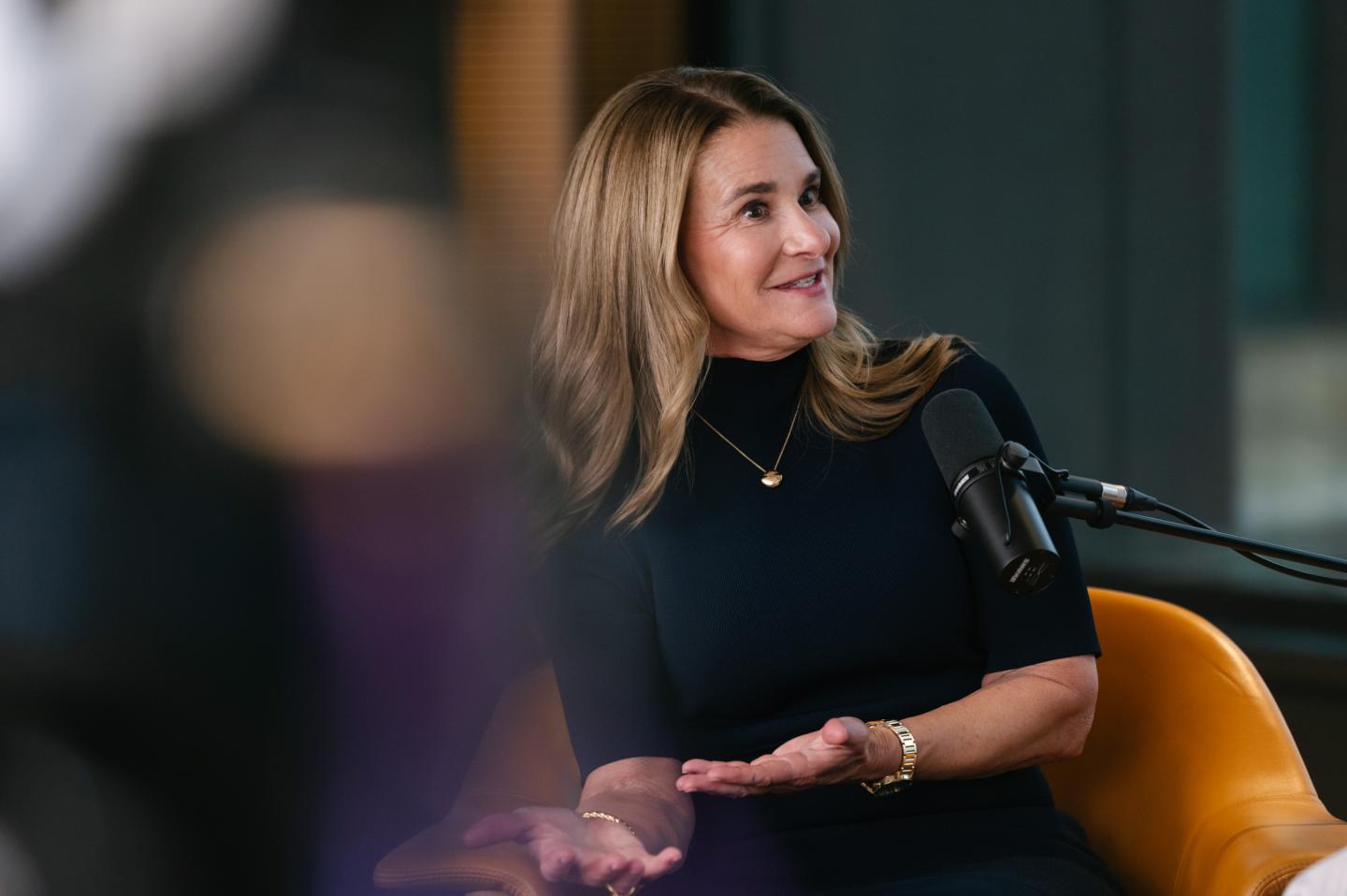
Yesterday in the newsletter, I shared my latest interview with Melinda French Gates—and the news of her fresh $215 million commitment to women’s health.
Today, I’d like to dive further into one slice of that work. The billionaire philanthropist’s $215 million will be split between access to care during women’s reproductive years, mental health, and menopause and midlife—a new category for her and her firm Pivotal. French Gates wrote an op-ed explaining why she’s tackling menopause specifically.
As anyone reading this newsletter likely knows, menopause and women’s midlife health have become a hot category in the startup world. Halle Berry and Naomi Watts have brands. A miles-long list of celebrities back the billion-dollar company Midi. Investors see opportunity in telehealth services, beauty products, and more. So does French Gates; investing is one way Pivotal will engage in this work.
But this is really one of the first times we’re seeing a major figure tackle menopause and women’s midlife health through philanthropic dollars.
For French Gates, the decision goes back to her longtime thesis that for women to access power, they need to be healthy.
“Just as she’s right at what could be the pinnacle of her career, we’re seeing women step out of the workforce because of menopause,” she explained to me. “We won’t get women to positions of power if they’re stepping out of the workforce. That’s why this is so fundamentally important to me—as part of women’s power.”
Consider OpenAI. In April, two major female executives stepped away because of health conditions specific to women. CMO Kate Rousch stepped down after working through a breast cancer diagnosis and Fidji Simo took medical leave from her role as CEO of AGI deployment to address chronic conditions; she has spoken about her experience with the condition POTS and endometriosis. More funding for women’s health—and women’s midlife health—could improve care and lead to scientific breakthroughs on any of these conditions.
“If a woman’s dealing with cancer or chronic illness or a cardiac issue, she can’t be at the top of these industries,” French Gates says. “And yet, we’re not focusing on it in the right way to be able to keep women in the roles they want to be in.”
Getting women access to the right care, funding research, and supporting state and federal policies that make all of this possible are all French Gates’ goals. And, an effect will hopefully be, more women will rise to the top of their fields and stay there.
Emma Hinchliffe
emma.hinchliffe@fortune.com
The Most Powerful Women Daily newsletter is Fortune’s daily briefing for and about the women leading the business world. Subscribe here.
ALSO IN THE HEADLINES
Women in AI are rising to the top of the list of America's richest self-made women. ABC Supply cofounder Diane Hendricks is still No. 1 on the Forbes list, with a net worth of $21.7 billion. But at No. 2 is Anthropic cofounder Daniela Amodei, with a net worth of $15.5 billion (and they haven't even gone public yet). Arista CEO Jayshree Ullal, who runs an AI infrastructure business and just debuted at No. 31 on Fortune's Most Powerful Women list, comes in at No. 7 among America's richest self-made women with a $6.6 billion net worth.
The FDA under Trump launches a study of mifepristone. Pushed for by anti-abortion activists, the review could make it easier for the FDA to restrict how the drug used for medication abortion is distributed. Its results will hit after the midterm elections.
The U.S. added 172,000 jobs in May. That's better than 80,000 jobs analysts expected. But according to the National Women's Law Center, gains were entirely among men, and women left the labor force last month. In total, 300,000 women have left the U.S. workforce this year.
93% of moms are experiencing burnout. And only 61% of moms describe their mental health as "good." That's in a new report on motherhood from Peanut, the social media platform for moms.
ON MY RADAR
Why Ann Patchett wants to write about kindness Elle
Michelle Wie West's return to golf is on her terms The Athletic
Several women who dated Graham Platner recall 'unsettling' behavior NYT
PARTING WORDS
"She’s a modern woman in a very unmodern time. She’s doing the most radical things inside of her life story, making these really hard decisions in her own home, and causing this ripple effect of change in the world around her."
—Broadway actress Caissie Levy on playing the Tony-nominated role of "Mother" in the current revival of Ragtime