
• Home
  • News
  • Fortune 500
  • Tech
  • Finance
  • Leadership
  • Lifestyle
  • Rankings
  • Multimedia
Commentary

Forcing Facebook to Behave: Why Consent Decrees Are Not Enough

By
Jeff John Roberts
Jeff John Roberts
Editor, Finance and Crypto
Down Arrow Button Icon
By
Jeff John Roberts
Jeff John Roberts
Editor, Finance and Crypto
Down Arrow Button Icon
December 9, 2018, 4:24 PM ET
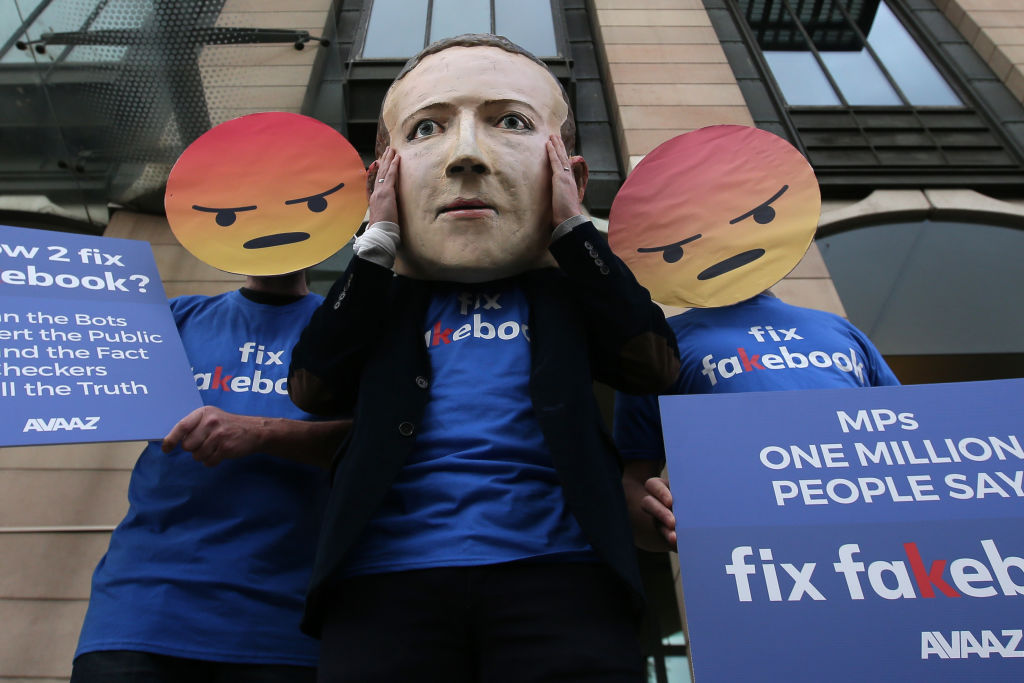
BRITAIN-US-FACEBOOK-PRIVACY-DATA
Protestors from the pressure group Avaaz demonstrate against Facebook in London on April 26, 2018. Daniel Leal-Olivas—AFP/Getty Images

Why does Facebook show such disregard for user privacy? The best answer may be “because it can.” For years, the social network has engaged in shady tricks to wring every last dollar from our data, and regulators haven’t done a thing.

This could soon change. I spoke this week with Georgetown University law professor David Vladeck who predicted the FTC will wallop Facebook with a fine “in the ten figures” over its recent privacy shenanigans—such as bartering user data with third party firms like Cambridge Analytica and, as new reports reveal, creating whitelist access for the likes of Airbnb and Lyft.

Vladeck is in position to know. As the former director of the FTC’s consumer protection bureau, he imposed a consent decree on Facebook for playing fast and loose with consumer data way back in 2009. The arrangement obliged the company to pledge it would get consent to share users’ information with third parties, and that each single violation could trigger a fine worth tens of thousands of dollars.

Facebook CEO Mark Zuckerberg has publicly stated he does not believe the company breached the decree, but Vladeck and other former FTC officials don’t see it that way. If the latter are right, the outcome could be a fine of $1 billion or more.

The question is whether such a fine will prompt Facebook and other tech companies to change their ways. It’s hard to believe that it will. Facebook executives appear to have calculated long ago that a fine, even one for $1 billion, was the price of rapid growth and one that it could well afford. The calculation has paid off: Not only has Facebook turned user data into an advertising gold mine, it has also used it to squelch competitors and maintain a monopoly. Why should it have acted any differently?

For companies to take privacy seriously, the U.S. requires a different legal regime. Right now, regulators must rely on the consent decree system, which gives companies a pass on their first major privacy violation, and then lets them quibble about subsequent violations.

Vladeck points out consent decrees are a relatively new policy tool to oversee privacy, and the FTC is still navigating how to use them. This may be the case but the law that underlies them—known as Section 5, which forbids “unfair or deceptive acts”— still feels like a clumsy tool to police data regulation.

Other countries take a more straightforward approach: They have privacy laws and go after firms that break them. Fortunately, something may be stirring in Congress. In the wake of recent data breaches, companies and lawmakers are talking seriously about a national privacy law. Maybe this will finally change how the likes of Facebook look at our data in the first place.

A version of this article appeared in the December 7 edition of Data Sheet, Fortune’s daily tech newsletter.


About the Author
By Jeff John RobertsEditor, Finance and Crypto
LinkedIn iconTwitter icon

Jeff John Roberts is the Finance and Crypto editor at Fortune, overseeing coverage of the blockchain and how technology is changing finance.

See full bioRight Arrow Button Icon

Latest in Commentary

Rakesh Kumar
CommentarySemiconductors
China does not need Nvidia chips in the AI war — export controls only pushed it to build its own AI machine
By Rakesh KumarDecember 3, 2025
13 hours ago
Rochelle Witharana is Chief Financial and Investment Officer for The California Wellness Foundation
Commentarydiversity and inclusion
Fund managers from diverse backgrounds are delivering standout returns and the smart money is slowly starting to pay attention
By Rochelle WitharanaDecember 3, 2025
13 hours ago
Ayesha and Stephen Curry (L) and Arndrea Waters King and Martin Luther King III (R), who are behind Eat.Play.Learn and Realize the Dream, respectively.
Commentaryphilanthropy
Why time is becoming the new currency of giving
By Arndrea Waters King and Ayesha CurryDecember 2, 2025
1 day ago
Trump
CommentaryTariffs and trade
The trade war was never going to fix our deficit
By Daniel BunnDecember 2, 2025
2 days ago
Elizabeth Kelly
CommentaryNon-Profit
At Anthropic, we believe that AI can increase nonprofit capacity. And we’ve worked with over 100 organizations so far on getting it right
By Elizabeth KellyDecember 2, 2025
2 days ago
Decapitation
CommentaryLeadership
Decapitated by activists: the collapse of CEO tenure and how to fight back
By Mark ThompsonDecember 2, 2025
2 days ago

Most Popular

placeholder alt text
North America
Jeff Bezos and Lauren Sánchez Bezos commit $102.5 million to organizations combating homelessness across the U.S.: ‘This is just the beginning’
By Sydney LakeDecember 2, 2025
1 day ago
placeholder alt text
Economy
Ford workers told their CEO 'none of the young people want to work here.' So Jim Farley took a page out of the founder's playbook
By Sasha RogelbergNovember 28, 2025
5 days ago
placeholder alt text
North America
Anonymous $50 million donation helps cover the next 50 years of tuition for medical lab science students at University of Washington
By The Associated PressDecember 2, 2025
2 days ago
placeholder alt text
C-Suite
MacKenzie Scott's $19 billion donations have turned philanthropy on its head—why her style of giving actually works
By Sydney LakeDecember 2, 2025
2 days ago
placeholder alt text
Innovation
Google CEO Sundar Pichai says we’re just a decade away from a new normal of extraterrestrial data centers
By Sasha RogelbergDecember 1, 2025
2 days ago
placeholder alt text
Law
Netflix gave him $11 million to make his dream show. Instead, prosecutors say he spent it on Rolls-Royces, a Ferrari, and wildly expensive mattresses
By Dave SmithDecember 2, 2025
1 day ago
Rankings
  • 100 Best Companies
  • Fortune 500
  • Global 500
  • Fortune 500 Europe
  • Most Powerful Women
  • Future 50
  • World’s Most Admired Companies
  • See All Rankings
Sections
  • Finance
  • Leadership
  • Success
  • Tech
  • Asia
  • Europe
  • Environment
  • Fortune Crypto
  • Health
  • Retail
  • Lifestyle
  • Politics
  • Newsletters
  • Magazine
  • Features
  • Commentary
  • Mpw
  • CEO Initiative
  • Conferences
  • Personal Finance
  • Education
Customer Support
  • Frequently Asked Questions
  • Customer Service Portal
  • Privacy Policy
  • Terms Of Use
  • Single Issues For Purchase
  • International Print
Commercial Services
  • Advertising
  • Fortune Brand Studio
  • Fortune Analytics
  • Fortune Conferences
  • Business Development
About Us
  • About Us
  • Editorial Calendar
  • Press Center
  • Work At Fortune
  • Diversity And Inclusion
  • Terms And Conditions
  • Site Map

© 2025 Fortune Media IP Limited. All Rights Reserved. Use of this site constitutes acceptance of our Terms of Use and Privacy Policy | CA Notice at Collection and Privacy Notice | Do Not Sell/Share My Personal Information
FORTUNE is a trademark of Fortune Media IP Limited, registered in the U.S. and other countries. FORTUNE may receive compensation for some links to products and services on this website. Offers may be subject to change without notice.









