• Home
  • News
  • Fortune 500
  • Tech
  • Finance
  • Leadership
  • Lifestyle
  • Rankings
  • Multimedia
TechFortune 500

Will Replacing Human Drivers With Self-Driving Cars Be Safer?

By
Jonathan Vanian
Jonathan Vanian
Down Arrow Button Icon
By
Jonathan Vanian
Jonathan Vanian
Down Arrow Button Icon
June 14, 2017, 2:51 PM ET

U.S. cities will look a lot different in 20 years, at least when it comes to public transportation.

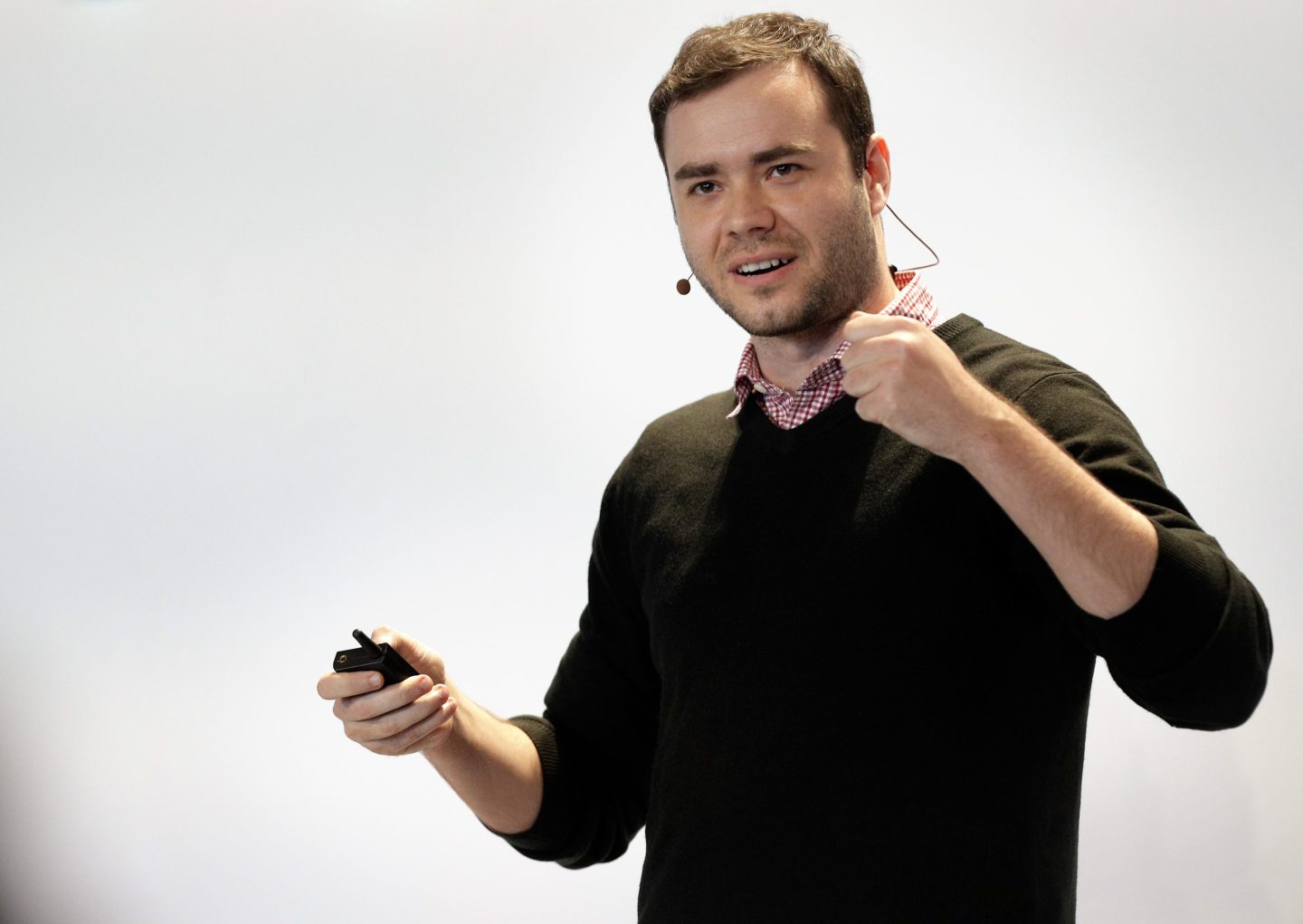
That’s according to Bryan Salesky, the CEO of the self-driving car company Argo AI, which became a Ford Motor subsidiary after the auto giant said in February it would invest $1 billion in the startup.

The rise of self-driving cars will usher a “much safer mode of transportation” by “removing the human from the loop,” Salesky said on Wednesday at the Rutberg FM technology conference in Half Moon Bay, Calif. Human drivers are more prone to distractions and errors in their judgment compared to autonomous cars in the future, Salesky believes.

Get Data Sheet, Fortune’s technology newsletter.

Salesky, who was once Google’s (GOOG) director of hardware for its self-driving car project, also believes that cities will have less need for parking spaces, which he said currently account for one-third of the space in an average urban city center. Self-driving cars would be constantly shipping people around cities instead of remaining parked for hours, and the unused parking spaces could be converted into office buildings or public parks, he explained.

People who buy self-driving cars will also have the option to convert their automobiles into autonomous taxis when they don’t use them, Salesky predicted. His thoughts echo recent statements made by Tesla (TSLA) CEO Elon Musk and Andrew Ng, the former head of AI for Chinese search giant Baidu, which is also working on self-driving cars.

Ford, which recently replaced CEO Mark Fields with Jim Hackett, is hoping new technologies like self-driving cars can help revive the struggling company. Fields said in January that Ford planned to develop a completely autonomous vehicle by 2021, and Salesky confirmed that the auto company is sticking with that date.

But Ford has a lot of work to do to improve autonomous vehicle technology, Salesky admitted, especially in terms of creating autonomous cars that can perceive nuances like the differences between children by themselves and when they are holding their mother’s hands. A self-driving car needs to know that children, when not by the side of their parents, may move “erratically,” and so the car must “then plan accordingly.” Self driving cars will need this ability to perceive tremendous amounts of detail on the road if they are to become mainstream.

Salesky says that advances in computing technology will make it possible for researchers to improve the machine learning algorithms powering self-driving cars, thus helping those cars better “see” the physical world by 2021.

The CEO did not directly compare Ford’s efforts on self-driving cars with competitors like Google’s Waymo unit, Tesla, or ride-sharing company Uber. But, he warned outsiders to be wary when these companies share statistics about how many miles their self-driving cars have driven.

Tesla, for example, said in December that Tesla cars with some self-driving capabilities have driven about 1.3 billion miles. Businesses brag about the number of miles their self-driving cars log because it’s “one of the few metrics the companies are forced to release” by regulators, he said.

For more about technology and finance, watch:

“Not all miles are the same, and that’s not the only indicator of success,” Salesky said.

He explained that miles logged by self-driving cars on the highway are not as valuable to researchers as miles driven in urban environments, because city driving involves more unpredictable variables like people suddenly crossing streets. This unpredictability can be used to help researchers create more powerful self-driving cars that can handle all driving situations, not just highway roads, which are “a much friendlier environment.”

About the Author
By Jonathan Vanian
LinkedIn iconTwitter icon

Jonathan Vanian is a former Fortune reporter. He covered business technology, cybersecurity, artificial intelligence, data privacy, and other topics.

See full bioRight Arrow Button Icon

Latest in Tech

InnovationBrainstorm Design
Procurement execs often don’t understand the value of good design, experts say
By Angelica AngDecember 8, 2025
1 hour ago
Big TechStreaming
Trump warns Netflix-Warner deal may pose antitrust ‘problem’
By Hadriana Lowenkron, Se Young Lee and BloombergDecember 7, 2025
10 hours ago
Big TechOpenAI
OpenAI goes from stock market savior to burden as AI risks mount
By Ryan Vlastelica and BloombergDecember 7, 2025
10 hours ago
AIData centers
HP’s chief commercial officer predicts the future will include AI-powered PCs that don’t share data in the cloud
By Nicholas GordonDecember 7, 2025
12 hours ago
Future of WorkJamie Dimon
Jamie Dimon says even though AI will eliminate some jobs ‘maybe one day we’ll be working less hard but having wonderful lives’
By Jason MaDecember 7, 2025
16 hours ago
CryptoCryptocurrency
So much of crypto is not even real—but that’s starting to change
By Pete Najarian and Joe BruzzesiDecember 7, 2025
21 hours ago

Most Popular

placeholder alt text
Real Estate
The 'Great Housing Reset' is coming: Income growth will outpace home-price growth in 2026, Redfin forecasts
By Nino PaoliDecember 6, 2025
2 days ago
placeholder alt text
AI
Nvidia CEO says data centers take about 3 years to construct in the U.S., while in China 'they can build a hospital in a weekend'
By Nino PaoliDecember 6, 2025
2 days ago
placeholder alt text
Economy
The most likely solution to the U.S. debt crisis is severe austerity triggered by a fiscal calamity, former White House economic adviser says
By Jason MaDecember 6, 2025
1 day ago
placeholder alt text
Economy
JPMorgan CEO Jamie Dimon says Europe has a 'real problem’
By Katherine Chiglinsky and BloombergDecember 6, 2025
1 day ago
placeholder alt text
Politics
Supreme Court to reconsider a 90-year-old unanimous ruling that limits presidential power on removing heads of independent agencies
By Mark Sherman and The Associated PressDecember 7, 2025
18 hours ago
placeholder alt text
Big Tech
Mark Zuckerberg rebranded Facebook for the metaverse. Four years and $70 billion in losses later, he’s moving on
By Eva RoytburgDecember 5, 2025
3 days ago
Rankings
  • 100 Best Companies
  • Fortune 500
  • Global 500
  • Fortune 500 Europe
  • Most Powerful Women
  • Future 50
  • World’s Most Admired Companies
  • See All Rankings
Sections
  • Finance
  • Leadership
  • Success
  • Tech
  • Asia
  • Europe
  • Environment
  • Fortune Crypto
  • Health
  • Retail
  • Lifestyle
  • Politics
  • Newsletters
  • Magazine
  • Features
  • Commentary
  • Mpw
  • CEO Initiative
  • Conferences
  • Personal Finance
  • Education
Customer Support
  • Frequently Asked Questions
  • Customer Service Portal
  • Privacy Policy
  • Terms Of Use
  • Single Issues For Purchase
  • International Print
Commercial Services
  • Advertising
  • Fortune Brand Studio
  • Fortune Analytics
  • Fortune Conferences
  • Business Development
About Us
  • About Us
  • Editorial Calendar
  • Press Center
  • Work At Fortune
  • Diversity And Inclusion
  • Terms And Conditions
  • Site Map

© 2025 Fortune Media IP Limited. All Rights Reserved. Use of this site constitutes acceptance of our Terms of Use and Privacy Policy | CA Notice at Collection and Privacy Notice | Do Not Sell/Share My Personal Information
FORTUNE is a trademark of Fortune Media IP Limited, registered in the U.S. and other countries. FORTUNE may receive compensation for some links to products and services on this website. Offers may be subject to change without notice.