• Home
  • Latest
  • Fortune 500
  • Finance
  • Tech
  • Leadership
  • Lifestyle
  • Rankings
  • Multimedia
RetailJ.C. Penney

J.C. Penney Might Be Walking Into the Same Private Label Trap That Kohl’s Did

Phil Wahba
By
Phil Wahba
Phil Wahba
Senior Writer
Down Arrow Button Icon
Phil Wahba
By
Phil Wahba
Phil Wahba
Senior Writer
Down Arrow Button Icon
August 17, 2016, 5:45 PM ET
#GIVETUESDAY With Joe Jonas And The Queens Boys & Girls Club
(Photo by Noam Galai/Getty Images)Noam Galai Getty Images

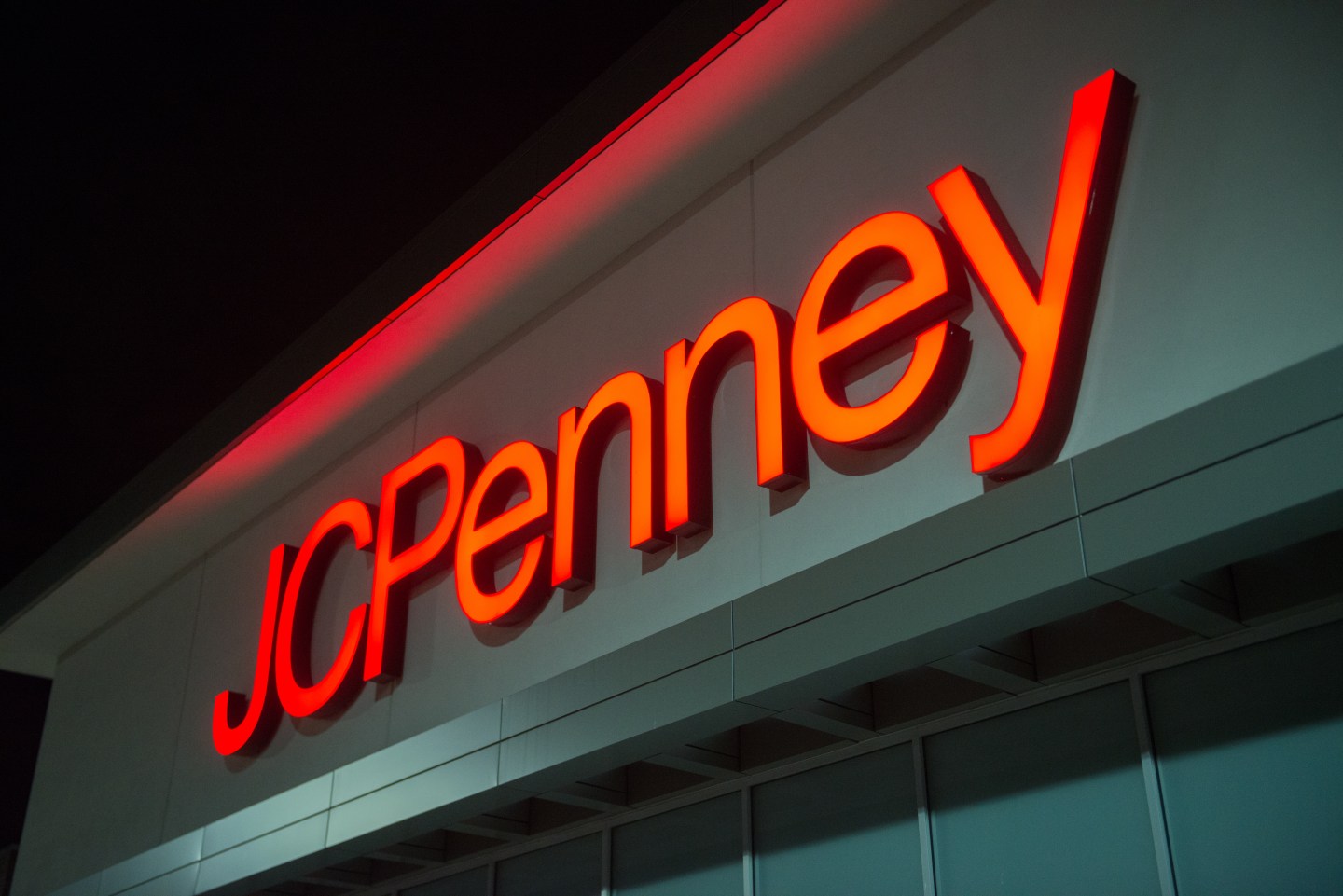
J.C. Penney (JCP) thinks it has found the ultimate weapon to keep its turnaround on track: ramping up its own house brands.

At Penney’s first investor day since 2014, company executives outlined their three-year plan: one of the centerpieces of the updated strategy is doubling down on its private brands.

J.C. Penney CEO Marvin Ellison, whom Fortune profiled earlier this year, has long said that house brands like clothing labels St. John’s Bay and Arizona, and houseware label Cooks, which generate just over half of Penney’s revenue, had a lot more potential.

And on Wednesday, company executives told Wall Street that private brands, that also include Ambrielle lingerie, Worthington, a.n.a. and Michael Strahan, would reach 65% to 70% of total sales by 2019 by adding new brands and expanding existing labels. Already in the last year, Penney has expanded its private label business, introducing Boutique +, a new Penney label targeted specifically at plus-size customers.

It’s easy to see why Penney is doubling down on that side of the business: private and exclusive brands offer higher gross profit margins than so-called national brands, or merchandise that is broadly available across retailers. (It’s about 40% for Penney private brands compared to 30+% for national brands.) They also give a retailer more control over supply, promotions and marketing of the items it sells. And best of all, such merchandise is not available on Amazon or elsewhere, given customers a reason to choose one retailer over another.

Of course, all that is predicated on customers wanting those brands in the first place, not an easy proposition. Even if a retailer’s brands are popular- indeed, St. John’s Bay and Arizona at their peaks were billion dollar Penney brands- any store chain needs to have an ample supply of national brands like Nike (NKE), Levi’s and Jockey to attract a broader swathe of shoppers.

That is a lesson Kohl’s (KSS) learned the hard way a few years ago. In 2014, Kohl’s private and exclusive collections reached a peak of about 52% of sales, way up from 30% in 2005. As part of its turnaround strategy, Kohl’s has since dialed that back down (to about 48% in 2015), with the CEO telling Fortune at the time that the focus on house brands had hurt Kohl’s reputation for national brands. (At Macy’s, it’s currently about 25%.)

More recently, Kohl’s this year re-launched its billion-dollar Sonoma apparel and home goods brand, it has also landed a deal to sell Under Armour (UA), while continuing to give prime real estate in its stores to national brands like Nike (NEE) and FitBit. (FIT)

As for Penney, it has a long history with in-house brands: a century ago, founder James Cash Penney was frustrated by vendors who would not sell him their products, so he started making his own merchandise in 1914, starting with Marathon Hats for men. Penney opened its first overseas sourcing office in 1959 and by the 1990s, Penney had centralized its design and sourcing functions to set itself up as a vertically integrated manufacturer. On Wednesday, Penney said it would cut the time it takes to get some new merchandise into stores by six weeks, the better to compete with fast-fashion retailers.

It’s easy to see why Penney is tempted by this massive private label expansion: after years of losses following a sales collapse in 2012 and 2013 after Penney tried to become a hip retailer, the company is eager to get back to profit: Penney expects to post a break-even profit this year and post a profit of $400 million to $500 million, or $1.40 to $1.50 a share by 2019, CFO Ed Record said at the analyst meeting. And the company is targeting earnings before interest, taxes, depreciation and amortization (EBITDA, a key performance metric used by its debtors) of $1.2 billion in 2017 (on sales slightly more than $13 billion), to improve its credit rating, a top priority.

Still, launching brands can cost hundreds of millions, with no guarantees a brand will catch on, particularly for apparel where there is a glut of offerings.

At the same time, Ellison seemed to recognize that there is a limit to how much new revenue this will bring, seeming to emphasize higher profits. The CEO said that getting back to $18 billion in annual revenue right before the botched 2012 transformation was not an “overarching” priority compared to raising profitability. Indeed, Penney said to expect sales between $13.8 billion and $14.3 billion in three years time, on the expectation of 3% annual growth in comparable sales.

“The landscape has dramatically changed,” he said of when Penney’s annual sales were $18 billion.


About the Author
Phil Wahba
By Phil WahbaSenior Writer
LinkedIn iconTwitter icon

Phil Wahba is a senior writer at Fortune primarily focused on leadership coverage, with a prior focus on retail.

See full bioRight Arrow Button Icon

Latest in Retail

Finance
Lorem ipsum dolor sit amet, consectetur adipiscing elit, sed do eiusmod tempor incididunt ut labore et dolore magna aliqua. Ut enim ad minim veniam
By Fortune Editors
October 20, 2025
Finance
Lorem ipsum dolor sit amet, consectetur adipiscing elit, sed do eiusmod tempor incididunt ut labore et dolore magna aliqua. Ut enim ad minim veniam
By Fortune Editors
October 20, 2025
Finance
Lorem ipsum dolor sit amet, consectetur adipiscing elit, sed do eiusmod tempor incididunt ut labore et dolore magna aliqua. Ut enim ad minim veniam
By Fortune Editors
October 20, 2025
Finance
Lorem ipsum dolor sit amet, consectetur adipiscing elit, sed do eiusmod tempor incididunt ut labore et dolore magna aliqua. Ut enim ad minim veniam
By Fortune Editors
October 20, 2025
Finance
Lorem ipsum dolor sit amet, consectetur adipiscing elit, sed do eiusmod tempor incididunt ut labore et dolore magna aliqua. Ut enim ad minim veniam
By Fortune Editors
October 20, 2025
Finance
Lorem ipsum dolor sit amet, consectetur adipiscing elit, sed do eiusmod tempor incididunt ut labore et dolore magna aliqua. Ut enim ad minim veniam
By Fortune Editors
October 20, 2025

Most Popular

Finance
Lorem ipsum dolor sit amet, consectetur adipiscing elit, sed do eiusmod tempor incididunt ut labore et dolore magna aliqua. Ut enim ad minim veniam
By Fortune Editors
October 20, 2025
Finance
Lorem ipsum dolor sit amet, consectetur adipiscing elit, sed do eiusmod tempor incididunt ut labore et dolore magna aliqua. Ut enim ad minim veniam
By Fortune Editors
October 20, 2025
Finance
Lorem ipsum dolor sit amet, consectetur adipiscing elit, sed do eiusmod tempor incididunt ut labore et dolore magna aliqua. Ut enim ad minim veniam
By Fortune Editors
October 20, 2025
Finance
Lorem ipsum dolor sit amet, consectetur adipiscing elit, sed do eiusmod tempor incididunt ut labore et dolore magna aliqua. Ut enim ad minim veniam
By Fortune Editors
October 20, 2025
Finance
Lorem ipsum dolor sit amet, consectetur adipiscing elit, sed do eiusmod tempor incididunt ut labore et dolore magna aliqua. Ut enim ad minim veniam
By Fortune Editors
October 20, 2025
Finance
Lorem ipsum dolor sit amet, consectetur adipiscing elit, sed do eiusmod tempor incididunt ut labore et dolore magna aliqua. Ut enim ad minim veniam
By Fortune Editors
October 20, 2025
Fortune Secondary Logo
Rankings
  • 100 Best Companies
  • Fortune 500
  • Global 500
  • Fortune 500 Europe
  • Most Powerful Women
  • Future 50
  • World’s Most Admired Companies
  • See All Rankings
Sections
  • Finance
  • Fortune Crypto
  • Features
  • Leadership
  • Health
  • Commentary
  • Success
  • Retail
  • Mpw
  • Tech
  • Lifestyle
  • CEO Initiative
  • Asia
  • Politics
  • Conferences
  • Europe
  • Newsletters
  • Personal Finance
  • Environment
  • Magazine
  • Education
Customer Support
  • Frequently Asked Questions
  • Customer Service Portal
  • Privacy Policy
  • Terms Of Use
  • Single Issues For Purchase
  • International Print
Commercial Services
  • Advertising
  • Fortune Brand Studio
  • Fortune Analytics
  • Fortune Conferences
  • Business Development
About Us
  • About Us
  • Editorial Calendar
  • Press Center
  • Work At Fortune
  • Diversity And Inclusion
  • Terms And Conditions
  • Site Map
Fortune Secondary Logo
  • About Us
  • Editorial Calendar
  • Press Center
  • Work At Fortune
  • Diversity And Inclusion
  • Terms And Conditions
  • Site Map
  • Facebook icon
  • Twitter icon
  • LinkedIn icon
  • Instagram icon
  • Pinterest icon

Latest in Retail

HealthFood and drink
Chains like Sweetgreen and Chipotle are finally realizing they need to look beyond the ‘slop bowl’
By Phil WahbaFebruary 27, 2026
24 hours ago
burger king
AIOpenAI
Burger King tests OpenAI-powered headsets that will track the friendliness of drive-through workers
By Dee-Ann Durbin and The Associated PressFebruary 27, 2026
1 day ago
Two restaurant workers wearing black stand in front of a silver "Flippy" fry station.
AIAutomation
Meet your new robot fry cooks: Inside the $28 billion race to disrupt White Castle and Jack in the Box
By Sasha RogelbergFebruary 26, 2026
2 days ago
Customers in the electronics section at Walmart on Black Friday in Columbus, Ohio, US, on Friday, Nov. 28, 2025. Americans are planning to spend more this holiday season than last year, according to credit reporting firm TransUnion. Photographer: Brian Kaiser/Bloomberg via Getty Images
C-SuiteLeadership
McKinsey studied 61 growth companies that outperformed their peers through COVID, inflation, and labor shocks. Here’s what they all had in common
By Geoff ColvinFebruary 26, 2026
3 days ago
The Home Depot storefront
InvestingHome Depot
Home Depot CEO says with the housing market stalemate, ‘our customers are telling us that they’re not investing’
By Jacqueline MunisFebruary 25, 2026
3 days ago
CommentaryCulture
Gen Z’s enthusiasm for all things touchable is resurrecting the analog economy—and costing parents
By Luba KassovaFebruary 24, 2026
4 days ago

Most Popular

placeholder alt text
Success
Japanese companies are paying older workers to sit by a window and do nothing—while Western CEOs demand super-AI productivity just to keep your job
By Orianna Rosa RoyleFebruary 27, 2026
1 day ago
placeholder alt text
Success
Walmart exec says U.S. workforces needs to take inspiration from China where ‘5 year-olds are learning DeepSeek’
By Preston ForeFebruary 27, 2026
1 day ago
placeholder alt text
Law
China's government intervenes to show Michigan scientists were carrying worms, not biological materials
By Ed White and The Associated PressFebruary 26, 2026
2 days ago
placeholder alt text
Commentary
'The Pitt': a masterclass display of DEI in action 
By Robert RabenFebruary 26, 2026
2 days ago
placeholder alt text
Personal Finance
Current price of gold as of February 27, 2026
By Danny BakstFebruary 27, 2026
1 day ago
placeholder alt text
Economy
Come 2030, the U.S. deficit will be worth 5.9% of GDP—more than spending on Social Security, and equal to major health programs
By Eleanor PringleFebruary 26, 2026
2 days ago

© 2026 Fortune Media IP Limited. All Rights Reserved. Use of this site constitutes acceptance of our Terms of Use and Privacy Policy | CA Notice at Collection and Privacy Notice | Do Not Sell/Share My Personal Information
FORTUNE is a trademark of Fortune Media IP Limited, registered in the U.S. and other countries. FORTUNE may receive compensation for some links to products and services on this website. Offers may be subject to change without notice.