• Home
  • Latest
  • Fortune 500
  • Finance
  • Tech
  • Leadership
  • Lifestyle
  • Rankings
  • Multimedia
CommentaryMicrosoft

Most M&As Fail, and Microsoft Should Be Worried

By
Howard Yu
Howard Yu
and
Bethany Cianciolo
Bethany Cianciolo
Down Arrow Button Icon
By
Howard Yu
Howard Yu
and
Bethany Cianciolo
Bethany Cianciolo
Down Arrow Button Icon
June 15, 2016, 9:00 PM ET
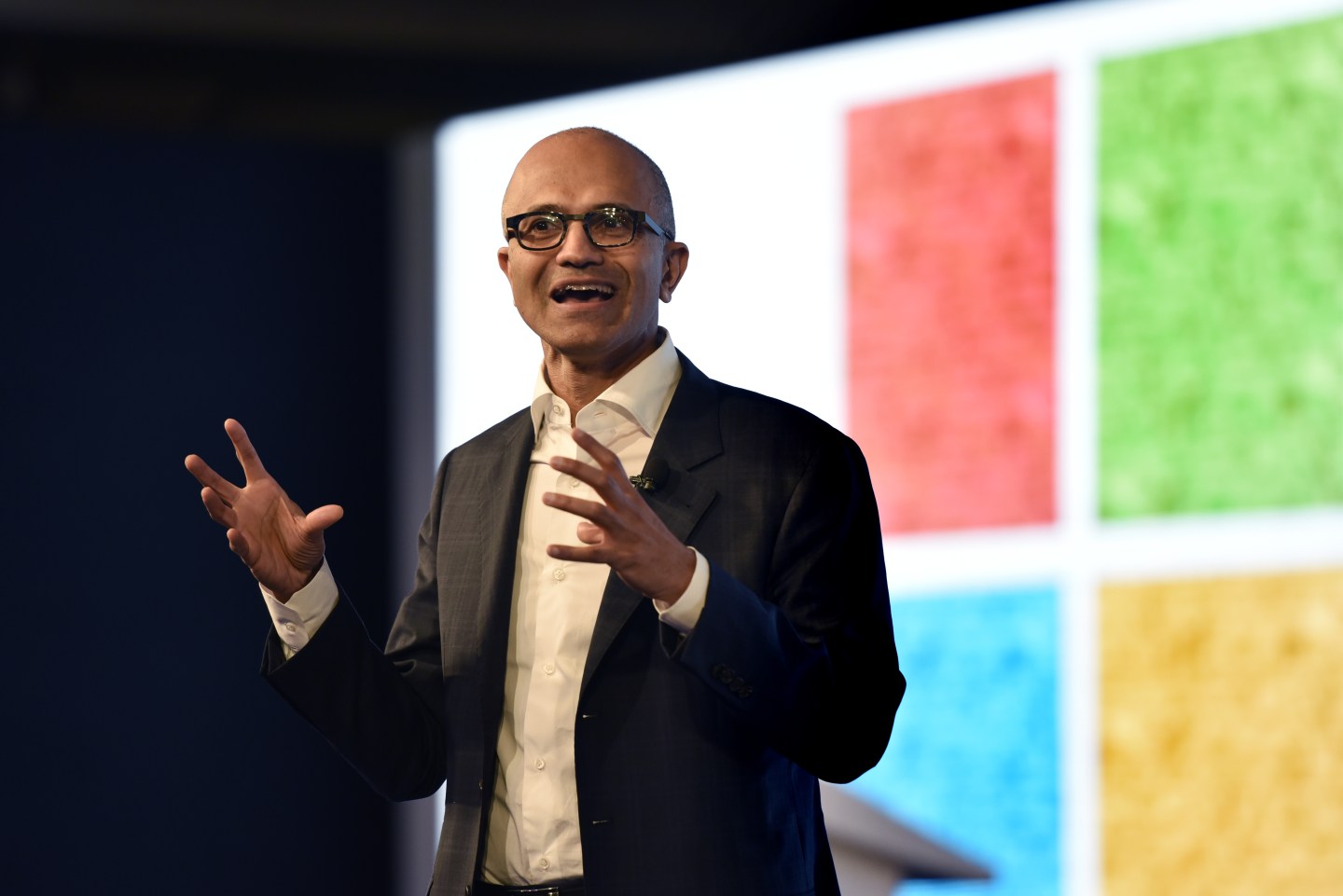
Microsoft CEO Satya Nadella In India At Microsoft India Programme
NEW DELHI, INDIA - MAY 30: Satya Nadella, CEO of Microsoft Corporation, during the Microsoft India event Tech for Good, Ideas for India A conversation with young achievers, students, developers and entrepreneurs on May 30, 2016 in New Delhi, India. The India-born CEO, who is on his third visit to his home country since taking over as Microsoft head in February 2014, met Prime Minister Narendra Modi and other ministers to discuss issues pertaining to the IT sector and enhancing partnership for initiatives like Digital India. (Photo by Virendra Singh Gosain/Hindustan Times via Getty Images)Photograph by Virendra Singh Gosain — Hindustan Times via Getty Images

When Microsoft announced that it was buying LinkedIn for $26.2 billion, it marked the biggest acquisition that Satya Nadella has undertaken since he became CEO of the company two and a half years ago. The firm previously purchased Skype in 2011 for $8.5 billion, Nokia in 2013 for $7.6 billion, and Yammer in 2012 for $1.2 billion. These acquisitions are not for the faint-hearted. To put this breathtaking figure into perspective, $26.2 billion is more than the valuation of all but two of the biggest startups in the world, including Airbnb ($25 billion), Palantir ($15 billion), Dropbox ($10 billion), Snapchat ($16 billion), and Pinterest ($11 billion). So exactly what can Microsoft (”MSFT”) teach us about the rough-and-tumble play of M&As?

Upon announcing 7,800 job cuts at Nokia (”NOK”) in July last year, Microsoft wrote off the entire investment of its acquired mobile unit. And Skype and Yammer haven’t been particularly rewarding either. But Microsoft is hardly alone. In February, Yahoo (”YHOO”) marked down $230 million of its acquired microblogging site, Tumblr. Along with BrightRoll and all other acquisitions since 2012, Yahoo recorded a $1.2 billion impairment charge in the fourth quarter of 2015. Even Google (”GOOG”) had to fire-sale Motorola at $2.9 billion, which it bought for $12.5 billion back in 2012.

If that’s not grim enough, this abysmal track record is confirmed by nearly all studies: 70% to 90% of M&As fail. Why is this the case?

There are bright spots, to be sure, although they’re few and far between. For example, Google’s Android is a poster child. Skeptics scoffed when Android was bought for a meager $50 million in 2005, seeing no chance that Google could successfully break into the mobile space dominated by Apple (“AAPL”), Nokia, and Blackberry (”BBRY”). In less than three years, however, the first Android phone was marketed by T-Mobile, thousands of new apps were being written, and third-party phone makers such as Samsung and HTC were coming on board. The fact that Android is a free system for anyone who wants to use it turns out to be consistent with Google’s overarching strategy: We don’t charge for usage; we make money from advertisements.

If any safe play exists in M&As, it’s where a parent company lets the newly acquired entity leverage the existing model to turbocharge growth. When Spinbrush was acquired, it gained immediate access to the distribution channels that P&G (”PG”) had nurtured over the years. When VMware (”VMW”) was acquired, it tapped in to a long list of existing EMC (”EMC”) customers. Few changes with respect to strategy or operating models are required on either side. Synergy is immediate and apparent.

This is why when Pepsi-Cola acquired Frito-Lay, it benefited from the direct store delivery logistics system that PepsiCo had honed over the years. In contrast, when Quaker Oats was acquired, managers painfully discovered that its traditional warehouse delivery method had very little in common with that of PepsiCo’s, and consequently, the acquisition failed to meet the financial expectation.

What all of this means is that Microsoft is facing some long odds with its current purchase of LinkedIn.

The deal size is so big that Microsoft, the world’s third largest technology firm, will need to issue new debt to fund the acquisition. Buying LinkedIn is not driven by industry consolidation, and in that sense, there isn’t any redundancy to cut that can realize quick savings. With the acquisition, Microsoft will try to use LinkedIn to create new services and yet-to-be-seen offerings. All of this implies that the sort of synergy it is seeking is neither apparent nor immediate.

To be fair, there are lots of arguments in favor of the merger. Nadella even offered an example of a busy executive walking into a business meeting scheduled on a Microsoft Outlook calendar fully integrated with LinkedIn functionalities. One can receive a notification if the other party went to the same university, enabling a whole new level of human connection. But couldn’t this have been done through some form of strategic alliance or partnership? A $26 billion payout for LinkedIn seems outrageously generous, which is great news for LinkedIn, but not so great for Microsoft. That’s why when the news broke, LinkedIn’s stock price shot up by 47%, and Microsoft’s went down by 2%.

While it will be interesting to see what this integration brings, at least for now, it seems the odds are against this merger.

Howard Yu is professor of strategy and innovation at IMD. In 2015, Yu was featured in Poets & Quantsas the World’s Best 40 Under 40 Business School Professors. He received his doctoral degree at Harvard Business School.


About the Authors
By Howard Yu
See full bioRight Arrow Button Icon
By Bethany Cianciolo
See full bioRight Arrow Button Icon

Latest in Commentary

Julian Braithwaite is the Director General of the International Alliance for Responsible Drinking
CommentaryProductivity
Gen Z is drinking 20% less than Millennials. Productivity is rising. Coincidence? Not quite
By Julian BraithwaiteDecember 13, 2025
8 hours ago
carbon
Commentaryclimate change
Banking on carbon markets 2.0: why financial institutions should engage with carbon credits
By Usha Rao-MonariDecember 13, 2025
9 hours ago
Dr. Javier Cárdenas is the director of the Rockefeller Neuroscience Institute NeuroPerformance Innovation Center.
Commentaryconcussions
Fists, not football: There is no concussion protocol for domestic violence survivors
By Javier CárdenasDecember 12, 2025
1 day ago
Gary Locke is the former U.S. ambassador to China, U.S. secretary of commerce, and governor of Washington.
CommentaryChina
China is winning the biotech race. Patent reform is how we catch up
By Gary LockeDecember 12, 2025
1 day ago
millennial
CommentaryConsumer Spending
Meet the 2025 holiday white whale: the millennial dad spending $500+ per kid
By Phillip GoerickeDecember 12, 2025
1 day ago
Sarandos
CommentaryAntitrust
Netflix, Warner, Paramount and antitrust: Entertainment megadeal’s outcome must follow the evidence, not politics or fear of integration
By Satya MararDecember 12, 2025
1 day ago

Most Popular

placeholder alt text
Economy
Tariffs are taxes and they were used to finance the federal government until the 1913 income tax. A top economist breaks it down
By Kent JonesDecember 12, 2025
1 day ago
placeholder alt text
Success
Apple cofounder Ronald Wayne sold his 10% stake for $800 in 1976—today it’d be worth up to $400 billion
By Preston ForeDecember 12, 2025
1 day ago
placeholder alt text
Success
40% of Stanford undergrads receive disability accommodations—but it’s become a college-wide phenomenon as Gen Z try to succeed in the current climate
By Preston ForeDecember 12, 2025
1 day ago
placeholder alt text
Economy
The Fed just ‘Trump-proofed’ itself with a unanimous move to preempt a potential leadership shake-up
By Jason MaDecember 12, 2025
1 day ago
placeholder alt text
Economy
For the first time since Trump’s tariff rollout, import tax revenue has fallen, threatening his lofty plans to slash the $38 trillion national debt
By Sasha RogelbergDecember 12, 2025
1 day ago
placeholder alt text
Success
Apple CEO Tim Cook out-earns the average American’s salary in just 7 hours—to put that into context, he could buy a new $439,000 home in just 2 days
By Emma BurleighDecember 12, 2025
1 day ago
Rankings
  • 100 Best Companies
  • Fortune 500
  • Global 500
  • Fortune 500 Europe
  • Most Powerful Women
  • Future 50
  • World’s Most Admired Companies
  • See All Rankings
Sections
  • Finance
  • Leadership
  • Success
  • Tech
  • Asia
  • Europe
  • Environment
  • Fortune Crypto
  • Health
  • Retail
  • Lifestyle
  • Politics
  • Newsletters
  • Magazine
  • Features
  • Commentary
  • Mpw
  • CEO Initiative
  • Conferences
  • Personal Finance
  • Education
Customer Support
  • Frequently Asked Questions
  • Customer Service Portal
  • Privacy Policy
  • Terms Of Use
  • Single Issues For Purchase
  • International Print
Commercial Services
  • Advertising
  • Fortune Brand Studio
  • Fortune Analytics
  • Fortune Conferences
  • Business Development
About Us
  • About Us
  • Editorial Calendar
  • Press Center
  • Work At Fortune
  • Diversity And Inclusion
  • Terms And Conditions
  • Site Map

© 2025 Fortune Media IP Limited. All Rights Reserved. Use of this site constitutes acceptance of our Terms of Use and Privacy Policy | CA Notice at Collection and Privacy Notice | Do Not Sell/Share My Personal Information
FORTUNE is a trademark of Fortune Media IP Limited, registered in the U.S. and other countries. FORTUNE may receive compensation for some links to products and services on this website. Offers may be subject to change without notice.









