• Home
  • News
  • Fortune 500
  • Tech
  • Finance
  • Leadership
  • Lifestyle
  • Rankings
  • Multimedia
Commentary

Here’s What 6.5% Growth in China Could Look Like

By
He Weiping
He Weiping
,
The Conversation
The Conversation
and
Bethany Cianciolo
Bethany Cianciolo
Down Arrow Button Icon
By
He Weiping
He Weiping
,
The Conversation
The Conversation
and
Bethany Cianciolo
Bethany Cianciolo
Down Arrow Button Icon
November 4, 2015, 9:30 AM ET
CHINA-BEIJING-CPC-FIFTH PLENARY SESSION(CN)
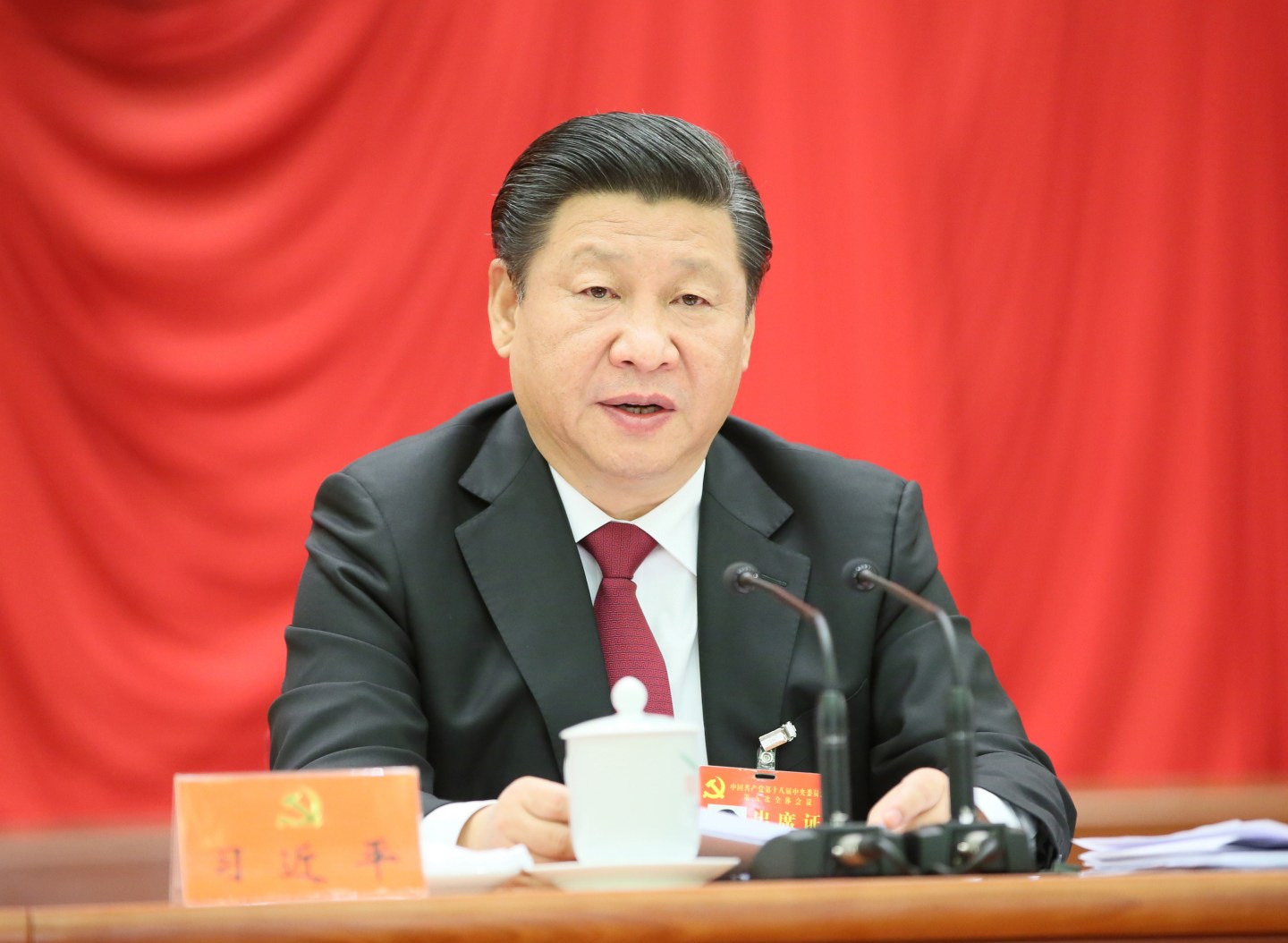
BEIJING- OCTOBER 29: Chinese President Xi Jinping, who is also general secretary of the Communist Party of China Central Committee, speaks at the Fifth Plenary Session of the 18th Communist Party of China Central Committee, in Beijing, capital of China. The meeting was held from Oct. 26 to 29 in Beijing. (Xinhua/Lan Hongguang via Getty Images)Photograph by Lan Hongguang — Xinhua News Agency via Getty Images

Overnight, Chinese President Xi Jinping gave the strongest indication yet the country will revise down its economic growth goal to 6.5%.

The official target will not be known until China releases its highly anticipated 13th five-year plan in March next year, but play has already been made on the idea of the “economic new norm.” This means lower percentage rates of economic growth (although rates still high in international terms) coupled with structural economic reform.

Undoubtedly, the primary goal is to keep the economy growing strongly. The latest interest rate cut on Oct. 30 was intended to stimulate the economy. As a result, the financial institution interest rate was reduced by 0.25% to 4.35%. This remains high by current international standards and leaves room for further significant cuts, a luxury not currently available in many economies.

The cut can hardly be considered a sign of economic desperation. It may have been prompted because last quarter’s GDP growth missed the 7% mark, but 6.5%, even allowing for the alleged suspect nature of Chinese economic statistics, is still a rate many economists consider consistent with the “transitioning” economy. Certainly percentage growth rates higher than these are unlikely to be seen again and growth is in fact sure to trend lower as China moves to become a developed economy.

The transition to a more consumer-based economy offers opportunities for private investors, especially given signs of official support for continuing economic liberalization.

The services sector has grown to 52% of the country’s GDP, as opposed to 44 % in 2011. China now accounts for 34% of the world’s smart phone market, 12% of the diamond and high end jewellery market, and 18% of the online games market. But poorly developed financial markets are an impediment to investment. Accordingly, financial market reform is a matter of government concern.

The path of reform in the financial sector has proven to be difficult. The government is encouraging private capital to enter the banking sector via the privately-funded banks, but the sector remains dominated by government controlled banks. Credit provided by banks still makes up 90% of all financing.

Of course, from the perspective of lenders, financing state-owned or controlled entities (SOEs) involves less risk than financing small to medium enterprises (SMEs). One perceived problem with the economy is this lack of funding for SMEs, and naturally a goal of reform is to provide adequate credit for smaller organizations. There has been an attempt to promote private finance companies as an alternative source of credit to the state controlled bank lending markets.

The government’s overarching goal is to establish a multi-layered capital markets system including shares, debt, futures, and private equity markets. The objective is to allow markets to play a decisive role. But the continuing influence and position of the SOEs and their structure, in which the main shareholders remain local or central government authorities who exercise managerial control, makes this difficult.

Listed companies mostly remain SOEs, which need to be supported for political and social reasons, and these capture most of the credit available from the state dominated banking system and capital from risk averse investors. The protected position of SOEs discourages lenders from investing in places other than the banking sector, and in particular from supporting SMEs. The protected position of SOEs inevitably distorts the capital markets.

There has so far been little success in making SOEs more market responsive. This means further development of financial markets in China depends on the growth of credit companies, privately funded banks, and also the “third board” market, which focuses on SME listings.

He Weiping is a lecturer in law at Monash University. This piece was originally published on The Conversation.

The Conversation

About the Authors
By He Weiping
See full bioRight Arrow Button Icon
By The Conversation
See full bioRight Arrow Button Icon
By Bethany Cianciolo
See full bioRight Arrow Button Icon

Latest in Commentary

Amit Walia
CommentaryM&A
Why the timing was right for Salesforce’s $8 billion acquisition of Informatica — and for the opportunities ahead
By Amit WaliaDecember 6, 2025
23 hours ago
Steve Milton is the CEO of Chain, a culinary-led pop-culture experience company founded by B.J. Novak and backed by Studio Ramsay Global.
CommentaryFood and drink
Affordability isn’t enough. Fast-casual restaurants need a fandom-first approach
By Steve MiltonDecember 5, 2025
2 days ago
Paul Atkins
CommentaryCorporate Governance
Turning public companies into private companies: the SEC’s retreat from transparency and accountability
By Andrew BeharDecember 5, 2025
2 days ago
Matt Rogers
CommentaryInfrastructure
I built the first iPhone with Steve Jobs. The AI industry is at risk of repeating an early smartphone mistake
By Matt RogersDecember 4, 2025
3 days ago
Jerome Powell
CommentaryFederal Reserve
Fed officials like the mystique of being seen as financial technocrats, but it’s time to demystify the central bank
By Alexander William SalterDecember 4, 2025
3 days ago
Rakesh Kumar
CommentarySemiconductors
China does not need Nvidia chips in the AI war — export controls only pushed it to build its own AI machine
By Rakesh KumarDecember 3, 2025
4 days ago

Most Popular

placeholder alt text
AI
Nvidia CEO says data centers take about 3 years to construct in the U.S., while in China 'they can build a hospital in a weekend'
By Nino PaoliDecember 6, 2025
19 hours ago
placeholder alt text
Real Estate
The 'Great Housing Reset' is coming: Income growth will outpace home-price growth in 2026, Redfin forecasts
By Nino PaoliDecember 6, 2025
24 hours ago
placeholder alt text
Big Tech
Mark Zuckerberg rebranded Facebook for the metaverse. Four years and $70 billion in losses later, he’s moving on
By Eva RoytburgDecember 5, 2025
2 days ago
placeholder alt text
Economy
The most likely solution to the U.S. debt crisis is severe austerity triggered by a fiscal calamity, former White House economic adviser says
By Jason MaDecember 6, 2025
14 hours ago
placeholder alt text
Asia
Despite their ‘no limits’ friendship, Russia is paying a nearly 90% markup on sanctioned goods from China—compared with 9% from other countries
By Jason MaNovember 29, 2025
8 days ago
placeholder alt text
Success
Nvidia CEO Jensen Huang admits he works 7 days a week, including holidays, in a constant 'state of anxiety' out of fear of going bankrupt
By Jessica CoacciDecember 4, 2025
3 days ago
Rankings
  • 100 Best Companies
  • Fortune 500
  • Global 500
  • Fortune 500 Europe
  • Most Powerful Women
  • Future 50
  • World’s Most Admired Companies
  • See All Rankings
Sections
  • Finance
  • Leadership
  • Success
  • Tech
  • Asia
  • Europe
  • Environment
  • Fortune Crypto
  • Health
  • Retail
  • Lifestyle
  • Politics
  • Newsletters
  • Magazine
  • Features
  • Commentary
  • Mpw
  • CEO Initiative
  • Conferences
  • Personal Finance
  • Education
Customer Support
  • Frequently Asked Questions
  • Customer Service Portal
  • Privacy Policy
  • Terms Of Use
  • Single Issues For Purchase
  • International Print
Commercial Services
  • Advertising
  • Fortune Brand Studio
  • Fortune Analytics
  • Fortune Conferences
  • Business Development
About Us
  • About Us
  • Editorial Calendar
  • Press Center
  • Work At Fortune
  • Diversity And Inclusion
  • Terms And Conditions
  • Site Map

© 2025 Fortune Media IP Limited. All Rights Reserved. Use of this site constitutes acceptance of our Terms of Use and Privacy Policy | CA Notice at Collection and Privacy Notice | Do Not Sell/Share My Personal Information
FORTUNE is a trademark of Fortune Media IP Limited, registered in the U.S. and other countries. FORTUNE may receive compensation for some links to products and services on this website. Offers may be subject to change without notice.