• Home
  • Latest
  • Fortune 500
  • Finance
  • Tech
  • Leadership
  • Lifestyle
  • Rankings
  • Multimedia
Some Fortune Crypto pricing data is provided by Binance.
CommentaryCryptocurrency

Anti-crypto regulators are blocking the pathway to a digital American dream

By
Li Jin
Li Jin
Down Arrow Button Icon
By
Li Jin
Li Jin
Down Arrow Button Icon
April 18, 2023, 11:56 AM ET
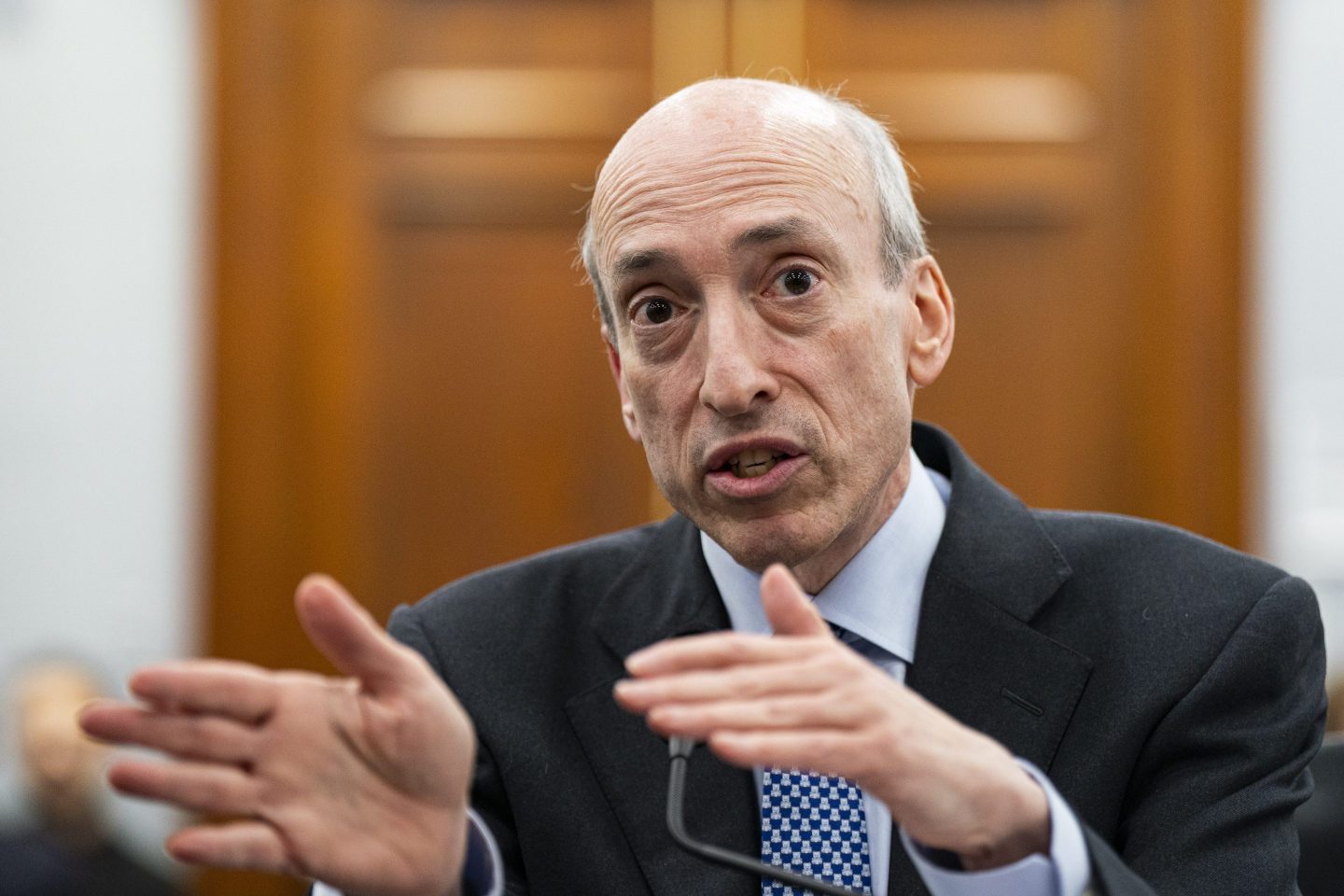
Gary Gensler, chairman of the U.S. Securities and Exchange Commission, speaks during a House Appropriations Subcommittee hearing in Washington,on March 29, 2023.
Gary Gensler, chairman of the U.S. Securities and Exchange Commission, speaks during a House Appropriations Subcommittee hearing in Washington,on March 29, 2023.Al Drago—Bloomberg/Getty Images

U.S. regulators are choking the crypto industry. Instead of providing a clear regulatory framework, they are pursuing regulation by enforcement. Done under the guise of consumer protection, the attack on crypto is hindering innovation and denying Americans a path to new economic opportunities.

Home ownership has long been a hallmark of the American dream, representing a key life achievement and a route to wealth building, but with interest rates and inflation at their highest levels in two decades, coupled with a nationwide housing shortage, that dream is fading away for many.

Crypto offers a new way for Americans to build wealth through ownership of the internet products they use. Tokens, or digital assets, enable value to be distributed and tracked digitally, so consumers can benefit from owning things just like in the physical world.

In the last big wave of the internet innovation, centralized Big Tech players owned users’ data and monetized it through advertising. In the crypto-based internet, users have much more control of their own data and which products they use. Big Tech and their shareholders alone won’t be the main beneficiaries of this new wealth creation, rather it will be the users who have a stake in the products they use.

Crypto’s massive potential has certainly been overshadowed recently by scams, grift, and speculation. Though crypto has been exploited for negative aims, that has always been present in new technologies—from the early internet being rife with phishing attacks and email fraud, to electricity being touted as a medicinal cure-all during the Victorian Era.

Though it is early in this user-owned iteration of the internet, there are already countless examples of digital ownership resulting in more equitable outcomes, lower barriers to entry, and greater access to economic opportunities.

Crypto enables artists and their fans to benefit in new ways. In 2021, emerging musician Daniel Allen raised over $180,000 for his first album through a crypto crowdfunding and gave backers 50% of his royalties, which allowed him to retain more control and economic rights over his music—and let fans obtain ownership and upside as well. “Traditionally, to make it in the music industry, you had to follow a one-dimensional trajectory: get really lucky by posting a song online, or sell rights away,” he told me. Since then, many musicians have implemented similar playbooks, bypassing industry gatekeepers to better align their interests with those of their fans.

In September 2020, more than 250,000 users received a surprise distribution of 400 tokens from Uniswap, the leading decentralized crypto exchange. The airdrop, worth $1,200 at the time, represented a life-changing sum for many users, allowing them to pursue professional interests or remodel their homes. But the event signified something even more profound: that users, rather than just founders or shareholders, could earn ownership of a platform and benefit from its success.

Braintrust, a decentralized freelance marketplace, enables programmers, designers, and illustrators to work on a contract basis with employers such as Nike and NASA. Since there is no central company taking a large cut of freelancers’ earnings for providing the service, workers retain more.

You might retort that all these examples apply to digital natives taking advantage of bleeding-edge technologies on the fringes of the internet. Today, crypto is indeed an emerging phenomenon, but down the road, it will extend to the products and services we use on a daily basis.

Crypto has already helped internet users form communities, access work and income, and capture more of the value they create. For business builders, crypto offers a new tool kit to build networks faster by sharing value with users. By embracing crypto, the U.S. has the opportunity to foster more stories like these, with tangible benefits for everyday Americans.

But regulators have so far provided no clear roadmap for crypto companies and projects to build in a compliant manner. Instead, they’ve hindered innovation with restrictive enforcement actions. Now America risks losing out to other parts of the world, like Europe and Asia, that are welcoming crypto companies more openly.

We implore U.S. policymakers to provide a clear regulatory framework for the industry, one that fosters responsible innovation to provide benefits for all citizens. We have an opportunity to empower the American dream—not just the version that has existed for centuries, but a newly updated dream for the era of digital natives.

Li Jin is a cofounder and general partner at Variant, an early-stage crypto investment firm. The opinions expressed in Fortune.com commentary pieces are solely the views of their authors and do not necessarily reflect the opinions and beliefs of Fortune.

Join us at the Fortune Workplace Innovation Summit May 19–20, 2026, in Atlanta. The next era of workplace innovation is here—and the old playbook is being rewritten. At this exclusive, high-energy event, the world’s most innovative leaders will convene to explore how AI, humanity, and strategy converge to redefine, again, the future of work. Register now.
About the Author
By Li Jin
See full bioRight Arrow Button Icon

Latest in Commentary

Julian Braithwaite is the Director General of the International Alliance for Responsible Drinking
CommentaryProductivity
Gen Z is drinking 20% less than Millennials. Productivity is rising. Coincidence? Not quite
By Julian BraithwaiteDecember 13, 2025
8 minutes ago
carbon
Commentaryclimate change
Banking on carbon markets 2.0: why financial institutions should engage with carbon credits
By Usha Rao-MonariDecember 13, 2025
1 hour ago
Dr. Javier Cárdenas is the director of the Rockefeller Neuroscience Institute NeuroPerformance Innovation Center.
Commentaryconcussions
Fists, not football: There is no concussion protocol for domestic violence survivors
By Javier CárdenasDecember 12, 2025
24 hours ago
Gary Locke is the former U.S. ambassador to China, U.S. secretary of commerce, and governor of Washington.
CommentaryChina
China is winning the biotech race. Patent reform is how we catch up
By Gary LockeDecember 12, 2025
24 hours ago
millennial
CommentaryConsumer Spending
Meet the 2025 holiday white whale: the millennial dad spending $500+ per kid
By Phillip GoerickeDecember 12, 2025
1 day ago
Sarandos
CommentaryAntitrust
Netflix, Warner, Paramount and antitrust: Entertainment megadeal’s outcome must follow the evidence, not politics or fear of integration
By Satya MararDecember 12, 2025
1 day ago

Most Popular

placeholder alt text
Economy
Tariffs are taxes and they were used to finance the federal government until the 1913 income tax. A top economist breaks it down
By Kent JonesDecember 12, 2025
1 day ago
placeholder alt text
Success
Apple cofounder Ronald Wayne sold his 10% stake for $800 in 1976—today it’d be worth up to $400 billion
By Preston ForeDecember 12, 2025
23 hours ago
placeholder alt text
Success
40% of Stanford undergrads receive disability accommodations—but it’s become a college-wide phenomenon as Gen Z try to succeed in the current climate
By Preston ForeDecember 12, 2025
23 hours ago
placeholder alt text
Economy
For the first time since Trump’s tariff rollout, import tax revenue has fallen, threatening his lofty plans to slash the $38 trillion national debt
By Sasha RogelbergDecember 12, 2025
18 hours ago
placeholder alt text
Economy
The Fed just ‘Trump-proofed’ itself with a unanimous move to preempt a potential leadership shake-up
By Jason MaDecember 12, 2025
17 hours ago
placeholder alt text
Success
At 18, doctors gave him three hours to live. He played video games from his hospital bed—and now, he’s built a $10 million-a-year video game studio
By Preston ForeDecember 10, 2025
3 days ago
Rankings
  • 100 Best Companies
  • Fortune 500
  • Global 500
  • Fortune 500 Europe
  • Most Powerful Women
  • Future 50
  • World’s Most Admired Companies
  • See All Rankings
Sections
  • Finance
  • Leadership
  • Success
  • Tech
  • Asia
  • Europe
  • Environment
  • Fortune Crypto
  • Health
  • Retail
  • Lifestyle
  • Politics
  • Newsletters
  • Magazine
  • Features
  • Commentary
  • Mpw
  • CEO Initiative
  • Conferences
  • Personal Finance
  • Education
Customer Support
  • Frequently Asked Questions
  • Customer Service Portal
  • Privacy Policy
  • Terms Of Use
  • Single Issues For Purchase
  • International Print
Commercial Services
  • Advertising
  • Fortune Brand Studio
  • Fortune Analytics
  • Fortune Conferences
  • Business Development
About Us
  • About Us
  • Editorial Calendar
  • Press Center
  • Work At Fortune
  • Diversity And Inclusion
  • Terms And Conditions
  • Site Map

© 2025 Fortune Media IP Limited. All Rights Reserved. Use of this site constitutes acceptance of our Terms of Use and Privacy Policy | CA Notice at Collection and Privacy Notice | Do Not Sell/Share My Personal Information
FORTUNE is a trademark of Fortune Media IP Limited, registered in the U.S. and other countries. FORTUNE may receive compensation for some links to products and services on this website. Offers may be subject to change without notice.