Red light therapy panels are now a regular part of many folks’ recovery routines. Some people want a simple way to support skin texture and fine lines; others are chasing faster recovery after long runs, muscle gains in the gym, or long days at a desk. In 2026, such panels span everything from flexible pads you can wrap around your legs to compact, high‑output devices that live in a bedroom or home gym instead of a clinic.
Our guide focuses on red light therapy (RLT) panels that pair solid research-backed wavelengths with practical design: clear irradiance specs, straightforward controls, and form factors you will actually use several times a week. Read to learn about our five top picks for the best red light therapy panels to use at home.
Best Red Light Therapy Panels of 2026
- Best Red Light Therapy Panel Overall: Novaalab Pad
- Best Red Light Therapy Panel for Anti-Aging: RLT Home Total Spectrum Compact
- Best Compact Red Light Therapy Panel: Kineon MOVE+ Pro LED & Laser
- Best Affordable Red Light Therapy Panel: Hooga Pro300 Red Light Therapy Device
- Best Red Light Therapy Panel Under $1,000: Lifepro BioHeal Plus Red Light Panel
Best Red Light Therapy Panel Comparison Table
Best Red Light Therapy Panel Overall: Novaalab Pad
Novaalab Pad
| Fortune score | 4.5/5 |
at Amazon
- Our thoughts: This pad stood out for its combination of strong power output, generous coverage area, and easy, intuitive setup
- Who it’s for: Folks looking for recovery support on larger areas like quads, hamstrings, or back
- What makes it different: It has high irradiance for a pad: up to 150–200 mW/cm² at 0 inches
Pros
- High irradiance for faster, more efficient sessions
- Flexible, lightweight pad that can wrap around legs, arms, or back
- User-friendly setup with intuitive remote and built-in timer
Cons
- Pad format is best for localized areas, not full-body exposure
- Must be positioned or strapped correctly to keep full contact
- Pricier than some other options on our list
Our Thoughts on Novaalab Pad
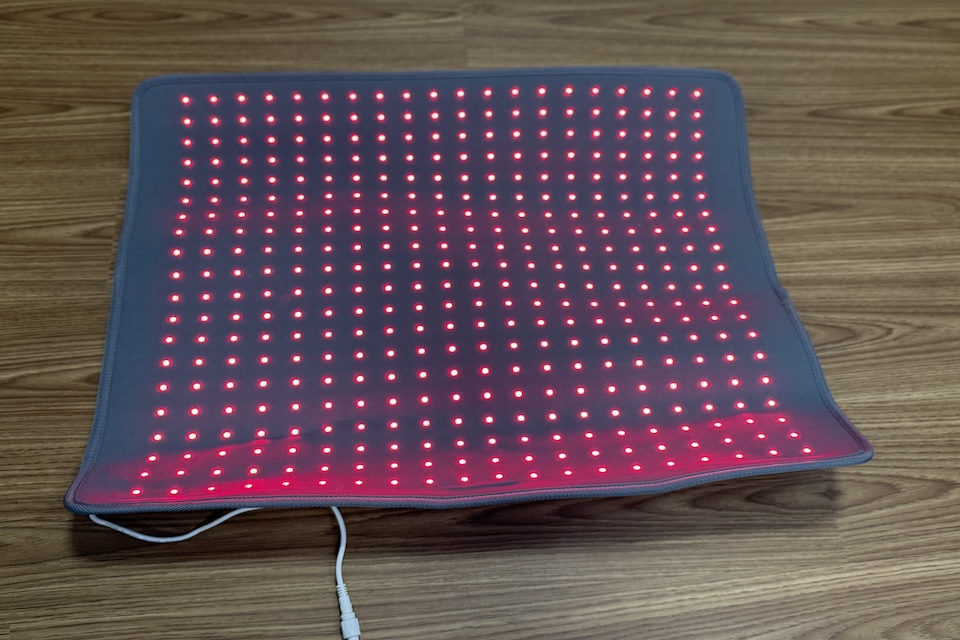
The Novaalab Pad is our pick for the best overall red light therapy panel because it has panel-level power in a format that’s easy to use. “The pad is quite large, so you can use it on multiple areas,” our tester Riley said. “I chose to wrap it around my leg, but I could see others using it around their arm or across their back,” highlighting how much coverage you get from a single device. Riley also noted that the entire set up process was intuitive. She was able to navigate the remote and play with the settings without using the manual, which speaks to how approachable it is even for first-time red-light therapy users.
For performance, Riley gave the pad a 5 out of 5 for irradiance and a 5 out of 5 for frequency because it uses red 660 nanometers and near‑infrared 850 nanometers, a pairing often cited as ideal for both surface-level and deeper-tissue benefits. Riley also rated coverage and ease of use as 5 out of 5, noting that the built-in timer automatically sets for 20 minutes, but you can adjust the time on the remote.
On value, Riley scored the pad a 4.5 out of 5: “The XL pad is less than $500, which seems very reasonable considering many body wraps cost $2,500 or more.” She also pointed out that it’s only about $100 more expensive than the other products she tested, which were smaller red light therapy masks.
Warranty and returns received a score of 5 out of 5, as the brand offers up to a three-ear warranty and a 60-day return policy. Riley also gave customer experience another 5 out of 5 for their extensive FAQ page and multiple support channels, including a chat box. Together, those scores and quotes made the NovaaLab Pad XL feel like the most balanced pick for power, coverage, usability, and price.
Best Red Light Therapy Panel for Anti-Aging: RLT Home Total Spectrum Compact
RLT Home Total Spectrum Compact
| Fortune score | 4/5 |

at Red Light Therapy Home
- Our thoughts: This panel has high irradiance in a compact footprint, which makes it easy to store away
- Who it’s for: Folks focused on fine lines, texture, and overall facial rejuvenation, who still want some full body-use versatility
- What makes it different: Uses seven wavelengths to cover everything from surface-level brightening to deeper-tissue support
Pros
- Seven therapeutic wavelengths tailored to anti‑aging and skin health
- Powerful irradiance in a compact footprint
- Prebuilt skin modes and pulse options for easy, guided use
Cons
- Higher price point than basic red/NIR-only panels
- Compact size means more repositioning for full face, neck, and chest coverage
- Feature set and modes may feel overwhelming if you just want a simple on/off device
Our Thoughts on RLT Home Total Spectrum Compact
The RLT Home Total Spectrum Compact is our pick for the best anti-aging red light panel because it is one of the few compact panels that genuinely prioritizes skin biology instead of just throwing red light at your face.
The Total Spectrum Compact uses a mix of 630 nanometers and 660 nanometers red, which RLT Home highlights as wavelengths that “support collagen production, surface level wound healing, and anti‑aging by smoothing fine lines & enhancing complexion.” It layers these with 810, 830, and 850 nanometers of near‑infrared for deeper support and 480 nanometers of blue light for anti‑bacterial uses, all rolled into a Skin & Anti‑Aging mode, so you do not have to program anything manually.
Riley rated the irradiance a 5 out of 5, noting that it measured 199.0 mW/cm² at six inches, 72 mW/cm² at eight inches, which is unusually strong for a compact device and ideal for shorter, efficient sessions.
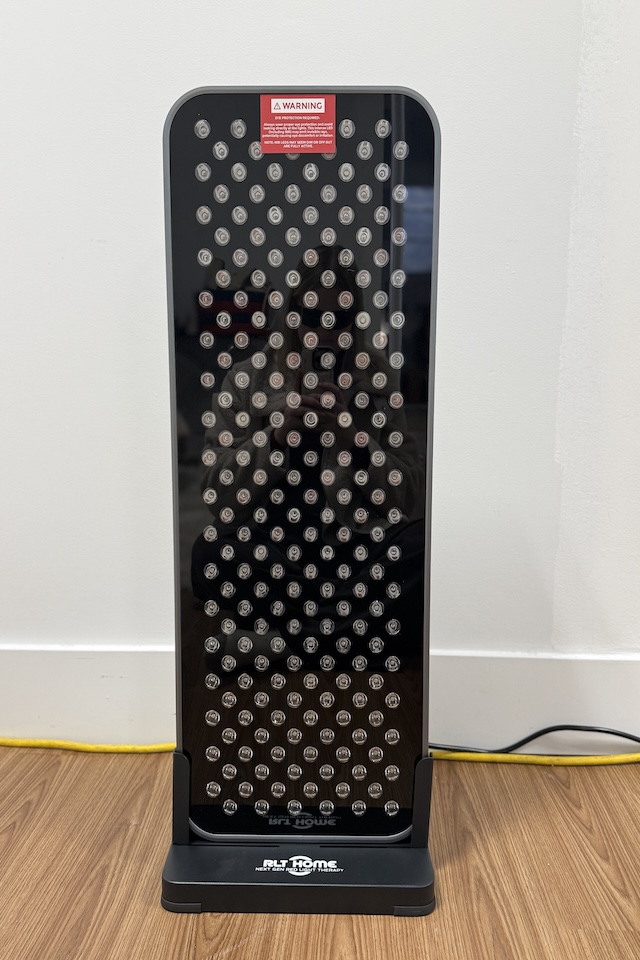
On usability, Riley rated coverage and ease of use a 5 out of 5. “The device slides into its stand, which you then secure with two screws,” she explained. “Once plugged in, you see a main screen that displays four modes: full power, skin aging, pain inflammation, fat burn weight loss.” All in all, Riley found the controls intuitive and simple.
She appreciated that you can simply pick a mode and set a timer for how long you want it on, instead of programming wavelengths manually. Riley noticed that “the device gets extremely bright at full power, so I recommend using the tinted sunglasses or blackout eye goggles that come with the device,” which underscores its intensity for skin treatments.
Value-wise, Riley scored the panel 3 out of 5 for effectiveness and described the value as about a 4 out of 5. “$1,295 is around the price I would expect for this product based on my knowledge of red light therapy pricing,” she said. Though, she does acknowledge that some users may be a little shocked by the steep cost.
Warranty and returns, however, earned a 5 out of 5, thanks to the 60-day trial period and three-year warranty. This tester gave customer experience another 5 out of 5, praising how “the entire website is super detailed, explaining the science behind RLT” and how helpful the manual is for dialing in modes and safety. That combination of targeted wavelengths, robust power, and skin-specific presets made it the standout anti‑aging choice.
Best Compact Red Light Therapy Panel: Kineon MOVE+ Pro LED & Laser
Kineon MOVE+ Pro LED & Laser
| Fortune score | 4/5 |
at Kineon
- Our thoughts: This pad stood out for its combination of strong power output, generous coverage area, and easy, intuitive setup
- Who it’s for: Runners and active folks targeting knees, hamstrings, or other specific joints rather than full-body sessions
- What makes it different: Uses both red LEDs and an 808 nanometer infrared laser, giving a mix of broader LED coverage and more concentrated laser energy
Pros
- Truly portable, battery-powered design for use away from an outlet
- LED + laser combo for more focused joint and tissue targeting
- Wearable form factor that stays put on knees, hamstrings, or elbows
Cons
- Setup involves charging, clipping three pieces, and turning each module on
- Higher price than many basic, non-laser compact devices
Our Thoughts on Kineon MOVE+ Pro LED & Laser
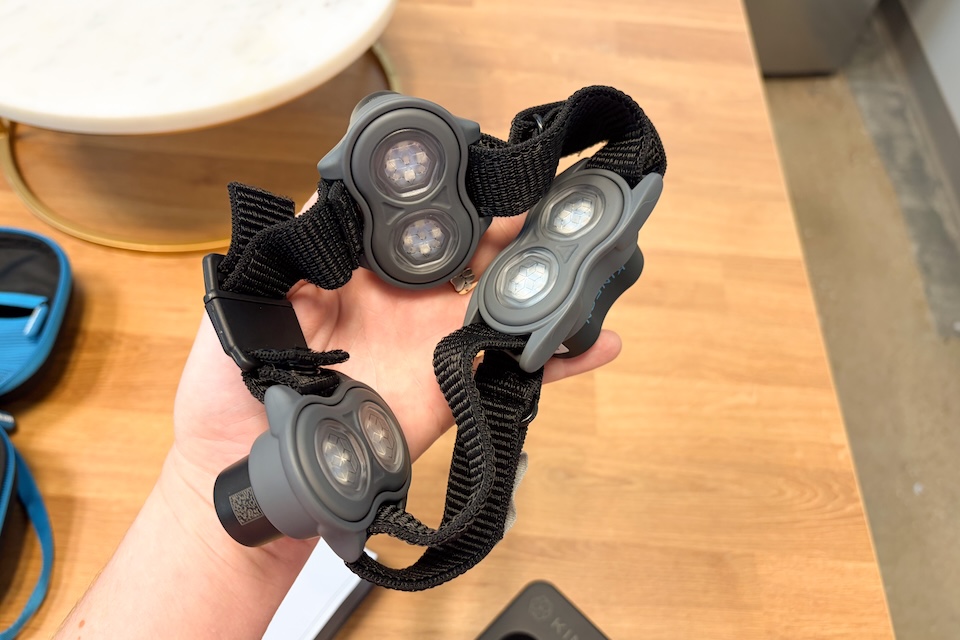
The Kineon MOVE+ Pro LED & Laser is our pick for the best compact red light therapy panel because it fills a very specific gap: people who do not have space for a big panel but still want serious, joint-focused light therapy in a device that can move with them. Instead of hanging on a door or sitting on a stand, the MOVE+ Pro clips into a band and wraps directly around the area you want to treat. That makes it especially appealing for knees, hamstrings, and other tricky areas where a traditional panel is hard to position for long periods.
Our tester Kate rated the frequency a 4.5 out of 5, noting that “this device offers red light therapy, as well as near-infrared therapy.” But where many red light panels use LEDs for their near-infrared functionality, MOVE+ uses targeted laser diodes. This is designed to create a more precise light that can deliver energy into joints and deeper tissue.
On usability, Kate scored coverage and ease of use a 3 out of 5. “It’s not really the simplest device to use,” she said. “You have to set up the charging device first and make sure everything is fully charged for 3.5 hours, according to the instructions. Then, there are three pieces you have to clip onto a band and then turn every single one on.”
She also mentioned that once this device is on the body, the experience is noticeably pleasant, if slightly unremarkable. “I did not notice any major benefits when using this device, though it felt nice,” she said, giving the effectiveness a 4 out of 5. “It helped with recovery in my hamstrings when I put it on after a run. The device itself was pleasant, and I had no negative notes.”
Kate rated the value a 4 out of 5, noting that it does seem to be on the pricier end. However, the build quality and durability were exceptional. She can imagine this device lasting for years even with regular use.
Warranty and returns impressed her enough for a 5 out of 5, thanks to a one‑year warranty and 30‑day risk‑free trial. Kate also gave customer experience another 5 out of 5, saying “the company was easy to contact. They have an online form, a FAQ page, an email and even a phone number to reach support with.”
For readers who prioritize portability, targeted joint coverage, and an LED‑laser combo over maximum irradiance or full-body coverage, that combination made the MOVE+ Pro the strongest compact pick.
Best Affordable Red Light Therapy Panel: Hooga Pro300 Red Light Therapy Device
Hooga Pro300 Red Light Therapy Device
| Fortune score | 4/5 |
at Hooga Health
- Our thoughts: This pick balances price, power, and usability better than most budget panels
- Who it’s for: Beginners who want a first real panel without spending four figures
- What makes it different: It’s priced at roughly $199, and the value is excellent
Pros
- True 660 nanometers red + 850 nanometers near-infrared at an affordable price
- Very easy setup and use, with built‑in timer and multiple mounts
- Strong warranty (three years) and 60‑day returns
Cons
- Smaller panel, so more repositioning for full‑body coverage
- No stand-alone base included beyond the basic adjustable stand and mounts
- Not as high-powered or feature rich as premium, multi‑wavelength systems
Our Thoughts on Hooga Pro300 Red Light Therapy Device
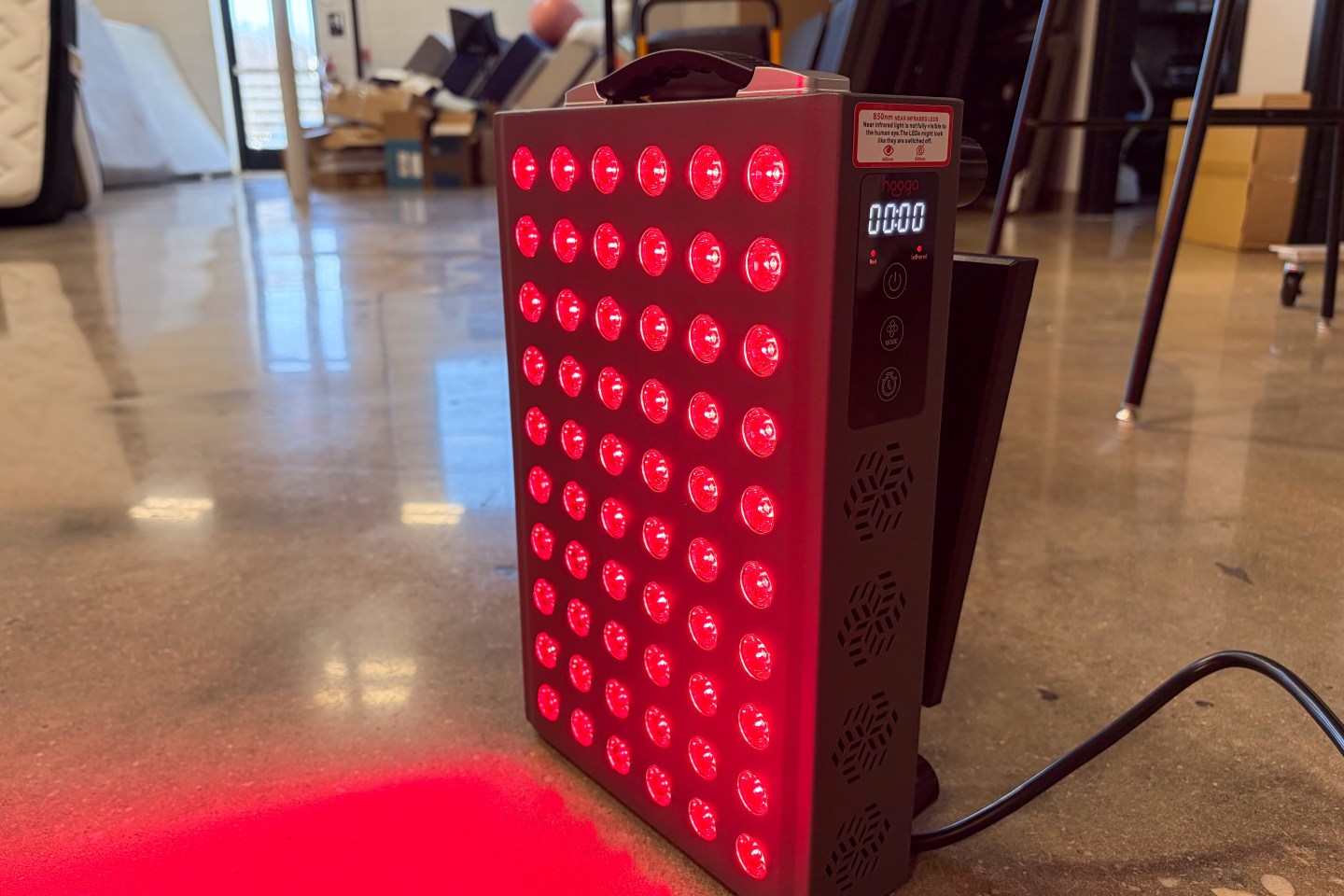
The Hooga Pro300 Red Light Therapy Device is our pick for the best affordable red light therapy panel because it hits a sweet spot that many budget panels miss: genuinely useful power and wavelengths, thoughtful hardware, and a price tag that feels accessible.
Our tester Kate rated the irradiance a 4 out of 5, noting the light power is solid for a smaller panel and enough for meaningful sessions without pushing into pro-clinic pricing. She gave the frequency a 5 out of 5 because it offers both deep read 660 nanometers and near infrared 850 nanometers, the classic red and near-infrared combo many people seek for muscle recovery, joint comfort, and general wellness.
Where this panel really shines is ease of use. Kate rated coverage and ease of use a 5 out of 5. “This panel was super easy to use,” she said. “You just pulled it out of the box, plugged it in and got started!” She appreciated that users have two available modes with the red light or near infrared light.
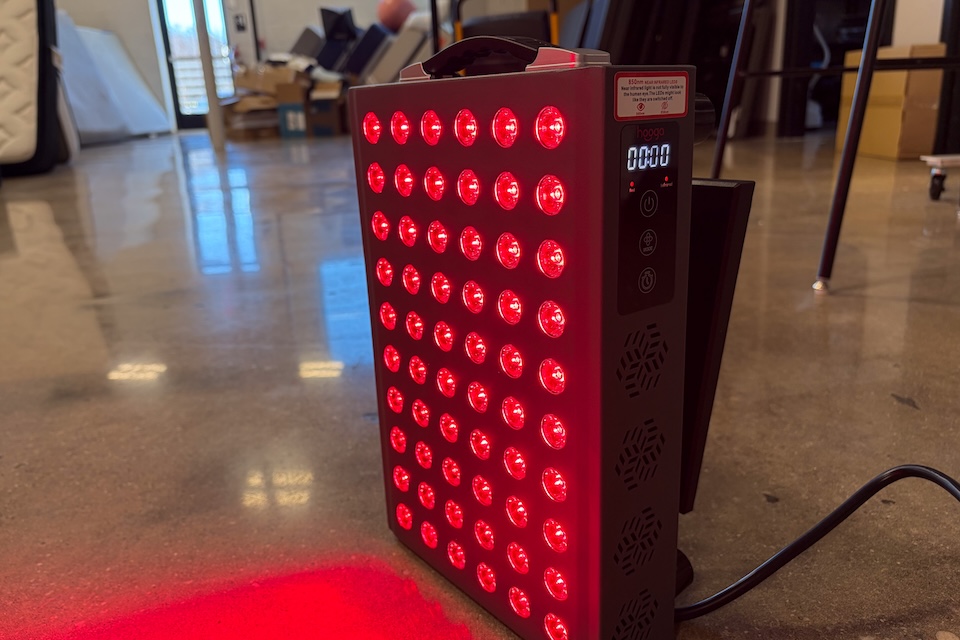
There is also a built-in timer, which goes up to 15 minutes max. Plus, the product includes some thoughtful extras, including a wall hanging kit, a door mount, adjustable stand and blackout goggles. Those details help turn a basic panel into something that feels flexible in small apartments or home gyms.
On value, Kate was enthusiastic, giving this red light panel a 5 out of 5 and saying. “This panel is on the smaller side, but is only $299–compared to some other panels this feels like a great bang for your buck,” she said. “The built-in timers, wall hanging units and other small accessories make it really feel like you are getting your money’s worth.”
She also highlighted the warranty and returns as 5 out of 5, citing the three-year warranty, and 60-day return policy. This tester rated customer experience 5 out of 5, noting that “the company was super easy to get in touch with” and had a very lengthy FAQ that felt genuinely helpful.
Best Red Light Therapy Panel Under $1,000: Lifepro BioHeal Plus Red Light Panel
Lifepro BioHeal Plus Red Light Panel
| Fortune score | 4/5 |
at Lifepro
- Our thoughts: This panel stands out because it offers power and specs that look more like premium, clinic‑style devices while staying within budget
- Who it’s for: Users who want a full-strength red/near-infrared panel but have a budget capped well below $1,000
- What makes it different: Costs about $300 on Amazon
Pros
- High irradiance
- Versatile red/near-infrared modes with simple, clearly labeled buttons
- Lifetime warranty (with registration) and convenient Amazon purchase/returns
Cons
- Hanging-only design; no built-in stand or legs
- Pulley mounting system is more complex than simple plug‑and‑go panels
- Tester has not long‑term tested results yet, so effectiveness score is conservative
Our Thoughts on Lifepro BioHeal Plus Red Light Panel
The Lifepro BioHeal Plus Red Light Panel is our pick for the best red light therapy panel under $1,000 because it delivers unusually high power and flexible red/near-infrared settings at a price that competes with entry-level panels, not high-end towers.
Tester Riley rated the irradiance a 5 out of 5. “From 3 inches away it’s 212 mWcm2, from six inches away it’s 140 mWcm2,” she explained. These numbers put this device firmly into pro‑grade territory for at‑home use.
Riley also gave the frequency a 5 out of 5, noting that the red-light mode is 660 nanometers, and near-infrared light 850 nanometers, which covers the classic wavelengths people look for when targeting both surface-level and deeper-tissue benefits.
On day‑to‑day usability, Riley rated coverage and ease of use a 4 out of 5. “Setting up the device was very simple,” she said. “I just had to plug in the cord, and then plug the cord into the wall.” Riley found the buttons easy to understand, including indicator lights that show whether the device is set to red, near‑infrared, or both, plus a display for the timer and a separate button for pulse mode.
The main drawback was the mounting system, according to this tester. “The panel does not come with a stand or legs to stand on,” Riley explained. “It comes with a hanging system that you must install into the wall and use a complicated pulley mechanism that I didn’t understand. I leaned mine against the wall to use it.”
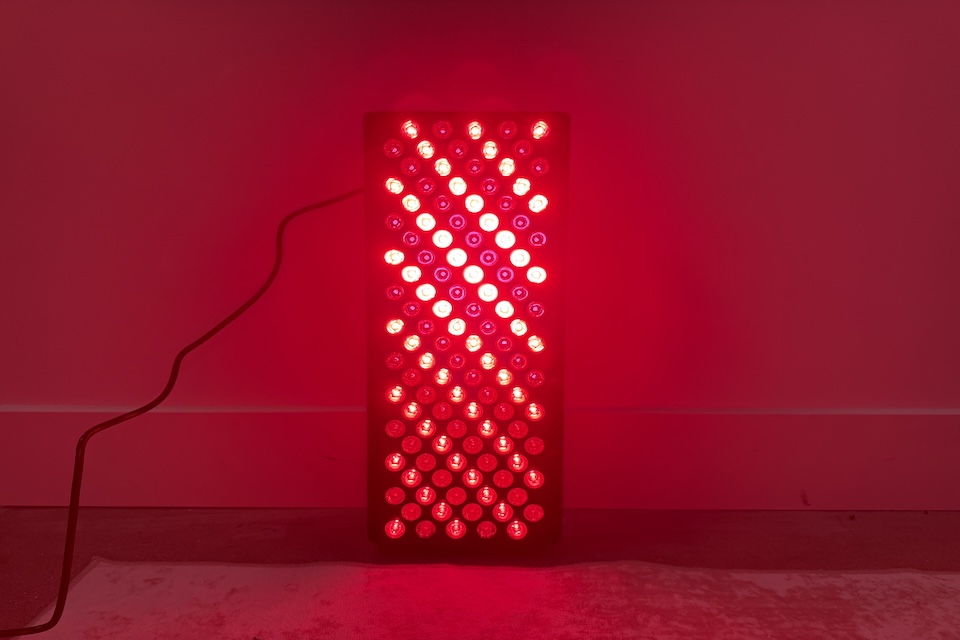
Riley rated effectiveness a 4 out of 5 at this stage, as she would have liked to test the panel for several months to gauge true results. That said, she enjoyed her experience with this product. Riley gave the value a 4 out of 5 score, saying, “It’s about $300 on Amazon, which seems like excellent value to me, considering many RLT therapy panels can go for thousands.” That said, she acknowledges that some users may see the hanging feature as a plus even though it was a con for her, personally.
The warranty and returns earned a 5 out of 5, since the device comes with a lifetime warranty, but you must register within 14 days of receiving the product to be eligible. It’s sold through Amazon, which means you get 30 day returns and financing.
Riley also gave customer experience a 5 out of 5. “Amazon is easy to work with, providing quick and reliable shipping and excellent customer service,” she said, also noting that the product has about 4.6 out of 5 stars based on 762 customer reviews as of this writing, which reinforces the impression that the BioHeal Plus overdelivers for its price bracket. Together, those scores and quotes make it a standout choice for anyone who wants a serious, high‑power panel without crossing the $1,000 line.
What is a Red Light Therapy Panel?
A red light therapy panel is a device that exposes your skin to concentrated red and near‑infrared light, usually using arrays of LEDs mounted on a flat surface that you position near your body. Panels range from small desktop units to large, door‑sized systems, and typically emit wavelengths in the 600–700 nanometers (red) and 800–900 nanometers (near‑infrared) range. People use these devices for skin concerns, muscle and joint recovery, and inflammation reduction, though large, well‑controlled studies are still limited, and results may vary.
In home use, you usually place the panel at a set distance from your skin (often six to 18 inches), expose a target area for several minutes, and repeat sessions multiple times per week. As red and near‑infrared light are non‑ionizing and used at relatively low power, panels are considered noninvasive and generally well tolerated, though folks with light sensitivity, eye conditions, or certain medications may want to discuss the use of red light with your doctor first.
How We Tested and Selected the Best Red Light Therapy Panels
Choosing the best panel depends on what you care about most: ease of use and setup, irradiance and wavelengths, comfort and coverage, visible or perceived results over time, and how the price and warranty stack up against competing devices. For this guide, our team of testers used each panel at home, paying attention to specs and ease of use.
Ease of Use
Testers scored each device on a 1–5 scale for ease of use, looking at how quickly they could go from box to first session, how intuitive the controls were, and whether the mounting system made day‑to‑day use simple or frustrating. They noted whether a panel could stand on its own, needed to be hung with hardware, or had a more complex multi‑piece setup, and whether the on‑device interface (timers, modes, buttons) felt clear.
Those impressions heavily influenced the picks. For example, panels that testers described as “super easy to use” and effectively plug‑and‑play tended to score 4–5 for ease of use, while devices that required complicated pulley systems or multi‑step assembly landed closer to 3.
Irradiance and Frequency
Each device was scored on irradiance (how much power reaches the skin, in mW/cm²) and frequency/wavelengths (which colors of light it emits). For irradiance, testers considered readings and manufacturer specs in the context of typical therapeutic windows: many experts suggest effective ranges around 20–200 mW/cm² at the skin, with about 20–50 mW/cm² often cited for skin and anti‑aging, and higher doses sometimes used for deeper tissues.
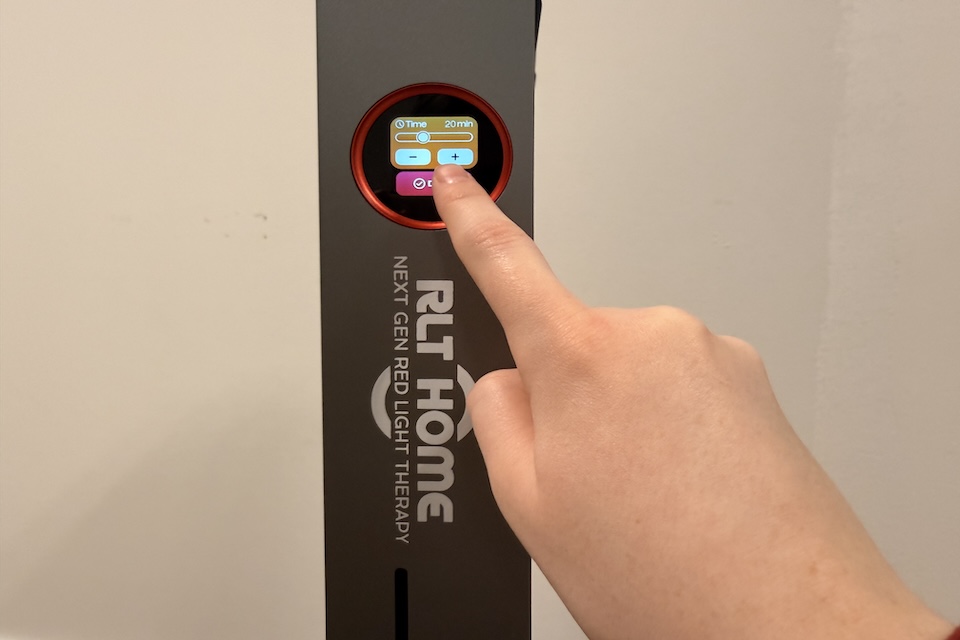
Panels that delivered robust output near the device (for example, >140–200 mW/cm² within a few inches) and maintained useful levels at realistic working distances tended to earn irradiance scores of 5 out of 5, especially when that power was paired with well‑studied wavelengths like 630–660 nanometers red and 810–850 nanometers near‑infrared. Frequency scores of 5 out of 5 generally went to devices offering both red and near‑infrared in those bands, while devices with only one band or less‑than‑ideal ranges scored lower.
Comfort and Coverage
Comfort and coverage scores reflected how the device actually felt and fit in real-world use. Testers evaluated whether the panels or pads could cover an entire target area (face, knee, back, or legs) and whether they could maintain that position comfortably for a full session. They also considered strap systems, mounting options, and whether devices stayed put without constant adjustment.
Devices that were described as “super easy to use,” “comfortable to wear,” or able to cover a whole face or large muscle group without hot spots or awkward angles tended to receive 4–5 out of 5 for coverage and ease of use. Products that required leaning panels against walls, fiddling with complicated band systems, or that felt unstable during use were scored lower, usually around 3 out of 5.
Perceived Results
Because red light benefits can take time, testers focused on how their skin, muscles, or joints felt after repeated sessions over the test period, while flagging when results were too early to call. They noted changes such as less muscle soreness after workouts, reduced redness, or skin that looked brighter or more even, and scored effectiveness on a 1–5 scale accordingly.
When results were inconclusive due to short testing windows, testers often kept effectiveness around 3 out of 5, even if the device seemed promising, and noted that they would want more long‑term data. Devices that produced clear improvements in soreness, redness, or skin tone over the test period were more likely to receive 4–5 out of 5 in this category.
Value
Value scores balanced price, performance, build quality, warranty, and ease of use. Testers compared each panel’s cost to its irradiance, wavelengths, accessories, and warranty/return policies, then assigned a 1–5 value rating. A reasonably priced panel with good power, dual red/near-infrared wavelengths, and a solid warranty (for example, three years or more, or lifetime with registration) generally scored 4–5 out of 5.
Pro Tip
Pair the use of a home sauna with a quality red light therapy device three to four evenings per week, using the sauna first for 15–20 minutes to boost circulation and loosen tight muscles, then following with 10–20 minutes of targeted red light to reduce inflammation and speed recovery in specific muscle groups.
For athletes or cold-climate folks with an outdoor sauna, schedule post-workout sessions within two to four hours of training so the outdoor heat plus red light can work together to drive blood flow, support mitochondrial energy production, and shorten downtime between hard workouts.
How to Find the Best Red Light Therapy Panel for You
Different people use red light therapy panels for different reasons: skin health, pain relief, athletic recovery, or general wellness. Your ideal device depends on your goals, your space and routine, and how much setup and intensity you are comfortable with.
Your Needs
Start by clarifying what you want to make an impact on: fine lines and texture, acne, redness, joint or muscle pain, or broader whole‑body wellness. People with active skin conditions (such as severe rosacea, psoriasis flares, or very photosensitive skin) or those taking photosensitizing medications should check in with a dermatologist or healthcare professional before adding a panel to their routine, since light exposure can sometimes aggravate sensitive skin or interact with treatments.

If your focus is mostly cosmetic (tone, radiance, mild wrinkles), a smaller panel that targets the face, neck, and chest is often enough. For body pain, sports recovery, or larger surface areas, a bigger panel or flexible pad that can cover the back, hips, or legs will be more practical.
Light Specifications
For most home users, it is worth looking for panels that include red wavelengths in roughly the 630–670 nm range and near‑infrared around 800–880 nm, since these bands are among the most commonly studied for skin and musculoskeletal benefits. As a rule of thumb, panels that deliver roughly 20–50 mW/cm² at the skin are often used for skin and anti‑aging, while higher doses up to about 100–200 mW/cm² can be useful for deeper tissues, as long as session times are adjusted appropriately.
When thinking about “top tier” specs (what might justify a 5/5 rating), look for:
- Clear disclosure of wavelengths (not just “red” or “infrared”)
- Published irradiance values at realistic distances (for example, 6–12 inches)
- Options to use red alone, near‑infrared alone, or both together, if you want flexibility for skin vs. deeper-tissue sessions
Some panels also include blue, amber, or other colors. Blue light around 415–480 nm is often used for acne, but can be irritating for some skin types and is not essential if your main concern is wrinkles or joint pain.
Tech Features
Practical features make the difference between a device you actually use and one that lives in a closet. Wired panels that plug into the wall are usually more powerful and more affordable; they are good for people who plan to use a panel in the same place every day. Wireless or battery-powered devices are more convenient and portable but often cost more per unit of power.
Timer options and presets also matter. Many good panels offer built‑in timers (for example, five to 20 minutes), plus modes tailored to “skin” vs. “pain” or similar use cases, which limits the guesswork and helps you avoid overuse. When comparing models, consider whether you want:
- Simple on/off and manual timing, or
- Pre‑programmed modes with automatic shutoff and possibly pulsing options
Benefits of Red Light Therapy Panels
Red light therapy panels are appealing because they essentially let you bring a spa or clinic‑style treatment into your home with a relatively small time commitment per session. While research is still evolving, several potential benefits are under active study. Here are some benefits some users have experienced:
- Skin quality: Many people use panels to help with fine lines, tone, and texture; some studies suggest red light can support collagen production and reduce signs of photoaging over time.
- Acne and redness: Panels that include red and sometimes blue light may help reduce mild acne lesions and calm some forms of redness by modulating inflammation and bacteria on the skin.
- Muscle and joint comfort: Near‑infrared wavelengths can penetrate more deeply into tissues and are being studied for relief of muscle soreness, joint pain, and recovery after exercise.
- Wound healing support: Red and near‑infrared light have been investigated for supporting wound healing and tissue repair in certain settings, though protocols and outcomes differ and not all uses are established standard care.
Frequently asked questions
What is the best red light therapy panel?
The best panel depends on your priorities. Someone focused on facial anti‑aging might prefer a compact, high‑irradiance panel or mask with strong red and near‑infrared output, while someone dealing with back pain or full‑body recovery might want a larger panel or pad that covers more area. Key factors to weigh are wavelengths, irradiance, coverage, ease of use, and warranty relative to price.
What is the most effective form of red light therapy?
Effectiveness depends on matching the delivery method to your goal. Panels are more efficient for larger areas of skin, muscles, and joints; smaller handheld or wearable devices can be better for localized spots but cover less area at once.
How do I use a red light therapy panel?
Typically, you position the panel at the recommended distance (often six to 18 inches), clean the skin, and expose the target area for a set time, such as five to 20 minutes per session, a few times per week. Many manufacturers advise starting with shorter sessions and increasing gradually, and using eye protection if the panel is very bright or used close to the face. Always follow the specific instructions and contraindications provided with your device, and check with a clinician if you have underlying health conditions or concerns.