
• Home
  • Latest
  • Fortune 500
  • Finance
  • Tech
  • Leadership
  • Lifestyle
  • Rankings
  • Multimedia
Some Fortune Crypto pricing data is provided by Binance.
EconomyMarkets

Scott Galloway wants the stock market to crash. Gen Z is already betting like it will

Nick Lichtenberg
By
Nick Lichtenberg
Nick Lichtenberg
Business Editor
Down Arrow Button Icon
Nick Lichtenberg
By
Nick Lichtenberg
Nick Lichtenberg
Business Editor
Down Arrow Button Icon
March 17, 2026, 1:54 PM ET
broker
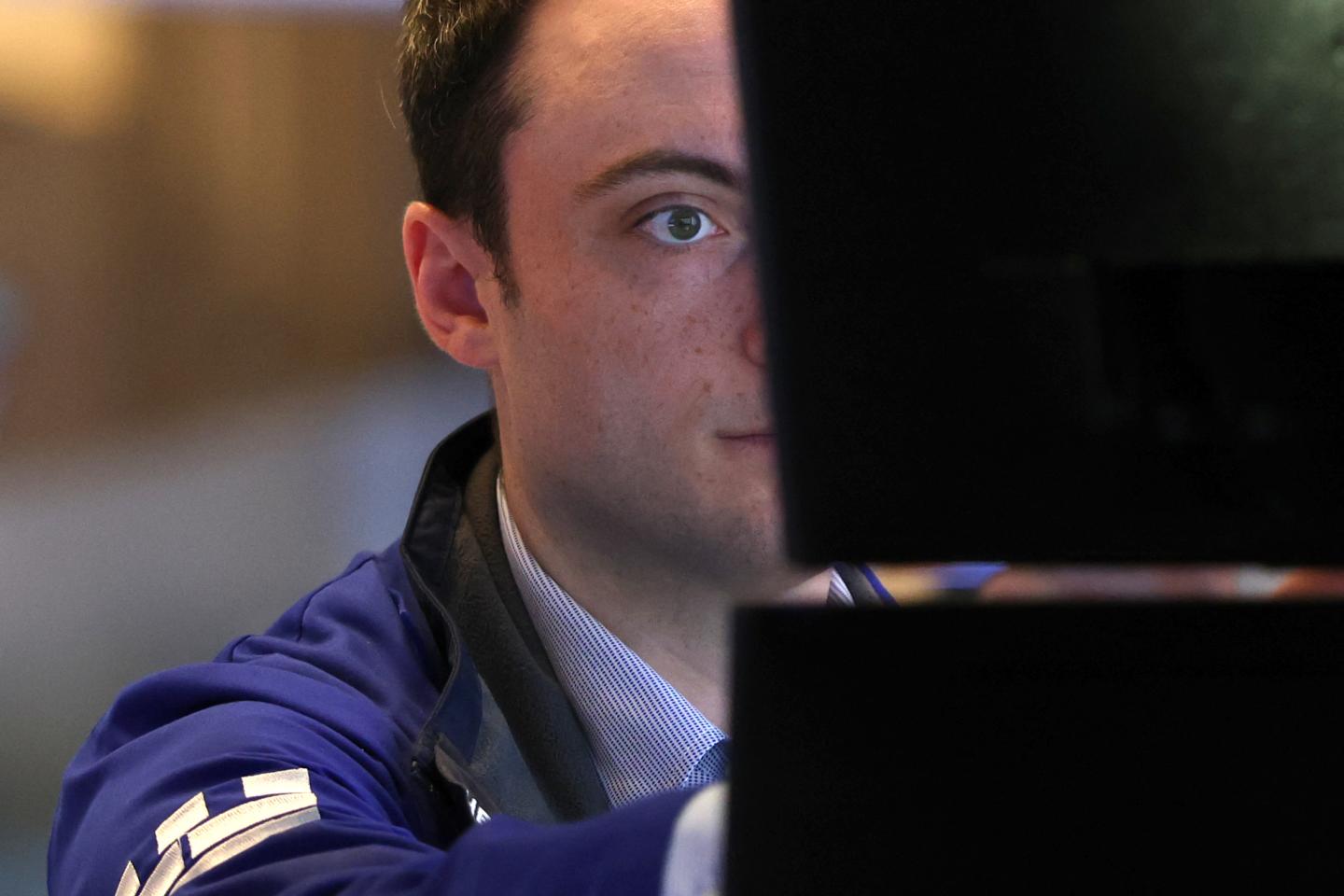
A trader works on the floor of the New York Stock Exchange (NYSE) at the opening bell in New York on March 16, 2026. Wall Street stocks opened higher early Monday as oil prices eased, with energy markets still in turmoil due to the US-Israeli war on Iran and a US central bank meeting later this week. TIMOTHY A. CLARY / AFP via Getty Images
Add Fortune on Google for similar content.

Scott Galloway doesn’t want the markets to go up. He said so out loud, live at South by Southwest, and the audience—skewing young—didn’t boo him. They cheered.

Recommended Video

“At some point,” Galloway told the crowd during a taping of the Prof G Markets podcast on Monday, “We have to stop propping up the markets with young people’s credit cards.”

It was a throwaway line dropped near the end of a longer riff about war, oil prices, and the mechanics of economic decay. But it landed like a thesis statement—and it inadvertently explained the entire psychology behind Gen Z’s flight into prediction markets, meme stocks, crypto, and speculative gambling.

Here’s Galloway’s argument, stripped to its core: for the last 40 years, every time a genuine economic shock threatened to destroy capital—the dot-com crash, the 2008 financial crisis, the COVID collapse—the U.S. government intervened. Not to protect workers. To protect assets. To protect owners. The debt and stimulus that financed those rescues lands on younger generations.

“Rather than let assets collapse and take money from the owners and give advantage back to the earners,” Galloway said, speaking directly to Gen Z, “we’re going to pull out your credit card and ensure, in the form of debt and stimulus, that I stay rich.”

“The reason I’m economically secure,” he explained, goes back to the 2008 collapse. Yes, the government bailed out the banks, but they let the markets collapse, and as a result Galloway said he got to buy stock in Apple, Amazon, and Netflix for between $8 to $12 per share each. Looking at today’s market, he asked, “Where do you find value right now?” Gen Z already knows the answer—and it’s not in equities.

The Dow and S&P as proxies for wealth

The Dow and the S&P, Galloway argued, are not indicators of economic health. They are “effectively a proxy for how the rich are doing. And spoiler alert—they’re doing really well.” A market correction, Galloway said, would be a feature, not a bug—a recalibration in which housing prices would fall, stocks would become affordable, and capital flows would go back from owners to earners.

New data released this month by Northwestern Mutual found that nearly a third of Gen Z investors have been exposed to prediction markets, and the cohort leads all generations in meme coin activity and usage of speculative platforms like Polymarket. The study attributed the trend to a belief that previous rules of growth and finance broke down creating a generation of investors who suspected market manipulation and tried to seek better returns in new markets. Bloomberg, surveying the same data, called it “financial nihilism.”

But nihilism implies irrationality. What Galloway described at SXSW is the rational engine underneath the behavior. If the traditional system is structurally designed to enrich those who already own assets — and if every crash is backstopped before young buyers can get in at the bottom — then the conventional playbook isn’t just unappealing. It’s a trap. Prediction markets, meme coins, and speculative bets aren’t signs of recklessness. They are the logical response of a generation that has concluded the casino is rigged and decided to find a different one.

Intergenerational wealth transfer

To be sure, not all of it is rational. Gen Z also leads all generations in sports betting participation, online casino usage, and scratch ticket purchases—not as defensibly rational as other alternative investments. And Galloway’s argument overlooks the fact that the humble index fund, boring as it sounds, has still compounded at roughly 10% annually over the long run, through every bailout and moral hazard Galloway has catalogued.

Still, Galloway is right that the intergenerational wealth transfer is real, that bailouts produce moral hazard, and that young people have been handed an objectively harder economic hand than their parents. All of that is true and worth saying loudly.

The moral hazard Galloway decries at the institutional level has been perfectly replicated at the retail level. When banks learn that catastrophic risk-taking carries no real consequence, they take more of it. When a generation watches that dynamic play out across three major crises—with the government each time choosing to protect portfolios over people—they draw the obvious inference: downside risk is something the system absorbs for the already-wealthy, and the only way to break through is to bet big and early. Polymarket is, in a sense, the free-market correction that fiscal and monetary policy has refused to allow.

Galloway has argued separately that for the first time in American history, a 30-year-old is not doing as well economically as their parents were at the same age—and that this intergenerational wealth gap is the root cause of the political and social volatility now convulsing the country. ​

“A certain amount of disruption and drawdowns in the market is a healthy thing,” Galloway said at SXSW, “that transfers and seeds power, leverage, and capital back from owners to earners.”

Galloway is right. They just stopped waiting for the market to do it on its own—and opened a Polymarket tab instead.

Subscribe to Fortune Gulf Brief. Every Tuesday, this new newsletter delivers clear-eyed, authoritative intelligence on the deals, decisions, policies, and power shifts shaping one of the world’s most consequential regions, written for the people who need to act on it. Sign up here.
About the Author
Nick Lichtenberg
By Nick LichtenbergBusiness Editor
LinkedIn icon

Nick Lichtenberg is business editor and was formerly Fortune's executive editor of global news.

See full bioRight Arrow Button Icon
Add Fortune on Google for similar content.

Latest in Economy

Finance
Lorem ipsum dolor sit amet, consectetur adipiscing elit, sed do eiusmod tempor incididunt ut labore et dolore magna aliqua. Ut enim ad minim veniam
By Fortune Editors
October 20, 2025
Finance
Lorem ipsum dolor sit amet, consectetur adipiscing elit, sed do eiusmod tempor incididunt ut labore et dolore magna aliqua. Ut enim ad minim veniam
By Fortune Editors
October 20, 2025
Finance
Lorem ipsum dolor sit amet, consectetur adipiscing elit, sed do eiusmod tempor incididunt ut labore et dolore magna aliqua. Ut enim ad minim veniam
By Fortune Editors
October 20, 2025
Finance
Lorem ipsum dolor sit amet, consectetur adipiscing elit, sed do eiusmod tempor incididunt ut labore et dolore magna aliqua. Ut enim ad minim veniam
By Fortune Editors
October 20, 2025
Finance
Lorem ipsum dolor sit amet, consectetur adipiscing elit, sed do eiusmod tempor incididunt ut labore et dolore magna aliqua. Ut enim ad minim veniam
By Fortune Editors
October 20, 2025
Finance
Lorem ipsum dolor sit amet, consectetur adipiscing elit, sed do eiusmod tempor incididunt ut labore et dolore magna aliqua. Ut enim ad minim veniam
By Fortune Editors
October 20, 2025

Most Popular

Finance
Lorem ipsum dolor sit amet, consectetur adipiscing elit, sed do eiusmod tempor incididunt ut labore et dolore magna aliqua. Ut enim ad minim veniam
By Fortune Editors
October 20, 2025
Finance
Lorem ipsum dolor sit amet, consectetur adipiscing elit, sed do eiusmod tempor incididunt ut labore et dolore magna aliqua. Ut enim ad minim veniam
By Fortune Editors
October 20, 2025
Finance
Lorem ipsum dolor sit amet, consectetur adipiscing elit, sed do eiusmod tempor incididunt ut labore et dolore magna aliqua. Ut enim ad minim veniam
By Fortune Editors
October 20, 2025
Finance
Lorem ipsum dolor sit amet, consectetur adipiscing elit, sed do eiusmod tempor incididunt ut labore et dolore magna aliqua. Ut enim ad minim veniam
By Fortune Editors
October 20, 2025
Finance
Lorem ipsum dolor sit amet, consectetur adipiscing elit, sed do eiusmod tempor incididunt ut labore et dolore magna aliqua. Ut enim ad minim veniam
By Fortune Editors
October 20, 2025
Finance
Lorem ipsum dolor sit amet, consectetur adipiscing elit, sed do eiusmod tempor incididunt ut labore et dolore magna aliqua. Ut enim ad minim veniam
By Fortune Editors
October 20, 2025
Fortune Secondary Logo
Rankings
  • 100 Best Companies
  • Fortune 500
  • Global 500
  • Fortune 500 Europe
  • Most Powerful Women
  • World's Most Admired Companies
  • See All Rankings
  • Lists Calendar
Sections
  • Finance
  • Fortune Crypto
  • Features
  • Leadership
  • Health
  • Commentary
  • Success
  • Retail
  • Mpw
  • Tech
  • Lifestyle
  • CEO Initiative
  • Asia
  • Politics
  • Conferences
  • Europe
  • Newsletters
  • Personal Finance
  • Environment
  • Magazine
  • Education
Customer Support
  • Frequently Asked Questions
  • Customer Service Portal
  • Privacy Policy
  • Terms Of Use
  • Single Issues For Purchase
  • International Print
Commercial Services
  • Advertising
  • Fortune Brand Studio
  • Fortune Analytics
  • Fortune Conferences
  • Business Development
  • Group Subscriptions
About Us
  • About Us
  • Press Center
  • Work At Fortune
  • Terms And Conditions
  • Site Map
  • About Us
  • Press Center
  • Work At Fortune
  • Terms And Conditions
  • Site Map
  • Facebook icon
  • Twitter icon
  • LinkedIn icon
  • Instagram icon
  • Pinterest icon

Latest in Economy

One chart explains the economy’s terrible baby boomer hangover, Gen X’s invisibility, and millennial and Gen Z irrelevance
Economybaby boomers
One chart explains the economy’s terrible baby boomer hangover, Gen X’s invisibility, and millennial and Gen Z irrelevance
By Tristan BoveJune 26, 2026
11 hours ago
gavin
PoliticsTaxes
Newsom calls for a national billionaires’ tax — just not the one his state’s voters are about to pass
By Jonathan J. Cooper and The Associated PressJune 26, 2026
12 hours ago
b
PoliticsTaxes
After flirting with Gavin Newsom rollback idea, union is ‘all in’ on full billionaires’ tax for California
By Sophie Austin and The Associated PressJune 26, 2026
12 hours ago
Current price of oil as of June 26, 2026
Personal FinanceOil
Current price of oil as of June 26, 2026
By Joseph HostetlerJune 26, 2026
15 hours ago
The New York Stock Exchange is seenduring morning trading on May 26, 2026 in New York City.
EconomyConsumer Spending
The richest 20% are the only ones powering the U.S. economy, says top economist, but their prospects are entirely reliant on teetering stock prices
By Eleanor PringleJune 26, 2026
16 hours ago
Photo: Sam Altman
EconomyMarkets
‘Memory supply crisis’: Wall Street triggers huge selloff in fear of looming chip shortages
By Jim EdwardsJune 26, 2026
17 hours ago

Most Popular

MacKenzie Scott alone accounted for one-third of America's $19.2 billion in megagifts last year
Success
MacKenzie Scott alone accounted for one-third of America's $19.2 billion in megagifts last year
By Sydney LakeJune 25, 2026
2 days ago
Now worth $200 million, Sarah Jessica Parker credits being ‘one of eight kids that struggled financially’ for her hunger, ambition, and work ethic
Success
Now worth $200 million, Sarah Jessica Parker credits being ‘one of eight kids that struggled financially’ for her hunger, ambition, and work ethic
By Orianna Rosa RoyleJune 24, 2026
3 days ago
Ray Dalio says the U.S. just had its 'Suez moment'—and history says what comes next could end an empire
Economy
Ray Dalio says the U.S. just had its 'Suez moment'—and history says what comes next could end an empire
By Nick LichtenbergJune 26, 2026
20 hours ago
The bond market knows something about the $39 trillion national debt that Washington doesn’t
Economy
The bond market knows something about the $39 trillion national debt that Washington doesn’t
By Eva RoytburgJune 25, 2026
1 day ago
Trump turns on Big Oil donors who spent nearly $100 million to get him elected—now he wants the DOJ to investigate them for price gouging
Economy
Trump turns on Big Oil donors who spent nearly $100 million to get him elected—now he wants the DOJ to investigate them for price gouging
By Tristan BoveJune 25, 2026
1 day ago
Current price of oil as of June 25, 2026
Personal Finance
Current price of oil as of June 25, 2026
By Joseph HostetlerJune 25, 2026
2 days ago

© 2026 Fortune Media IP Limited. All Rights Reserved. Use of this site constitutes acceptance of our Terms of Use and Privacy Policy | CA Notice at Collection and Privacy Notice | Do Not Sell/Share My Personal Information
FORTUNE is a trademark of Fortune Media IP Limited, registered in the U.S. and other countries. FORTUNE may receive compensation for some links to products and services on this website. Offers may be subject to change without notice.