• Home
  • Latest
  • Fortune 500
  • Finance
  • Tech
  • Leadership
  • Lifestyle
  • Rankings
  • Multimedia
Economy

Trump’s tariffs are a ‘dirty tax’ that will make the $38.6 trillion national debt crisis even worse over the long term, top analyst says

Nick Lichtenberg
By
Nick Lichtenberg
Nick Lichtenberg
Business Editor
Down Arrow Button Icon
Nick Lichtenberg
By
Nick Lichtenberg
Nick Lichtenberg
Business Editor
Down Arrow Button Icon
February 19, 2026, 9:50 AM ET
trump
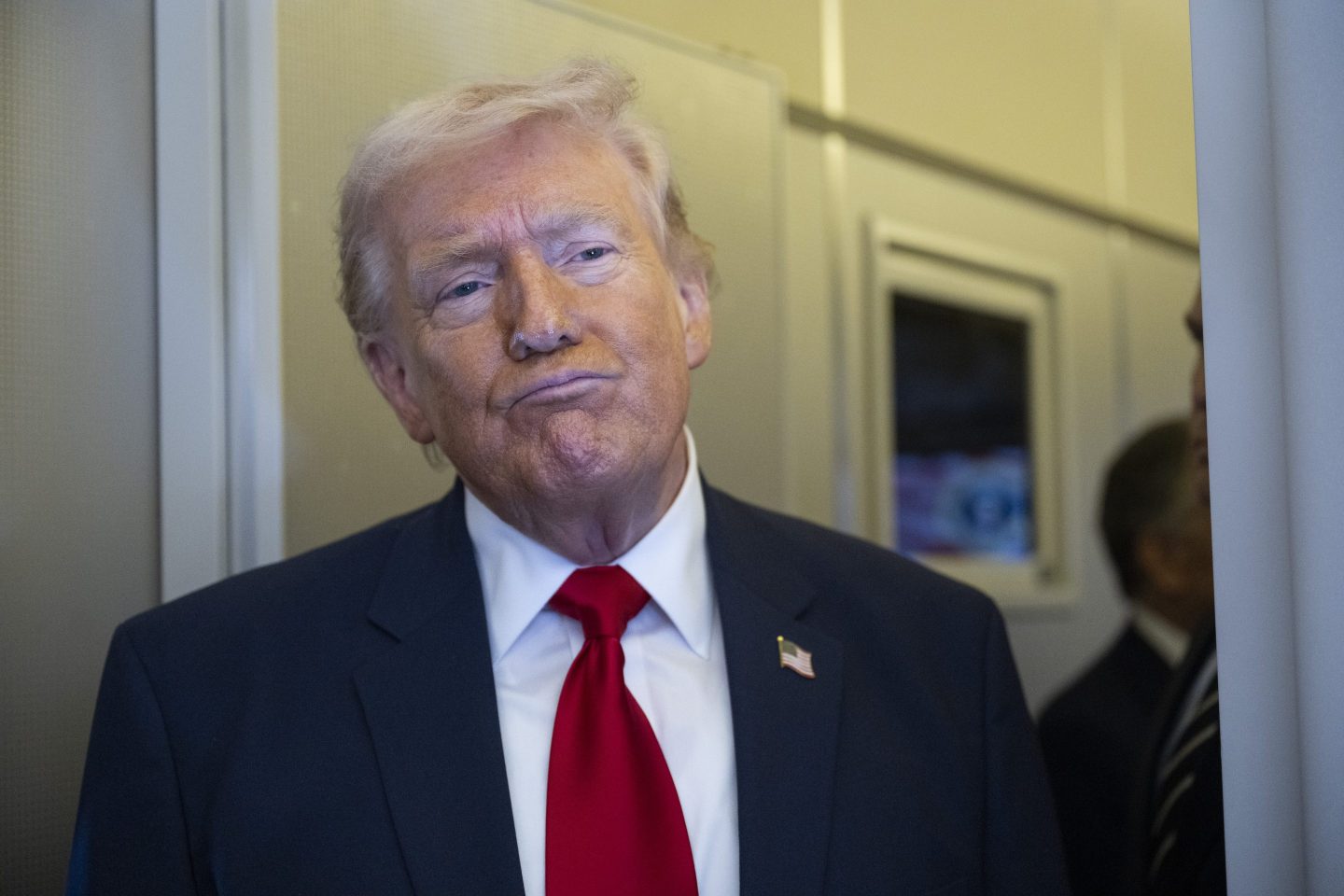
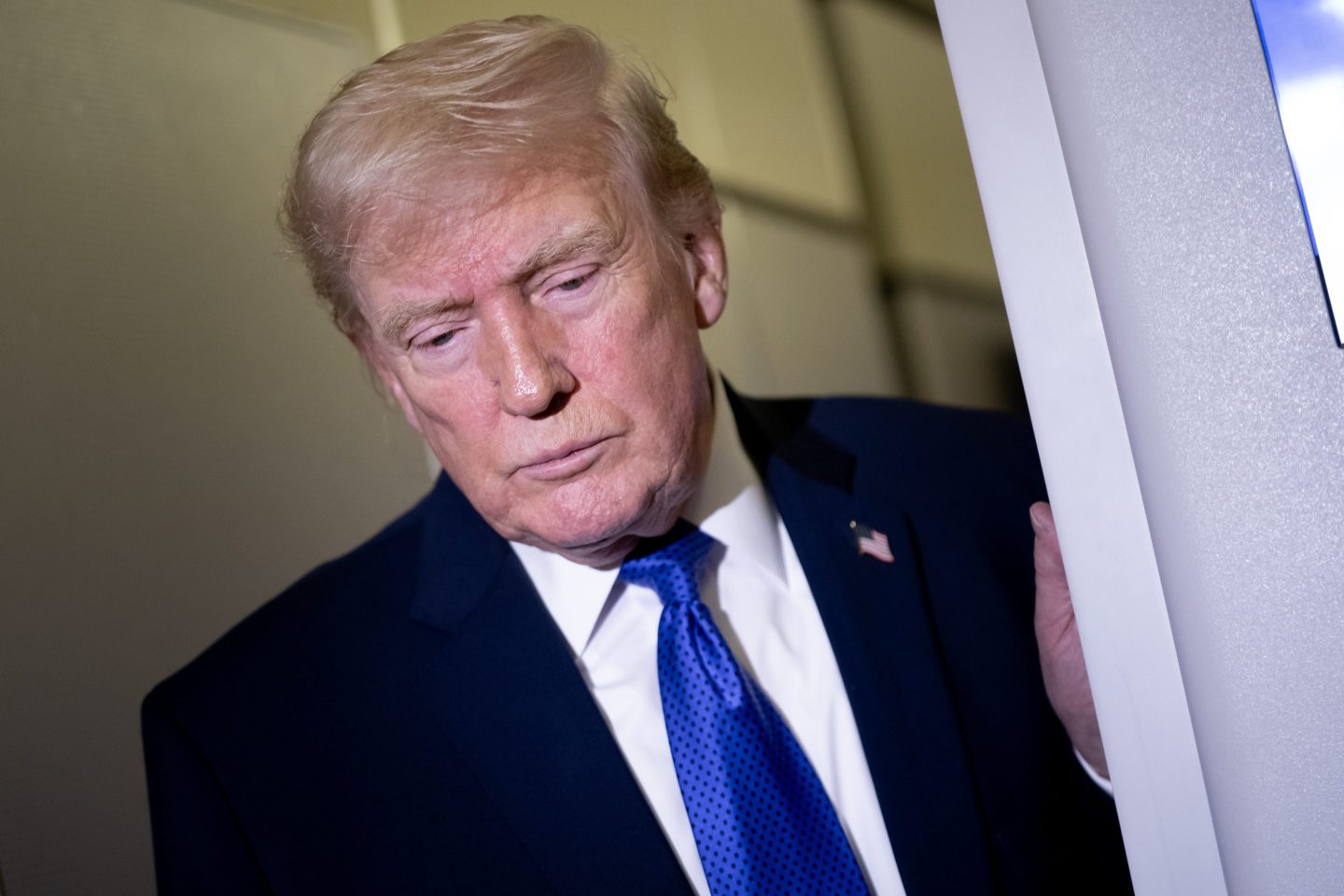
President Donald Trump on Feb. 16, 2026, en route to Washington, D.C. Nathan Howard—Getty Images

Kent Smetters, faculty director of the Penn Wharton Budget Model, is challenging the narrative that tariffs are a tool for protecting domestic industry. In a recent interview with Fortune, Smetters held forth on what he said was his long-held view that broad-based tariffs are a “dirty VAT” (value-added tax)—a policy he believes is significantly more damaging to the U.S. economy than traditional tax increases.

Recommended Video

While economists generally view a broad-based, flat VAT as an efficient method for raising government revenue, Smetters distinguishes tariffs as a “dirty” variation because they are far less uniform. A standard VAT applies broadly, distorting decisions primarily between spending now versus saving for later. Tariffs, however, target specific goods, causing consumers and businesses to shift behavior in inefficient ways to avoid the tax.

Even more, Smetters said, despite the tariffs being pitched as a deficit-reduction tool that will bring in revenue that makes a material difference on the United States’ $38.6 trillion national debt, he sees it another way.

“We have a lot of debt, and we are going to be floating more and more debt along our current baseline,” Smetters said, adding he sees a future ahead in which investors demand a higher return to keep investing in the U.S., and a “feedback effect” that will just keep driving the debt higher, far into the future.

The Supreme Court has been weighing the legality of many of Trump’s tariffs since hearing arguments in November, with several Trump-appointed justices having sharp wording on the issue. Their decision may come down as soon as Friday.

The ‘corporate tax’ in disguise

A central flaw in the tariff strategy, according to Smetters, is a misunderstanding of what America actually imports. He notes 40% of imports are not final goods destined for store shelves, but intermediate inputs used by U.S. companies to manufacture their own products. Consequently, tariffs act as a tax on American producers, raising their costs and making them less competitive globally.

“The idea that this is pro-American is actually just the opposite,” Smetters said. “It hurts American manufacturers.” He cited the example of companies like Deere, arguing the U.S. economy benefits when such firms focus on high-margin intellectual property rather than producing low-margin components like screws or steel strips. By taxing those inputs, the policy effectively penalizes domestic production.

Deere has repeatedly quantified tariffs as a major cost item, revealing roughly half a billion dollars worth of costs for the full 2025 fiscal year and projecting a $1.2 billion hit for 2026. Management has described tariffs (on metals and specific imported components) as causing “margin pressures” and weaker operating profits, even when revenue has held up. To Smetters’s point, Deere has evaluated and renegotiated supply contracts and considered shifting some sourcing and production footprints to reduce tariff exposure and input‑cost increases.

Americans shouldn’t want Deere to be sourcing steel and screws, he argued.

“That’s really low-margin stuff,” he said. “We want them to focus on the really high-margin intellectual property that they do.” He added he thinks this is “really missing” from the wider discourse.

Long-term debt spiral

Smetters shared Penn Wharton Budget Model projections showing that while the immediate impact of tariffs might seem manageable—potentially reducing GDP by only 0.1% in the first year—the long-term outlook is grim. Smetters projected a GDP reduction of roughly 2.5% over 30 years, considering the impact on the debt this dirty tax would add through escalating debt interest payments.

The primary driver of this decline is this “massive feedback effect” on U.S. debt. As American companies become less efficient and the government floats more debt, Smetters explained global investors will demand a higher return (or risk premium) to hold U.S. Treasuries. In that sense, the tariffs problem is really a national debt problem.

“Think about U.S. Treasury bonds,” he said, predicting investors in the U.S. will demand a higher return to invest. “What happens if the private market now has to pay a higher return to attract investments because it has higher costs?”

The only result, he said, is Treasuries will pay a higher yield to investors over a longer and longer time. The U.S. runs a real risk of turning into Japan—a favorite doomsday prediction from macro analysts such as Societe Generale’s Albert Edwards—which has been paying upwards of 25% of its revenue on interest payments since its stock-market bubble popped in the early 1990s. The U.S. is due to pay $1 trillion in interest payments next year, he noted, “and climbing.”

Worse than a corporate tax hike

To illustrate the inefficiency of tariffs, Smetters compared them to a hypothetical hike in the corporate income tax, which is typically considered the least efficient way to raise revenue. He estimates that to raise the same amount of revenue as the proposed tariffs, the U.S. would need to raise the corporate tax rate from 21% to 29%. However, the economic damage caused by the tariffs would be “2.5 times worse” than that corporate tax hike.

Smetters clarified that he’s not in favor of raising corporate income tax revenue—he’s not advocating for any policy in particular—but essentially he’s surprised that Trump has found a new form of the most inefficient tax increase possible: “Well, Trump just found a new one. It’s even more inefficient than that.”

Smetters noted a “destination-based” tax proposed in 2016 could have achieved similar revenue goals more efficiently. However, that proposal was effectively killed by major retailers, including Walmart, which feared it would raise their import costs. Instead, the U.S. is left with what Smetters calls a “dirty” alternative—a sales tax disguised as trade policy that risks hindering the very growth it promises to protect.


The Fortune 500 Innovation Forum will convene Fortune 500 executives, U.S. policy officials, top founders, and thought leaders to help define what’s next for the American economy, Nov. 16-17 in Detroit. Apply here.
About the Author
Nick Lichtenberg
By Nick LichtenbergBusiness Editor
LinkedIn icon

Nick Lichtenberg is business editor and was formerly Fortune's executive editor of global news.

See full bioRight Arrow Button Icon

Latest in Economy

Finance
Lorem ipsum dolor sit amet, consectetur adipiscing elit, sed do eiusmod tempor incididunt ut labore et dolore magna aliqua. Ut enim ad minim veniam
By Fortune Editors
October 20, 2025
Finance
Lorem ipsum dolor sit amet, consectetur adipiscing elit, sed do eiusmod tempor incididunt ut labore et dolore magna aliqua. Ut enim ad minim veniam
By Fortune Editors
October 20, 2025
Finance
Lorem ipsum dolor sit amet, consectetur adipiscing elit, sed do eiusmod tempor incididunt ut labore et dolore magna aliqua. Ut enim ad minim veniam
By Fortune Editors
October 20, 2025
Finance
Lorem ipsum dolor sit amet, consectetur adipiscing elit, sed do eiusmod tempor incididunt ut labore et dolore magna aliqua. Ut enim ad minim veniam
By Fortune Editors
October 20, 2025
Finance
Lorem ipsum dolor sit amet, consectetur adipiscing elit, sed do eiusmod tempor incididunt ut labore et dolore magna aliqua. Ut enim ad minim veniam
By Fortune Editors
October 20, 2025
Finance
Lorem ipsum dolor sit amet, consectetur adipiscing elit, sed do eiusmod tempor incididunt ut labore et dolore magna aliqua. Ut enim ad minim veniam
By Fortune Editors
October 20, 2025

Most Popular

Finance
Lorem ipsum dolor sit amet, consectetur adipiscing elit, sed do eiusmod tempor incididunt ut labore et dolore magna aliqua. Ut enim ad minim veniam
By Fortune Editors
October 20, 2025
Finance
Lorem ipsum dolor sit amet, consectetur adipiscing elit, sed do eiusmod tempor incididunt ut labore et dolore magna aliqua. Ut enim ad minim veniam
By Fortune Editors
October 20, 2025
Finance
Lorem ipsum dolor sit amet, consectetur adipiscing elit, sed do eiusmod tempor incididunt ut labore et dolore magna aliqua. Ut enim ad minim veniam
By Fortune Editors
October 20, 2025
Finance
Lorem ipsum dolor sit amet, consectetur adipiscing elit, sed do eiusmod tempor incididunt ut labore et dolore magna aliqua. Ut enim ad minim veniam
By Fortune Editors
October 20, 2025
Finance
Lorem ipsum dolor sit amet, consectetur adipiscing elit, sed do eiusmod tempor incididunt ut labore et dolore magna aliqua. Ut enim ad minim veniam
By Fortune Editors
October 20, 2025
Finance
Lorem ipsum dolor sit amet, consectetur adipiscing elit, sed do eiusmod tempor incididunt ut labore et dolore magna aliqua. Ut enim ad minim veniam
By Fortune Editors
October 20, 2025
Fortune Secondary Logo
Rankings
  • 100 Best Companies
  • Fortune 500
  • Global 500
  • Fortune 500 Europe
  • Most Powerful Women
  • Future 50
  • World’s Most Admired Companies
  • See All Rankings
Sections
  • Finance
  • Fortune Crypto
  • Features
  • Leadership
  • Health
  • Commentary
  • Success
  • Retail
  • Mpw
  • Tech
  • Lifestyle
  • CEO Initiative
  • Asia
  • Politics
  • Conferences
  • Europe
  • Newsletters
  • Personal Finance
  • Environment
  • Magazine
  • Education
Customer Support
  • Frequently Asked Questions
  • Customer Service Portal
  • Privacy Policy
  • Terms Of Use
  • Single Issues For Purchase
  • International Print
Commercial Services
  • Advertising
  • Fortune Brand Studio
  • Fortune Analytics
  • Fortune Conferences
  • Business Development
  • Group Subscriptions
About Us
  • About Us
  • Editorial Calendar
  • Press Center
  • Work At Fortune
  • Diversity And Inclusion
  • Terms And Conditions
  • Site Map
Fortune Secondary Logo
  • About Us
  • Editorial Calendar
  • Press Center
  • Work At Fortune
  • Diversity And Inclusion
  • Terms And Conditions
  • Site Map
  • Facebook icon
  • Twitter icon
  • LinkedIn icon
  • Instagram icon
  • Pinterest icon

Latest in Economy

A mother works on her computer on a couch with her child in the background.
Workplace CultureWomen
$683 billion in unpaid labor: How companies like Amazon, AARP, and Levi’s are easing the caregiving burden on women
By Jacqueline MunisMarch 12, 2026
2 hours ago
AsiaGovernment
Asia rolls out four-day weeks and work-from-home as emergency measures to solve a fuel crisis caused by Iran war
By Angelica AngMarch 11, 2026
8 hours ago
gas prices
EnergyIran
Top economist says Iran war could trigger an economic ‘butterfly effect’—and keep inflation elevated for years
By Jake AngeloMarch 11, 2026
16 hours ago
barrel
EnergyOil
Plastics, fertilizers, clothing, medicines and electronics: $100-a-barrel oil has huge downstream consequences
By André O. Hudson and The ConversationMarch 11, 2026
16 hours ago
U.S. President Donald Trump speaks to the Republican Members Issues Conference at Trump National Doral Miami on March 9, 2026 in Doral, Florida.
EconomyIncome inequality
It’s thanks to Social Security wealth inequality isn’t even worse, Wharton economist says. Trump’s policies will push it to insolvency in 6 years
By Tristan BoveMarch 11, 2026
16 hours ago
donald trump
EconomyDebt
The $38.9 trillion national debt is costing you thousands of extra dollars per year on your mortgage. Here’s how it adds up
By Jake AngeloMarch 11, 2026
19 hours ago

Most Popular

placeholder alt text
Economy
'This cannot be sustainable': The U.S. borrowed $50 billion a week for the past five months, the CBO says
By Eleanor PringleMarch 10, 2026
2 days ago
placeholder alt text
AI
'Proceed with caution': Elon Musk offers warning after Amazon reportedly held mandatory meeting to address 'high blast radius' AI-related incident
By Sasha RogelbergMarch 11, 2026
14 hours ago
placeholder alt text
Big Tech
Big tech has defeated everything for 30 years, but for the first time faces something it can't control: a jury
By Carolina Rossini and The ConversationMarch 10, 2026
2 days ago
placeholder alt text
Future of Work
Shark Tank's Kevin O'Leary doesn't care if you work from your basement. He just wants to know if you can ‘execute’
By Marco Quiroz-GutierrezMarch 10, 2026
2 days ago
placeholder alt text
Personal Finance
Retirees wait for the day they can sell their homes and cash in—but there's a secret Medicare 'trap' that could stop them in their tracks
By Sydney LakeMarch 11, 2026
1 day ago
placeholder alt text
Commentary
How the ultrawealthy use smartphone apps to avoid millions in taxes
By Jose AtilesMarch 11, 2026
24 hours ago

© 2026 Fortune Media IP Limited. All Rights Reserved. Use of this site constitutes acceptance of our Terms of Use and Privacy Policy | CA Notice at Collection and Privacy Notice | Do Not Sell/Share My Personal Information
FORTUNE is a trademark of Fortune Media IP Limited, registered in the U.S. and other countries. FORTUNE may receive compensation for some links to products and services on this website. Offers may be subject to change without notice.