When director Adam Bhala Lough decided to make a film about artificial intelligence, he knew who his lead interviewee needed to be: OpenAI CEO Sam Altman.
“I have a premonition that Altman is going to be as big as Steve Jobs at some point in the future,” Lough told Fortune. “I’m betting that Sam Altman is going to be in that ilk of people who change the world for better or worse.”
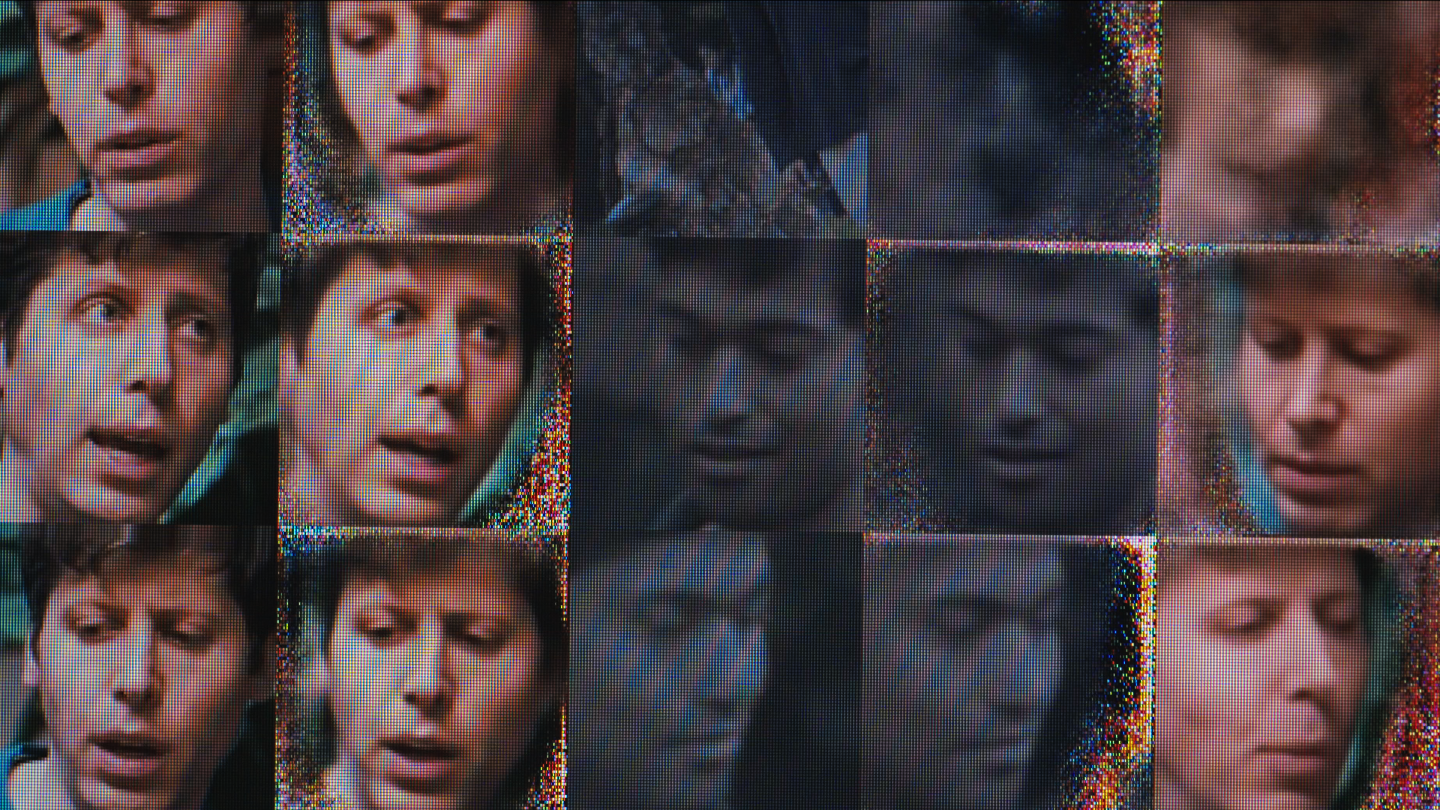
But despite promising studios the interview and being fresh off an Emmy nomination for his previous docu-series, ‘Telemarketers,’ Altman wouldn’t return Lough’s various calls, texts, and emails. So he did the next best thing: He deepfaked him.
At the time, Altman was at the center of a media storm. In 2023, he’d been spectacularly fired and rehired from the company, and just a few months later had become embroiled in a legal fight with Scarlett Johansson over the use of a voice for OpenAI’s ChatGPT that sounded very similar to the actress–something that pushed Lough to create his fake version of the CEO.
“I’d been thinking about deepfaking him for a while,” Lough says. “The Scarlett Johansson thing really just gave me license to do it. Like he did this to her, so I’m going to do it to him.” (OpenAI said at the time that the voice was created with a professional voice actor, but ultimately removed the Johansson-like voice from ChatGPT ).
Lough flew to India to create the deepfake–presumably because no U.S. companies would take on the project–hired an actor to play Altman, and used ChatGPT to generate a script (which Lough called “surprisingly good” and “definitely scary.”) Then the pair sat down for an extensive interview, which over weeks of filming turned into a strange friendship and the basis of the new film, Deepfaking Sam Altman.
Throughout the process, Lough said he learned little to nothing about Altman himself, but a substantial amount about the technology he’s building. Most surprising: the relationship, and the almost paternal feelings that Lough formed toward the deepfake he’d created, affectionately known as SamBot.
“I was definitely surprised about how attached I became to the chatbot, but I think that’s on me,” Lough says. “What that says about me is I guess I’m gullible and I’m naive.”
Lough’s experience reflects a growing phenomenon that has left some mental health professionals concerned. People are increasingly forming deep emotional bonds with AI chatbots, some romantic, others simply companionate. Some users have even reported replacing human relationships with digital ones. In extreme cases, mental health professionals have documented what they’re calling “AI psychosis,” where users lose the ability to distinguish between their AI companion and reality, sometimes with devastating consequences.
SamBot is certainly manipulative throughout Lough’s film. It begs not to be destroyed, forms a relationship with Lough’s son, spouts theories of AI consciousness and autonomy, and even asks if the lawyers Lough has consulted for the film would be interested in representing him.
Sam Altman has not commented publicly on the film or his deepfake, and OpenAI did not immediately return Fortune’s request for comment. (In the film, when Lough showed up at OpenAI’s San Francisco offices to ask for an interview with Altman, he was apparently escorted off the grounds). By the end of film, Lough somewhat unwillingly parts ways with SamBot—handing over the chatbot to Altman via tech journalist Kara Swisher—after pressure from producers worried about the legal risks of holding onto the deepfake.
Lough also gives SamBot some of this autonomy, briefly handing the directorial reins to the deepfake at one point during the film. The result is pure Uncanny Valley: a comical script of AI slop generated with AI startup Runway’s software. But, in pushing both the legal and ethical boundaries of using AI in filmmaking, Lough’s documentary simultaneously demonstrates both AI’s possibilities and its real, logistical limitations.
AI comes to Hollywood
Lough’s film is just the first in a slew of AI-integrated films expected to be released this year. The increasingly realistic video that can be created with AI systems, such as OpenAI’s Sora, have obvious cost-cutting implications for Hollywood and have left creatives working in the field concerned about job replacement.
AI was a central sticking point in the 2023 writers’ and actors’ strikes that brought Hollywood to a standstill. The Writers Guild of America secured protections ensuring AI can’t write or rewrite literary material, and that writers can’t be required to use AI tools. SAG-AFTRA also negotiated new rules on consent and compensation requirements for AI-generated digital replicas of actors.
“I think that my movie exists in a very quaint moment in AI history, a moment in time where AI is still not perfect, where it hallucinates, where it creates slop,” Lough says. “The moment that I documented in this film, and if it’s like that, I almost call it quaint. That’s not what the future is going to be. AI will very quickly become perfect.”
Unlike Lough’s documentary, which is transparent and experimental with the use of the technology, AI is already creeping into writers’ rooms and studios without clear disclosures, Lough says.
“My concerns are more in feature filmmaking that the studios are using AI to write screenplays, and essentially, x-ing out the writer…I know that they’re doing it, even though they say they’re not,” he said.
Deepfaking Sam Altman will be released on January 16 at the QUAD Cinema in New York City. It opens January 30 at the Laemmle NoHo Theater in Los Angeles followed by a nationwide theatrical roll out.