• Home
  • Latest
  • Fortune 500
  • Finance
  • Tech
  • Leadership
  • Lifestyle
  • Rankings
  • Multimedia

Trendingnow

1

After forcing workers back to the office, Goldman Sachs and JPMorgan Chase are now letting their staff work remotely—but only for the World Cup

2

Markets tumble worldwide as Fed resets expectations: $400 billion wiped off SpaceX stock

3

Current price of oil as of June 23, 2026

1

After forcing workers back to the office, Goldman Sachs and JPMorgan Chase are now letting their staff work remotely—but only for the World Cup

2

Markets tumble worldwide as Fed resets expectations: $400 billion wiped off SpaceX stock

3

Current price of oil as of June 23, 2026
CybersecurityAnimals

One way AI won’t ruin the world: tools to crack down on the $23 billion animal trafficking trade

By
Eve Bohnett
Eve Bohnett
and
The Conversation
The Conversation
Down Arrow Button Icon
By
Eve Bohnett
Eve Bohnett
and
The Conversation
The Conversation
Down Arrow Button Icon
February 8, 2026, 8:45 AM ET
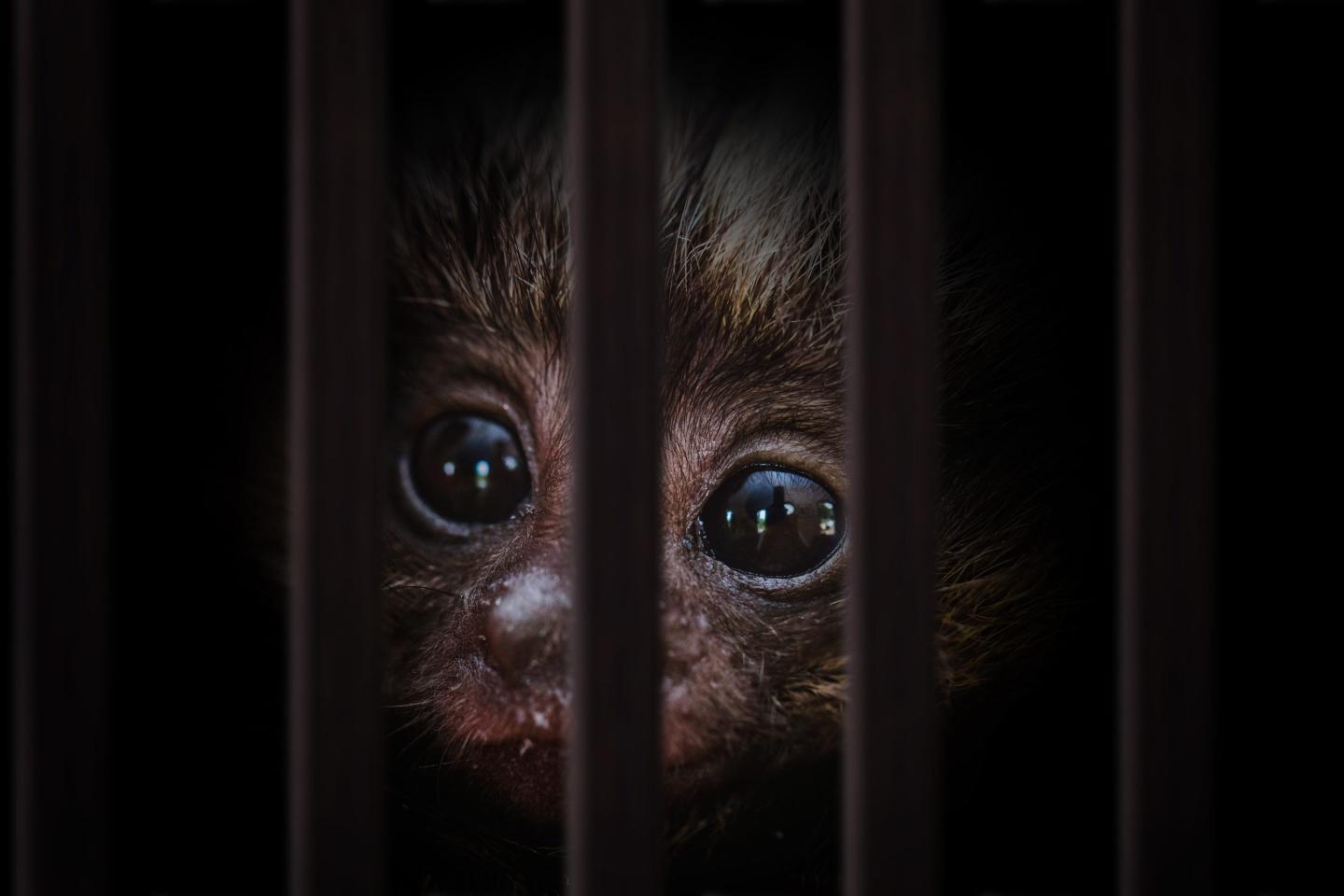
monkey
AI can make a difference.Getty Images
Add Fortune on Google for similar content.

In late 2025, Interpol coordinated a global operation across 134 nations, seizing roughly 30,000 live animals, confiscating illegal plant and timber products, and identifying about 1,100 suspected wildlife traffickers for national police to investigate.

Recommended Video

Wildlife trafficking is one of the most lucrative illicit industries worldwide. It nets between $7 billion and $23 billion per year, according to the Global Environment Facility, a group of nearly 200 nations as well as businesses and nonprofits that funds environmental improvement and protection projects.

People buy and sell a wide range of items, including live animals, plant powders and oils, ivory carvings and musical instruments.

Historically, enforcement has been largely reactive. There is so much global trade that fewer than 1 in 10 international cargo shipments of any kind are physically inspected. Traffickers also avoid detection by using false or generic names instead of proper species identification, employing coded language in online listings, rerouting shipments and shifting to different messaging platforms when enforcement pressure increases. Emerging digital tools are helping authorities link online monitoring, legal reference tools and on-the-ground investigations.

As a researcher at the University of Florida working at the intersection of conservation science and applied technology, I observed these advancements firsthand at an international meeting of governments and partner organizations under the Convention on International Trade in Endangered Species of Wild Fauna and Flora, often known by its acronym, CITES. This treaty – the cornerstone for international regulation of trade in endangered plants and animals – is enforced by national customs and wildlife agencies.

An image with artificial coloring shows the contents of a suitcase, including two long pointed solid objects.
An X-ray image of luggage shows rhinoceros horns packed in a bag. Interpol via AP

AI and digital tools for inspection

A huge challenge for officials seeking to prevent wildlife trafficking is knowing where to look – and then figuring out what they’ve found.

Cargo screening: Advanced X-ray screeners, similar to those used in airport security but designed for cargo, are being paired with software that helps spot unusual shapes or materials inside packages.

Trials conducted at major ports and mail processing centers in Australia have detected animals concealed in various kinds of shipments. The software does not identify species but highlights anomalies, helping inspectors decide which packages deserve closer inspection.

Assisted identification: A software program supported by the Chinese Academy of Sciences uses artificial intelligence to help identify the species of animals or animal parts found in shipments. Inspectors can use chatbot-style interfaces to describe what they have found to a system trained on technical documents with detailed descriptions of a wide range of species.

This type of work can help inspectors tell the difference between closely related species whose legal protections differ. For example, trade of African grey parrots (Psittacus erithacus) is strictly regulated. There are different, often less stringent protections for similar-looking species, such as the Timneh parrot (Psittacus timneh) and the brown-necked parrot (Poicephalus fuscicollis).

Portable DNA testing: Enforcement efforts don’t always happen in offices and labs. One company aims to provide small, handheld kits that can detect up to five species in about 20 or 30 minutes without needing traditional lab equipment. The kits show their results on a simple strip that changes color when the DNA of a particular species appears in a sample. Conceptually, it’s similar to a pregnancy test, which changes color when a hormone is detected.

Timber identification: Handheld scanners use software to quickly identify timber species by examining the internal cellular structure of the wood. This can help to distinguish protected hardwoods from legal alternatives in regions where illegal logging is widespread, such as South America, Southeast Asia and Africa.

Several animals are positioned in a wooden crate.
Taxidermied animals were among items seized in Argentina in an October 2023 anti-trafficking effort. Interpol via AP

Background research and risk profiling

Even before wildlife-related items appear at national borders, there can be signs of illegal trafficking that technology can help identify.

Monitoring online trade: Large volumes of wildlife trafficking now occur through online transactions. To avoid detection, sellers often use vague descriptions or coded language, such as listings that omit species names entirely or use emojis instead of words. Others hide key details in images or brief text that say little about what is being sold, even just showing a photo with no description.

Anti-trafficking organizations such as the World Wildlife Fund collaborate with tech companies to scan online listings using AI and content moderation tools. Between 2018 and 2023, the tech companies blocked or removed more than 23 million listings and accounts related to protected species, including live reptiles, birds and primates, and elephant products.

Early warnings from paperwork: Shipping documents often provide early warning signs of illegal trade. Wildlife enforcement officers, transport sector personnel, government tax officers and others are using new software tools to analyze millions of manifests and permits, looking for species names that aren’t usually traded on particular routes; shipments that are unusually heavy or underpriced; and complex routing through multiple transit countries. Instead of inspecting shipments at random, these systems help enforcement agencies identify the consignments most likely to contain illegal materials.

Two men look at a large bin holding tusks and other white-colored material.
Nigerian officials examine elephant tusks seized from wildlife traffickers and set for destruction. Emmanuel Osodi/Anadolu via Getty Images

Navigating wildlife trade laws: Enforcement officers have to navigate vast legal complexity. New tools seek to compile laws from multiple countries, helping inspectors understand regulations across export, transit and destination nations.

Using trade data to identify other species to monitor: Researchers at the University of Oxford have developed a method that uses wildlife trade records to identify thousands of highly vulnerable endangered species that could benefit from stricter international trade protections and stronger law enforcement to limit exploitation.

Taken together, these devices and systems extend – but do not replace – human expertise. They help officers decide which shipments or sites to focus on, identify what they find, and share information internationally. No single technology will end wildlife trafficking, but these digital tools can enable a shift from reactive enforcement toward proactive, coordinated action, helping authorities keep pace with adaptive criminal networks.

Eve Bohnett, Assistant Research Scholar, Center for Landscape Conservation Planning, University of Florida

This article is republished from The Conversation under a Creative Commons license. Read the original article.

The Conversation

Subscribe to Fortune Gulf Brief. Every Tuesday, this new newsletter delivers clear-eyed, authoritative intelligence on the deals, decisions, policies, and power shifts shaping one of the world’s most consequential regions, written for the people who need to act on it. Sign up here.
About the Authors
By Eve Bohnett
See full bioRight Arrow Button Icon
By The Conversation
See full bioRight Arrow Button Icon
Add Fortune on Google for similar content.

Latest in Cybersecurity

Finance
Lorem ipsum dolor sit amet, consectetur adipiscing elit, sed do eiusmod tempor incididunt ut labore et dolore magna aliqua. Ut enim ad minim veniam
By Fortune Editors
October 20, 2025
Finance
Lorem ipsum dolor sit amet, consectetur adipiscing elit, sed do eiusmod tempor incididunt ut labore et dolore magna aliqua. Ut enim ad minim veniam
By Fortune Editors
October 20, 2025
Finance
Lorem ipsum dolor sit amet, consectetur adipiscing elit, sed do eiusmod tempor incididunt ut labore et dolore magna aliqua. Ut enim ad minim veniam
By Fortune Editors
October 20, 2025
Finance
Lorem ipsum dolor sit amet, consectetur adipiscing elit, sed do eiusmod tempor incididunt ut labore et dolore magna aliqua. Ut enim ad minim veniam
By Fortune Editors
October 20, 2025
Finance
Lorem ipsum dolor sit amet, consectetur adipiscing elit, sed do eiusmod tempor incididunt ut labore et dolore magna aliqua. Ut enim ad minim veniam
By Fortune Editors
October 20, 2025
Finance
Lorem ipsum dolor sit amet, consectetur adipiscing elit, sed do eiusmod tempor incididunt ut labore et dolore magna aliqua. Ut enim ad minim veniam
By Fortune Editors
October 20, 2025

Most Popular

Finance
Lorem ipsum dolor sit amet, consectetur adipiscing elit, sed do eiusmod tempor incididunt ut labore et dolore magna aliqua. Ut enim ad minim veniam
By Fortune Editors
October 20, 2025
Finance
Lorem ipsum dolor sit amet, consectetur adipiscing elit, sed do eiusmod tempor incididunt ut labore et dolore magna aliqua. Ut enim ad minim veniam
By Fortune Editors
October 20, 2025
Finance
Lorem ipsum dolor sit amet, consectetur adipiscing elit, sed do eiusmod tempor incididunt ut labore et dolore magna aliqua. Ut enim ad minim veniam
By Fortune Editors
October 20, 2025
Finance
Lorem ipsum dolor sit amet, consectetur adipiscing elit, sed do eiusmod tempor incididunt ut labore et dolore magna aliqua. Ut enim ad minim veniam
By Fortune Editors
October 20, 2025
Finance
Lorem ipsum dolor sit amet, consectetur adipiscing elit, sed do eiusmod tempor incididunt ut labore et dolore magna aliqua. Ut enim ad minim veniam
By Fortune Editors
October 20, 2025
Finance
Lorem ipsum dolor sit amet, consectetur adipiscing elit, sed do eiusmod tempor incididunt ut labore et dolore magna aliqua. Ut enim ad minim veniam
By Fortune Editors
October 20, 2025
Fortune Secondary Logo
Rankings
  • 100 Best Companies
  • Fortune 500
  • Global 500
  • Fortune 500 Europe
  • Most Powerful Women
  • World's Most Admired Companies
  • See All Rankings
  • Lists Calendar
Sections
  • Finance
  • Fortune Crypto
  • Features
  • Leadership
  • Health
  • Commentary
  • Success
  • Retail
  • Mpw
  • Tech
  • Lifestyle
  • CEO Initiative
  • Asia
  • Politics
  • Conferences
  • Europe
  • Newsletters
  • Personal Finance
  • Environment
  • Magazine
  • Education
Customer Support
  • Frequently Asked Questions
  • Customer Service Portal
  • Privacy Policy
  • Terms Of Use
  • Single Issues For Purchase
  • International Print
Commercial Services
  • Advertising
  • Fortune Brand Studio
  • Fortune Analytics
  • Fortune Conferences
  • Business Development
  • Group Subscriptions
About Us
  • About Us
  • Press Center
  • Work At Fortune
  • Terms And Conditions
  • Site Map
  • About Us
  • Press Center
  • Work At Fortune
  • Terms And Conditions
  • Site Map
  • Facebook icon
  • Twitter icon
  • LinkedIn icon
  • Instagram icon
  • Pinterest icon

Latest in Cybersecurity

Google DeepMind CEO Demis Hassabis (left) stands on a spiral staircase next to Google DeepMind researcher John Jumper.
NewslettersEye on AI
Defections from Google DeepMind prompt questions about Alphabet’s efforts to stay at the forefront of AI
By Jeremy KahnJune 23, 2026
16 hours ago
Cursor’s 25-year-old CEO turned a Discord server into a talent pipeline to build his $60 billion SpaceX-backed AI company
AIHiring
Cursor’s 25-year-old CEO turned a Discord server into a talent pipeline to build his $60 billion SpaceX-backed AI company
By Sydney LakeJune 23, 2026
18 hours ago
ravi
CommentaryAI agents
Yale School of Management: surveillance pricing is just the beginning. AI agents will be the real test of corporate trust
By Ravi Dhar and Jon IwataJune 23, 2026
23 hours ago
SpaceX’s drop-off sees Elon Musk’s net worth fall $240 billion—roughly the same value as computing giant IBM
InvestingElon Musk
SpaceX’s drop-off sees Elon Musk’s net worth fall $240 billion—roughly the same value as computing giant IBM
By Eleanor PringleJune 23, 2026
23 hours ago
d
EnvironmentConsumer electronics
Almost 4 in 10 Americans have a ‘junk drawer’ full of their old electronics. It’s because of a very specific anxiety
By Eric Williams, Payam Saeedi, Stacey Watson and The ConversationJune 21, 2026
3 days ago
zak
CybersecuritySocial Media
The U.K. just banned social media for kids under 16. The founder of ‘safe TikTok’ says the U.S. is next
By Nick LichtenbergJune 21, 2026
3 days ago

Most Popular

After forcing workers back to the office, Goldman Sachs and JPMorgan Chase are now letting their staff work remotely—but only for the World Cup
Success
After forcing workers back to the office, Goldman Sachs and JPMorgan Chase are now letting their staff work remotely—but only for the World Cup
By Orianna Rosa RoyleJune 23, 2026
22 hours ago
Markets tumble worldwide as Fed resets expectations: $400 billion wiped off SpaceX stock
Banking
Markets tumble worldwide as Fed resets expectations: $400 billion wiped off SpaceX stock
By Jim EdwardsJune 23, 2026
1 day ago
Current price of oil as of June 23, 2026
Personal Finance
Current price of oil as of June 23, 2026
By Joseph HostetlerJune 23, 2026
21 hours ago
Meet the 2 men putting New York's $300 billion pension fund in play for the first time in 20 years
Investing
Meet the 2 men putting New York's $300 billion pension fund in play for the first time in 20 years
By Nick LichtenbergJune 22, 2026
2 days ago
Former U.S. Secret Service agent says bringing your authentic self to work stifles teamwork: 'You don’t get high performers, you get sloppiness'
Success
Former U.S. Secret Service agent says bringing your authentic self to work stifles teamwork: 'You don’t get high performers, you get sloppiness'
By Sydney LakeJune 21, 2026
3 days ago
Texas and Charlotte used to build huge McMansions—now they're copying the California design tricks they once mocked
Real Estate
Texas and Charlotte used to build huge McMansions—now they're copying the California design tricks they once mocked
By Sydney LakeJune 22, 2026
2 days ago

© 2026 Fortune Media IP Limited. All Rights Reserved. Use of this site constitutes acceptance of our Terms of Use and Privacy Policy | CA Notice at Collection and Privacy Notice | Do Not Sell/Share My Personal Information
FORTUNE is a trademark of Fortune Media IP Limited, registered in the U.S. and other countries. FORTUNE may receive compensation for some links to products and services on this website. Offers may be subject to change without notice.