• Home
  • Latest
  • Fortune 500
  • Finance
  • Tech
  • Leadership
  • Lifestyle
  • Rankings
  • Multimedia
Commentaryoceans

The $2.5 trillion ocean economy is at a crossroads. Capital must act now

By
Olivier Wenden
Olivier Wenden
Down Arrow Button Icon
By
Olivier Wenden
Olivier Wenden
Down Arrow Button Icon
October 14, 2025, 5:00 AM ET

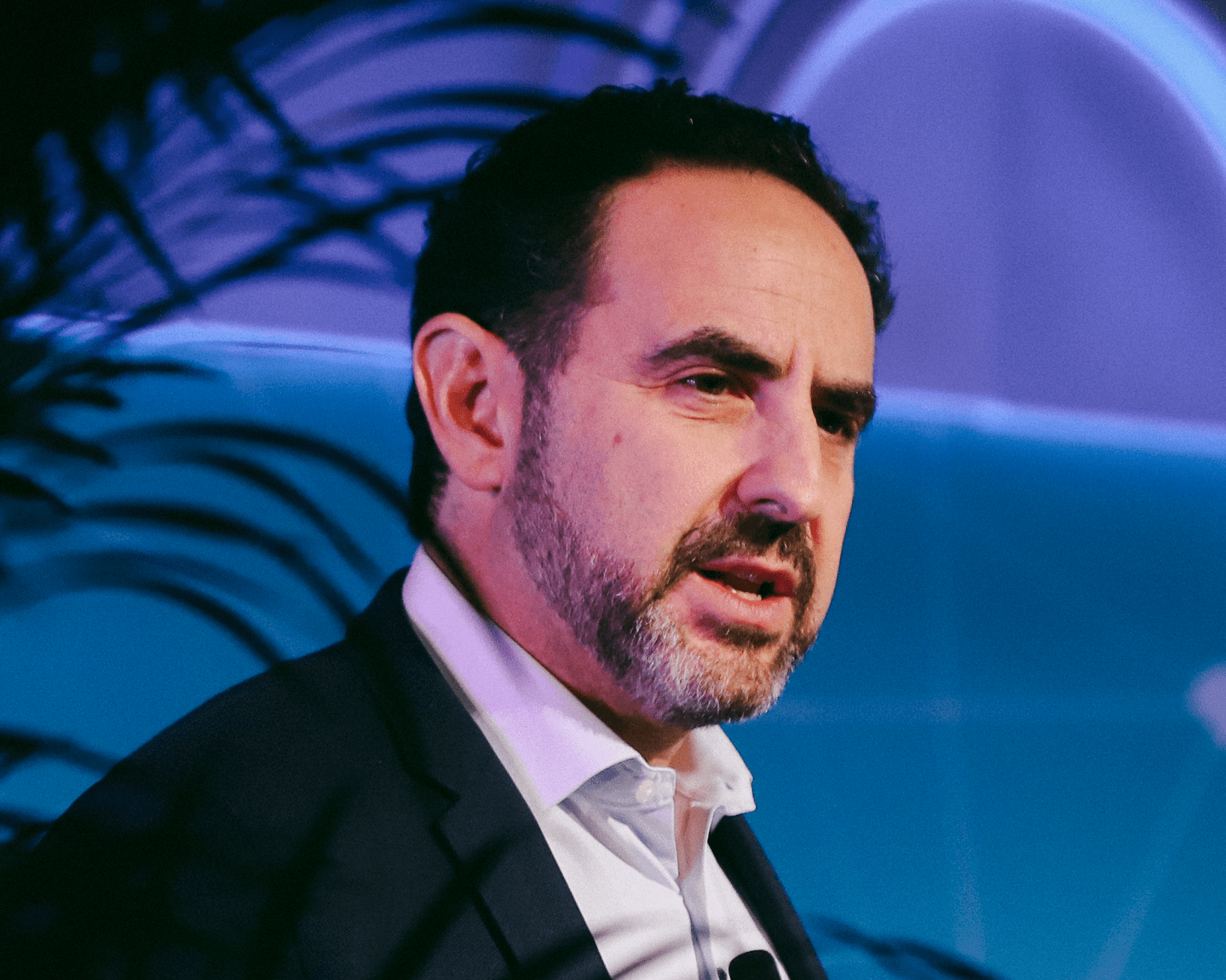
Olivier Wenden is Vice Chairman & CEO, Fondation Prince Albert II de Monaco, one of the world’s foremost philanthropic institutions dedicated to environmental conservation. Prior to his appointment, Wenden was Executive Director and Secretary General at the foundation.

After earning his degree from Sciences Po Bordeaux in public affairs and economy, he pursued a trilingual Master’s in international trade at Université Paris Sorbonne Nouvelle. Upon his return to Monaco, Wenden served as Chief of Staff and International Affairs Advisor to the President of the Conseil National de Monaco and Chargé de Mission to the Minister of Foreign Affairs and Cooperation of the Government of Monaco, between 2007 and 2013.

Olivier Wenden.
Olivier Wenden.courtesy Fondation Prince Albert II de Monaco

Today, the blue economy, valued at roughly $2.5 trillion annually, stands at a crossroads: either we continue business as usual — with staggering ecological, social, and financial costs — or we finance deployment at scale, so the ocean remains our most powerful ally for climate, biodiversity, and prosperity.

Recommended Video

There are reasons for hope. Surpassing the 60 state ratifications needed, the High Seas Treaty will finally enter into force in January 2026 — a breakthrough for international law and marine biodiversity, and proof that multilateralism can still deliver. The global pledge to protect 30% of land and sea by 2030, the prohibition of harmful fishing subsidies at the WTO, new shipping emission-reduction measures from the IMO, and negotiations for a global plastics treaty are further signs that governments increasingly view the ocean not as an infinite frontier but as a common good that demands stewardship.

But policy alone will not be enough. Innovation must rise to meet it. Commitments must be matched with resources.

Worldwide, a wave of visionary entrepreneurs is building the foundations of a new blue economy — recyclable and biodegradable packaging, advanced waste-management systems, low-impact aquaculture, community-based fisheries, regenerative tourism, clean-tech for shipping and yachting, and eco-engineered coastal infrastructure. What was once niche is now reshaping entire value chains and redefining how industries operate.

New financing approaches are beginning to match these solutions. Blue bonds and blended-finance mechanisms are raising capital for ocean conservation – as we did with the Paul G. Allen Foundation when launching the Global Fund for Coral Reefs. And a growing ecosystem of funds dedicated to the blue economy is emerging, offering investors opportunities to support promising companies while advancing measurable impact.

At the Prince Albert II of Monaco Foundation, we believe in leading by example. That is why we created the ReOcean Fund with Monaco Asset Management — a €100 million growth fund dedicated to scaling businesses that advance the sustainable blue economy. We have already secured $73 million in commitments, including a new commitment from the Minderoo Foundation, announced by Dr Andrew Forrest AO on the Nasdaq stage during New York Climate Week. Our goal: invest in 15–20 companies across five priority areas — solutions to plastic pollution, sustainable blue foods, green shipping, ocean intelligence, and the protection and restoration of marine ecosystems.

These priorities are already visible in practice: NatureMetrics is providing AI-powered biodiversity monitoring to give decision-grade data on risk and resilience; in New York City, ECOncrete’s living coastal infrastructure, part of the $114 million Living Breakwaters project, reduced required mitigation costs by about 80% — saving nearly $14 million, showing how ecological design delivers financial savings. These are not philanthropic gestures. They are investable, scalable solutions that align environmental protection with economic value.

What must happen next?

First, treat the ocean as an investable market. The ocean regulates our climate, supports global trade, and feeds communities. Investments that restore ecosystems, green maritime transport, and build resilient blue-food systems are not “nice to have”; they are foundational to economic growth.

Second, scale blended finance with purpose. Governments and development banks should partner with mission-driven funds and philanthropies to de-risk innovation and speed deployment, while holding projects to measurable environmental and social outcomes.

Third, standardize decision-grade data and impact frameworks. Investors and regulators should adopt transparent, comparable metrics so capital rewards genuine impact, not greenwash.

Fourth, turn early innovations into established asset classes. We need portfolios of solutions across plastics, blue food, shipping, restoration, and data that can scale together, creating jobs and resilience while restoring the ocean.

This is not a choice between protecting the ocean and growing the economy. It is a call to recognize that the two are inseparable. For investors, policymakers, and business leaders, the time has come to seize the momentum, champion innovation, and finance the blue transition.

We cannot afford another decade of declarations without resources. The ocean cannot wait. If we succeed, we will do more than safeguard the ocean. We will prove that investing in harmony with nature is the smartest bet of the 21st century.

The opinions expressed in Fortune.com commentary pieces are solely the views of their authors and do not necessarily reflect the opinions and beliefs of Fortune.
Join us at the Fortune Workplace Innovation Summit May 19–20, 2026, in Atlanta. The next era of workplace innovation is here—and the old playbook is being rewritten. At this exclusive, high-energy event, the world’s most innovative leaders will convene to explore how AI, humanity, and strategy converge to redefine, again, the future of work. Register now.
About the Author
By Olivier Wenden
See full bioRight Arrow Button Icon

Latest in Commentary

Julian Braithwaite is the Director General of the International Alliance for Responsible Drinking
CommentaryProductivity
Gen Z is drinking 20% less than Millennials. Productivity is rising. Coincidence? Not quite
By Julian BraithwaiteDecember 13, 2025
1 day ago
carbon
Commentaryclimate change
Banking on carbon markets 2.0: why financial institutions should engage with carbon credits
By Usha Rao-MonariDecember 13, 2025
2 days ago
Dr. Javier Cárdenas is the director of the Rockefeller Neuroscience Institute NeuroPerformance Innovation Center.
Commentaryconcussions
Fists, not football: There is no concussion protocol for domestic violence survivors
By Javier CárdenasDecember 12, 2025
2 days ago
Gary Locke is the former U.S. ambassador to China, U.S. secretary of commerce, and governor of Washington.
CommentaryChina
China is winning the biotech race. Patent reform is how we catch up
By Gary LockeDecember 12, 2025
2 days ago
millennial
CommentaryConsumer Spending
Meet the 2025 holiday white whale: the millennial dad spending $500+ per kid
By Phillip GoerickeDecember 12, 2025
2 days ago
Sarandos
CommentaryAntitrust
Netflix, Warner, Paramount and antitrust: Entertainment megadeal’s outcome must follow the evidence, not politics or fear of integration
By Satya MararDecember 12, 2025
3 days ago

Most Popular

placeholder alt text
Success
Apple cofounder Ronald Wayne sold his 10% stake for $800 in 1976—today it’d be worth up to $400 billion
By Preston ForeDecember 12, 2025
2 days ago
placeholder alt text
Economy
Tariffs are taxes and they were used to finance the federal government until the 1913 income tax. A top economist breaks it down
By Kent JonesDecember 12, 2025
3 days ago
placeholder alt text
Success
40% of Stanford undergrads receive disability accommodations—but it’s become a college-wide phenomenon as Gen Z try to succeed in the current climate
By Preston ForeDecember 12, 2025
2 days ago
placeholder alt text
Uncategorized
Transforming customer support through intelligent AI operations
By Lauren ChomiukNovember 26, 2025
18 days ago
placeholder alt text
Economy
More financially distressed farmers are expected to lose their property soon as loan repayments and incomes continue to falter
By Jason MaDecember 13, 2025
1 day ago
placeholder alt text
Economy
The Fed just ‘Trump-proofed’ itself with a unanimous move to preempt a potential leadership shake-up
By Jason MaDecember 12, 2025
2 days ago
Rankings
  • 100 Best Companies
  • Fortune 500
  • Global 500
  • Fortune 500 Europe
  • Most Powerful Women
  • Future 50
  • World’s Most Admired Companies
  • See All Rankings
Sections
  • Finance
  • Leadership
  • Success
  • Tech
  • Asia
  • Europe
  • Environment
  • Fortune Crypto
  • Health
  • Retail
  • Lifestyle
  • Politics
  • Newsletters
  • Magazine
  • Features
  • Commentary
  • Mpw
  • CEO Initiative
  • Conferences
  • Personal Finance
  • Education
Customer Support
  • Frequently Asked Questions
  • Customer Service Portal
  • Privacy Policy
  • Terms Of Use
  • Single Issues For Purchase
  • International Print
Commercial Services
  • Advertising
  • Fortune Brand Studio
  • Fortune Analytics
  • Fortune Conferences
  • Business Development
About Us
  • About Us
  • Editorial Calendar
  • Press Center
  • Work At Fortune
  • Diversity And Inclusion
  • Terms And Conditions
  • Site Map

© 2025 Fortune Media IP Limited. All Rights Reserved. Use of this site constitutes acceptance of our Terms of Use and Privacy Policy | CA Notice at Collection and Privacy Notice | Do Not Sell/Share My Personal Information
FORTUNE is a trademark of Fortune Media IP Limited, registered in the U.S. and other countries. FORTUNE may receive compensation for some links to products and services on this website. Offers may be subject to change without notice.