In 2021 when Allbirds’ stock went public, the shoemaker could do no wrong. Riding on the popularity of its eco-friendly wool sneakers among Silicon Valley venture capitalists and other tech bros, it had been a sensation since its founding six years earlier. Its shares nearly doubled on their debut.
Allbirds’ fast growth up until then helped Wall Street brush aside concerns about deep losses—at first. Since then, Allbirds’ shares have lost more than 95% of their value. And after hitting a peak of $297.8 million in 2022, revenue fell by more than a third through 2024, despite a healthy broader market for comfortable shoes. The company on Thursday reported that sales fell 23% in its second fiscal quarter, showing just how daunting a task Allbirds faces in making a comeback.
Now, Allbirds cofounder Tim Brown and its CEO, Joe Vernachio, say the company has a strategy to regain customers’ favor: zeroing in on what it did best in the first place. That means making versatile lifestyle shoes with a unique look, using innovative, sustainable materials to maintain the environmental cred so central to its identity. The company has closed stores and abandoned some of its ill-fated attempts to expand into other categories to spur growth: leggings made of merino wool, for example, or performance-oriented running shoes.

Quick growth, and some missteps
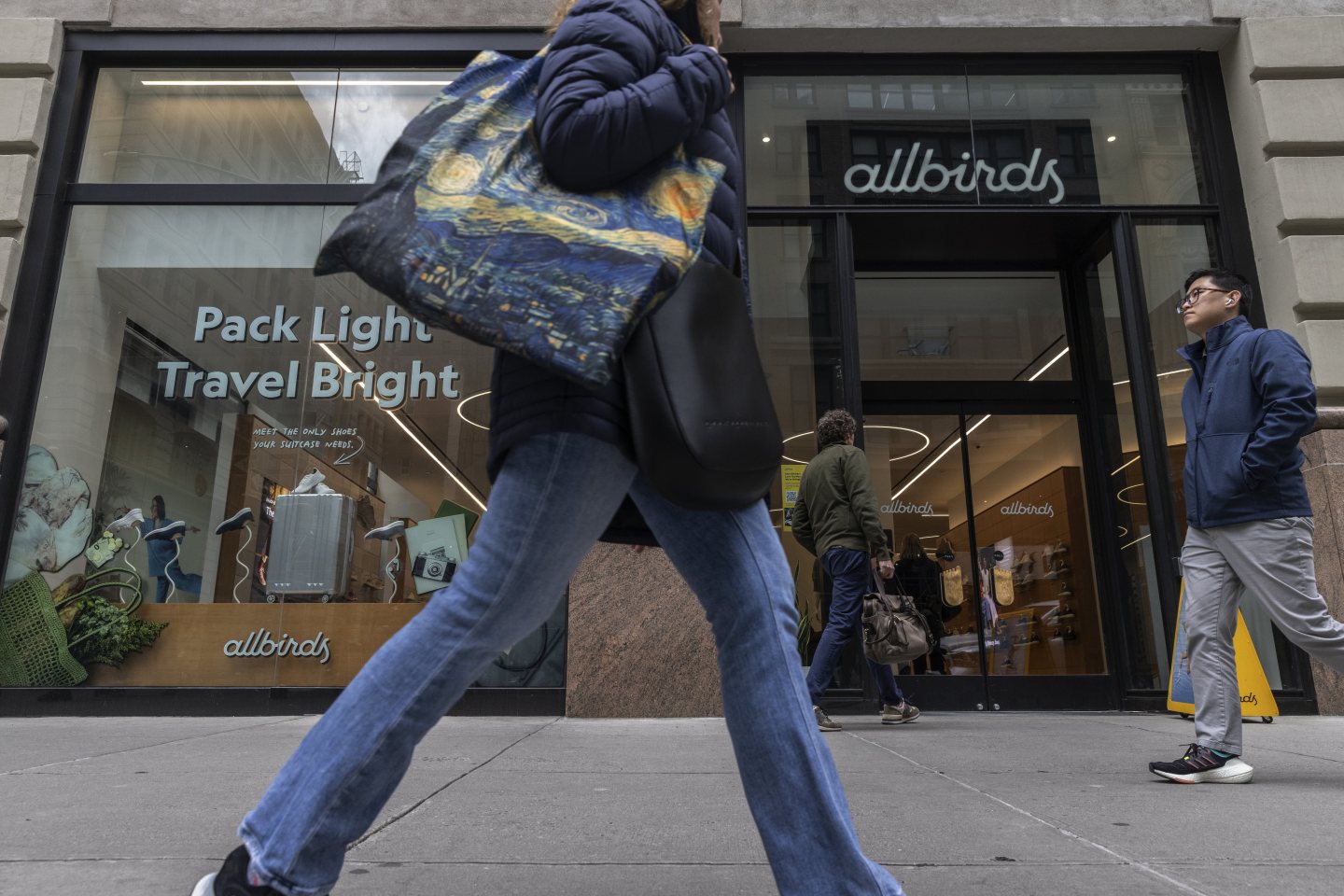
It was a classic tale of a hot brand growing too quickly and making hasty mistakes in its ascendance. In Allbirds’ case, those included building out too wide a product assortment and opening too many store locations. By late 2023, Allbirds had 45 U.S. stores; now it is back down to 21 locations.
The brand also was overly optimistic about its ability to sell directly to consumers. It took too long to line up wholesale partnerships with national department store chains like Nordstrom, betting incorrectly that its own stores and website were enough to attract new customers and serve its tech-savvy fans.
Meanwhile, imitators of Allbirds’ natural-fiber shoes proliferated, and the compelling brand story that was such at hit at first was in jeopardy. “The time we had to evolve and grow that story was compressed in such an intense way,” Brown tells Fortune in an exclusive interview ahead of Allbirds’ 10-year anniversary. “With the rapid success that came our way, we lost some of our DNA.”
Like many brands in growth mode, Allbirds tried to cast a wider net for customers. Case in point was the Tree Flyer, a model launched in 2022 and aimed at younger customers, rather than the brand’s sweet spot of people in their thirties and forties. The shoe did not catch on and has been discontinued. Other product flops: those wool leggings, and an expansion into items far from its expertise, like puffer jackets.
And Allbirds wasn’t just opening way too many stores given its sales volume; those stores were also too large for its need, not allowing for an enticing display of its shoes.
Less can be more when it comes to a store
All these misfires strained the company’s finances: In the five fiscal years that ended in December 2024, Allbirds lost $419 million on sales of $1.24 billion. It recently announced an expended credit facility to give itself more financial breathing room.
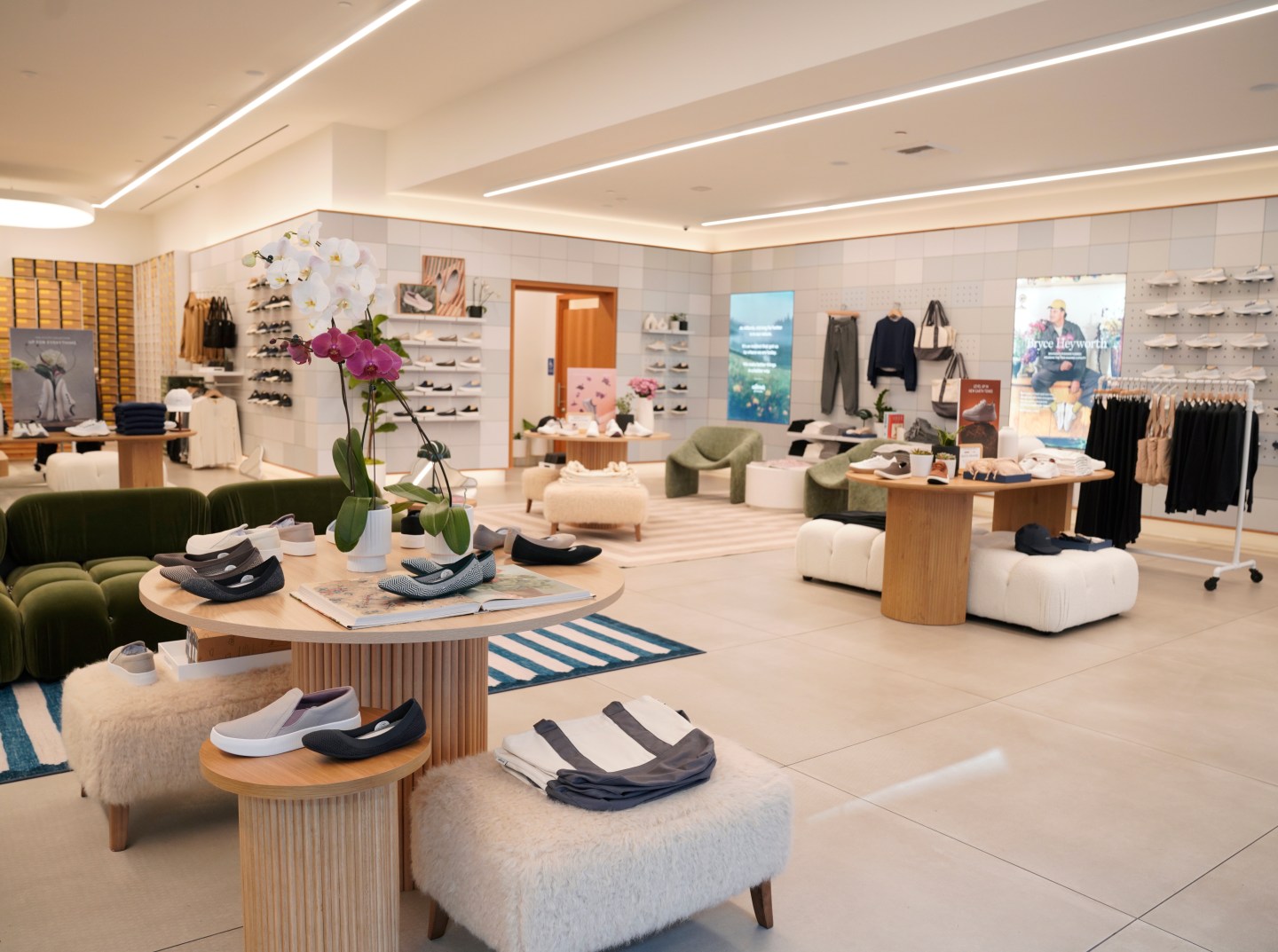
It has closed many of its stores, and the 21 stores the brand still operates are smaller—about half the size of stores opened in that blitz a few years ago. “We now have books and plants and couches to relax on, and we just get people spending a lot more time in the store, giving us a better opportunity to engage with them,” says Vernachio.
The company is also listening to concerns expressed by some analysts that the brand’s messaging has focused too much on environmental virtues, highlighting the carbon emissions footprint of each item and the company’s efforts to reduce it. Some have urged Allbirds to focus more on the look and comfort of the shoes. Vernachio dismisses some of that criticism: Focusing on sustainable materials makes Allbirds more innovative in its looks and designs, he says.
But he does note that Allbirds now uses the word “nature” in its marketing much more than “sustainability.”
“We think the word ‘sustainability’ sounds like a chore, like sorting your garbage,” he jokes.
Taking flight again?
Brown and Vernachio, who took the reins last year, replacing Brown’s cofounder Joey Zwillinger, insist that the brand’s appeal was not merely a fad. They are focused on tapping into what made Allbirds a sensation in the first place: cool, innovative shoes that are comfortable.
Brown, a New Zealander, likes to quote a Maori proverb: “Ka mua, ka muri,” or walking backwards into the future. “This moment is about going back to the beginning and back to those core principles that had been lost as we had so much growth and expansion,” he said.
Just as he did in 2015, Brown sees a white space in the market for shoes that offer simplicity. Sneakers are often “over designed,” he said, and tend to rely too much on plastic.
But the fact remains that many of the biggest hits of recent years in footwear are bulbous, flashy in design, and heavy on synthetic materials. Brands like Hoka and On Running have seen major success, and technical brands like New Balance and Brooks Running have successfully forayed into lifestyle shoes, taking up some of the space once occupied by Allbirds.
Allbirds has relaunched its original bestseller, the Wool Runner NZ (a nod to Brown’s New Zealand roots), with some design tweaks and features like a dual-density insole that uses cushioned memory foam.
There is also a plant-based-leather shoe coming out early next year called the Terralux, with a look Vernachio called “more elevated.”
“What we’re leaning into is that people want to have sneaker-level comfort in every use occasion,” he said.
Another promising product is the Tree Cruiser. It is made with tree fibers—a nod to the early adopters who chose Allbirds for its green virtues. (A version made of recycled polyester and recycled Italian wool will be launched next month.) The Cruiser line has been marketed as “court-inspired,” meaning it was intended for people playing tennis and other court-based sports. But it has found its niche as a versatile, everyday shoe with clean lines and features like its low-profile rubber sole that can be worn in a number of different situations. “We were long overdue in getting a shoe like that in the customer’s closet,” says Vernachio.
Ten years after its founding, the sneaker market and the world look very different. But getting back to Allbirds’ original values and aesthetics is the way forward, Brown said: “This is a brand worth fighting for, with principles that have never felt more full of potential and important in this moment.”