When it comes to trust in their employer, how does Gen Z stack up against previous generations joining the workforce?
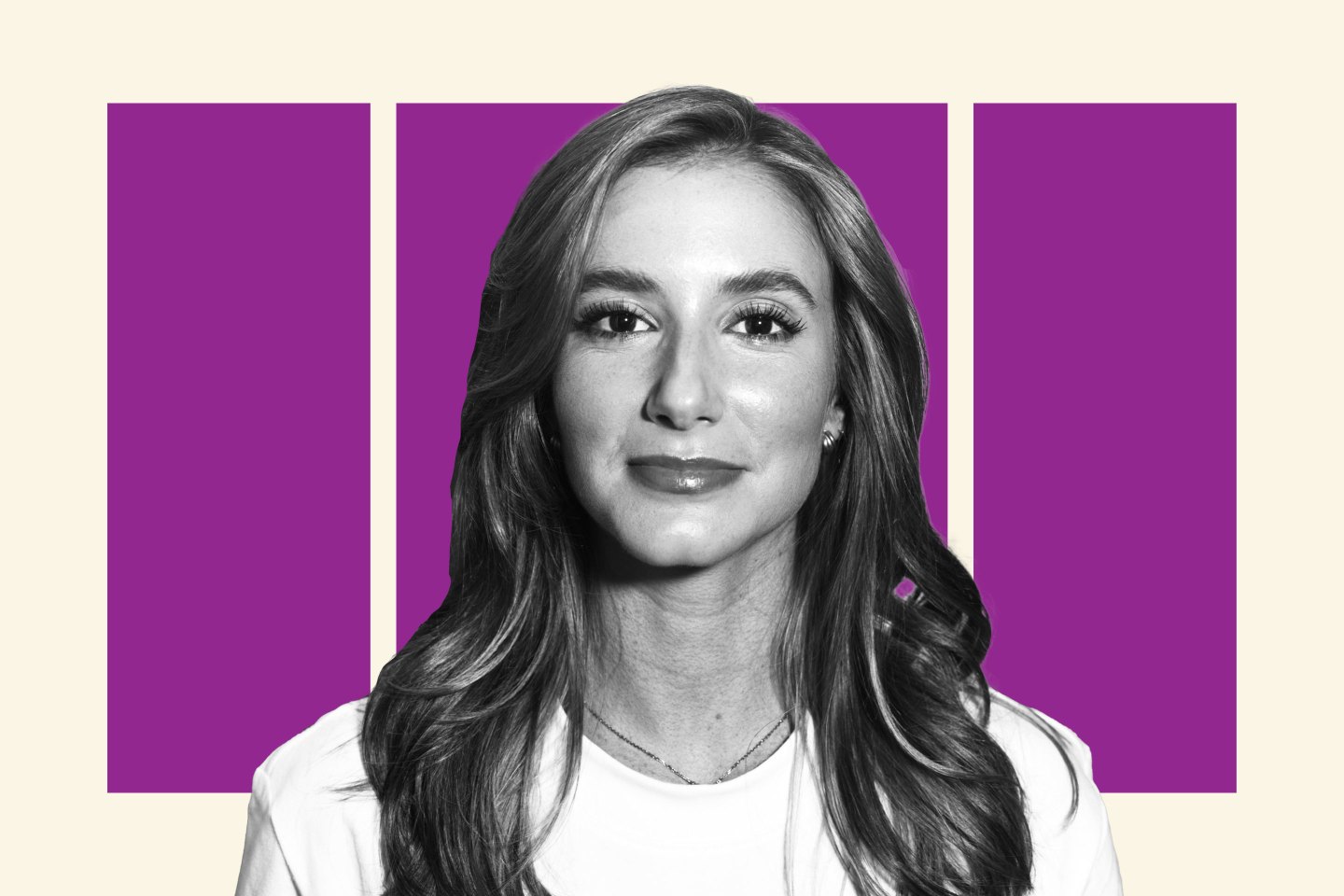
Kate Duchene is ready with an apt slogan.
“I would say there’s a lower level of trust coming in,” says the president and CEO of global professional services firm RGP. “I grew up in Missouri, so I always think of the license plate—’the Show-Me State.’ You’re not going to get it from day one.”
Plus, talent has more leverage than ever, Duchene tells me from Irvine, Calif. “And I think Gen Z in particular is saying, ‘We want something different in our relationship with work, and it’s going to be built on more flexibility, choice, transparency, and control.’”
Along with a growing number of Gen Z employees, Duchene has a son from that generation who also works in professional services. “I talk with him and his peers, and I think they are not buying into the traditional ‘I’ll have a job for life, I’ll be a full-time employee.’”
With that more entrepreneurial attitude comes, well, some attitude.
“They aren’t afraid to push back a little bit and then put their money where their mouth is and leave if they don’t feel heard or listened to,” Duchene says. “Baby-boomer loyalty is probably something of the past, and you have to stay really close to your employees, [keeping a pulse] on their concerns, desires, and plans so you don’t have as much turnover.”
For anyone who manages Gen Zers, communication is critical for building trust, stresses Duchene, whose 3,300-employee firm works with clients in industries such as health care, finance, and tech. That includes answering a ton of questions.
“Now there’s a lot more exploration of the why,” she says. “It’s not enough to explain a company’s mission and vision. You have to also make sure employees understand purpose, because that’s important to Gen Z and whether they’re gonna trudge up the hill with you.”
And unlike previous generations, Gen Z workers don’t view the promotional ladder as the Holy Grail, Duchene observes. “Gen Z wants to say, ‘Okay, can I work differently? Can I take some time off? Do I move sideways before I move up?’”
I recently chatted with the founder of a nonprofit who sees Gen Z workers chomping at the bit for some early leadership experience. Duchene has a different take.
“It sounds great in the beginning, and then when you realize what real people management means, I think Gen Z is like, ‘I don’t really want that.’”
Perhaps because they did so at college, Gen Z employees prefer working in teams, Duchene says: “While that can be good—because a lot of work that happens in business happens as a team—it has created an environment where Gen Z[ers], they don’t want to have to manage people.”
That’s creating challenges for organizational design and how work gets done, Duchene notes. It could also make companies flatter over time. “That’s not necessarily a bad thing, because probably we got too hierarchical,” Duchene says. “There are many studies of companies that just created too many layers, and that slows down decision-making.”
Trust cuts both ways. Is there anything Gen Z could be doing to build trust with employers?
Duchene invokes the mass quitting known as the Great Resignation. “There was a lot of ghosting-type behavior, and that destroys trust more than anything else,” she says. “If you demand [communication] of your employer, then you need to give it as well. And that communication is a lot about relationship-building, and trust follows relationship-building.”
Younger workers could also change their perspective on failure and treat constructive criticism as a gift, Duchene suggests.
“Gen Z needs to really embrace that and, say, look at failure as the opportunity to learn and then succeed the next time,” she says. “I think Gen Z struggles with that a little bit because that was a generation that grew up thinking everyone wins, and that’s just not reality.”
Maybe someday.
Nick Rockel
nick.rockel@consultant.fortune.com
How will your business adapt in the face of a shifting global landscape? Join global executives and policy leaders at the Fortune Global Forum in New York City Nov. 11–12 to discuss AI, the future of democracy, rising geopolitical tensions, and more. Request your invite here.
IN OTHER NEWS
Conscious uncoupling
Conventional wisdom says that for couples, sharing finances builds trust. But with younger Americans more likely than older generations to keep their money separate as they marry, that could be a smart choice, one expert argues. Jessica Ray, a certified divorce financial analyst (yes, that’s a thing), suggests protecting your assets from threats like breakups and creditors by starting out separate, with an account for joint expenses. Especially for women, having a divide also helps spouses feel more independent, Ray says. Bonus: That Amazon bill is someone else’s problem.
Sleep it off
Want to be able to trust your brain as you age? Get a good night’s sleep. That’s the message from a new U.S. study that ties subpar shut-eye in early middle age to poor thinking and memory skills later in life. After assessing almost 600 people over a 15-year period, researchers found that more sleep problems were associated with more signs of faster brain aging. Some tips for a better snooze: Keep a consistent sleep schedule, exercise regularly, and avoid caffeine and booze before bed. Hey, it beats dementia.
Raising the bar
Gold looks like a trusted asset in turbulent times. Amid conflict in the Middle East and doubt over the U.S. election, the precious metal has reached record highs, Greg McKenna reports. With gold up about 30% over the past year, some experts think it will defy historical trends by climbing over the long haul. Lately, much of the demand has come from central banks buying bullion like gangbusters—a bid to cut reliance on the greenback. Best of luck, goldbugs.
BRICS wall
For obvious reasons, Western nations don’t trust Vladimir Putin, but some other countries don’t seem to think he’s so bad. The Russian President just hosted a summit of the ever-expanding BRICS group, which drew leaders from more than 20 emerging economies. With powerful chums like China’s Xi Jinping and India’s Narendra Modi—thanks, guys!—Putin aims to challenge Western “hegemony” in finance and elsewhere. The summit is a coup for the autocratic invader of Ukraine, who’s ostensibly a global pariah but keeps on finding new friends. Please stop encouraging him.
TRUST EXERCISE
“The public debate about inflation has caught on to what economists have long known: Price change—a.k.a. inflation—and prices are not the same thing. Though inflation has fallen back sharply over the last two years, prices have not dropped—they have merely risen more slowly. And while politicians promise lower prices on the campaign trail, the dirty little secret is that nobody wants prices to fall across the board. Falling prices constitute deflation, inflation’s ugly cousin.
So, are American voters stuck on a plateau of higher prices? Not quite. Wages matter just as much as prices. If the prices of all goods doubled in one year, consumers would face dire circumstances. But if wages also doubled, any financial injury would be largely psychological. What ultimately matters is price affordability—the ratio of prices and wages.”
Financially, Americans don’t trust that they’re better off than five years ago. But in fact, things have improved. There’s also a good reason for that pessimism, explain Philipp Carlsson-Szlezak, global chief economist, and Paul Swartz, senior economist, at Boston Consulting Group.
As Carlsson-Szlezak and Swartz note, consumer prices have surged almost 20% since 2019—while average wages grew more than 25% over the same period. So price affordability is 5% better today. At the same time, Americans are spending enough to ward off a recession, despite the prevailing narrative that they’re strapped for cash. They splurge where they see value for money—for instance, on toys and games, whose prices haven’t risen much lately.
But the issue is that people see price increases and wage gains very differently, Carlsson-Szlezak and Swartz observe. The former is something bad that befalls us, while the latter is earned. As a result, no pay hike can offset the sting of higher chicken prices. And of course, wage growth is unevenly distributed, so workers in some industries actually have fallen behind since 2019.
For companies aiming to build trust with consumers, the lesson is to offer real value. For politicians as November’s election draws near, it’s worth grasping how voters really think about prices, wages, and spending. Getting it wrong might prove costly.