
• Home
  • Latest
  • Fortune 500
  • Finance
  • Tech
  • Leadership
  • Lifestyle
  • Rankings
  • Multimedia
EconomyTaxes

California’s wealth tax doesn’t fix the real problem: Cash-poor billionaires who borrow money, tax-free, to live on

Nick Lichtenberg
By
Nick Lichtenberg
Nick Lichtenberg
Business Editor
Down Arrow Button Icon
Nick Lichtenberg
By
Nick Lichtenberg
Nick Lichtenberg
Business Editor
Down Arrow Button Icon
January 14, 2026, 12:31 PM ET
page, brin
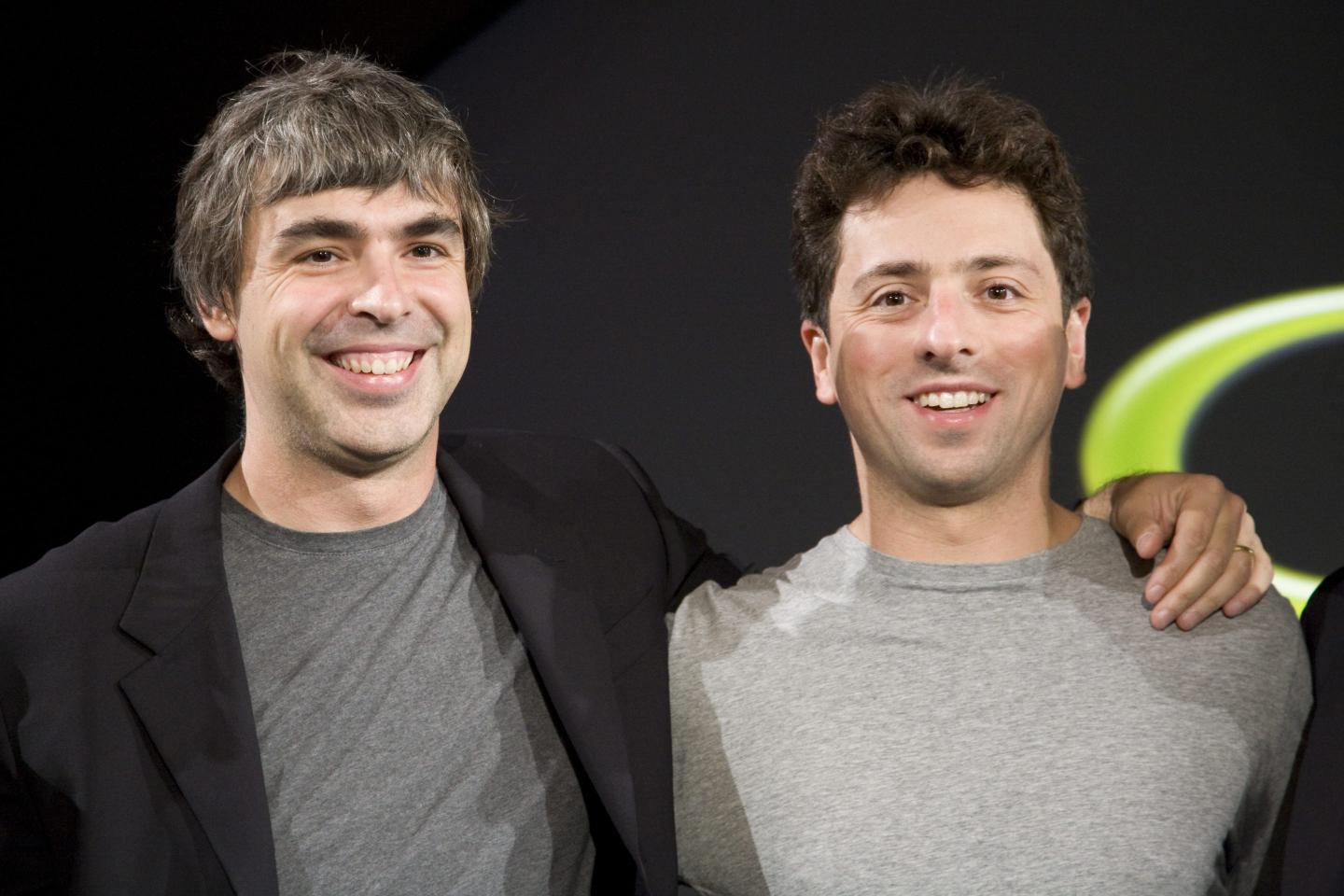
Google co-founder Larry Page (L) and Sergey Brin (R).James Leynse/Corbis via Getty Images

California’s proposed wealth tax aims to go after billionaires’ balance sheets, but it largely sidesteps the way many ultrawealthy people actually generate spendable cash: they borrow against their assets, tax‑free, and never “realize” income in the first place. As long as that borrowing model stays intact, a one‑time levy on wealth may raise money once, but it does little to change the system that lets cash‑poor billionaires live richly while reporting very little taxable income.​

Recommended Video

California is weighing a ballot measure, the Billionaire Tax Act, that would impose a one‑time 5% tax on the total assets of state residents worth $1 billion or more. The tax would apply to anyone who was a California resident on January 1, 2026, with payment due in 2027 and the option to stretch it over five years for an additional charge.​

Supporters, led by a major healthcare workers’ union, pitch the measure as a way to raise roughly $100 billion to backfill expected federal healthcare cuts and force the wealthy to pay what they call their fair share. Gov. Gavin Newsom has warned that the levy could backfire by accelerating a departure of high‑net‑worth residents, even as he continues to defend the state’s broader progressive tax system.​

To take this example from the abstract into the practical, consider the examples of Elon Musk, the world’s richest man, and Mr. Beast, the world’s most popular YouTuber. Musk does not live on a normal “salary” the way most people do, with most of his wealth tied up in shares of his companies such as Tesla and SpaceX, and he typically finances his spending by borrowing against those holdings and occasionally selling stock. In that sense, he is extremely asset‑rich but comparatively low on ordinary cash income, using large credit lines backed by his equity to pay for homes, jets, and other expenses instead of taking regular paychecks.

Mr. Beast, meanwhile, told The Wall Street Journal just days ago that he has “negative money right now … “I’m borrowing money right now — that’s how little money I have.” While he isn’t the CEO of a publicly traded company like many of the California billionaires being targeted by this proposed tax, Mr. Beast, or Jimmy Donaldson, is always reinvesting in his content, he explained, leaving very little in his bank account.

Anduril founder Palmer Luckey pointed out this tension in a heated social media exchange with Rep. Ro Khanna, who supports the billionaire tax. “You are fighting to force founders like me to sell huge chunks of our companies to pay for fraud, waste, and political favors for the organizations pushing this ballot initiative,” Luckey wrote, noting that the tax would create more problems than it would solve. Other executives voted with their feet, with the Google guys saying goodbye to California, The New York Times reported, as Larry Page and Sergey Brin both moved to sever ties, Page with a very Bezosian playbook centered on trophy properties in Miami. Here’s why Luckey has a point that this tax is going after the wrong things, and the strange reason these billionaires don’t actually have that much cash on hand.

The ‘Buy‑Borrow‑Die’ reality

The deeper problem lies in how modern billionaires convert paper wealth into cash without ever showing much taxable income. Rather than selling stock or private‑company shares and realizing capital gains, they pledge those assets as collateral, borrow against them, and use the loan proceeds to fund everything from yachts and mansions to new investments.​​

Because U.S. tax law does not treat borrowed money as income, these loans incur no income‑tax bill, even when they finance lavish lifestyles. Policy analysts often describe this as the “buy, borrow, die” strategy: buy appreciating assets, borrow against them to live, then let heirs inherit those assets with stepped‑up basis after death, erasing much of the embedded tax liability.​

Under U.S. tax law, loan proceeds are not treated as income because they must be repaid, so they are not taxed when received.​ If a billionaire borrows against appreciated stock or real estate instead of selling it, there is no sale, so no capital gain is realized and no capital gains tax is triggered.​

It works like this:

  • Step 1 – Buy: They acquire assets expected to appreciate over time (founder stock, real estate, private businesses) and hold them for decades, letting gains build up untaxed as “unrealized” gains.​
  • Step 2 – Borrow: They pledge those assets as collateral for large credit lines or loans (e.g., margin loans, securities‑backed lines of credit, loans against real estate) and live or invest using that borrowed cash instead of selling.​
  • Step 3 – Die: When they die, heirs get a “step‑up in basis,” meaning the tax cost basis resets to current market value, wiping out the built‑up unrealized gain for income‑tax purposes.

Why a One‑Time Wealth Tax Misses

California’s own fiscal watchdogs have noted that many top earners already avoid large state income taxes by borrowing against appreciated stock instead of selling it. A one‑time 5% charge on net worth would hit that accumulated wealth once, but wouldn’t touch the ongoing flow of tax‑free cash that comes from asset‑backed borrowing.​ As Luckey notes, it would force these billionaires to liquidate assets to come up with the cash that the law would require, making a move out of California an easier alternative for those with the means to do it—and billionaires have the means.

Critics warn the proposal could encourage more billionaires to leave without permanently changing their incentives to realize income or pay taxes where they actually live. Venture capitalist Chamath Palihapitiya estimates that about $1 trillion in billionaire wealth has already left California amid the tax fight, raising the risk that the state loses future income‑tax revenue while capturing only a single extraordinary haul.​

Solving the real problem

Tax experts argue that if policymakers want to reach the cash‑poor, asset‑rich class, they must tax the proceeds of wealth, not just the stock of it at a moment in time. Proposals include state‑level “wealth proceeds” taxes that more comprehensively tax capital gains and investment income, and reforms to reduce the bias that favors borrowing over selling appreciated assets.​ Edward Fox and Zachary Liscow, law professors at the University of Michigan and Yale, respectively, have suggested a way to close the “billionaire borrowing loophole” by changing the law so that borrowing is treated as income.

Without such structural changes, California’s wealth tax risks being a dramatic, politically appealing gesture that leaves the core architecture of billionaire tax avoidance—and the tax‑free loans that underpin it—largely intact.​ And it would seemingly leave California with a lot fewer billionaires.

For this story, Fortune journalists used generative AI as a research tool. An editor verified the accuracy of the information before publishing.

Join us at the Fortune Workplace Innovation Summit May 19–20, 2026, in Atlanta. The next era of workplace innovation is here—and the old playbook is being rewritten. At this exclusive, high-energy event, the world’s most innovative leaders will convene to explore how AI, humanity, and strategy converge to redefine, again, the future of work. Register now.
About the Author
Nick Lichtenberg
By Nick LichtenbergBusiness Editor
LinkedIn icon

Nick Lichtenberg is business editor and was formerly Fortune's executive editor of global news.

See full bioRight Arrow Button Icon

Latest in Economy

Finance
Lorem ipsum dolor sit amet, consectetur adipiscing elit, sed do eiusmod tempor incididunt ut labore et dolore magna aliqua. Ut enim ad minim veniam
By Fortune Editors
October 20, 2025
Finance
Lorem ipsum dolor sit amet, consectetur adipiscing elit, sed do eiusmod tempor incididunt ut labore et dolore magna aliqua. Ut enim ad minim veniam
By Fortune Editors
October 20, 2025
Finance
Lorem ipsum dolor sit amet, consectetur adipiscing elit, sed do eiusmod tempor incididunt ut labore et dolore magna aliqua. Ut enim ad minim veniam
By Fortune Editors
October 20, 2025
Finance
Lorem ipsum dolor sit amet, consectetur adipiscing elit, sed do eiusmod tempor incididunt ut labore et dolore magna aliqua. Ut enim ad minim veniam
By Fortune Editors
October 20, 2025
Finance
Lorem ipsum dolor sit amet, consectetur adipiscing elit, sed do eiusmod tempor incididunt ut labore et dolore magna aliqua. Ut enim ad minim veniam
By Fortune Editors
October 20, 2025
Finance
Lorem ipsum dolor sit amet, consectetur adipiscing elit, sed do eiusmod tempor incididunt ut labore et dolore magna aliqua. Ut enim ad minim veniam
By Fortune Editors
October 20, 2025

Most Popular

Finance
Lorem ipsum dolor sit amet, consectetur adipiscing elit, sed do eiusmod tempor incididunt ut labore et dolore magna aliqua. Ut enim ad minim veniam
By Fortune Editors
October 20, 2025
Finance
Lorem ipsum dolor sit amet, consectetur adipiscing elit, sed do eiusmod tempor incididunt ut labore et dolore magna aliqua. Ut enim ad minim veniam
By Fortune Editors
October 20, 2025
Finance
Lorem ipsum dolor sit amet, consectetur adipiscing elit, sed do eiusmod tempor incididunt ut labore et dolore magna aliqua. Ut enim ad minim veniam
By Fortune Editors
October 20, 2025
Finance
Lorem ipsum dolor sit amet, consectetur adipiscing elit, sed do eiusmod tempor incididunt ut labore et dolore magna aliqua. Ut enim ad minim veniam
By Fortune Editors
October 20, 2025
Finance
Lorem ipsum dolor sit amet, consectetur adipiscing elit, sed do eiusmod tempor incididunt ut labore et dolore magna aliqua. Ut enim ad minim veniam
By Fortune Editors
October 20, 2025
Finance
Lorem ipsum dolor sit amet, consectetur adipiscing elit, sed do eiusmod tempor incididunt ut labore et dolore magna aliqua. Ut enim ad minim veniam
By Fortune Editors
October 20, 2025
Rankings
  • 100 Best Companies
  • Fortune 500
  • Global 500
  • Fortune 500 Europe
  • Most Powerful Women
  • Future 50
  • World’s Most Admired Companies
  • See All Rankings
Sections
  • Finance
  • Leadership
  • Success
  • Tech
  • Asia
  • Europe
  • Environment
  • Fortune Crypto
  • Health
  • Retail
  • Lifestyle
  • Politics
  • Newsletters
  • Magazine
  • Features
  • Commentary
  • Mpw
  • CEO Initiative
  • Conferences
  • Personal Finance
  • Education
Customer Support
  • Frequently Asked Questions
  • Customer Service Portal
  • Privacy Policy
  • Terms Of Use
  • Single Issues For Purchase
  • International Print
Commercial Services
  • Advertising
  • Fortune Brand Studio
  • Fortune Analytics
  • Fortune Conferences
  • Business Development
About Us
  • About Us
  • Editorial Calendar
  • Press Center
  • Work At Fortune
  • Diversity And Inclusion
  • Terms And Conditions
  • Site Map
  • Facebook icon
  • Twitter icon
  • LinkedIn icon
  • Instagram icon
  • Pinterest icon

Latest in Economy

U.S. President Donald Trump
PoliticsDepartment of Defense
Trump’s ‘Department of War’ rebrand could cost $125 million to replace all the stationery and signs, the CBO says
By Eleanor PringleJanuary 15, 2026
8 hours ago
Federal Reserve Chairman Jerome Powell
EconomyConsumer Spending
Economy is marginally improving but only because the rich are splurging on luxury items and holidays, the Fed says
By Eleanor PringleJanuary 15, 2026
11 hours ago
Photo: President Donald Trump during a bill signing event with dairy farmers in the Oval Office on Wednesday January 14, 2026.
InvestingMarkets
Trump’s chips ‘proclamation’ causes retail investors to dump the Magnificent Seven stocks  
By Jim EdwardsJanuary 15, 2026
12 hours ago
Photo of a job applicant being interviewed
EconomyJobs
Desperate job seekers are abandoning the idea of a ‘dream job’—but an economist warns bosses about what could happen next 
By Jacqueline MunisJanuary 15, 2026
13 hours ago
sharma
CommentaryTraining
AI will infiltrate the industrial workforce in 2026—let’s apply it to training the next generation, not replacing them
By Kriti SharmaJanuary 15, 2026
13 hours ago
Artistic illustration of a huge wave made up of dollar bills engulfing the Capitol building
EconomyU.S. economy
America’s $38 trillion national debt is so big the nearly $1 trillion interest payment will be larger than Medicare soon
By Shawn TullyJanuary 15, 2026
14 hours ago

Most Popular

placeholder alt text
Personal Finance
Peter Thiel makes his biggest donation in years to help defeat California’s billionaire wealth tax
By Nick LichtenbergJanuary 14, 2026
1 day ago
placeholder alt text
Europe
Americans have been quietly plundering Greenland for over 100 years, since a Navy officer chipped fragments off the Cape York iron meteorite
By Paul Bierman and The ConversationJanuary 14, 2026
1 day ago
placeholder alt text
Success
Despite a $45 million net worth, Big Bang Theory star still works tough, 16-hour days—he repeats one mantra when overwhelmed
By Orianna Rosa RoyleJanuary 15, 2026
13 hours ago
placeholder alt text
AI
Being mean to ChatGPT can boost its accuracy, but scientists warn you may regret it
By Marco Quiroz-GutierrezJanuary 13, 2026
2 days ago
placeholder alt text
Economy
California's wealth tax doesn't fix the real problem: Cash-poor billionaires who borrow money, tax-free, to live on
By Nick LichtenbergJanuary 14, 2026
1 day ago
placeholder alt text
AI
'Godfather of AI' says the technology will create massive unemployment and send profits soaring — 'that is the capitalist system'
By Jason MaJanuary 12, 2026
3 days ago

© 2025 Fortune Media IP Limited. All Rights Reserved. Use of this site constitutes acceptance of our Terms of Use and Privacy Policy | CA Notice at Collection and Privacy Notice | Do Not Sell/Share My Personal Information
FORTUNE is a trademark of Fortune Media IP Limited, registered in the U.S. and other countries. FORTUNE may receive compensation for some links to products and services on this website. Offers may be subject to change without notice.