
Tyreshia Morgan went viral on TikTok this summer because of her fashion choices for a job interview. In the August heat, she wore a pair of shorts—which turned out to be a big mistake. Upon seeing her outfit, the recruiter asked for her to reschedule the interview and come back in different clothes. Morgan refused.
The video of Morgan describing the incident and showing the outfit she wore—black shorts, a white top, and cardigan—has racked up more than 6.2 million views and 144,000 likes so far. It also kicked off a debate about how to dress for work these days, bringing in more than 30,000 comments that held a wide range of fashion beliefs. “Shorts aren’t even allowed in the office let alone on an interview” one commenter wrote. But another countered that there was “nothing wrong with this in warm weather.”
It’s no wonder so many people are confused about what to wear to the office right now. The pandemic fundamentally shifted the way people dress for work, Myka Meier, the founder of Beaumont Etiquette, a professional etiquette company, tells Fortune. While buttoned-up shirts and matching heels used to be more common, many employees realized while working from home how much more comfortable they were in casual clothing.
“Once people went back to the office they argued, ‘We still do our job in these casual clothes. Let’s continue,’” she says.
Pandemic fashion changes also coincide with Gen Z’s entry into the workforce. Many young people graduated college online, and held virtual internships during lockdown. They didn’t experience work dress culture before the pandemic, and now have a murkier idea about what the rules really are. Hazel Clark, professor of design and fashion studies at Parsons School of Design, tells Fortune that Gen Z and millennials in particular have ushered in a new era of relaxed workwear.
“Younger generations do and will dress more casually, and it’s having an impact,” she says. “The possibility of wearing a turtleneck or an unbuttoned shirt—that is happening. Things will change as more younger people come into the corporate workplace.”
Love it or hate it, the office fashion game is changing. “The rules have relaxed, but now they’re just ambiguous enough to get people into trouble,” Allison Shapira, CEO of Global Public Speaking LLC, a professional skills company, tells Fortune.
Experts tell Fortune that formal neckties and high heels are mostly out, but that doesn’t mean anything goes. Here’s what they advise wearing—and not wearing—to white collar jobs.
You probably can’t wear shorts
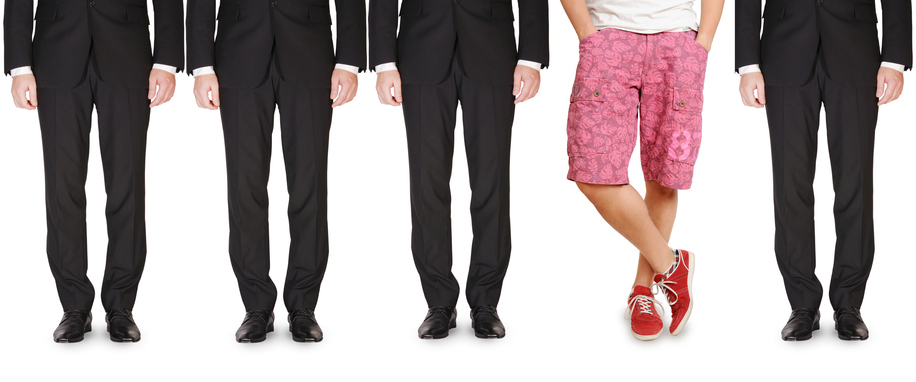
Professors and professional skills experts may differ on the finer points of office fashion, but they mostly agree on one thing: You probably shouldn’t wear shorts.
“I think that shorts, generally speaking, are not seen as business attire. Period. End of story,” Meier says. “Shorts are a slippery slope, because then you get into different lengths.”
Lisa Z. Morgan, chair of fashion design at the Pratt Institute, still believes, however, that there are scenarios in which shorts can be styled appropriately for work, considering that they come in different lengths. But she still advises employees to use their discretion.
“It depends on the shorts, and I suppose it depends on the job,” she says. “I wouldn’t suggest hot pants for meetings. But there are codes which I do believe can be broken.”
No open toed shoes—but heels aren’t mainstream either
Another agreed upon no-no for appropriate office attire is open-toed shoes. This style can come off a bit too casual for work—especially when it comes to sandals and other beachwear shoes.
“Closed-toed shoes are seen as the most formal. So if you work at a corporate bank, you’re not wearing open-toed shoes to a client meeting,” Meier says, adding that alternatives include loafers and ballet flats.
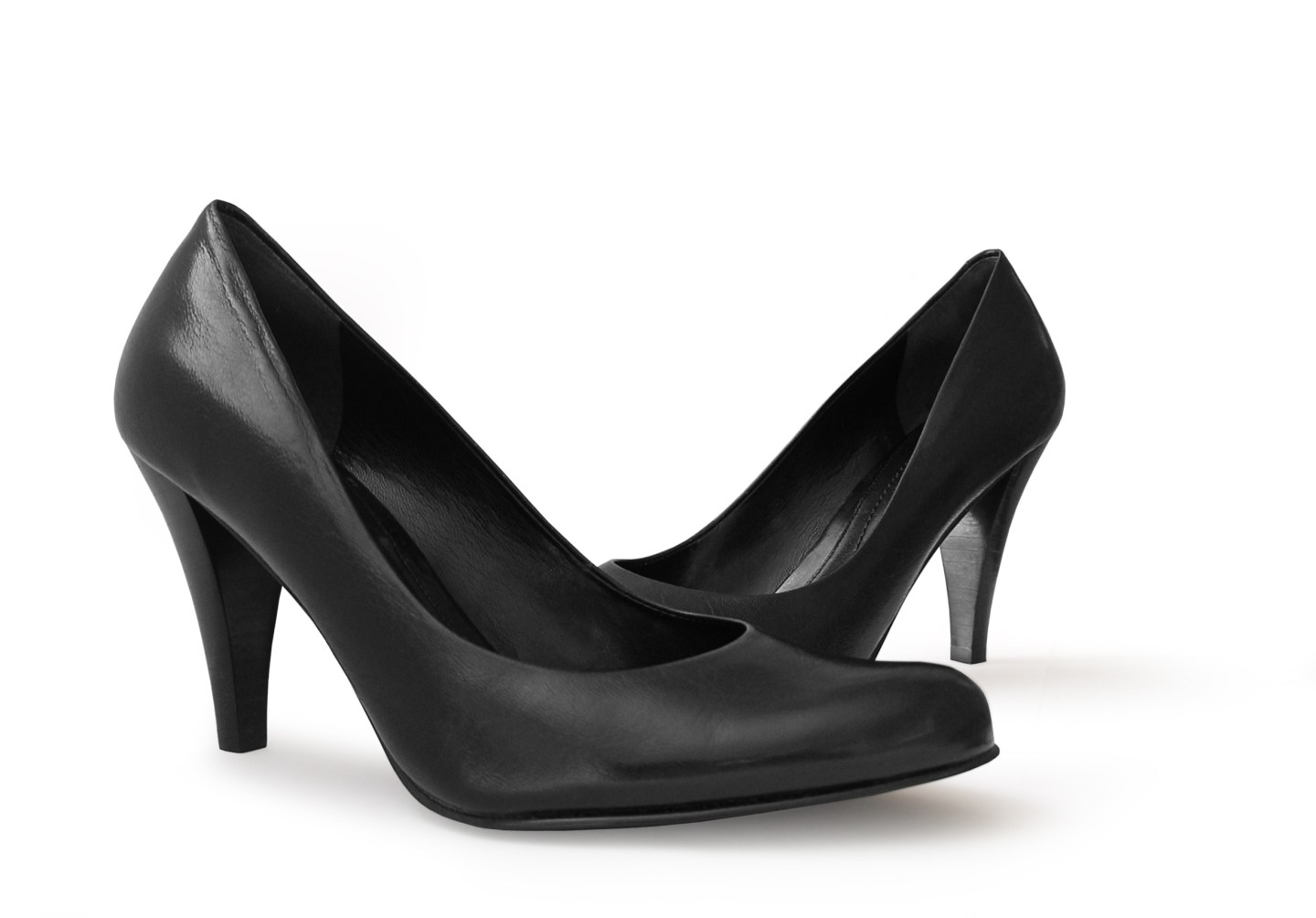
And while flip flops and peep-toe shoes may be inappropriate, formal high heels are an age-old workplace norm that’s going out of style. Before the pandemic, in-person workers would wear comfortable footwear for their commutes before changing into heels near the office, according to Clark. Now, women prefer to keep the flat shoes on.
“Nowadays, people just wear their sneakers,” she says.
Fashionable sneakers are here to stay
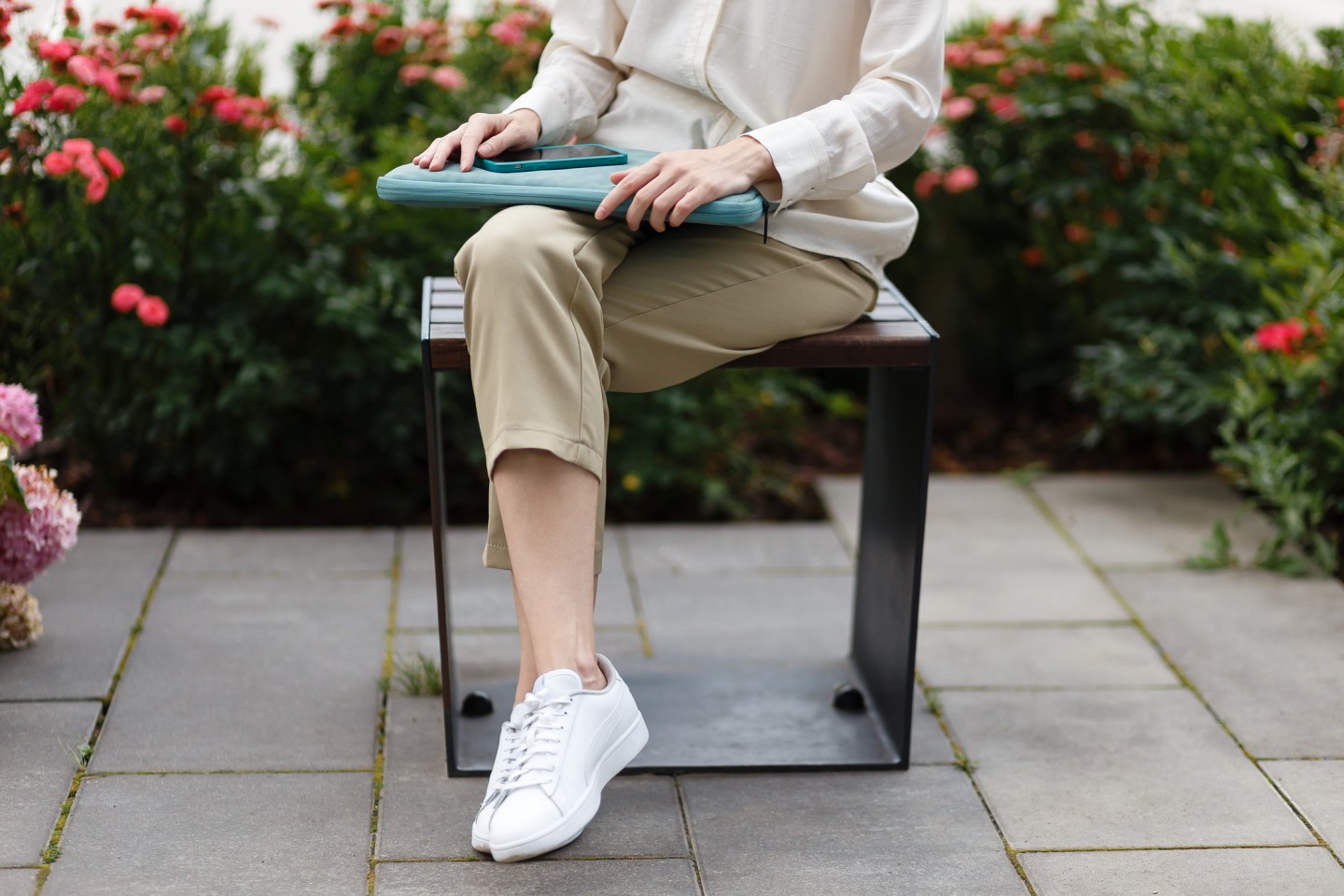
In lieu of classic footwear like heels and dress shoes, fashionable sneakers are becoming a mainstay of the corporate uniform.
While some industries might be relaxed enough for employees to don Vans or Converse, the general rule of thumb is that luxury sneakers are appropriate for the office. Think the leather shoes from Quince and Veja—sleek designs, made with quality materials to communicate a level of effort.
“We’re not talking running shoes. They are polished, clean, professional, and elegant like a Cole Haan sneaker that I see people wearing in the office,” says Shapira. Prior to the pandemic, workers may have worn them on their commute before changing into more formal shoes at the office. Now, she notices that everyone wears sneakers to work—even senior executives.
Ties are gone
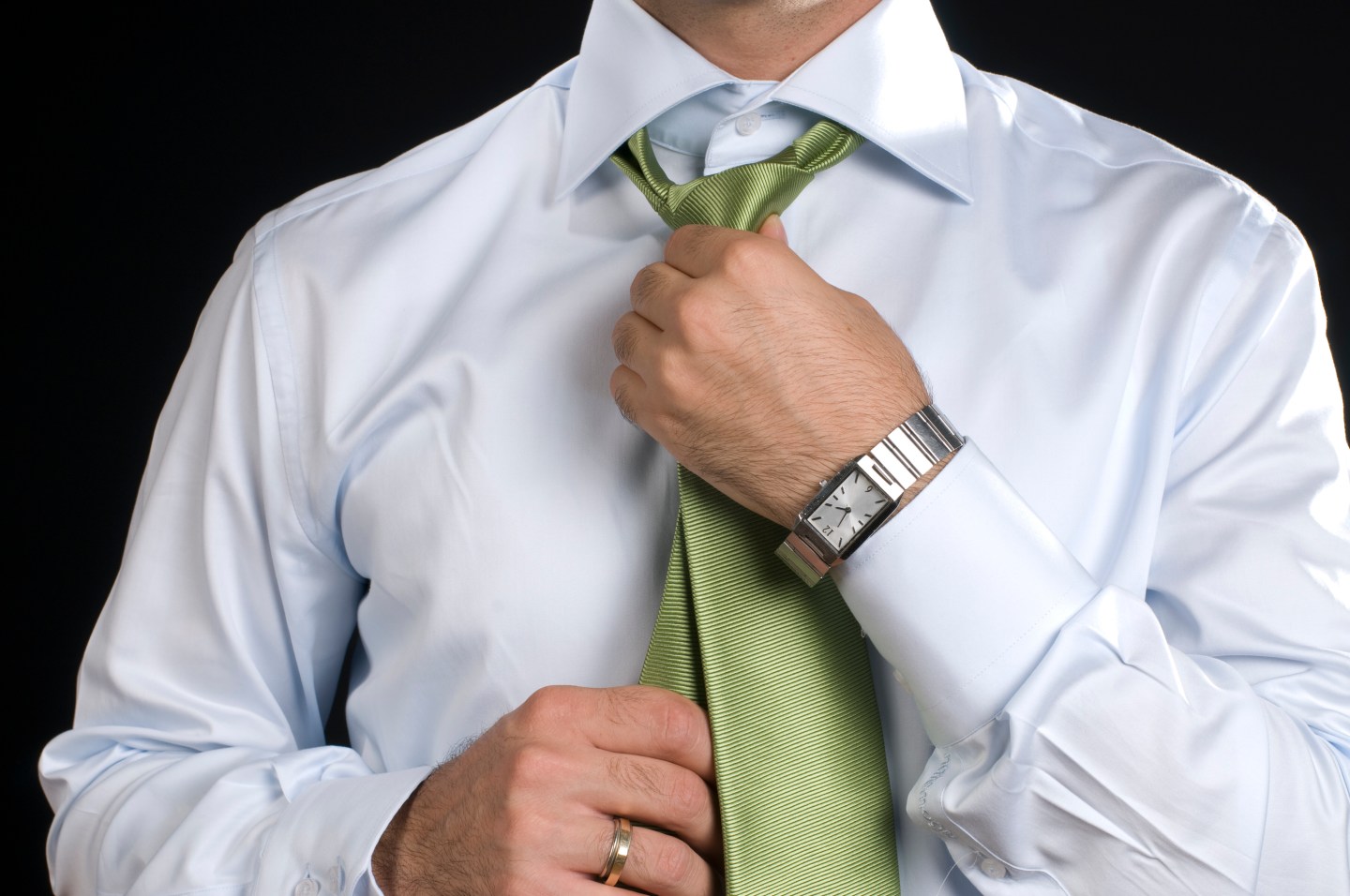
Once a menswear staple, employees are now opting to wear button down shirts without a tie around their collar.
“People who wear ties have said they’re uncomfortable and they can be constricting around your throat,” Shapira says. “I would say it’s probably more about comfort than about professionalism.”
Even the most dressy and client-facing industries, including finance and government, are shying away from the accessory. “It’s very interesting how the necktie has, even by politicians and the private realm, been disregarded,” Clark says.
Adapt to your company culture
While experts told Fortune there are some clear articles of office attire that are waxing and waning in popularity, they all agree employees should adapt their style to the office’s general energy. Not all white-collar jobs have the same uniform, and it’s important to match your peers’ expectations.
“The main guideline that I’m teaching [in terms of] business etiquette to employees and companies, from startups to Fortune 100s, is that you dress for the environment of the company,” says Meier. “If you are working on a retail floor, you’re going to be dressing very differently than a marketing firm versus a bank. You have to dress for the company culture.”
And keep in mind that there are some industries that play by very different rules. Tech, for instance, is famous for its relaxed dress code. Experts all point to Steve Jobs being a major influence with his black turtleneck, jeans, and white sneakers.
“You would not see an engineer at Google wearing a three piece suit. They don’t do that,” says Morgan. “They wear t-shirts and cargo shorts. It’s almost their way of showing their status—the fact that they don’t care about the clothes that they put on their back.”
And remember there can even be several distinct layers of fashion rules within a single company. “Are you in retail banking, or are you in investment banking? The dress code, even within the same organization, can be vastly different,” Shapira says.
Gradually add your personal style
While employees should generally follow the dress code of their company, there is some wiggle room when it comes to personal style. Workers spend most of their waking hours at the office—and to deny any sense of unique flair would drown the fun out of getting ready for work.
Shapira says that as staffers settle into their roles, they can bring bolder fashion choices to the table. She recommends that for the initial interview and first days on the job, employees wear slacks and more formal shoes. But as they settle into their roles, workers can bring in touches of their own personal style.
“I’ll wait to build credibility before I wear those sneakers,” she says. “I could be playful with the colors that I choose. And then once I’ve started to get to know people, then I slowly start to bring in my personality more and more. It can be a conversation starter.”