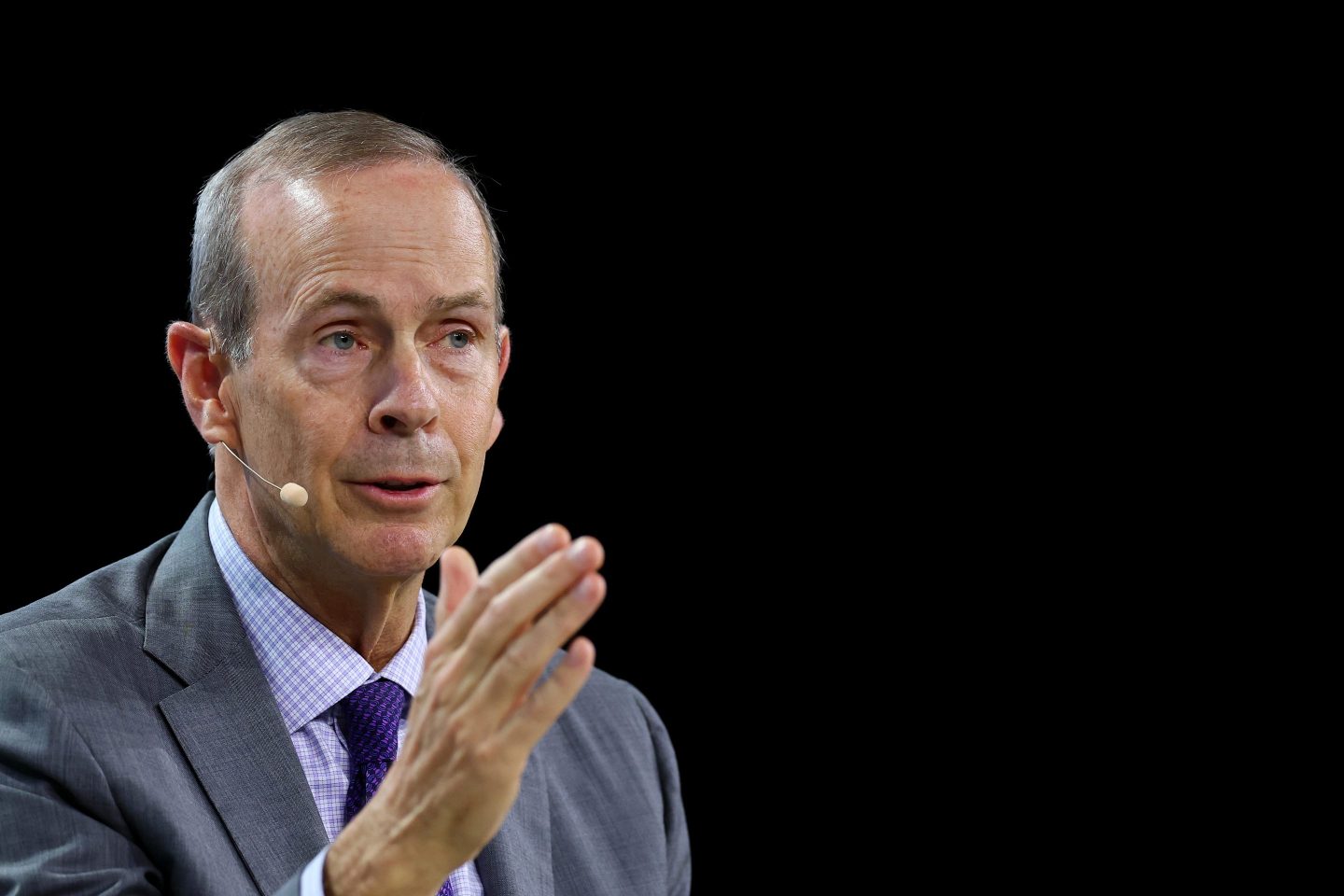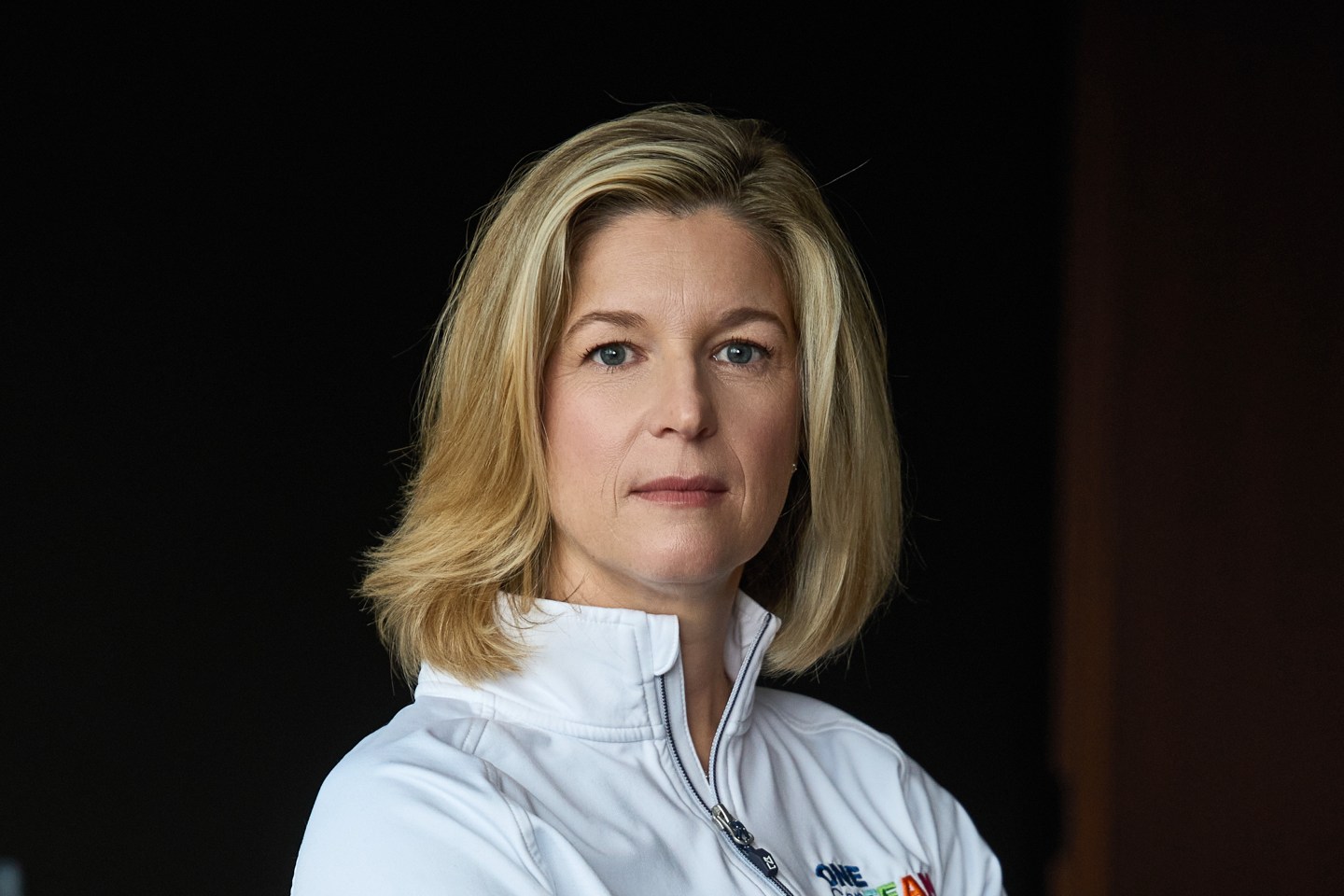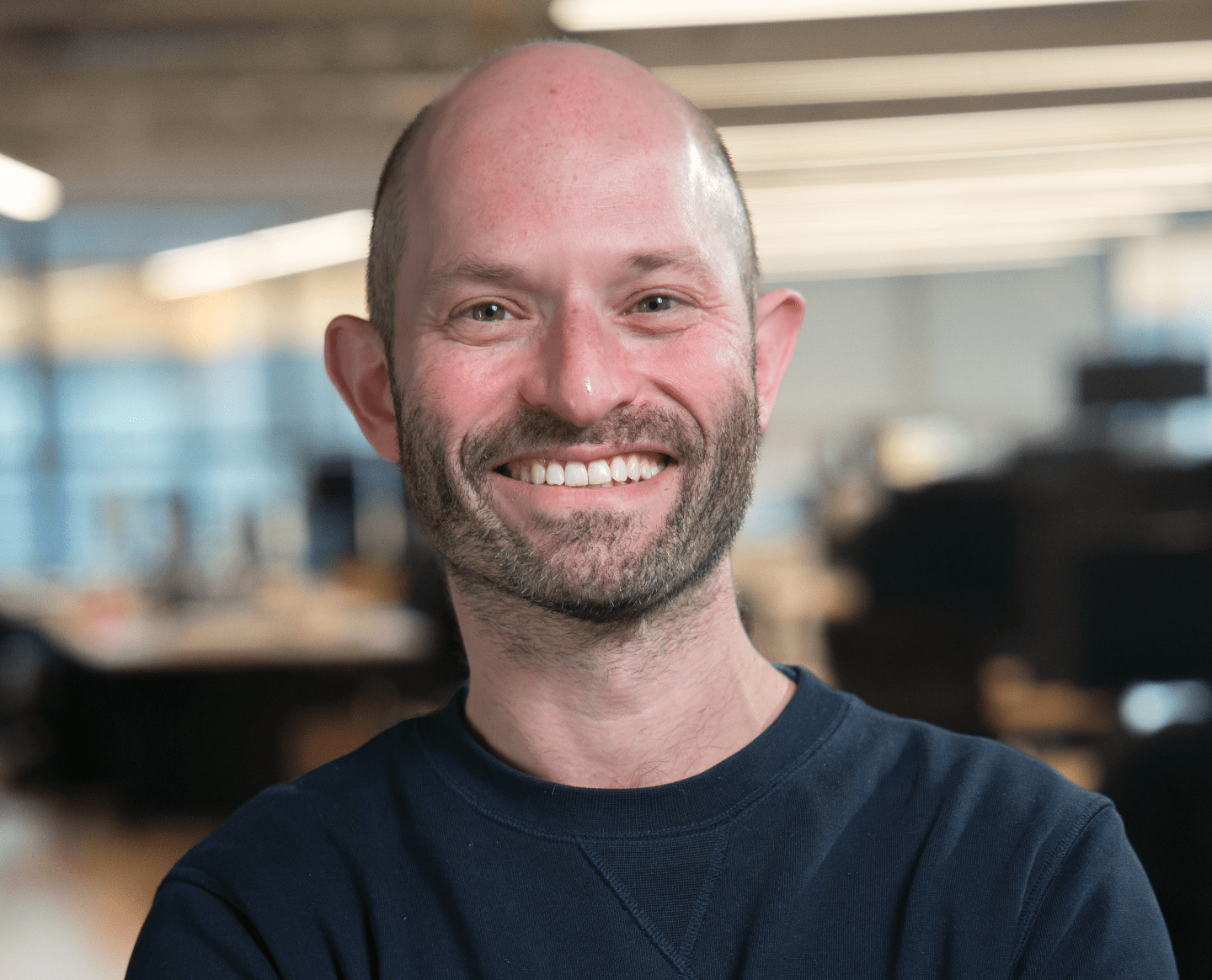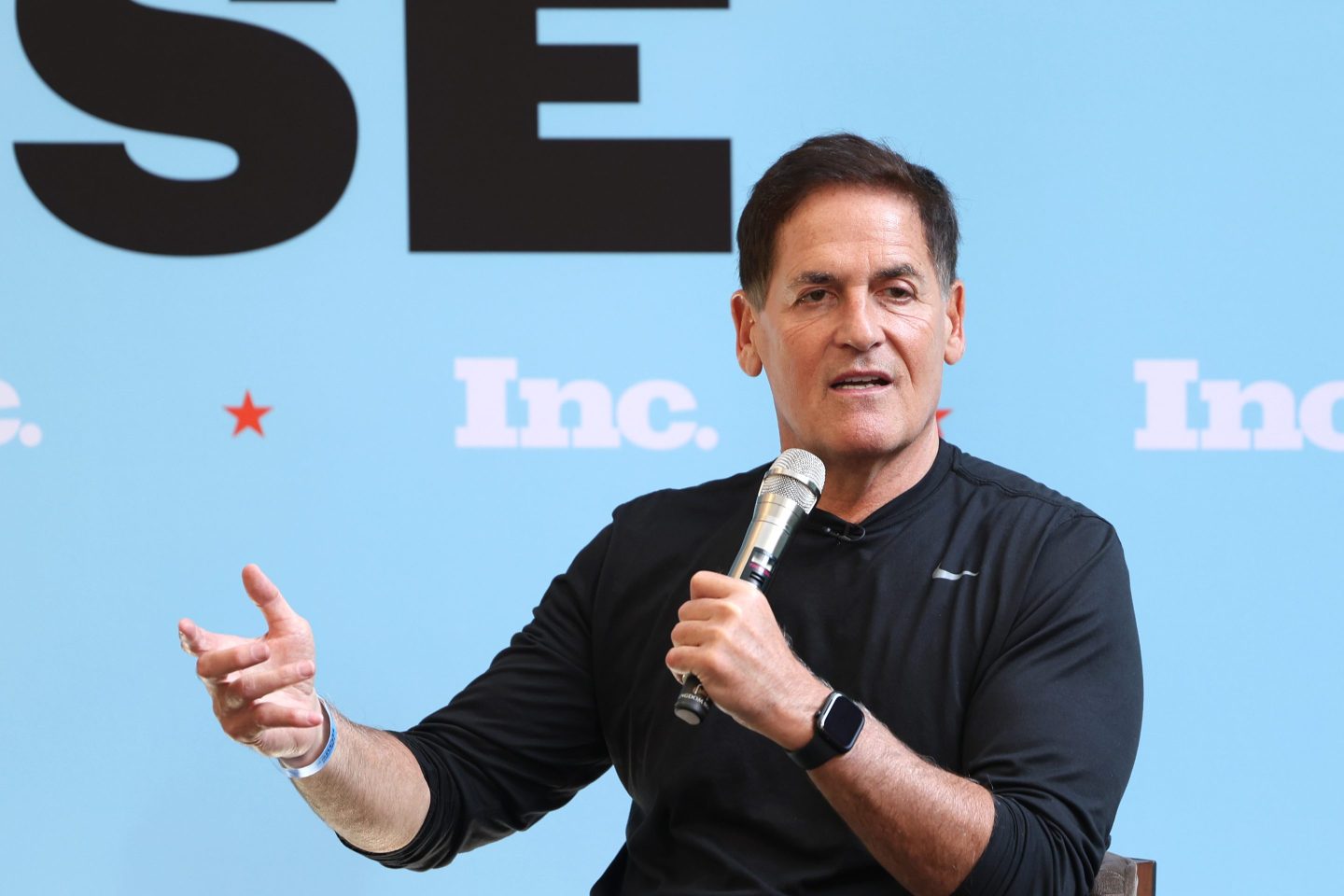

On this episode of Fortune’s Leadership Next podcast, co-hosts Michal Lev-Ram and Diane Brady interview Klarna co-founder and CEO Sebastian Siemiatkowski. They discuss Klarna’s business model, why offering at-work benefits like “creative time” and free Coca-Cola fell flat, and how the company ended up sharing a Slack channel with Sam Altman and others at OpenAI.
Listen to the episode or read the transcript below.
Transcript
Diane Brady: Leadership Next is powered by the folks at Deloitte who, like me, are exploring the changing roles of business leadership and how CEOs are navigating this change.
Michal Lev-Ram: Welcome to Leadership Next, the podcast about the changing rules of business leadership.
I’m Michal Lev-Ram, and joining me today is Diane Brady, who co-hosted today’s episode. We got to talk to Sebastian Siemiatkowski, who is the CEO of Klarna, the “buy now, pay later” company.
Brady: Yeah, and “buy now, pay later” has a lot of connotations. What I found interesting is Sebastian really sees this as a financial services company. They’ve got their own credit card and I did not know they were such an early adopter of OpenAI’s technology. He saw promise there and created a partnership with them long before even Apple and News Corp got a hold of them. So, good for him.
Lev-Ram: Yeah. Apparently, they even share a Slack channel with them. That’s interesting. But yeah, we talked a lot about AI. We talked about the company’s culture and its structure.
And just something to note for our listeners. We recorded this before the CFPB [Consumer Financial Protection Bureau] said that basically all buy-now-pay-later firms, like Klarna, have to comply with U.S. credit card laws that are meant to give certain rights to customers. So unfortunately, we didn’t have a chance to talk about that. But that’s just kind of the product of a fast-moving emerging industry. It just moves really quickly.
Brady: Also, this interview happened prior to the news that Klarna was selling its checkout business for a reported $520 million. So we did not have a chance to get into that.
[Interview begins.]
Lev-Ram: Sebastian, welcome to Leadership Next. Thanks for joining us.
Sebastian Siemiatkowski: Thank you for having me.
Lev-Ram: So, I’m going to start with a super basic question, which is just what is Klarna, for those who don’t know?
Siemiatkowski: I think we’re most famous for the fact that we offer this interest free installments in four as an option when you shop online. But actually, for people more familiar with the business, [it’s] actually a fully-fledged bank in Europe. We’re a global payments network. So we offer our services in over 20 countries. We have 150 million consumers, and they use us both for buy now, pay later, but also to pay the full amount. And we have a card so you can use us as a debit credit card. And yeah, it’s basically a full financial service company.
Lev-Ram: So one of my questions for you also in the hopes of better understanding the business is to get your take on how what you do, and buy now, pay later more broadly, is different from the traditional credit card payment system. And I’m also curious to know why you guys felt the need to actually launch your own credit card.
Siemiatkowski: Right. So I think if we started with the buy now, pay later part. I think buy now, pay later to us came as an idea based on looking at the bad parts of credit cards and how banks have introduced a number of elements such as revolving credit, showing you the credit limit when you log in as a sense to feel that you have more money to spend than you actually have. There’s a lot of bad practices, most of which you will find if you watch Netflix “Credit Cards, Explained.” You will see a lot of these that have been aggregated in the banking industry over the years, overdraft fees, etc. And so we wanted to create a more simple, go-back-to-the-basic form of credit. There’s a more healthy form of credit. So we created this fixed installment, clear time period, no interest, easy to use. And there is a huge group of American consumers. McKinsey made a study that they call them the self-aware avoiders, which are about 20% of the U.S. population, which are people that have bad experiences with credit cards where they felt like they are inciting them to overspend and overextend. And they are looking for a product that is primarily debit-based, where they pay the full amount but occasionally have access to a simple and easy to use form and cheap form of credit. So that’s the buy now, pay later part.
Beyond that, Klarna aspires to be a payment network, just like Visa, MasterCard, and Amex. And the reason for that is that we see a huge opportunity to create a better experience. Visa and MasterCard are four-party networks, so they are slower to innovate because they have to rely on both your issuing bank who gives you the card and the acquiring bank that has the merchant relationship to introduce any new innovation. A third-party network like Amex, Klarna, and PayPal can move faster because we have the direct relationship to the consumer. So we just need to agree with merchants to bring new features. And one of the critical things that sets Klarna apart that consumers really appreciate is the fact that there’s richer data travelling on our network. So if you make a purchase with Klarna at Macy’s, you will actually get the full digital receipt, images and the full SKU-level data [stock-keeping unit] of everything that you purchased, which consumers really appreciate because it makes it much easier to understand what did I buy, if I want to make a return, if I have a warranty issue, whatever it might be, I have a lot of information at hand that otherwise would be hard to find and it’s easier to understand my purchases. Now, adding a card to the mix is basically the ability for people that really love Klarna to use us everywhere, who prefer that debit and credit kind of experience, and they want to have the availability to use that where our network is still not available today.
Brady: I love that you call them self-aware avoiders. We’ll get into the demographics. I think I’m a blissfully loyalty card chaser, so that screams Gen X. One of the things when I think about Klarna, I’m hard pressed to think of a bigger fan of generative AI to the point where you actually put out a press release, I think in your first month, talking about how I think it was the equivalent of 700 full-time agents through ChatGPT. Talk about how transformative that has been for you.
Siemiatkowski: I mean, I think it’s amazing. First and foremost, I would like to say something which is that I’m actually one of the people who are kind of skeptical about new technologies and people have been asking me about crypto obviously for a lot of years. And I always said like, if I can’t convince my mom to use it, I don’t understand the value of it. And so like I never got my mom to understand why she would have a bitcoin, and I still haven’t convinced her.
Brady: But she does use Klarna.
Siemiatkowski: But she does use Klarna.
Brady: OK, there you go.
Siemiatkowski: And so, I think when gen AI came out, it was very clear from day one that this actually has practical application. We can use it. But it’s difficult to get it to practical application because it’s a new technology, you have to figure it out. And as much as you will see a lot of noise currently about people doing press releases about this in their product launches, few things we have seen have actually come to like serious results that have business impact. And so when we achieve that with the customer service experience where actually the AI chat has a similar and, many times, higher customer satisfaction than people interacting with human agents, we felt that that was quite an interesting data point. And we wanted to share that because, at the same point of time, we feel a little bit that society is not necessarily— and politicians are not necessarily — taking enough consideration to the implications it will have on jobs, which is why obviously sharing that 700 number, we knew it was somewhat controversial and some people would, you know, react to it. But at the same point in time, we said, look, in the short term, we hire big customer service companies. They have hundreds of thousands of employees. They’re just going to, when we have less errands, they’re going to send their errands elsewhere. These people will still have jobs. But in the longer term, in the few coming years, this will have severe and big implications for society. And we think it’s time to think about that more proactively.
Brady: Ninety percents of your agents are using it daily. What were that last 10%, who are they?
Siemiatkowski: That’s a good question. I haven’t asked. But I mean I think it’s interesting.
Brady: They have a target on their back.
Siemiatkowski: Yeah, because obviously, obviously people are nervous about jobs. Like, not only at Klarna, but in general. Like what is the implication specifically for white collar jobs, which is are the ones that are mostly affected. But what we’ve told our employees is a few things. Like one, we have stopped hiring since about six months back, which means that we are actually shrinking in number of employees and Klarna, just as most tech companies, we have about 20% that normal attrition every year. So people stay on average five years, which is kind of typical for tech companies. Which means if we stop hiring, we’re 20% smaller in a year, right? So that’s one thing. So we stopped hiring because we understood that eventually we believe we can do more with less people. However, at the same point in time, I made a clear commitment to our employees saying, Look, the other part is we expect payroll costs to be lower within a year, but we expect to pay more per individual. So we believe this will allow us to actually invest more per individual, so meaning salaries will increase more. Right. And then finally, the other thing is because we lean so much into AI and this now become this, which I think is actually fair, that people think that Klarna is a hotbed of people that understand AI. Our employees are getting very attractive offers from other employers. So I think it’s created a very positive spin, like it was a nervous spin initially, but now I start seeing that like people actually see, look, it’s positive for us as employees as well in this case. So I feel that it’s worked fairly well.
Lev-Ram: We understand you allowed Sam Altman from OpenAI to basically use Klarna like an AI sandbox. So I’m just curious to hear how that relationship started. Obviously we’re seeing OpenAI spark some really interesting partnerships. This is definitely one of them. So tell us about it.
Siemiatkowski: Well, I think to me, when I tried it myself first in November, a little bit more than a year ago now, I was like, Wow, this was like a Google experience back 20 years ago when I tried Google the first time. But even better, I would say to some degree. And like it became very obvious to me that Sam and OpenAI would be a company that would be very hard to reach very soon, and then create relationships. I was like, I better move fast before it’s too late. So I made sure to get…
Brady: Get on the calendar.
Siemiatkowski: Yeah, exactly. Get on the calendar. I took a trip to San Francisco, basically only to see Sam and I managed to still, it was kind of funny because I think initially the meeting was two hours, and by the time I arrived, it was only 30 minutes. So it was kind of a good impression of like how fast OpenAI’s calendar was shrinking due to the interest in the company. But I think the point is, we had a meeting and I said, Look, I want to be a great partner. And I know afterwards I heard a little bit they were like, Really? A European bank? Are they going to be one of our most, like, forward-leaning partners? But since then, we created a joint Slack channel and we’ve had like a lot of good interactions, and just testing and saying, We want to try that and we want to try that, and provide a lot of good, meaningful feedback to them about how the APIs work and what could be working better. And I think it’s helped establish us as a good partner of theirs.
And it is as much as people don’t fully recognize because there’s such a mix in maturity of application and utilization of AI across companies. So you’ll have everything from people like Klarna very much leaning in to people that are still like, Oh, this, I’m not sure how this is going to work. And is it, you know, what about data? What about hallucinations? What about this and that?
But for the people leaning in, there’s a capacity issue, there’s a clear capacity issue where there’s not enough electricity, there’s not a lot of processing power. And so leaning in and making sure to be a customer that’s, we just want to buy and we want to make sure we’re easy to work with, actually benefits us in our case because it becomes easier to get access to the processing power that we need. And so it’s been very helpful for us and I think it just allows us to stay slightly ahead of the curve, which is what we’re trying to do.
Brady: I love the fact you’ve a joint Slack channel with Sam Altman and co. I want to, we’ll hear about his emojis another day.
Siemiatkowski: Yeah, exactly.
Lev-Ram: You mentioned earlier that customers reacted more positively to interacting with AI chat bots versus humans. So why is that?
Siemiatkowski: Well, there’s, it’s…
Lev-Ram: Are they nicer?
Siemiatkowski: [Laughing.] Yeah, they’re nicer. Exactly. No, I think that, first and foremost, there are a few things to consider here? One is that, to me and to us, as Klarna, it was like very, very critical to say from the beginning, obviously you as a user, as a customer of Klarna should always know, am I interacting with AI or a human, right? But we did actually have a bug and we did have a few hundreds of conversations that happened where that wasn’t obvious to the consumer.
Brady: A bug. What was the bug?
Siemiatkowski: It was a mistake. It wasn’t visible enough to the consumer that this was not a human agent but an AI agent. And as much as that was a mistake, we then looked at the customer-satisfaction scores and we realized that they were on par with conversations with humans. And we looked at the transcripts of those conversations and we looked at that. So as much as it was a mistake, it actually provided some valuable information to us. And since then, that was kind of the key conclusion that, as much as you will highlight self-driving cars were involved in accidents, we tend to forget that human drivers are also involved in accidents. The same applies here, right? Like, as much as AI will make mistakes, human agents will also make mistakes. And all of the conversations with human agents will not always be of highest quality, so it’s not really about making it perfect and always work. It’s about making sure that the conversation with AI is at least of the same quality and the same quality as a human interaction would be.
And once, in about February, Jan., we met that criteria when we could see that we had achieved that, that consumers interacting with these, reading the transcript of those conversations versus the human chat conversations, looking at customer satisfaction scores, they were on par at that point in time, we were like, okay, this is now ready to be deployed across. But then two things happen. It’s one, we all know and as much as like I would preferably avoid it, we all know because we’ve had that experience, when you interact on chat with a human agent, they tend to be doing three, four other conversations at the same time. And it’s just like an efficient way for them to work.
Brady: I’ll be back to you in five minutes.
Siemiatkowski: Exactly, but it’s very annoying to you as a customer because you’re like, I want answers right now. Right? And so you’re sensing that I’d like as much as a lot of companies try to avoid it, like you sense that that’s going on. AI is there only for you and available for you. So we’ve seen the time from starting the conversation to actually resolution dropped from 12 minutes with humans to two minutes with AI. It’s not that AI is so much smarter or better at resolving, it’s just that it’s focused on this one conversation, so to speak, or it’s capable of having parallel conversations without context switching. Right? So as a consequence of that, you see much faster.
So a lot of customers are actually quite happy with that experience because they feel it’s more instant, it’s more to the point, and it’s more correct. It also has a slightly higher correctness in how it answers to questions. Now, with that said, the funny thing still is that the most common first thing that the human writes to the AI is “agent,” like basically saying I want to speak to an agent, and so, a human. And so the point is like, Why are we doing that? Well, there I think is a little bit of a transition phase. The reality is so many consumers, including myself, have had so many really poor chat bot experiences where you’re like, you’re talking to someone…
Brady: Like Dante-esque circles of hell basically.
Siemiatkowski: Exactly. Or like an IVR [interactive voice response] system. Press one, press two, where it’s like you write something and it doesn’t understand your question. So people have just like pre-learned, so to speak, that like these experiences are bad and we’re trying to avoid them as much as possible. So a lot of our effort right now is trying to like suggest to be, because we want to be, we always want to give people the option to speak to a human. It’s important that you have that option. Nobody should be like forced to use the AI. So we want to give people the optionality, but at the same time, we really want to encourage our customers to try it because it is actually a great experience many times.
[Music starts.]
Alan Murray: Jason Girzadas, the CEO of Deloitte US, is the sponsor of this podcast and joins me today. Welcome, Jason.
Jason Girzadas: Thank you, Alan. It’s great to be here.
Murray: Jason, we live in an era of disruption, technology disruption, geopolitical disruption, workplace disruption, and it makes accurate predictions about what’s going to happen in the future more difficult than it has ever been. Yet the polls that we do together with you show that most business leaders largely remain optimistic. Why do you think that is?
Girzadas: I think optimism as a result of the fact that we’ve been through an incredibly tumultuous three years. And so I think business leaders realize that they’ve built resiliency into their organizations. The prospect of even more disruption isn’t as foreign of a concept, and I think there’s more confidence in their ability to adapt and to be agile. Secondarily, there’s been tremendous investment in technology and new capabilities that client organizations and executives broadly are optimistic about those creating more value and more opportunity. So it’s a function of what we’ve been through, as well as the investments that have been made that give a sense of optimism despite some of the headwinds.
Murray: And what’s your advice to companies that are struggling with the potential disruption in the future?
Girzadas: Well, disruption is the new normal. I don’t think there’s any placid water on the horizon or calmness that we can predict. So, it’s a function of getting accustomed to the discontinuities things that are ahead of us, whether it’s around technology or geopolitical change or workplace changes associated with the future of work or the demands of the talent workforce. Change is the new normal. As a result, it is requiring executive teams to actually look holistically at those challenges, be facile with doing scenario planning, and being on the lookout for where and how to capitalize on disruption versus being concerned by it or seen as a barrier to their success.
Murray: Jason, thanks for your perspective and thanks for sponsoring Leadership Next.
Girzadas: Thank you.
[Music ends.]
Lev-Ram: Can you talk a little bit about how you’re structured internally at Klarna? Other than being kind of all-in on AI and seeing what it can do for the business? It’s my understanding that you have these small autonomous teams and many, many of them. Can you explain how it works and just how you’ve structured the company to move quickly even though you’re in a very regulated industry?
Siemiatkowski: At Klarna, we were, as many other, I think, entrepreneurs and founders and founder-led companies, when you start the business, you’re all about building a product, but then you start thinking about how do you organize yourself and all that. And then you look around and you read these books, management books like Good to Great or all these different books and you’re like, what do we do from that? And then you read in the newspaper, it says, Google just launched 20% of creative time, which used to be a big thing, you know, back in the days and [gasp] like we have to do 20% of creative time for everyone and we did that and nothing happened. And, you know, we put Coca-Cola in the rooms, free Coca-Cola, ping pong tables, like, and, you know, Lego in the conference rooms, like, we did it all, right. And we’ve been trying and testing all of the things that you read in the press, like…
Brady: You’re reading too many management books. I think.
Siemiatkowski: Exactly. That was my conclusion as well, eventually, but it took some time to reach that that realization. But over these years of testing and iterating, I think we have found our ways of operating. And I don’t actually believe that we’re that different than a lot of other companies. I don’t want to overextend this, but the one company that we are truly inspired by is Toyota and the Toyota Way. And I visited a Toyota factory and I walked the floor and I’ve understand a lot of, like, combining Kanban and Gemba…
Lev-Ram: Kaizen.
Siemiatkowski: Kaizen, and a lot of the things that they do. And I think it’s really, really impressive as an organization. As much as Elon Musk now and Tesla has proven that a different way of operating a company can also be very successful in that industry. But, Toyota has done a fantastic job and just still beats competition on profit margins and by a lot. And I think what I really enjoy about it is how they empower their people to participate in the innovation, in the continuous improvement process.
And so we’ve tried to recreate a lot of what Toyota does in our own world, to have these autonomous teams to foster and try to encourage them to participate in the development improvement process on a daily basis. And actually, there are similarities because we’re a bank, it’s a little bit stricter than you would find at your normal tech company. There’s a lot of regulations, policies, instructions, regulatory requirements, underwriting, sensitive data, etc. which actually isn’t that different from car manufacturing because if you think about that person in the factory putting some part of the car together, that person needs to both consider economical issues, what if they over time have a bad back as a consequence of doing that in a bad way? Or what if they put that thing together in a bad way so there’s an accident and somebody loses their life If they haven’t done that properly? There’s a lot of security concerns and quality concerns that needs to be considered in that situation, which isn’t that dissimilar from what our teams need to consider, considering the kind of products that we offer.
Brady: You’re the first person I know who has used the Toyota Way applied to something that’s not manufacturing. I think of tape on the floor and very kind of distinct modular management practices to apply it to the financial services sector is really interesting.
Siemiatkowski: Well, and I think it’s very funny that you say that because I’m not going to say which company this was. But I talked to one of the largest banks in the world and their chairman is from the manufacturing industry, and he was quite disappointed that the bank that he was a chairman of wasn’t like more applying these practices. I think to some degree, the thing with banking, right, which is interesting, and I think there was a research that showed, that banking is the only industry in the last 150 years that basically has zero productivity gains in the last 150 years. Right. So like as opposed to manufacturing, a lot of have had huge growth. And I think the reason for that is because we regulated banks so much, there’s actually a very limited competition to be fair. Like once you reach that size, the competition is actually quite limited. And so as a consequence, the excess wealth that is created has been distributed to the employees of the banks and the shareholders. Right. Which is why we also used to have this tremendously high compensation. Now after 2007, it’s come down a little bit, but and so there hasn’t been that strong incentive. And as much as, officially, banks are so well regulated with policies and instructions, in a lot of banks those compliance parts live parallel life to reality, which is also why we’re still seeing things happening and things blowing up now and then. So I think that really applying them in practice is actually an interesting challenge and, and, and has a lot of opportunity in itself.
Lev-Ram: Do you want to be known as a buy now, pay later company or as a bank?
Siemiatkowski: I would say none of those two.
Lev-Ram: None. So what are you?
Siemiatkowski: Yeah, I think, when I look at the future and this actually is the strategy that we set the company at in 2015, So we have kind of pivoted the business a few times. But in ‘15 we said, okay, we are not going to compete with Stripe or any of those companies because they were beating the crap out of us and they were doing that kind of merchant acquisition and PSP [payment service provider] type of payments work with merchants so much better than we were. So we said, Look, let’s leave that to them and then think about the consumer side of the business instead and build a fantastic consumer offering. And so we ask ourselves like, what does the future of financial services look like? And this is funny because this was actually before gen AI and all of that, but already in ‘15 we sat down, we said, Well, sometime in the future, and this is a bit like self-driving cars, I don’t know exactly when it will happen, but I know it will happen: You wake up in the morning and your digital financial system says, Hey, I’ve analyzed your mortgage tonight, I realize you’re overpaying by ten bucks a month. I can make the switch on your behalf. The only thing you need to do in order to get a better mortgage rate is say “yes.” Right? Like few customers will say no, they won’t care that much which bank brand is giving them that mortgage. They will be like ten bucks, I’m all in, right? Like, so the point is, we realized that at some point in time, as technology matures, you will have these digital financial assistants AI powered and it will work on the benefit of the consumer. And so if you then ask yourself, like, what does that mean for banking as an industry? Well, it means that the excess profits that we’ve seen for 150 years are going away because they are predominantly here because of the lack of competition, but most importantly, because the lack of customer mobility. It is such an effort to move from bank A to bank B, and in addition to that, when you move, there’s a huge dilemma because a lot of new customers may be moving because they have poor credit records and stuff like that. So you have this like adverse selection problem for the new bank that is accepting that customer.
Brady: Wouldn’t my digital assistant say, By the way, Diane, you can’t afford that pair of jeans, so don’t divide it into four different purchases. How does that work in terms of you do incentivize people to buy more…
Siemiatkowski: Yup.
Brady: …right? By virtue of making it more affordable to buy at the moment. What does the AI or any other tool tell me about the long term consequences of that?
Siemiatkowski: I think it is a great question and it’s one that we, to be fair, we do have that discussion internally. Like where do you find a balance between those two? Right? And I think you have to become a little bit more granular when you think about that, because the way I think about credit is that credit may be motivated in specific situations. So like if you start with the idea that like if I buy something online, if I use only debit, it means I pay for it instantly and then I get the product. And it’s actually a better concept to wait with payment until you receive the product itself and so forth. So credit has a utility there. Then you look it’s like, okay, but what about installments and financing things? Well, it depends a little bit. So for example, we didn’t have that much money when I was a kid, right? And we ended up buying things of lower quality that actually ran out faster because we couldn’t afford to buy things of higher quality. So there would be instances where buying something slightly more expensive actually makes sense from that perspective. There would be other instances where there was discounting going on, but we couldn’t buy it at the discounting time and we were buying when it was most expensive. There was times when you could buy big packs of things and save money by doing that. So there are instances where credit, especially if it’s interest free, actually makes sense financially speaking, right? That’s why companies don’t cash flow, they actually, you know, they activate cost over a period of time, So then obviously if you buy more furniture or TV or home electronics it also make sense. So I think it’s almost like you have to look at a more granular level. When does it make sense?
Now you look at jeans as an example. Well, I think occasionally it may make sense. There is a little bit of like flexibility in that, where it makes sense, where it doesn’t make sense. You have to look at it as, how much credit are you using overall? What’s the cost of it? And there again, if you look at Klarna’s average outstanding balance, it’s $100, right? A credit card is $5,500. That’s a huge difference. Our interest free credit is zero. A credit card has a fee of like 30, 40% sometimes like when you revolve and it’s very expensive. So the point is that, I think the AI assistant even in that case may say like, look, if you’re going to use credit, use this one. Right? But then I think sometimes maybe you’ll have two assistants, like one assistant will tell you, like if you really want this, you can actually get it. And the other one would say, okay, you can do it. But just a caution…
Brady: An angel on every shoulder.
Siemiatkowski: Exactly.
Lev-Ram: Where does Gen Z fit in all of this? I mean, what do they want? You know, you’re talking about a future where some of the brands that we’ve always thought of as the mighty credit card companies or the banks don’t have the kind of brand recognition and power that they still do today. So what does Gen Z really care about? And I know obviously they’ve been big on buy now, pay later, but what we’re talking about is much more broad than that.
Siemiatkowski: No, it’s true. But I think to some degree also, I sometimes I feel like there’s a mix of perspective there. One, the perspective of us who are not Gen Z or slightly older, to think about it as like, we want to protect the youngsters from bad decision making. But sometimes it’s also us thinking we know better than they, right? So we who are of a slightly older generation will be using credit cards revolving at 25%. And then we will tell a youngster who’s primarily using debit and occasionally using buy, now pay later at 0% interest and say that’s a bad thing because it’s a new thing and I don’t understand what it is. Right. And to be fair, strictly financially speaking, I would say that use debit occasionally, buy now, pay later is a better financial outcome for a consumer than using a credit card and basically put all of your spending, including groceries and everything on a monthly statement.
You have to remember, banks used to offer the idea of like press one for debit, press two for credit. I used to work at Burger King. We talked about it. And so, I remember when you would swipe that card, it said press one for debit and two for credit. Why did the banks remove that option at point of sale? Because by removing it, you would rack up a bigger bill at the end of the month and hence you were more likely to revolve and hence they were making more money. So they specifically removed that debit option at every time of purchase in order to increase the likelihood of you overextending yourself and that driving higher revenue. And it’s just not a tactic that works anymore. We have a different society today. We think business thinks differently about these things.
Brady: I want to ask a little bit about your origin story, because your parents were Polish immigrants to Sweden. Talk about how that shaped you and your mindset in terms of as an entrepreneur. And of course, feel free to throw in Burger King. We can never talk about it enough here.
Siemiatkowski: Yeah, look, so my parents fled communism because they didn’t see any future in that system. And they came to Sweden. We actually wanted to go to the U.S. I even have relatives here, but we ended up staying in Sweden and it’s a dark place for most of the year, so there’s not much else to do than work. And then during summer, you breathe for a few months. But the point was that being brought up in that society, it is not a society that integrates people as well as the U.S. does. And so my parents, despite the fact of having academical backgrounds, my father ended up driving a cab and being unemployed for a long period of time. My mother had a problem with her back and was an early retiree as a consequence. So we didn’t have a lot of money. And I think that, to some degree, when I looked around at my Swedish friends, they all lived in a house. We lived in an apartment. You know, we even lived in some fairly rough neighborhoods for a period of time. And then my parents decided to divorce when I was eight years old. And my kind of childish understanding of that was partially, it was money related because that was always the topic at hand at home, which was, we don’t have money for this and we don’t have money for that.
So I do think that to some degree there was an association for me that I was going to make it, I was going to make some money, and then I was going to make us all happy again. And, unfortunately, then you realize in life, it’s not really that easy, even though money helps, but it doesn’t that easy. It’s not like it’s automatically going to solve all your relationships. So and then also, I was always inspired by entrepreneurs. I don’t know why I read the book of Richard Branson of Virgin very early on. I thought that was amazing. We have a fantastic entrepreneur in Sweden, Ingvar Kamprad, who built IKEA, which was like the big Swedish success story of the time, H&M and others as well, but IKEA in particular. And so like this was just inspirational for me. And I remember calling my local radio station when I was like 13 and I was like, Hey, you guys are having the wrong shows. You should do this instead. I was trying to tell them. So I always had like this like crazy idea that, I love business. I always thought it was just fun and interesting.
And then, eventually starting Klarna when we were 23 years old. So, yeah, so I think that drive, but we were also lucky. I think as much there are things that I love about the U.S., there’s also things I loved about Sweden, and one of the things was that I was an immigrant kid, but I had free health care. So if something happened to me, that solved itself. I had free access to schools. The best schools didn’t cost anything. So it got me into the best schools, which created a network of people that eventually invested in our business. So it was also society that really gave me, as an immigrant kid, a lot of prerequisites to basically do the American dream story and I think that’s also pretty cool.
In addition, the government in Sweden at that point of time was very forward looking and they had what they called the PC at home reform, which basically was a subsidy for PCs. So that was when we could afford our first computer. And as a consequence of that, a lot of kids out of Sweden, the computer literacy was far beyond a lot of other countries. Broadband was built up much faster in Sweden and other countries. So Spotify, it’s not just luck that Spotify came out of Sweden. It was because we had broadband connection that was streaming songs over downloading them from iTunes became viable much earlier on. So a lot of these things that happened in the nineties actually had a good effect and I think created a lot of interesting success stories out of Sweden.
Brady: Interesting. I didn’t know that.
Lev-Ram: So, okay, last question for you, Sebastian. And I think this is a nice like putting a bow on the rags-to-riches story here. What can you tell us about an IPO?
Siemiatkowski: [Laughs.] Well, look, I think I’ve had this question a few times. I try to answer it very consistently, which is that to me, the prerequisites of the IPO was always that we wanted to build a global business. Global business means success in the U.S. Success in the U.S. always came down to brand awareness, but also a sustainable business model. And so first we managed to sign up almost half of the top 100 U.S. retailers who are live now. There’s over 40 million consumers using Klarna in the U.S. And we’re now, since five quarters, a profitable business in the U.S. You know, we’re going to do over a billion dollars of revenue in this market. And so we’ve kind of achieved those targets that we’ve set out for ourselves. And since that, like everything is in place to do the IPO, we’re doing preparatory work and working on it, so forth, but we haven’t set a deadline and it’s not like an official thing yet, but it’s fairly likely to happen within the first…
Brady: I was reading early next year. That’s not the case?
Siemiatkowski: That’s what people say. Yeah, I’ve heard that as well.
[Laughter.]
Lev-Ram: Well, Sebastian, thank you so much for joining us.
Brady: Thank you.
Siemiatkowski: Thank you for having me.
Lev-Ram: Leadership Next is edited by Nicole Vergalla. Our executive producer is Chris Joslin. Our producer is Mason Cohn. Our theme is by Jason Snell. Leadership Next is a production of Fortune Media.
Brady: Leadership Next episodes are produced by Fortune‘s editorial team. The views and opinions expressed by podcast speakers and guests are solely their own and do not reflect the opinions of Deloitte or its personnel. Nor does Deloitte advocate or endorse any individuals or entities featured on the episodes.